
Licensed editorial adaptation
Adapted and localized by the ZWCNC Editorial Team from licensed technical material. The source record is published for traceability.
Technical boundary: confirm machine-specific capacity, configuration and safety requirements against the current quotation, manual and application review.
Two bending cells can run the same order and finish with different business results. One machine may complete each bend sooner, yet its finished parts wait beside inspection while an operator retrieves blanks, confirms tooling, rotates panels, and corrects a flange. The other machine may lose the cycle-time comparison but release the accepted order first.
The difference is the work around the bend.
Bend Speed Is Only One Part of Production Value
A bend-cycle specification measures motion inside the machine. Production value covers the longer route: release the order, stage material, prepare the program and tooling, approve the first part, form the batch, inspect the output, correct failures, and deliver accepted parts to the next operation.
That route behaves like a relay. Bend speed is one runner's pace; shipped output depends on every handoff. A fast stroke cannot recover time lost while blanks wait, tooling is searched for, parts are repositioned, or inspection is blocked.
The buying question is whether a panel bender converts recurring work into more accepted parts with less direct labor and elapsed order time. The advantage is strongest in repeatable families, where programs, tooling, handling, and quality results can be reused.
Measure Good Parts per Labor-Hour
The useful productivity measure is:
Good parts per labor-hour = accepted parts produced / all direct labor-hours consumed by the order
"Accepted" is essential. A machine that rapidly produces parts requiring correction has created work in process, not production value. "All direct labor-hours" is equally important. Count press-brake operators, helpers, programmers, inspection time, material recovery, troubleshooting, and any labor assigned intermittently to the automated cell.
A 2014 FSMdirect comparison reported typical press-brake productivity of about 6 to 10 parts per worker-hour, while a manually loaded panel bender could reach up to 60 parts per worker-hour on an eight-bend part. "Up to" describes a favorable geometry and operating model, not a universal conversion rate.
The comparison shows what bend speed misses. An eight-bend part may require repeated support, rotation, repositioning, and verification at a press brake. A panel bender can automate much of that manipulation after loading. Its advantage comes from reducing the labor around the forming strokes.
Labor savings are usable only when the released person can run another process, cover another machine, eliminate overtime, or prevent an additional shift position. If material arrives unpredictably or exceptions occur constantly, the operator may remain tied to the cell. Part mix matters just as much: recurring cabinets, trays, doors, and channels preserve programs and handling patterns, while unusual, low-repeat, or out-of-range work can favor a press brake.
Compare Total Order Time, Not Just Forming Time
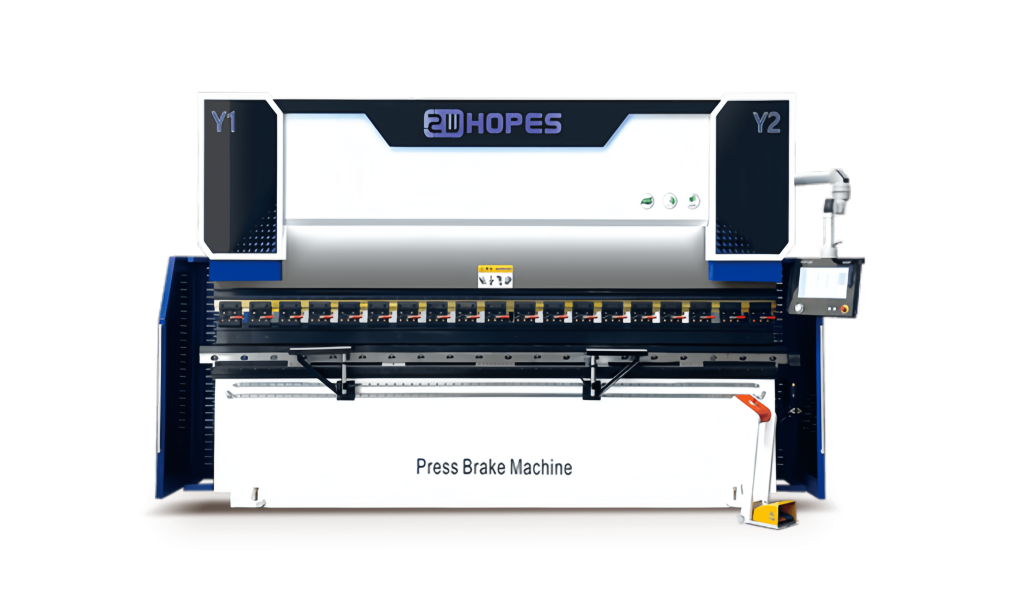
The Fabricator reported in 2021 that a panel bender could reduce manual job changeover to about five minutes, or roughly 90 seconds with an automatic tool changer. Those results are meaningful, but once setup becomes small, another part of the order may become the constraint.
For a short recurring batch, compressed setup can change the economics because setup is spread over only a few accepted parts. Across repeat orders, reusable programs keep recovering that time. On a long run, setup is a smaller share of total order time; loading, unloading, inspection, replenishment, or downstream transfer may dominate.
Measure from the point when the order is available to bending until the last accepted part is ready for the next process. Include:
- Programming, tooling, and material staging
- First-part approval and in-process inspection
- Active forming and operator handling
- Loading, unloading, sorting, and transfer
- Correction loops, rework, and final inspection
Machine cycle time belongs in the calculation, but it cannot represent the whole calculation. Use representative order histories and include difficult parts, material variation, revision changes, and ordinary manual interventions.
Rework deserves separate attention. Springback correction, incorrect sequencing, inconsistent positioning, or a missed orientation consumes labor and delays accepted output. A panel bender can reduce variation by repeating a validated sequence, but it cannot eliminate unsuitable geometry, unstable material, poor programming, or weak process control.
Repeatability may reduce measurements only if the quality plan permits fewer checks and the process remains capable. Faster forming is not automatically a quality improvement.
Identify the Real Bottleneck
Suppose a bending cell doubles its output rate, but inspection can release parts only at its previous pace. Finished pieces queue, work in process rises, and operators spend more time sorting stacks. Bending improved locally while the plant gained little globally.
The same problem can occur upstream. A panel bender that waits for blanks, pallets, programs, or tooling is expensive idle capacity. Downstream welding, hardware insertion, coating, assembly, or final inspection may cap shipments regardless of bending speed.
A 2024 TRUMPF customer story described Autz + Herrmann pairing a TruBend Center 7020 panel bender with robot loading and unloading plus storage. The company reported throughput gains that supported new customers with hardly any operators. The useful lesson is the architecture: automation covered the material and handling handoffs around forming.
Not every shop needs storage and robotics. Identify the actual constraint. If bending limits shipments, reducing total order time can raise output. Otherwise, the panel bender must justify itself through labor reduction, consistency, scheduling stability, or usable future capacity.
Audit the workflow in both directions. Check whether material arrives when needed, programs and tooling are ready, operators intervene frequently, first-part approval waits, rework begins, and downstream operations can consume the output. If faster bending would merely create a larger queue, its economic value has reached a practical limit.
The Largest Savings Often Occur Between the Bends
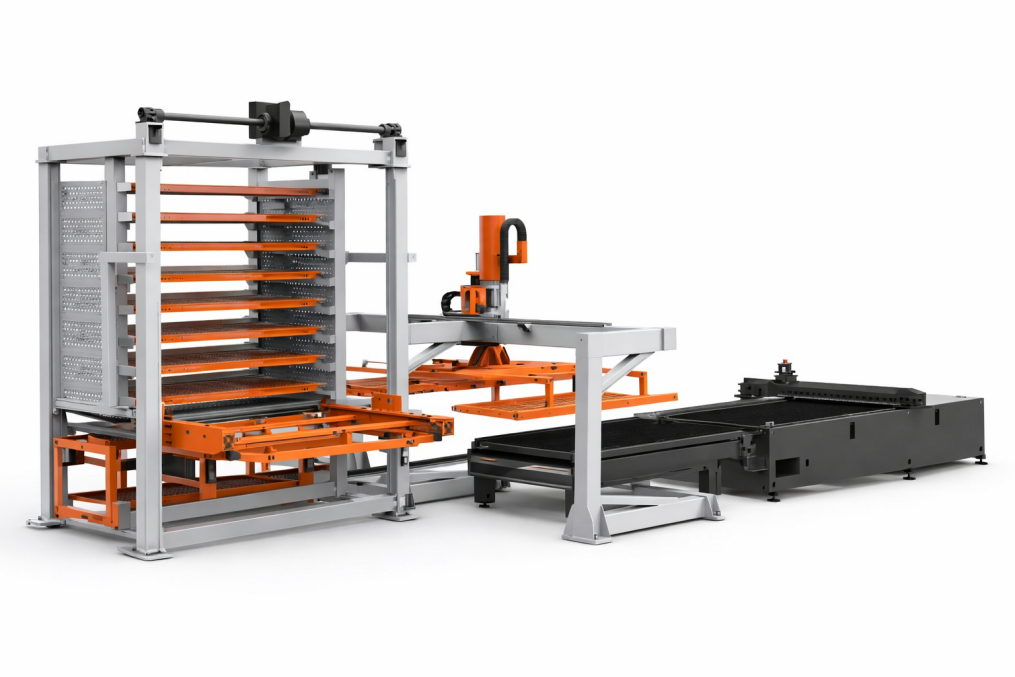
Consider a recurring enclosure panel with several flanges and bends in both directions. At a press brake, the operator may retrieve tooling, square the blank, support it as its center of gravity shifts, rotate it, confirm orientation, inspect the first piece, and stack the output. The ram is moving for only part of that sequence.
For application-specific equipment selection, contact ZWCNC.
Loading and unloading may still be manual, so they remain in the labor calculation unless the cell automates them. The premium is earned by removing repeated handoffs that consume labor and interrupt flow.
Automatic Tooling Reduces Repeated Changeover Work
A press-brake changeover includes tool identification, retrieval, removal, installation, alignment, program confirmation, and first-part approval. Quick clamps, offline preparation, and organized carts shorten the work, but do not make it disappear.
On a panel bender equipped for automatic tooling, the program calls the required configuration and the machine positions segmented tools accordingly. That can remove tool retrieval and manual arrangement from many changeovers while reducing the chance that the physical setup differs from the programmed setup.
The economic effect depends on the schedule. A long batch spreads one manual setup over many pieces; recurring short runs pay it repeatedly. Automatic tooling is most valuable when compatible jobs return often enough for programs and configurations to be reused.
Machine automation is not the only route to fast setup. The Fabricator reported in 2025 that disciplined, kit-based press-brake flow can approach panel-bender changeover times on certain jobs. Compare against the shop's mature process, including offline staging, standardized setups, quick-change hardware, and program control. If setup performance converges, the panel bender must win on positioning, handling, repeatability, or labor.
Automated Manipulation Reduces Handling and Ergonomic Exposure
After the first bend, a blank is no longer flat and easy to control. Flanges change its balance and create obstructions. Each orientation can require lifting, turning, reaching, support, and accurate location against a gauge. Large panels magnify the effort, but lighter pieces also create fatigue when the motion repeats.
A panel bender's manipulator controls the blank from a defined reference and moves it through the programmed sequence. Fewer manual repositions mean fewer opportunities to select the wrong edge, reverse the part, lose gauge contact, or distort a partially formed panel.
This does not automatically create unattended production. A basic cell may still require an operator to load every blank and remove each finished part. Automatic loading, stacking, and robotic transfer must be included in the purchased configuration before those savings appear in the model.
Ergonomic improvement has a boundary. Moving internal manipulation to the machine reduces repetitive lifting, reaching, and support, but not the risk of loading large blanks or extracting difficult geometries. Examine the route from pallet to finished stack.
Programmed Handling Reduces Shift-to-Shift Variation
At a press brake, the program may define the sequence and backgauge positions, yet the operator still interprets which edge enters first, when to flip the part, how to support a growing flange, and whether the blank remained square.
A panel bender encodes more of that physical sequence. Positioning, rotation, bend direction, and tool movement become repeatable machine actions instead of instructions reinterpreted on every shift.
Skill moves; it does not vanish. The shop still needs people who develop programs, account for material behavior, validate clearances, respond to exceptions, and recognize process drift. The operator shifts from manually creating consistency to supervising it.
Incorrect allowances, unstable material assumptions, or a flawed sequence will be repeated with great discipline. Automation cannot rescue weak process engineering.
Angle Control and Repeatability Improve First-Part Yield
The first piece of a recurring job often exposes the gap between the program and material behavior. Springback, thickness variation, grain direction, and tooling conditions can move the angle away from target. The operator measures, adjusts, and repeats until the part is acceptable.
Where a panel bender includes angle measurement or correction, that feedback can enter the cycle. Controlled datums, programmed manipulation, and repeatable motion also reduce the variables around each correction. Once an adjustment is validated and stored, the next run starts from a proven process.
Modern press brakes can also provide angle control and program repeatability, so angle control alone does not settle the comparison. The panel bender gains ground when it operates alongside automatic positioning and sequencing.
The result appears downstream. Steadier angles and flange dimensions reduce sorting and manual persuasion in welding fixtures, hardware insertion, and assembly. A good first piece releases the order sooner; repeatability helps the remaining pieces fit like the approved one.
Many-Bend Parts Multiply the Advantage
As bend count rises, a press-brake operator repeatedly releases the part, supports its new shape, rotates it, finds the next reference edge, seats it against the gauge, and checks clearance. Brief actions multiplied across many bends and parts can become the dominant labor content.
A panel bender compresses the sequence into one controlled cycle. The operator loads the blank, the machine performs programmed positioning and forming, and the finished piece is presented for removal or transfer. The advantage compounds with every reposition, orientation decision, and verification removed.
The labor logic can be expressed as:
Labor saved per order = recurring setup work avoided + repeated handling and verification avoided - remaining loading, unloading, supervision, and exception work
Parts with few bends provide fewer opportunities for the equation to become favorable. So do batches that rarely repeat, because validated programs and automatic setups receive little reuse. Recurring multi-bend families can collect the same savings at changeover, on every part, and across every shift.
Geometry remains the hard boundary. In a 2025 interview published by The Fabricator, Jamie Sims of Ursviken Pivatic identified limits involving profile types, bending heights, and parts longer than about 10 feet. If a panel bender cannot complete the geometry, sending the part to a press brake for secondary work adds another setup, transfer, queue, and inspection point.
The premium is earned by compatible complexity, not complexity in the abstract. Sort the workload by recurring families and ask which parts fit the range, how many handoffs automation removes, how often programs return, and whether the schedule gives those savings enough repetitions to matter.
Find the Part-Family Sweet Spot
Part count alone can hide the opportunity. A queue may contain cabinet doors with four edge flanges, shallow trays, narrow channels, and a one-off bracket with a deep return. Tracing rotations, support moves, setup decisions, first-part checks, and program recurrence separates the compatible families from the bracket.
A useful part family is defined by its process signature, not only by product name. Members share manageable material and thickness ranges, a compatible geometric envelope, reusable bend logic, and a repeatable reference and tooling strategy.
The panel-bender sweet spot appears where four conditions overlap:
- The geometry fits the machine without routine secondary bending.
- The part requires enough support, rotation, positioning, or sequencing to create meaningful press-brake labor.
- Programs and setup assumptions can be reused across orders or related variants.
- Demand returns often enough for avoided work to accumulate into dependable savings.
Batch size alone does not identify this intersection. A large batch of simple one-bend parts may offer little value, while small batches from a standardized family may repeatedly avoid setup and handling. The premium is defensible when compatible families recur often enough for each automated handoff to become a production habit.
Large Panels and Multi-Sided Enclosures
A wide, flat panel may be straightforward for its first flange. After that bend, the operator must support its weight, protect the formed edge, withdraw it without striking tooling, rotate it, and locate the next reference edge.
On a suitable panel bender, the machine holds, references, and repositions the work through the programmed sequence. Four compatible sides create more automation opportunity than one simple flange because every side adds support and orientation work at a press brake.
Large size alone is not enough. A broad panel with one easy bend may remain economical on a press brake or folder. The strongest candidates are awkward enough to consume handling labor but compatible enough to finish in one continuous process.
Repetitive Profiles and Complex Sequences
Consider a compatible multi-bend profile produced in different lengths or widths across recurring orders. Each press-brake run may require program retrieval, tooling confirmation, gauge setup, sequence review, and first-part validation. Every piece then repeats orientation and verification work.
A panel bender can reuse validated forming logic across those returns. Complex sequences are valuable because each compatible bend creates another positioning or orientation decision that automation can repeat.
Programming can also reduce the release cost of first-time work. In a 2025 Salvagnini case study on Muraro, the shop reported completing 300 parts while programming 1,200 bends from scratch in almost half a day. That vendor-reported case is not a universal benchmark, but it shows why automation can matter before recurrence; later orders turn the initial advantage into continuing return.
Frequent changeovers strengthen the case only when release is controlled. Program reuse means little if material is missing, revisions are unclear, position checks are improvised, or first-part approval stalls the machine. Effective setup reduction includes program control, staging, position verification, first-part validation, and safe cell access.
High Mix Can Work When It Is Structured
High mix is not the same as random mix. A shop may produce many stock-keeping units while relying on a few stable forming patterns. Cabinet doors can vary in size while retaining the same material class, edge design, bend sequence, and tooling assumptions. Trays can vary in depth or hole pattern within one envelope.
These are parameterized families: dimensions and quantities change, but process logic remains reusable. Small batches can suit a panel bender because automatic setup prevents changeover from dominating. The useful economic unit is the family across all orders, not one batch.
Very small batches of unrelated parts are different. If every job requires specialized tooling, unusual forming methods, extensive intervention, or secondary work, an automatic-tool-change press brake may preserve more flexibility with less process compromise.
The distinction is simple:
- Variety inside a standard: dimensions and quantities change, but programs, tooling logic, reference strategy, and bend sequence remain substantially reusable.
- Variety outside a standard: geometry, access, tooling, and forming methods change so much that every job behaves like a new process.
The first pattern can keep a panel bender productive. The second can leave an expensive cell waiting for engineering decisions.
Turn Recurrence into Predictable Capacity
When a standardized family reaches the schedule, the shop has a validated program, known setup requirements, an established material route, and fewer likely exceptions. That reduces variation in completion time and makes capacity easier to schedule.
Recurrence must be measured, not assumed. A family that ran heavily during one project may disappear, while another returns steadily in small quantities. Stored programs have little value if orders do not return.
A practical family analysis should:
- Apply a geometry gate for material, thickness, blank size, flange range, profiles, clearances, and bend directions.
- Group variants by process signature, including bend logic, tooling, datums, and setup method.
- Map demand frequency, batch sizes, seasonality, and forecast confidence.
- Count setup, rotations, support moves, orientation checks, first-part corrections, and interventions automation would remove.
- Model programming, staging, loading, unloading, inspection, exceptions, and downstream operations.
- Test whether compatible families can keep the machine productively occupied as orders arrive.
This produces two lists: families whose geometry, bend content, and demand allow savings to compound, and simple, incompatible, erratic, or fallback work. Both belong in the investment case.
Where a Press Brake Still Wins
Begin by removing every part the proposed panel bender cannot process reliably. Only qualifying demand can fund the premium.
For each eligible family, multiply accepted annual volume by the difference between current full-route cost and expected panel-bender cost. Include setup, loading, rotations, forming, unloading, inspection, correction, secondary bending, and transport. Add capacity value only when it converts into sales or avoided overtime, then subtract incremental ownership and operating costs.
This prevents headline speed from carrying unsuitable work. A panel bender may complete approximately one bend per second, compared with roughly six to eight seconds for a fast hydraulic press brake. That advantage is irrelevant when the manipulator cannot grip the blank, the tooling cannot create the profile, or the part needs another forming operation.
Thick Materials, High Tonnage, and Unsupported Geometry
As thickness and forming force rise, the decision shifts toward tonnage, tooling range, bend length, and process control. A press brake can apply more tooling strategies across jobs that need concentrated force or machine-specific methods. A panel bender designed around sheet-metal families may reach its boundary sooner.
Unsupported geometry creates another problem. The manipulator must grip, reference, rotate, and stabilize the work. Punched forms, offsets, special profiles, and poor gripping areas can interrupt that logic. A press-brake operator may reposition or support such a part manually, or use tooling unavailable in the panel-bending process.
The penalty is larger than a slower cycle. Incompatible parts may require split routing, extra transport, repeated inspection, or a retained press brake. One documented shop retained manual and robotic press brakes because not every component suited its panel bender, even though it reported a 4:1 production-to-footprint ratio on compatible work.
Short Flanges, Deep Returns, and Special Profiles
Nominal thickness and blank size do not prove that a part will run. Manipulator access, gripping area, flange depth, return clearance, bend sequence, pierced features, and extraction can each become the limit.
Published application guidance indicates how quickly limits can matter: parts only a little over 6 inches wide may become too small for some manipulators, while typical applications may top out around 8-inch flanges. These figures are not universal machine limits. They show why a catalog range cannot replace testing the proposed model, tools, software, and automation configuration.
Deep returns may collide with tooling or obstruct rotation. Short flanges may leave too little material for secure manipulation. Special radii may need tooling or springback control that changes the economics. Punched forms may interfere with gripping, and unusual profiles may require manual intervention after critical bends.
Validate difficult family members with actual material, coating, grain direction, pierced forms, and dimensional extremes. Complete the sequence and unload the part. Record first-pass acceptance, interventions, setup and adjustment time, damage, dimensional variation, secondary work, and loading or stacking restrictions.
A part that can be bent is not necessarily a part that belongs in the payback model. It qualifies only when the complete route preserves the expected labor, setup, handling, and quality gains.
Low Utilization Can Erase the Savings
The premium is paid continuously; savings arrive only when qualifying parts run. Utilization is therefore an economic variable, not a machine-status percentage.
Calculate family-level savings first:
Annual family savings = accepted annual quantity x full-route savings per accepted part + annual setup savings - programming, tooling, exception, and secondary-operation costs
Then calculate the investment result:
Net annual benefit = total demonstrated family savings + realizable capacity value - incremental annual ownership and operating costs
Simple payback = incremental installed investment / net annual benefit
Compare complete alternatives, including machine, tooling, software, integration, training, facility work, material handling, maintenance, and support. If a press brake remains for incompatible work, do not credit the panel bender with eliminating its fixed cost.
A useful break-even calculation is:
Break-even savings-generating hours = annual incremental fixed cost / net savings per qualified production hour
Qualified hours contain compatible work that removes the modeled costs. Powered-on hours, trials, blocked output, and low-value work run only to keep the machine occupied do not repay the premium.
Count labor at the cost actually avoided or productively reassigned. Credit reduced rework against a measured baseline. Assign capacity value only when demand can consume it, and do not count the same released hour as both labor reduction and throughput value without separate evidence.
Demand timing matters. Families sufficient in an annual total may arrive in one seasonal window, leaving long idle periods. Test committed, expected, and downside demand separately. A payback that works only in the optimistic forecast is idle specialization disguised as utilization.
Compare Other Automation Options
The comparison is not always a panel bender versus a basic manual press brake. A robotic press brake, automatic-tool-change press brake, or folding machine may remove enough of the same work while preserving more range.
A robotic press brake can automate loading, orientation, sequencing, and unloading while retaining much of the press brake's tooling freedom. Automatic tool changing attacks setup loss, while a folding machine can support large sheets as it forms flanges.
Compare each alternative using the same accepted-part set and full-route boundaries:
- Share of annual demand that can run without secondary bending
- Setup, programming, and handling work actually removed
- Tooling freedom and reuse of existing tools
- Manual interventions per batch or part
- First-pass acceptance and inspection burden
- Incremental capital and recurring costs
- Cost of retaining other equipment for exceptions
A competing machine wins if it captures enough savings with a smaller premium or fewer excluded parts.
Skilled Labor Changes the Value of Automation
Two shops with the same parts can reach different decisions because their labor constraints differ. Where experienced brake operators are scarce, reducing dependence on manual positioning, sequence judgment, and repeated dimensional correction can protect output the shop cannot otherwise staff.
The value may exceed direct wage savings if automation releases a skilled operator for prototypes, difficult profiles, process development, or several less automated machines. But this is not automatic labor elimination. The operation still needs programming, staging, exception handling, inspection, maintenance support, and process diagnosis.
Where skilled press-brake labor is available and the shop earns strong margins from unusual or frequently changing work, operator flexibility retains substantial value. An experienced operator paired with appropriate tooling can recover from exceptions that stop a tightly constrained automated sequence.
Value labor according to the constraint removed. Document whether released hours prevent overtime, support sold work, or cover an unstaffed shift. If payroll remains and no extra capacity is sold, record the operational benefit without calling it cash savings.
Prove the Business Case with Your Parts and Workflow
The strongest evaluation uses three groups: a recurring compatible family, a difficult borderline family, and work that may need another forming route. This addresses what the shop actually sells, handles, inspects, reworks, and delivers.
Use Representative Part Families
A representative sample is not a random stack or a favorable demonstration. It is a weighted model of the shop's forming burden. Rank families by annual volume, order frequency, batch variation, setups, labor, scrap, rework, tolerance, geometry, and strategic importance.
Include proven candidates, parts near geometric limits, frequently revised work, and profitable exceptions that will remain on another process. Use actual material, blank tolerances, drawings, revisions, order quantities, and quality requirements.
Create two ledgers before testing. One lists qualifying families and demand; the other lists exceptions, fallback routes, and cost. If a part needs secondary press-brake work, count transfer, setup, labor, queue, and inspection. If another press brake nearly eliminates setup, do not award the panel bender that same advantage.
Build Savings from Measured Route Differences
Use this structure:
Annual recurring net savings = setup savings + direct handling and forming labor savings + scrap and rework savings + avoidable overtime or outsourcing + realizable released-capacity value - new recurring operating costs
Each term needs evidence. Separate offline programming, tooling preparation, physical changeover, first-part adjustment, and inspection; automation may reduce one while leaving another unchanged.
Record hands-on and occupied time. Hands-on time measures activity; occupied time measures how long the operator remains unavailable for other work. An automatic cycle releases labor only when the operator can tend another task or staffing, overtime, outsourcing, or hiring changes.
Internal logistics deserves its own line. One documented distributor-board operation reportedly reduced heavy press-brake work by about 80 percent, removed roughly two hours per day spent searching and gathering parts, and avoided added staffing. Those figures are not a benchmark; staging, searching, sorting, orientation, and movement can cost more than the bends.
Value scrap and rework at actual cost, including lost material, repeated labor, and downstream value added before rejection. Released capacity creates financial value only when the shop can sell work, avoid overtime or outsourcing, move constrained work forward, or reassign people to otherwise unstaffed work.
Use contribution after variable costs, not revenue, when valuing extra output. If payroll remains unchanged and demand does not increase, released hours are operational headroom rather than cash savings.
Stress-Test Payback
Build at least three cases:
- Committed demand: recurring orders or firm operating evidence support the qualifying volume.
- Conservative downside: compatible volume falls, exceptions rise, and capacity value is limited.
- Break-even: the model solves for the qualifying workload required to repay the premium.
For a target payback period, calculate:
Minimum annual savings = investment premium / target payback period
Divide the requirement by demonstrated net saving per accepted part or qualified hour. Compare the result with historical demand, not theoretical availability.
Stress mix as well as volume. Change order frequency, batch size, family recurrence, secondary-operation share, staffing assumptions, and released-capacity value. Lower demand often arrives with a less favorable mix, so test several assumptions together.
Check the Entire Production Relay
Use the demonstrated accepted-part rate to calculate demand on cutting, deburring, staging, inspection, welding, coating, and assembly. Compare it with available capacity, not nameplate rates.
Programming can become the hidden constraint in high mix. Record engineering time to create, verify, revise, and release programs. Reusable logic supports the case; frequent drawing changes weaken it.
Blank quality matters. Variations an experienced operator corrects may stop an automated sequence or create repeatable defects. Run production-equivalent blanks so the test captures this interaction.
Inspection should follow the intended production plan. Determine who measures the first part, approval time, the adjustment loop, and whether repeatability legitimately reduces later checks. Consistency creates savings only when the inspection route changes.
Material flow needs an owner and method. If savings depend on kits arriving in sequence, specify who builds them, where they wait, how shortages are handled, and how parts leave the cell. A machine does not eliminate searching by itself.
Require a Live Run-Off
Freeze the run-off protocol first. Give every supplier or internal team the same drawings, production-equivalent blanks, batch sequence, quality criteria, and definition of a completed part.
Time separate stages rather than reporting one favorable cycle number:
- Programming and process preparation
- Tooling and machine setup
- Material staging and loading
- Time from job release to the first accepted part
- Steady-state production of accepted parts
- Changeover to the next family
- Unloading, sorting, transfer, and inspection
First-part quality means conformance without unplanned correction. Measure parts at the beginning, middle, and end. Record scrap, retries, adjustments, alarms, secondary operations, and rejected parts in elapsed time.
Throughput is accepted parts divided by the complete measured interval. A machine may still be attractive after long preparation, but allocate that preparation across real order frequency and batch size.
Observe operator involvement: hands-on and occupied minutes, intervention count, required skills, replenishment, exception handling, quality checks, and restarts. A cell is not labor-light if one person must watch it continuously.
Retain raw time records, inspection results, program hours, intervention logs, and rejected parts. Vendor estimates can shape the test; demonstrated results should populate the model.
The Purchase Decision: Five Gates
Choose a panel bender only when recurring production savings outweigh lost flexibility and higher investment. Price the need to retain another forming machine, duplicate tooling and skills, move exceptions between processes, outsource unsupported work, or decline profitable jobs that no longer fit the available route.
The panel bender should pass five gates:
- Coverage: A documented set of recurring part families fits the machine without optimistic geometry or secondary-processing assumptions.
- Run-off: Live trials verify setup, first-part quality, accepted throughput, repeatability, and operator involvement.
- Workflow: Cutting, programming, staging, inspection, and downstream processes can support the resulting rate.
- Economics: Conservative recurring savings exceed the investment premium within the required return period.
- Flexibility: The cost and operating consequences of excluded work are included explicitly.
Failure at one gate should stop the purchase or trigger a production-plan redesign. Cycle performance cannot repair insufficient demand, labor savings cannot repair a blocked downstream process, and base-case payback cannot repair a downside case that collapses under ordinary mix change.
The final approval package should contain a part-family manifest, run-off scorecard, exception-route plan, bottleneck check, and scenario-based cash-flow model. Approve the purchase only after the production relay shows which machine creates more accepted output, at lower total labor, with a workload the shop can sustain.
Apply this guidance to your production
Share your material, thickness, part drawing, tolerance, and target output with the ZWCNC engineering team for an application-specific equipment review.
More news, insights, and updates from ZWCNC.
Panel Bender ROI: Calculate Payback from Real Production Data
9 Panel Bender Advantages: Automation, ROI, and Best-Fit Jobs
Automated Panel Bender Case Study: From Machine Speed to Shipped Orders
Panel Bender and Laser Cutting Integration for Higher Throughput
Panel Bender for Job Shops: When It Beats a Press Brake