
Licensed editorial adaptation
Adapted and localized by the ZWCNC Editorial Team from licensed technical material. The source record is published for traceability.
Technical boundary: confirm machine-specific capacity, configuration and safety requirements against the current quotation, manual and application review.
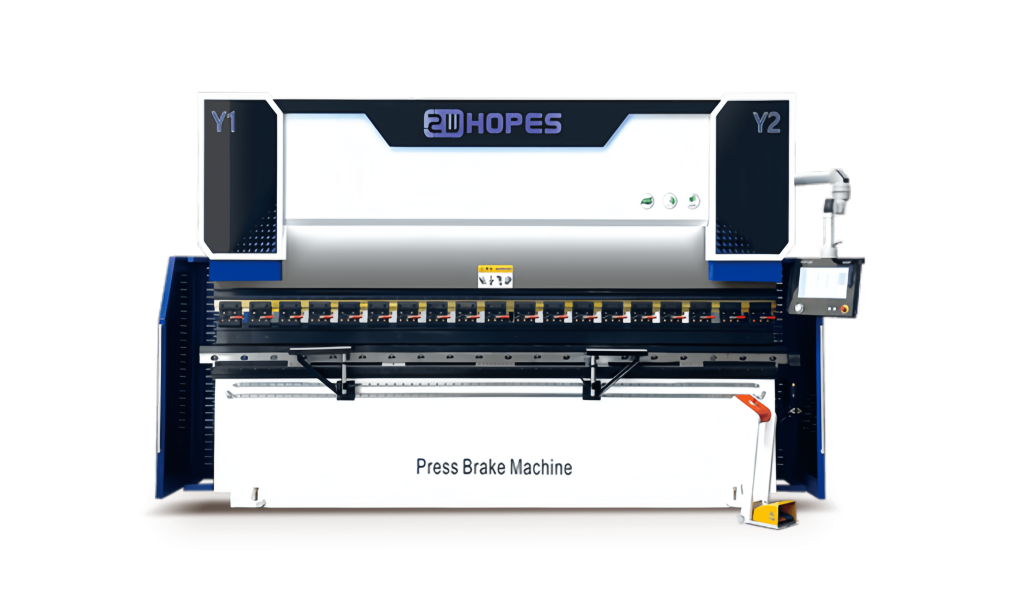
Six press brakes can stay busy for an entire shift while customer orders still wait for complete, acceptable sets of parts. That creates an uncomfortable question: if the machines were occupied, where did the capacity go?
It disappeared between nominal cycles. Material moves, tool changes, first-piece checks, drawing questions, rework, and incomplete handoffs consumed time that a machine utilization report did not show. The production system was running a relay, but the investment case was timing only one runner.
This case study explains how to evaluate an automated panel bender in that environment. The central lesson is simple: machine speed creates value only when the right part families arrive with reliable inputs, the surrounding operations can keep pace, and accepted output becomes complete orders. A faster bending cycle is useful. A faster path to shipping is the result that matters.
Why Six Busy Press Brakes Still Missed High-Mix Demand
Six press brakes do not create six interchangeable production lanes. Part length, tonnage, tooling, operator capability, and geometry limit which jobs can run on which machine. In a high-mix shop, the brake qualified for a particular part family may be overloaded even when other machines have available hours.
Observed busyness also hides non-forming work. Operators retrieve tools, locate blanks, confirm orientation, call up programs, support large panels, inspect first pieces, separate finished parts, and correct earlier mistakes. These tasks may be necessary, but they do not have equal value. Only accepted parts that advance complete orders create shippable output.
A queue before bending proves congestion, not necessarily a bending constraint. Before comparing a press-brake cycle with a panel-bender cycle, the baseline must show how staffed hours became good parts, how those parts became complete orders, and where the conversion failed.
The real cycle includes the work around the bend
Nominal cycle time measures the visible forming sequence. Production time begins earlier and ends later: the correct blank must be found, its revision and orientation confirmed, tools loaded, the program retrieved or created, the first piece approved, the panel handled through each bend, and the finished part placed where the next operation can identify and consume it.
Short runs make these activities especially important. A setup that is reasonable across hundreds of identical parts can dominate a batch of three or four. Measuring only the seconds between clamp and release makes the bend look expensive and the transition look free, even when the transition consumes more staffed time than the production cycle.
Fatigue is part of the same loss mechanism. Repeated lifting, rotating, supporting, and aligning large blanks can slow production and make results less consistent late in a shift. Automation can reduce that burden, but only for parts the system can grip, recognize, orient, and form without frequent intervention. It does not solve a missing program, an ambiguous drawing, a bad blank, or an unsuitable geometry.
The useful baseline was therefore the full staffed time required to produce an accepted part under the actual product mix. It was not the press brake's best observed cycle.
The baseline metrics that exposed the lost capacity
The first correction to machine-centered thinking is good parts per staffed hour. The numerator includes accepted parts only. The denominator includes direct labor assigned to producing, inspecting, sorting, and moving work through the measured flow. In a high-mix shop, the result must be segmented by part family, material, thickness, batch size, and complexity. A plant-wide average lets easy repeat work conceal difficult jobs.
Setup time needs a strict boundary: from the last good part of one job to the first good part of the next. Tool changes, program retrieval, material staging, first-piece adjustment, correction, and approval all belong inside that interval. Stopping the clock when the machine is technically ready excludes the coordination losses an automated cell is supposed to remove.
First-pass yield asks whether a part was accepted without unplanned correction or remake. It links productivity to blank quality, programming accuracy, tooling, forming consistency, and inspection standards. Fast production with poor first-pass yield simply moves more defects toward inspection, where they consume capacity again.
WIP should be measured by location and age, not as one total pile. A growing queue before bending suggests pressure at the brakes; an aging queue after bending may identify inspection, welding, assembly, or another downstream constraint. Job completeness matters too: ten finished parts from ten different orders can keep a machine busy while leaving every order unshippable.
Lead time closes the gap between departmental performance and customer demand. Preserve timestamps for release, cutting, deburring, program readiness, arrival at bending, first and final good parts, inspection, downstream completion, and shipment. Code delays by cause, such as material, program, quality, tooling, machine conflict, inspection, or process-fit issues. If bending cycle time fell sharply tomorrow, what would stop first? That answer identifies whether a faster bender would remove the constraint or move the backlog.
The Fit Audit: Why Rejecting Unsuitable Parts Strengthened the Business Case
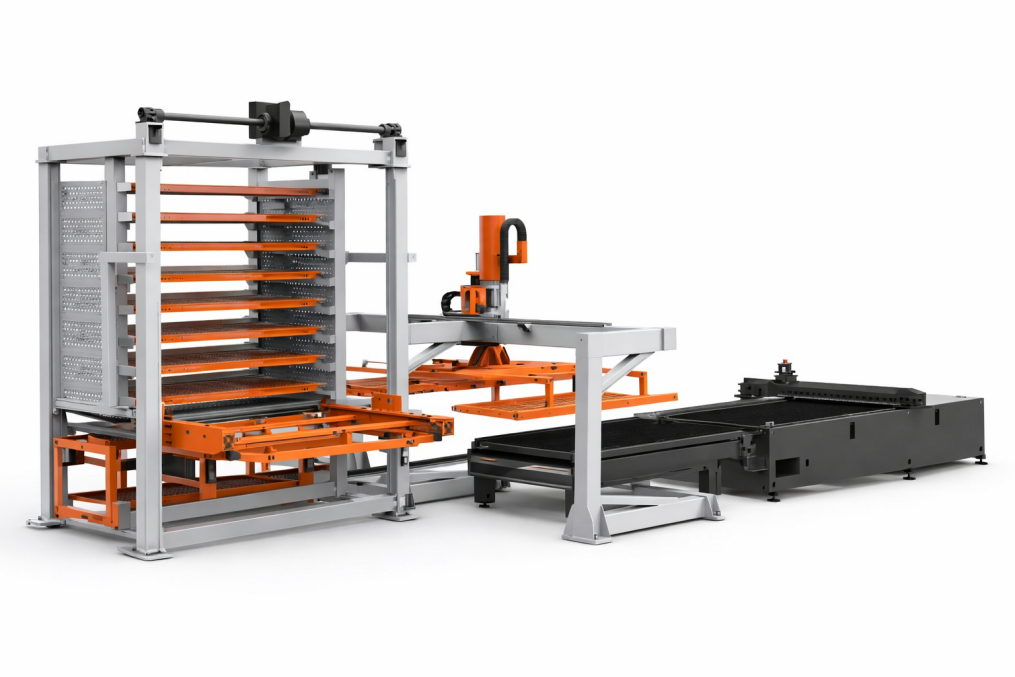
The automation decision changed when the audit stopped asking how many parts could physically enter the panel bender and started asking how many could leave it as accepted parts through a repeatable process.
One job folder may contain enclosure panels whose length and width vary while their clamping edge, perimeter-flange sequence, support method, and angle-correction logic remain stable. Another may contain brackets that look similar but require different tooling, orientations, return flanges, support arrangements, and first-piece decisions. Both may have demand. Only the first offers a clear path to dependable automated output.
Rejecting unsuitable parts did not weaken the investment case. It prevented unreliable output from being counted as automated capacity and protected the cell from becoming a development station for unstable work.
Repeatable geometry matters more than volume
A panel bender can handle a broad range of dimensions without handling an equally broad range of bending logic. Several enclosure sizes may use the same tool concept, bend sequence, support strategy, and angle-correction method. Those variants form a real automation family because one validated process can be recalled and adjusted through controlled parameters.
Volume alone does not create compatibility. A frequently ordered part remains a poor candidate if every run needs special tooling, manual repositioning, a different correction strategy, or operator judgment around a difficult feature. Repeating an unstable process produces recurring disruption rather than dependable automated capacity.
For each candidate family, the audit should map four changes across variants:
- Which tools are required?
- How does the bend sequence change?
- How are angles corrected?
- How must the workpiece be supported and rotated?
A dimensional change that leaves those decisions intact is usually manageable. A small geometry change that alters all four may be a new process, even if the drawings look nearly identical. Part-family count is therefore a poor approval metric: ten enclosure sizes governed by one forming strategy may burden the cell less than three brackets that each require a new program and first-piece method.
The practical fit envelope
Physical fit begins with panel dimensions but does not end there. The audit must examine available clamping area, minimum and maximum flange conditions, deep or closed returns, collision risks, features close to bend lines, and whether the panel can remain supported through every rotation.
Material creates another boundary. Actual thickness, grain direction, coating side, and batch-specific springback can change forming behavior even when the drawing lists the same grade and nominal gauge. A press-brake operator may compensate after seeing the first bend. An automated program needs these variables identified, measured where necessary, and incorporated into a controlled correction method.
Tolerance requirements determine whether a technically formable part is economically formable. If success depends on an operator measuring midway through the cycle and adjusting the remaining bends, the part is not a strong hands-off candidate. It needs a validated correction routine, a design or datum change, or continued routing to a press brake.
Cosmetic requirements belong in the fit decision as well. Finish-face identification, protective coating, contact points, sliding, rotation, and support all affect visible surfaces. A panel that is dimensionally correct but marked on an exposed face is not a good part.
This audit also exposes a requirement for manufacturing-definition hygiene. Revision status, finish face, measured thickness, coating side, grain direction, and batch springback validation must accompany the flat pattern and drawing. If these facts exist only in an operator's memory, the process is not defined well enough for repeatable automation.
Each part should receive one of three dispositions:
- Automated family: geometry, material behavior, tolerance, cosmetic requirements, and production data support a repeatable process.
- Conditional candidate: a defined obstacle can be removed through blank control, design standardization, or program validation.
- Press-brake route: successful forming still depends on improvisation or frequent manual intervention.
Large enclosures versus complex brackets
For application-specific equipment selection, contact ZWCNC.
A compact bracket may present the opposite economics. Short or interrupted flanges, narrow returns, nearby cutouts, restricted tool access, and repeated reorientation can force the process away from standard automated handling. Small size does not make a part easy.
Size and product labels therefore cannot serve as routing rules. Some large panels have deep forms, delicate finishes, or closed geometry outside the practical envelope. Some brackets repeat a simple channel or flange pattern and belong in the cell. Each family earns its place by preserving forming logic across releases and producing accepted parts with predictable handling and inspection.
The changeover threshold
Not every difference between parts creates a difficult changeover. A change from one suitable panel variant to another may require a validated program and new clamping positions but preserve the same tooling concept, sequence, support method, and correction strategy. This is a soft changeover.
A hard changeover introduces another tool class, a new sequence, different support, fresh springback validation, or a first-article problem requiring engineering judgment. Both changes consume time, but only the second disrupts the production model in a fundamental way.
Measure changeover from the last good part of the previous job to the first approved part of the next. Include program retrieval, tooling movement, blank staging, material verification, trial forming, correction, and inspection. For each family, compare automated preparation and setup time with press-brake setup time, then compare staffed time per accepted part and expected exception recovery.
The break-even quantity for additional automated preparation can be expressed simply:
Break-even quantity = additional preparation time / staffed time saved per accepted part.
This formula applies only when the automated process actually saves time per good part. A validated program reused across repeated releases can repay preparation that a one-time order cannot. Automatic setup wins when changes are deterministic, the manufacturing definition is complete, and demand is sufficient. A skilled press-brake operator wins when the batch is too small or too ambiguous for that preparation to pay back.
Why prototypes and exceptions stayed on press brakes
Prototypes exist to reveal what must change. That conflicts with the main economic advantage of panel-bender automation: reusing validated manufacturing logic. When geometry, material, tolerance, or mating conditions may change after the first article, programming and correction work can become obsolete before repetition repays it.
Frequent revisions create the same risk inside established products. A changed bend line may invalidate the flat pattern, sequence, collision check, support method, finish orientation, springback assumptions, or inspection plan. Sending that work automatically to the production cell turns it into a development station and exposes repeat orders to revision-driven interruptions.
Low-volume exceptions are also poor candidates when setup, validation, and recovery exceed the labor they could save. A skilled press-brake operator can form an isolated part, inspect it, adjust it, and finish the lot without creating a reusable automation package. That adaptability is a productive capability, not a failure to automate.
Exception routing should still be governed. Parts with uncertain revisions, incomplete manufacturing definitions, unresolved material behavior, unusual cosmetic risks, or expected engineering changes remain on designated press brakes until the fit audit shows that the process has stabilized. Some can later graduate through standard radii, consistent datums, clearer finish-face marking, better blank control, or geometry changes that remove handling conflicts.
Installation Was Easy; Rebuilding the Production Loop Was Not
Imagine the first repeat order after commissioning. The operator receives blanks marked revision D, while the program terminal shows revision C. One blank has a burr that prevents consistent seating, and the first formed panel misses an inspection point. Who quarantines the blanks? Who decides whether the program is obsolete? Who approves the first article? Who decides whether to correct, restart, or reroute the order?
Machine installation answers none of these questions. A dependable production loop assigns those decisions before the job reaches the cell.
Manufacturing engineering owns program validation and family rules. Cutting owns blank conformance. Document control ensures that the flat pattern, program, drawing, and inspection plan share the released revision. Quality approves the first article. The cell lead can stop production and initiate recovery. Maintenance owns equipment faults, while production control decides when an interrupted order moves to a designated press brake.
The panel bender can repeat a validated process with little operator variation, but repetition is not judgment. It cannot reconcile conflicting revisions, infer grain direction, decide that an edge defect is harmless, or determine whether a changed flange invalidates the existing sequence. Explicit controls turn a functioning machine into a dependable production system.
Standardize family rules before offline programming
Two programs can both produce acceptable panels while creating different operating risks. The preferred sequence preserves stable rotation, cosmetic surfaces, support, and accumulated-error control across the family.
Before offline programming, define each family's datum strategy, bend order, blank orientation, material range, tool concept, correction method, inspection points, and finish-face and grain rules. Geometry that conflicts with reliable rotation, opening height, or support should remain outside the family instead of becoming a hidden exception.
Offline programming is controlled process preparation, not a production shortcut. A file becomes a released program only when it is paired with the correct revision, flat pattern, material specification, orientation requirements, and inspection plan. Simulation checks motion and collisions; first-article approval proves actual material, blank geometry, springback, and measurement. Any revision affecting those conditions sends the package back to validation.
Blank quality is part of automation quality
The cell locates and manipulates blanks according to program assumptions. Edge variance can change a datum; burrs can change seating; grain direction can change springback even when grade and thickness appear correct. A manual operator may detect variation through handling or a trial bend, while automation repeats unstable inputs with impressive consistency.
Blank documentation should identify revision, material and thickness, finish face, grain orientation, critical edge and notch dimensions, and deburring requirements. Inspection must confirm locating and handling features, not only easy-to-measure dimensions. Mixed revisions or uncertain orientations require containment before bending.
Burr effects can appear intermittent: one blank seats while the next drags or tilts. That pattern is easily mistaken for a machine fault. The corrective action belongs at cutting or deburring, not in a released bend program that would corrupt conforming lots.
Give every exception a named owner
Responsibility is useful only when each decision has one accountable function. Manufacturing engineering owns bend sequence, program validation, family rules, and technical release. Document control prevents mismatched drawings, flat patterns, programs, and inspection plans from reaching production. Cutting owns blank conformity; quality owns first-article acceptance and suspect-part disposition; maintenance owns equipment faults after the approved initial check.
The cell lead needs authority to stop, contain, and escalate. A short recovery sequence protects the order:
- Stop the process.
- Segregate affected blanks and formed parts.
- Confirm program, drawing, material, and revision identity.
- Classify the failure as equipment, program, blank, handling, or documentation related.
- Send it to the named owner and decide whether the order resumes, receives controlled rework, or moves to the press-brake route.
The event must close with a correction to the program, blank standard, work instruction, or maintenance condition; otherwise the cell accumulates tribal knowledge instead of process control.
The labor shift and the stabilization period
One reported challenge involved supplying roughly 400 to 600 panels during an eight-hour shift while offloading, sequencing, and sorting required minimal handling. Labor has not disappeared; it has moved toward verifying jobs, confirming blank identity, supervising first articles, responding to approved faults, inspecting output, and keeping parts sequenced for downstream work.
Experienced press-brake knowledge should be captured in programming, validation, troubleshooting, and training. Staffing must include programming, staging, inspection, sorting, exception recovery, and downstream handoff, not only the person at the machine. Payback should separate installation, commissioning, and stabilization, then calculate mature throughput from accepted order-completing parts after availability, changeovers, yield, starvation, blockage, and recovery losses.
The Early Bottlenecks: Why Faster Bending Did Not Initially Create More Shipments
The early production pattern was encouraging but misleading. The panel bender consumed staged blanks quickly, caught the available queue, and then waited for cutting, deburring, or material handling. When another batch arrived, it produced formed panels that accumulated before inspection. Bending accelerated first into starvation and then into blockage, without moving an order to the shipping dock.
A formed panel counted as local production, but not as order completion until inspection accepted it and downstream operations consumed it. If one component of a kit remained at deburring, under quality review, or behind an expedited custom job, the completed panels were simply WIP.
Cutting, deburring, and handling had to feed the approved family queue
Cutting often releases work according to sheet utilization, material availability, efficiency, or urgency. Those priorities can produce many blanks without producing the complete sequence the panel bender needs; one missing blank can hold an order while unrelated material fills the aisle.
Deburring and material handling add instability when burrs, mixed revisions, uncertain orientation, obscured labels, or lost sequence interrupt loading and sensing. Readiness must be measured at the point of use: how many correct, clean, revision-matched blanks are available in the required order. A larger buffer can conceal these failures, so the cell needs controlled eligible work rather than a warehouse of uncertain parts.
Faster output can overload inspection
Inspection was designed around the previous bending rate and defect pattern. When the new cell shortened processing time, gauges, inspectors, first-article procedures, and response rules did not automatically change. Finished panels waited for acceptance while new programs, material response, and blank variation were still being proved.
The durable response is family-based control: define first-article characteristics, periodic checks, sampling reductions, and stop conditions. Recurring blank-related defects must return to cutting or deburring rather than become repeated corrections at the bender.
Inspection is a capacity-constrained operation in the order route, not an administrative step after production. Accepted output must leave as predictably as blanks enter.
Custom orders disrupt the standardized queue
An urgent custom order can tempt the shop to interrupt the family queue and edit a program at the machine. The physical changeover may be short, but the operator still must confirm the drawing and revision, assess fit, prove the sequence, obtain first-article approval, and recover the interrupted job.
Without revision control, the next repeat order may use an unknown version. Custom work also fragments cutting, inspection, material handling, and downstream sequencing. A full backlog does not guarantee productive demand when it is dominated by custom work.
Urgent work still needs a route. Sending every exception through the fastest machine imposes its uncertainty on standard work waiting behind it. Use a designated press-brake or development route, or reserve validation windows that do not fragment the primary queue.
Corrective actions that restored flow
The shop introduced a readiness gate before jobs entered the automated queue. A job qualified only when its program was approved, drawing and blank revisions matched, material and grain requirements were defined, blanks met edge and dimensional standards, gauges were available, and downstream capacity could receive the output.
Buffer rules connected cutting and deburring to actual cell consumption. The buffer absorbed normal variation but exposed recurring quality and sequencing failures; replenishment followed family priority and complete-order needs rather than producing more uncertain work.
Offline validation kept new and revised programs away from production time. Shop-floor corrections followed controlled approval and updated the master program. Unproven custom parts, questionable blanks, engineering changes, and urgent one-offs used a separate route until they had a stable definition, repeatable program, acceptable blank specification, and control plan.
These controls allowed the cell to remain supplied without uncontrolled inventory, allowed inspection to accept output without becoming a holding area, and allowed custom demand to be served without dismantling the standardized queue.
The Stabilized Scorecard: What Changed and What Remains Unproved
The available Manufacturer A case record reports that replacing a conventional press brake reduced mold-setup time and processing time after bending had become a delivery bottleneck. That is a real local improvement. It does not quantify additional shipped orders, total labor per accepted part, quality stability, or whether the queue moved to another operation.
The evidence boundary should be stated clearly:
| Dimension | Defensible finding | Still required before claiming a system-level gain |
|---|---|---|
| Cycle and setup | Setup and processing time improved versus manual bending | Sustained performance under normal mix, changeovers, interruptions, and recovery |
| Labor | No quantified result available | Total staffed hours across programming, staging, bending, inspection, handling, and rework |
| Quality | No quantified result available | First-piece acceptance, first-pass yield, scrap, rework, and shift-to-shift consistency |
| Flow | No quantified result available | Good parts per staffed hour, WIP, lead time, on-time completion, and shipped output |
| Constraint movement | Bending had been a bottleneck before replacement | The operation that limited shipments after bending capacity increased |
The correct conclusion is narrower than "automation increased throughput." The case shows that the panel bender performed part of the work faster. Shipment improvement remains unquantified until the other scorecard lines are closed.
Compare like with like
Baseline and stabilized periods must contain comparable eligible families, batch sizes, materials, priorities, shift coverage, and downstream routes. A panel bender may receive only stable work while a press brake historically handled stable panels plus difficult brackets; comparing those totals would credit the machine for complexity removed by routing policy.
Normalize demand into released, ready-to-run, and completed work. The review window should include ordinary changeovers, shift transitions, planned maintenance, first-article checks, minor stops, and representative exceptions. The result belongs to normal production days, not the best demonstration cycle.
Measure four separate clocks
Machine cycle time is the start-to-finish automated bend sequence. Internal setup time is the production time consumed while the machine cannot run another job. First-accepted-part time runs from changeover to quality approval. Order processing time runs from job start to the final accepted part.
This separation shows whether the gain came from faster motion, shorter setup, faster approval, or fewer handoff losses. It also prevents program retrieval, material searches, first-piece corrections, and recovery events from disappearing inside a favorable machine-cycle number.
Labor and quality results
The relevant labor denominator is accepted output and includes programming, staging, attendance, inspection, handling, maintenance, supervision, and rework. If former press-brake operators support several processes, the shop may produce more with the same headcount; that is a capacity gain, not payroll savings unless overtime, hiring, or contract labor falls.
Report first-piece acceptance, first-pass yield, scrap, and rework by family, material, operator coverage, and shift. Automation can repeat a good process consistently, but it can also repeat a wrong program or defective blank. Link defects to delayed orders because one rejected component can hold an otherwise complete kit while a replacement is processed.
Flow and the new constraint
Good parts per staffed hour, WIP, order lead time, and shipped output are the decisive measures. Rising bent-piece counts with flat accepted output indicate quality or inspection losses; rising accepted output with growing downstream WIP indicates blockage after bending. The stabilized review must name the new constraint, whether upstream or downstream, and quantify its effect on complete orders.
ECI Solutions reports that Leer raised utilization on one panel bender from 20% to 55% and on its main line from 40% to 65% after improving production visibility. The important point is not that these percentages transfer to another shop. It is that scheduling and flow changed the value of equipment already installed. Utilization is a production-system result, not a machine specification.
The Investment Decision: Buy, Redesign First, or Keep a Hybrid Process
Capital approval should pass three separate tests:
- Is there enough validated compatible demand to recover the investment?
- Can surrounding operations feed and receive the planned good-output rate?
- Is there a protected route for work that does not fit the automated process?
Pass all three and buy. Pass the demand test but fail the readiness test and redesign first. Maintain a hybrid process when a stable automated core exists but recurring exceptions would destabilize it.
Stress-test the payback
Eligible-part share must be measured by production load, not part-number count. Calculate annual hours represented by validated compatible demand, including programming, setup, first-article approval, planned interruptions, and recovery work.
The basic threshold is:
Break-even productive hours = annual fixed ownership cost / net cash benefit per productive hour.
Fixed ownership cost includes annualized equipment and installation, financing, software commitments, and other costs that continue whether the machine runs or not. Net benefit per productive hour includes contribution from additional shipped orders and verified avoidable costs, less variable operating and support expenses. The denominator must use accepted order-completing output, not theoretical strokes or raw bent pieces.
Labor savings become financial savings only when overtime, hiring, or contract labor falls, or when capacity is reassigned to additional contribution. Include downside cases for losing a compatible family, shifting demand, a longer learning period, higher maintenance downtime, or insufficient downstream capacity. Financing changes cash timing, not operating economics.
Include the full project boundary
The complete investment includes software, post-processors, programming, tooling, power, maintenance, service, training, rigging, guarding, inspection equipment, and stabilization labor. Better blank tolerances, labeling, revision control, deburring, material identification, and production visibility also belong in the project when the cell depends on them. One-time and recurring costs should be separated, and workflow redesign should be evaluated as its own option.
Before trusting a vendor model, collect family demand and trial-based eligibility, actual programming and setup time, yield, downtime by cause, support labor, adjacent-process capacity, WIP, lead time, shipped output, maintenance terms, and demand scenarios. Every vendor assumption should be traceable to observed data or clearly labeled.
Buy now when the production relay is ready
Buying now is justified when a stable core of compatible families clears the economic threshold in the downside case and has enough proven load without speculative future orders. Cutting and deburring must provide controlled blanks, programming must keep validated work ready, inspection must approve first articles, and downstream operations must consume accepted panels without growing WIP. The extra capacity must create shipments, avoid a real cost, or protect a measurable constraint.
Redesign first when readiness losses would starve the cell
Redesign first when compatible demand is sufficient but programs, questionable blanks, revision mismatches, unstable release priorities, or downstream queues prevent productive use. Target the dominant loss with family scheduling, offline validation, blank specifications, revision control, or controlled buffers.
After these changes, rerun the representative production test. Redesign is complete only when readiness and flow losses fall far enough for the downside financial case to clear the company's hurdle. A cleaner workflow is valuable, but it is not by itself permission to buy.
Keep a hybrid route for structural exceptions
A hybrid cell is appropriate when recurring compatible families support automation but prototypes, low-volume specials, unusual geometries, unstable revisions, rework, or urgent engineering changes remain structurally incompatible. Press brakes become a controlled exception route. Measure exception burden by disruption, not piece count: a short custom job may consume more automated capacity in programming, inspection, troubleshooting, and schedule recovery than its bend time suggests.
Stable families with validated blanks and repeat demand belong on the panel bender. Unproven parts remain on the press brake until engineering and trial data establish repeatability. Rework and urgent revisions should default to the route that contains their disruption. As exception families stabilize, they can be requalified.
Conclusion: Approve Speed Only When It Reaches the Shipping Dock
This case supports a decision method, not a transferable payback result. Machine speed, utilization, labor, and throughput depend on compatible demand, setup complexity, blank control, programming coverage, downstream capacity, and exception frequency.
The investment should be approved only when validated compatible demand clears break-even under a downside scenario, adjacent processes can sustain the required good-output rate without growing queues, and incompatible work has a separate route. If demand is sufficient but flow is not ready, redesign first. If a stable automated core exists alongside unavoidable exceptions, keep a hybrid process. If compatible demand cannot clear break-even after improvement, retain the conventional route until the mix changes.
The capital gate belongs at the shipping dock. A panel bender is a production asset when it turns clean, identified, validated blanks into accepted, order-completing parts with predictable labor and flow. Its speed matters because it can carry the production relay farther. The business case is proven only when that relay reaches shipment.
Apply this guidance to your production
Share your material, thickness, part drawing, tolerance, and target output with the ZWCNC engineering team for an application-specific equipment review.
More news, insights, and updates from ZWCNC.
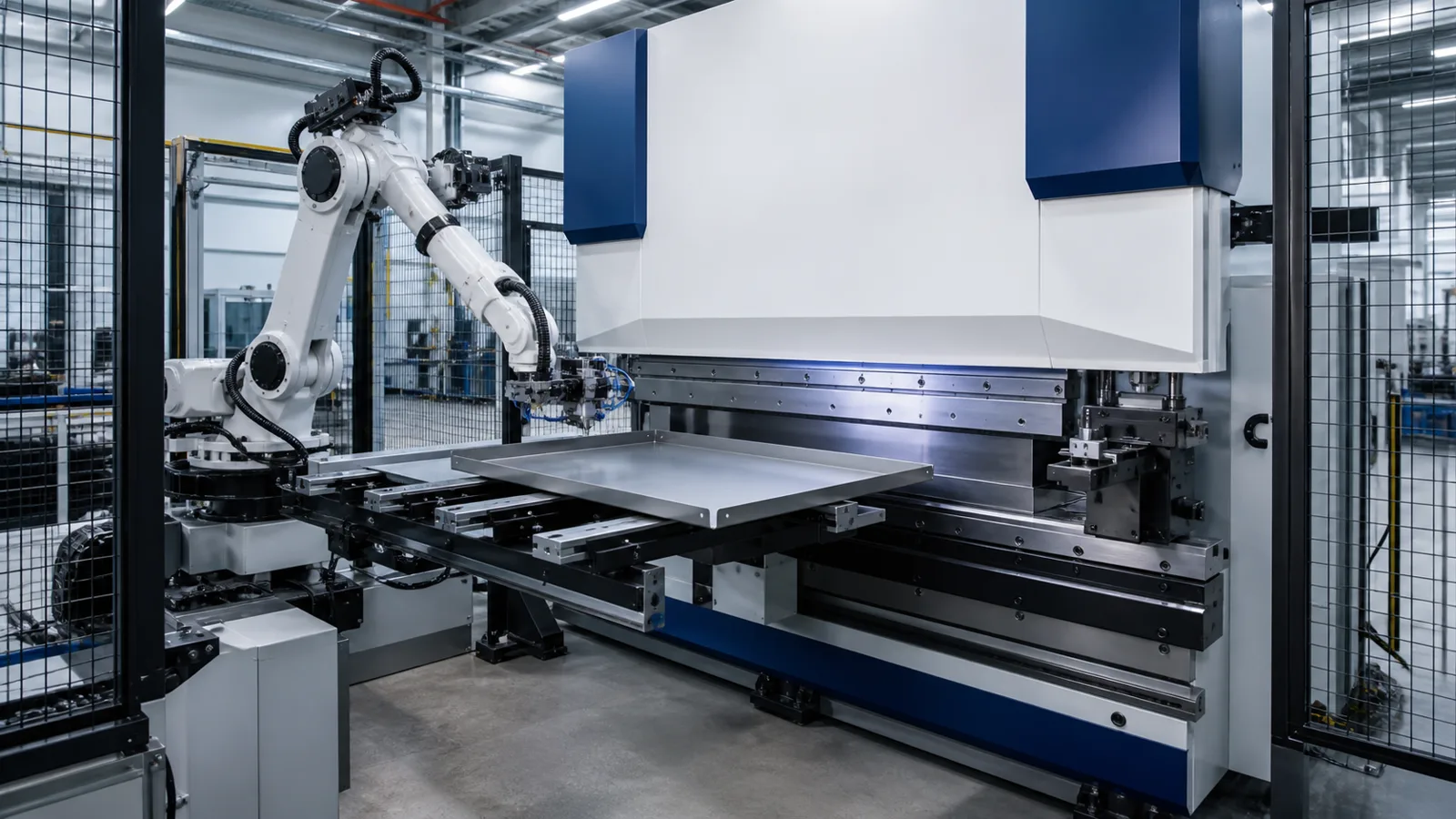
Panel Bender Advantages: Automation, Labor Savings, and Production Value
Panel Bender and Laser Cutting Integration for Higher Throughput
Panel Bender Productivity: How to Increase Good Parts per Shift
Panel Bender ROI: Calculate Payback from Real Production Data
9 Panel Bender Advantages: Automation, ROI, and Best-Fit Jobs