Licensed editorial adaptation
Adapted and localized by the ZWCNC Editorial Team from licensed technical material. The source record is published for traceability.
Technical boundary: confirm machine-specific capacity, configuration and safety requirements against the current quotation, manual and application review.
Imagine a panel bender completing setup in four minutes while the same job takes twelve minutes on a press brake. The demonstration ends with an impressive number. Back at the shop, however, the laser may be late with blanks, half the order may contain incompatible geometries, and the repeatable parts may occupy only two hours of the weekly schedule.
The machine won the timed comparison. The production system gained almost nothing.
That is the central issue for any job shop evaluating a panel bender. A panel bender can reduce setup, handling, and operator attendance dramatically, but only when enough suitable work can enter the machine's lane and the rest of the shop can turn its output into shipped orders. The right question is not whether a panel bender is faster. It is whether it will create measurable business value for the shop's actual mix.
Define the Production Problem First
Reported comparisons often place panel-bender setup around three to five minutes, versus roughly ten to fifteen minutes on a conventional press brake. That difference can matter. Yet a setup advantage creates value only when the released capacity can be converted into accepted parts, shorter lead times, lower labor cost, or additional shipments.
Start by identifying the primary problem the investment is meant to solve:
- Labor: excessive operator time spent on setup, handling, correction, or inspection.
- Consistency: dimensional variation caused by manual sequencing, handling, or repeated adjustment.
- Lead time: orders spending too long in queues across the routing network.
- Press-brake capacity: recurring compatible work competing with deep boxes, unusual forms, urgent jobs, and prototypes.
These objectives overlap, but they are not interchangeable. A labor case needs operator-hour data by part family. A consistency case needs first-pass acceptance, correction, and rework records. A lead-time case needs order-level queue and elapsed-time data. A capacity case needs proof that the released brake time will serve waiting work rather than create idle capacity elsewhere.
Choose one primary constraint before comparing machines. Otherwise, every improvement will look attractive and none will have a clear acceptance test.
Count recurring production traffic, not impressive demonstration parts
The useful question is not, “Which of our parts can this machine bend?” It is, “Which compatible parts return often enough to occupy it?” A demonstration naturally favors a clean cabinet-like panel with accessible edges and a repeatable sequence. The shop schedule may contain one such enclosure followed by a deep box, a heavy bracket, a short-run assembly, and an emergency repair.
Review several months of actual production and group parts by shared routing characteristics: material, thickness, bend length, flange or box depth, handling difficulty, setup pattern, and downstream destination. Then calculate how many hours those families represent under normal demand and due dates.
Lot size alone can mislead. A distribution-board application reportedly used lots of only one to five units and still achieved roughly twice the productivity with less worker burden. The parts belonged to a narrow, repeatable thin-gauge family. Low quantity did not defeat automation because the geometry, programming logic, and handling method repeated.
Conversely, a large prototype batch may be a poor candidate if every part requires new programming, collision review, first-piece correction, and inspection. Repeat frequency, not just quantity, helps amortize process development.
Set a measurable target
Define the result before requesting quotations. For example: move twenty hours of recurring cabinet work off the press brakes each week, reduce operator touch time per accepted kit by 40 percent, or improve first-pass acceptance from 92 to 98 percent.
Each target must connect to shipped work. Saved minutes have no economic value if they remain trapped as idle time or unfinished inventory. Ask whether the target workload is genuinely available, whether blanks can arrive reliably, whether inspection can release parts, and whether downstream operations can absorb the output.
Floor space, maintenance, software, training, and specialization raise the required gain. A press brake can accept a broad mix; a panel bender creates a selective route. That flexibility premium must be repaid by a stable stream of qualified work.
Geometry Defines the Economic Lane
Two blanks may have the same material and thickness and both fit within the machine's advertised bend length. One may become a broad cabinet panel with accessible perimeter bends. The other may become a deep enclosure with an inward return and a cutout close to a bend line. The first can often remain under machine control through the full sequence. The second may collide with the tooling, lose its clamping reference, or require manual rescue.
The flat blanks fit the specification. Only one finished shape fits the process.
Compatibility therefore means more than making an individual bend. The machine must be able to clamp, gauge, rotate, bend, and release the complete part in the required sequence without exceptional intervention.
Where panel benders are strongest
For application-specific equipment selection, contact ZWCNC.
- bends are concentrated along accessible outside edges;
- the blank can remain supported while the machine repositions it;
- the part can be rotated without repeated manual lifting and regauging;
- the same handling and bending logic applies across a family;
- the final parts can often be stacked or kitted for the next operation.
The benefit comes less from one rapid blade movement than from removing repeated pickup, alignment, support, rotation, and turnover events. A large panel with only one simple bend may offer little improvement once loading and unloading are included. The strongest candidates combine difficult manual handling with multiple accessible bends completed in one controlled sequence.
Where clearance limits appear
Deep boxes, short or narrow flanges, internal returns, nearby cutouts, and complex bend sequences expose the practical limits of panel bending. A wall formed early in the sequence may occupy the space needed by a later tool movement. Reversing the order may move the collision to another side.
Short flanges can leave too little material for reliable clamping or forming. Narrow areas around notches and corner reliefs deserve the same scrutiny even when the overall flange looks adequate. Internal returns can curl toward the tooling or the part's own formed walls. Holes, slots, louvers, and large cutouts near a bend can remove support from the clamping zone or interfere with the gauging reference.
Review complex parts as three-dimensional sequences, not as a collection of individually possible bends. Simulation can identify likely collisions and unreachable orientations, but a production trial must confirm clamping, feature clearance, extraction, dimensional performance, and surface condition. If the operator must pause the cycle, move the part to a brake, or perform repeated manual corrections, the job has not fully entered the panel-bending lane.
Build a practical processing envelope
Published limits describe outer boundaries. A job shop needs a practical envelope: the combinations of dimensions, materials, features, tolerances, and surface requirements that run repeatedly under normal conditions.
Record at least the following for each candidate family:
- bend length and minimum and maximum flange height;
- finished box depth and internal clearance;
- material, grade, thickness, and expected tensile variation;
- required inside radius and springback tolerance;
- critical dimensional and angular tolerances;
- surface class, protective film, and marking sensitivity;
- cutout proximity, corner relief, and blank flatness;
- normal blank size, squareness, edge quality, and burr condition.
Compare that complete record with the proposed machine configuration, tooling, and handling method. Do not compare a family with one maximum-capacity number such as nominal bend length. The usable envelope is the region where all requirements coexist without extraordinary intervention.
Special blades, segmented tooling, protective surfaces, or dedicated clamping arrangements may expand the envelope. They also add design, purchase, storage, installation, verification, maintenance, and scheduling work. Classify candidate jobs as standard-configuration, special-tooling, or not reliably routable. Only the first group receives the full standard setup and automation benefit. The second group must repay its added complexity through recurring demand.
Control blank quality before blaming the forming process
Automatic gauging depends on predictable inputs. Blank length and width, squareness, flatness, edge condition, corner reliefs, feature locations, burrs, residual tabs, and protective film all affect positioning and handling.
A skilled press-brake operator may mask some variation by checking the blank, nudging its position, changing the sequence, or correcting the bend after the first piece. A panel bender repeats its programmed datum. It can compensate only for variables its sensors and software are designed to measure. It cannot repair an incorrectly cut hole or restore a warped reference edge.
Qualification should use representative blanks from different nests, material lots, and ordinary cutting conditions. Measure reference edges, critical feature locations, bend positions, angles, and finished dimensions. When results drift, determine whether the cause lies in bending, material behavior, or blank quality before assigning savings to the new machine.
High Mix Works Only When It Contains Repeatable Families
Five part numbers in an enclosure order may look like extreme high mix: left side, right side, top, bottom, and back, each in a quantity of one. If they belong to a recurring cabinet family, the machine may retrieve approved programs, apply known material corrections, and form the complete kit in sequence.
Five unrelated prototypes with the same quantities create a different workload. Each one requires interpretation, programming, prove-out, measurement, and correction. The machine may bend each part quickly after approval, but its real bottleneck is engineering uncertainty.
Part-number count does not measure randomness. A shop can process many numbers while repeatedly applying the same geometry rules, tooling strategy, datum method, material data, and inspection plan.
Separate the three clocks
For each candidate family, measure three distinct clocks:
- Physical preparation: machine changeover, tooling, workholding, material staging, and loading setup.
- Programming: model import, datum selection, sequence development, collision review, and material compensation.
- Prove-out: first cycle, measurement, correction, approval, and release of the accepted process.
Automatic tool adjustment can shorten the first clock. Offline programming can protect machine availability during the second. Neither makes unfamiliar geometry free. If programming and prove-out dominate, the physical setup advantage will not materially improve shipped output.
A published comparison illustrates this point. For thirty prototype chassis in 2 mm stainless steel, the reported cycle was 55 seconds per part on a panel bender and 48 seconds on a press brake. This does not establish a universal speed ranking. It shows that prototype status and unfamiliar process requirements can outweigh machine-category advantages.
Make offline programming reusable
Offline programming supports small batches when the shop treats approved processes as controlled production assets. A reusable job record should connect the program with the correct drawing revision, blank dimensions, material and thickness, tooling configuration, compensation data, surface requirements, and inspection results.
Revision control is critical. Duplicate files, undocumented material substitutions, or drawing changes that do not trigger program review can make a large program library unsafe. The operator then has to decide whether the stored process is still valid, reintroducing the delay that offline programming was intended to remove.
For new parts, track programming and prove-out as engineering work. For repeat parts, track retrieval, revision verification, changeover, first-piece production, and approval. The gap between these two paths shows how much the investment depends on genuinely reusable families.
First-piece time determines whether one-piece flow is practical
Steady-state cycle time describes the second, tenth, or hundredth part. A one-piece order may never reach that state. Its economics depend on the path to the first accepted part.
Start the clock when the released file and approved blank become available. Include program retrieval or creation, revision confirmation, material staging, setup, cautious first cycling, inspection, correction, and acceptance. Ask whether the first blank routinely becomes a conforming shipment or becomes a test piece.
Known families with controlled blanks and validated programs can make single-piece flow practical. Unfamiliar parts that require iterative correction may still run quickly after approval, but that speed arrives too late to rescue a quantity-of-one order.
Compare Against the Best Press-Brake Route You Could Build
In simple-part trials, a panel bender has been reported to produce five parts for every one produced on a conventional press brake. Against an automated press-brake setup, the relationship may be closer to two or three to one. The panel bender may remain faster, but much of the apparent advantage disappears when the comparison includes offline programming, automated tool changing, bend guidance, lifting assistance, or robotic handling on the brake.
The valid comparison is lane against lane: the panel-bender route, a modernized press-brake route, and, where justified, a robotic press-brake cell.
Find the actual source of current brake time
Observe a current brake job from program release through the first accepted part. Break elapsed time into tooling delay, programming delay, handling delay, decision delay, correction delay, and unavoidable forming time.
This separation matters because different improvements address different causes. Staged tooling may remove tool searching. Offline programming may remove control-side programming. A support device may reduce lifting and manipulation. Bend guidance may reduce operator-dependent decisions. A panel bender can address several categories at once, but buying a new forming process to solve a disorganized tool crib is poor diagnosis.
Use the same boundaries for both routes. Include engineering, tool preparation, loading, manipulation, first-piece inspection, corrections, unloading, and any second route required to finish the part. Comparing a fully prepared press-brake cycle with an automatically prepared panel-bender cycle produces a distorted result.
Test what a modernized brake can capture
Offline programming, automatic tool changing, bend guidance, and lifting assistance can transform a press brake while preserving much of its geometric range. Reusable family programs improve repeat work. Tool management reduces changeover. Guidance reduces interpretation at the control. Lifting assistance reduces the labor burden of large blanks.
These upgrades do not eliminate every flip, rotation, or clearance issue. A panel bender may still have a structural advantage when a compatible part requires many bends around several sides and can remain under one integrated manipulation system.
Compare representative jobs on four measures: time to the first accepted part, direct labor attendance, accepted output over the scheduled window, and exceptions requiring another route. If the upgraded brake approaches the panel bender on the first three while accepting substantially more of the portfolio, flexibility may be worth the remaining speed gap.
Consider robotic press-brake automation for broader geometry
A robotic press brake can handle parts that exceed the panel bender's practical envelope but still arrive as stable families with consistent blanks, known sequences, and predictable gripping surfaces. The robot can load, present, reorient, and unload the workpiece while the press brake retains its broader tooling and access options.
The tradeoff is integration complexity. New orientations, grip conditions, tool changes, and collision-safe movements require engineering. Irregular parts, unstable workpieces, and frequent unproven revisions can turn nominal flexibility into a large support burden.
Measure accepted parts over a scheduled period, including blank presentation, recovery, and intervention. A robot waiting for blanks or stopping because a formed edge interferes with the gripper is not productive merely because no operator stands inside the cell.
Preserve press brakes for the work that needs them
Deep boxes, irregular profiles, complex return flanges, difficult internal features, unusual sequences, and low-frequency jobs often need the direct tool access and configurable setup of a press brake. Such work may be slower on the brake, but building and validating an automated panel-bending route would consume more effort than the order can repay.
A complementary strategy gives each machine a defined role: panel bender for recurring compatible families, press brake for flexible or exceptional work, and robotic brake automation for repeatable families that are too broad geometrically for panel bending.
Replacement requires a stronger case. The panel-bender-qualified portfolio must provide enough schedulable hours across the year, exceptions must be rare or economically handled elsewhere, and the remaining brakes must absorb prototypes, revisions, repairs, and urgent work without creating a new queue.
Prove That Faster Bending Becomes More Shipments
In one reported job shop, operators spent almost half their press-brake-area time on setup. Tool changes, program entry, first-part checks, and adjustments consumed about an hour per job. Process improvements reduced setup to roughly fifteen minutes, after which forming stopped being the bottleneck.
The lesson is simple: a faster machine can attack a visible symptom while leaving the real constraint untouched.
Check the complete route
Trace representative families from available material through cutting, deburring, forming, inspection, welding, finishing, and assembly. At each operation, compare required hours with demonstrated available hours. Include setups, first-piece approval, material shortages, maintenance, ordinary interruptions, and downstream queues.
Bending is a credible constraint when qualified parts wait before it, the cell can remain fed, and downstream operations have capacity to absorb additional accepted output. If the bender will regularly wait for blanks or inspection release, or if one missing component holds an assembly kit, extra forming speed will mainly increase idle time or incomplete work in process.
Cutting deserves special attention. Confirm that it can repeatedly supply the dimensions, squareness, flatness, edge condition, material specification, and presentation orientation assumed by the bending program. Inspection must also release first parts fast enough to protect the schedule. Measure time from job release to accepted downstream quantity, not only time from first bend to last bend.
Measure labor and material handling honestly
The machine cycle excludes many labor activities. Depending on the configuration, an operator may still separate blanks, confirm orientation, load the work envelope, unload parts, inspect them, stack them, replenish material, and recover faults.
Measure labor from material arrival at the cell until an accepted part leaves it. Separate loading, unloading, inspection, programming, changeover, replenishment, fault recovery, and waiting. Report labor minutes per accepted part or completed kit.
Manual, semi-automatic, and fully automatic loading create different economics. Full automation reduces attendance only when stacks separate reliably, completed work has a defined destination, containers are suitable, and interruptions do not demand constant recovery. Large panels may still require lifting equipment and a safe unloading method even when the machine controls them during bending.
Map the physical route as well as the digital routing. Include staging, forklift or crane calls, pallet changes, protective handling, label application, searches for missing components, container return, and the destination of completed stacks. Randomly stacked speed can create sorting and handling later. The best flow often sends usable quantities directly to the next operation.
Plan for skill, support, and downtime concentration
Automation shifts skill from repeated forming decisions toward programming, blank control, troubleshooting, revision management, and process supervision. Build a skill matrix for normal production, new-part introduction, changeover, first-piece approval, material deviation, software interruption, and mechanical fault. Assign a trained primary and backup for each state.
Include programming, maintenance, recovery, and support hours in the labor model. One expert can make a demonstration cell look successful while leaving production vulnerable when that person is absent.
Also account for guarding, power, floor layout, software interfaces, preventive maintenance, spare parts, service response, and backup routing. Automation can reduce labor while concentrating downtime: one machine failure may interrupt the preferred route for an entire part portfolio. A credible plan preserves the ability to reroute urgent work to a press brake.
Make Vendors Prove the Fit with a Representative Run-Off
The run-off should use actual released drawings, normal blanks, real tolerances, normal batch quantities, and the staffing model the shop plans to use. Select a small but deliberate cross-section:
- A recurring enclosure or cabinet family expected to suit the panel bender.
- A borderline part with a difficult return, internal flange, short feature, or surface requirement.
- A frequent small-batch job that tests programming and first-piece time.
- A heavy, deep, irregular, or otherwise known press-brake holdout.
The final category is a negative control. It establishes the routing boundary and tests whether the vendor describes limitations honestly. A panel bender can be a strong investment without replacing the flexible press brake.
Define acceptance before programming begins. A part passes only when it meets the drawing, survives the proposed handling method, reaches the next operation in usable condition, and improves the route's measured labor and elapsed time.
Start the clock at program creation or job release, not at the first machine movement. For a new part, record model import, datum selection, simulation, programming, setup, loading, first cycle, inspection, correction, and approval. For a repeat part, record program retrieval, revision verification, changeover, material staging, first-piece production, and approval.
Vendor preparation may be part of the run-off, but it must remain visible. Record who performed each task, how long it took, what information was missing, and whether the shop's own staff could repeat the process. A vendor expert's hidden application-engineering time cannot be treated as zero-cost production labor.
For each family, record time to first accepted piece, changeover, labor by role, operator touch time, accepted throughput, scrap, rework, dimensional consistency, handling performance, and downstream fit-up. Keep raw machine cycle time separate from accepted parts per total elapsed hour.
Include operators, programmers, maintenance staff, inspectors, material handlers, welders, and assemblers in the evaluation. They will reveal problems a cycle-time demonstration can hide: awkward loading, blocked stacks, difficult recovery, revision confusion, poor fit-up, and downstream container or fixture issues.
Classify each tested family as passed, conditionally passed, or retained on another route. A conditional pass must name its control, cost, owner, and schedule. Unfunded conditions do not belong in the available workload.
Base the Decision on Routable Hours and Risk-Adjusted Payback
Suppose compatible families consume 2,000 hours a year on the current bending route but only 700 hours on the panel bender. The investment case may claim 1,300 hours of improvement, but the new machine receives only 700 hours of traffic. Those figures describe different things: hours displaced versus hours occupying the asset.
Released hours also do not automatically become cash savings. Some may eliminate overtime, some may fill a vacancy, and some may merely create idle capacity. The business case needs two ledgers: qualified workload that can enter the panel-bender lane, and financial value that survives after released capacity is traced to a real outcome.
Calculate qualified annual machine hours
Use only families accepted by the run-off. Excluded families receive zero panel-bender hours. Conditionally accepted families enter the model only after their required blank control, inspection, handling equipment, software work, training, or downstream capacity has been funded and assigned.
For each family, calculate:
Annual family hours = annual runs x setup hours per run + accepted annual quantity x elapsed machine hours per accepted part
Elapsed time should include normal loading, unloading, inspection interruptions, stack changes, and expected recovery. Setup must reflect the actual release pattern. A family run twelve times consumes more preparation time than the same annual quantity released twice.
Build a separate figure for current-route hours removed. It may include more manual handling, correction, and changeover than the panel-bender route. Do not treat every eliminated brake hour as one hour of panel-bender utilization or one paid labor-hour saved.
Then test the schedule. Annual demand may look sufficient while due-date conflicts, shared laser capacity, material shortages, or downstream queues leave the cell underfed in normal weeks. Do not force marginal geometry into the utilization calculation merely to make the machine look busy.
Compare fully burdened alternatives
Use the same qualified families, demand assumptions, quality boundary, and planning horizon for each option. Start with a cut blank and end with an accepted downstream-ready part or kit.
For the panel bender, include installed equipment, tooling, software, integration, training, handling changes, upstream improvements, maintenance, service, consumables, programming, ramp-up losses, and downtime support. Apply the same discipline to an upgraded press brake, a robotic brake cell, and the current route.
The core calculation is:
Net annual benefit = cash labor avoided + overtime avoided + quality costs avoided + contribution margin from additional shipments - added operating and support costs
Capital recovery must use the fully installed investment, not the machine invoice alone. If benefits ramp gradually, calculate cumulative risk-adjusted cash flow rather than dividing capital by an ideal mature-year benefit.
Value labor only when it changes the business
Moving an operator from bending to another department does not, by itself, reduce payroll. The reassignment creates value when it removes overtime, fills a vacancy, avoids a planned hire, supports additional accepted work, or improves delivery performance.
Trace every released labor-hour to one outcome and avoid double counting. The same hour cannot be claimed once as eliminated labor and again as labor producing incremental output. Capacity value also requires customer demand, material availability, and a complete downstream route. Additional bending hours have no contribution margin if welding or assembly is already full.
Stress-test the model
Recalculate the case under practical downside conditions: loss of a major compatible customer, lower order volumes, a mix shift toward thicker or irregular parts, material variation, inconsistent blanks, service delays, concentrated downtime, and slower ramp-up.
Model outages by their effect on due-date windows. An outage during an empty week is different from an outage during a concentrated release. If the backup press brake remains necessary, retain its tools, programs, staffing, maintenance, and support costs in the comparison.
Use probability-weighted scenarios only when the assumptions are defensible. Otherwise, use a conservative downside case. Risk-adjusted payback should show how fragile the proposal is, not hide uncertainty behind an overly precise average.
Set Approval Gates Before Buying
Define the thresholds before final configuration and negotiation:
- Routable utilization: a minimum load of qualified, schedulable hours based on accepted families and credible demand.
- Labor outcome: a specified number of released hours that become overtime reduction, vacancy coverage, avoided hiring, added output, or delivery improvement.
- Quality: required first-pass acceptance, rework, scrap, and downstream fit-up performance.
- Capacity: a defined increase in accepted output or shipments supported by upstream and downstream capacity.
- Payback: cumulative risk-adjusted cash benefits recovering the fully installed investment within the shop's capital policy.
Every benefit used to justify the purchase needs a threshold and evidence. Strong cycle time cannot compensate for insufficient routable demand. Attractive labor reduction cannot compensate for unstable blanks or a full downstream welding queue.
The evidence-supported outcome will usually be one of four decisions:
- Replace manual bending when a stable compatible core supports the machine, intended workload is reliably routable, and released labor or capacity clears the payback gate.
- Complement existing press brakes when the qualified workload is valuable but the shop still needs flexible capacity for thick, complex, irregular, new, and infrequent work.
- Automate a press brake instead when broader geometry matters, robotic handling is repeatable, and the fully burdened route accepts more profitable work at lower risk or cost.
- Wait when the case depends on forecast demand, inflated compatibility, unfunded conditions, unresolved blank variation, uncertain service recovery, or downstream capacity that cannot convert output into shipments.
Conclusion
A panel bender is not simply a faster press brake. It is a dedicated production lane with a specific geometry, handling method, programming model, and support requirement.
It can beat a press brake decisively when recurring thin-gauge families have accessible perimeter bends, reliable blanks, reusable programs, difficult manual handling, and enough demand to create productive hours. It may not pay when the mix is dominated by deep boxes, internal returns, irregular parts, prototypes, unstable inputs, or sporadic demand.
The machine's value is determined outside the bend cycle. Geometry decides which parts may enter. Repeatable families create traffic. Cutting, inspection, material handling, and downstream operations determine whether that traffic moves. Fully burdened labor, maintenance, service, risk, and actual shipments determine whether the investment pays.
If the shop can name its qualified families, schedule their annual hours, measure first-piece and accepted throughput, trace released labor to a business result, and prove payback under adverse conditions, it can make a defensible decision. If it cannot, the next investment may be better spent stabilizing blanks, programming, tooling, scheduling, or material flow before adding another machine.
Apply this guidance to your production
Share your material, thickness, part drawing, tolerance, and target output with the ZWCNC engineering team for an application-specific equipment review.
More news, insights, and updates from ZWCNC.
Panel Bender Advantages: Automation, Labor Savings, and Production Value
Auto-Tool Panel Bender vs. Press Brake: Which Machine Fits Your Parts?
Panel Bender vs. Robotic Press Brake: How to Choose
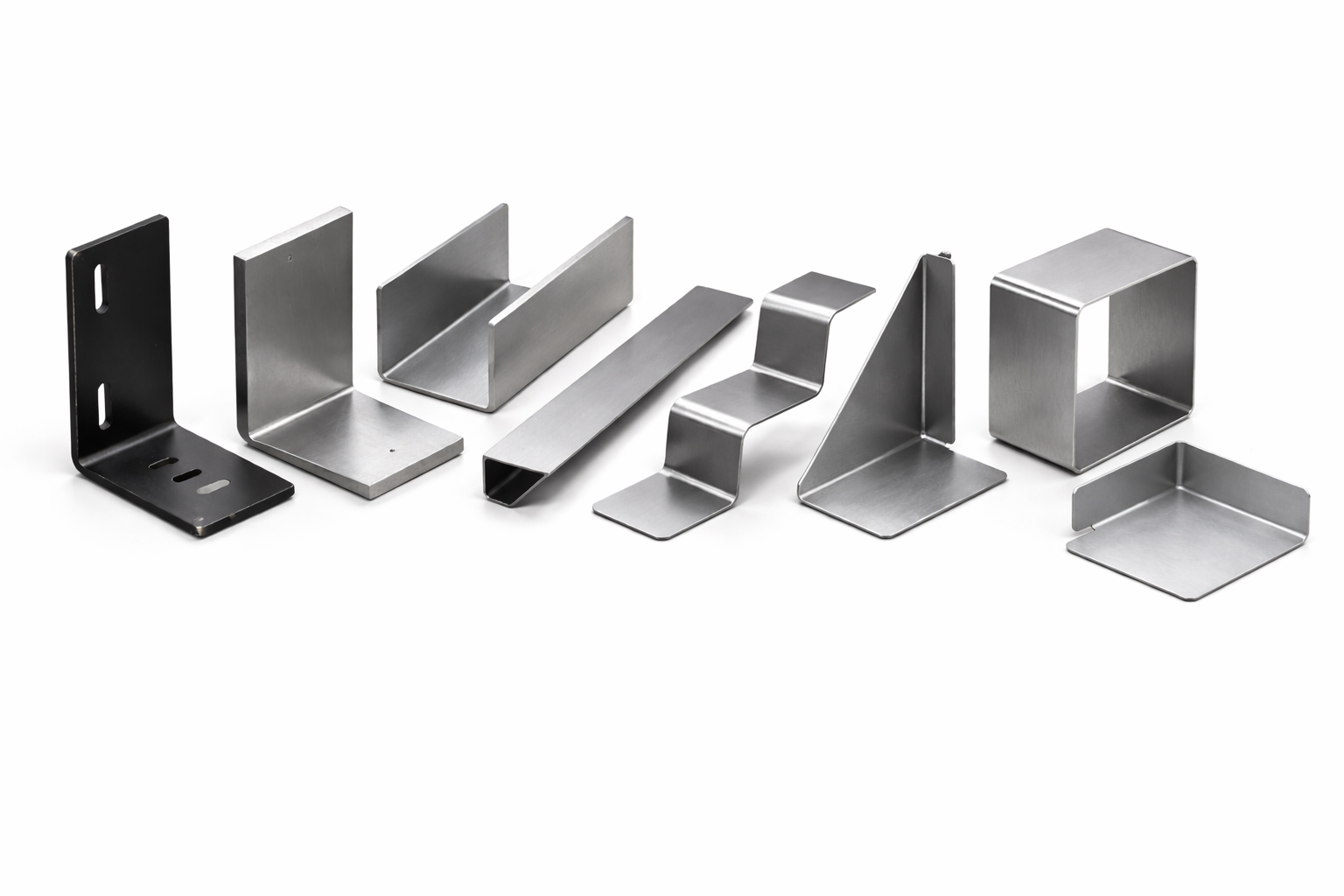
Panel Bender vs Press Brake for Job Shop
Press Arm Panel Bender Fit: Geometry, Workflow, and ROI