
Licensed editorial adaptation
Adapted and localized by the ZWCNC Editorial Team from licensed technical material. The source record is published for traceability.
Technical boundary: confirm machine-specific capacity, configuration and safety requirements against the current quotation, manual and application review.
Two panel benders may list the same maximum bending length, material thickness, force, and footprint. Both may also complete a short demonstration part successfully. Yet when a long, thin production panel arrives, one machine may need operator support and repeated program corrections as material lots change, while the other continues producing within tolerance.
Both specification sheets can be accurate. What they do not reveal is whether the machine can sustain economical production.
The right purchasing question is therefore not, “Which machine has the better headline specifications?” It is, “Which complete configuration will deliver the required good parts at the lowest total cost and acceptable risk?” Answering that question requires a disciplined comparison of dependable capacity, automation, process control, software, tooling, validation, service, and the cost of every accepted part.
For application-specific equipment selection, contact ZWCNC.
Similar Machine Dimensions Do Not Mean Equivalent Production Capability
Maximum dimensions serve an important purpose: they eliminate machines that are clearly too small or underpowered. If a panel cannot enter the working envelope or the machine cannot form the specified material, no other advantage matters. Larger working ranges may also require stronger structures and more power, which can legitimately increase price.
Once two machines meet the minimum requirement, however, identical numbers no longer prove equivalent capability. Maximum bending length shows what can physically fit, not what can be supported, positioned, bent, and unloaded reliably. A long blank may fit inside the enclosure but sag enough to disturb positioning or final accuracy.
The same limitation applies to thickness and force ratings. Actual bending resistance depends on material strength, thickness, geometry, and how the machine engages the workpiece. Resistance rises sharply with thickness, so two machines with the same nominal rating may have very different operating margins near the limit.
A force rating is also only a mechanical boundary under stated assumptions. It does not show how consistently the machine controls the part, how much tuning is required, or whether production must slow to protect accuracy. Producing one acceptable sample after extensive adjustment proves physical ability, not dependable output.
Nominal capacity answers a narrow question: can the machine attempt the part? Dependable capacity asks harder questions:
- Can it hold the required tolerances across representative materials and geometries?
- How much setup, correction, and operator support does it require?
- What happens when blanks vary in thickness, flatness, strength, coating, or grain direction?
- How many completed cycles become accepted parts rather than scrap or rework?
That dependable operating envelope is smaller than the published envelope, but far more valuable.
Validate the Real Part Range, Not the Easiest Demonstration
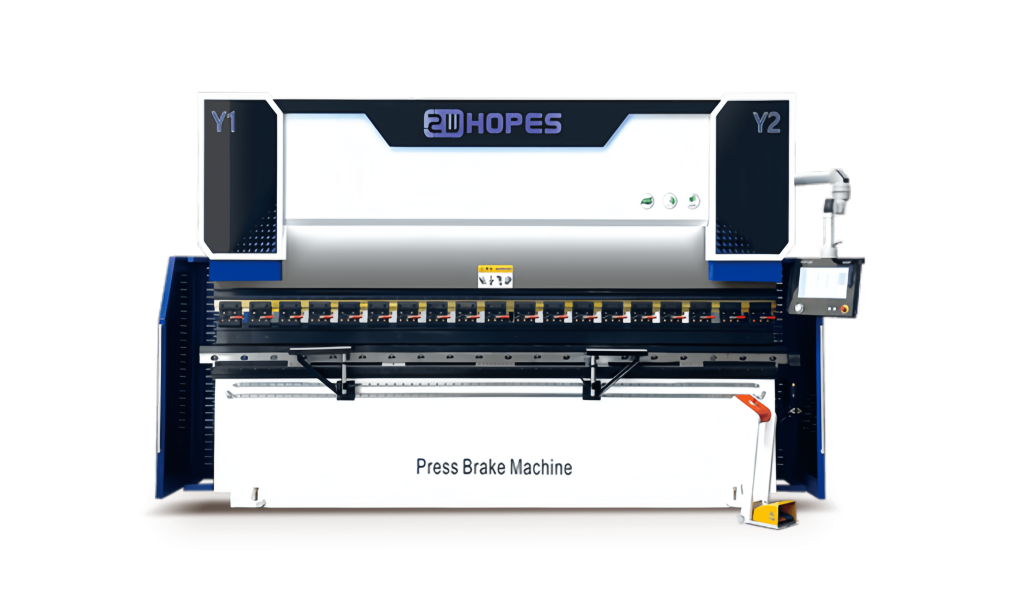
A supplier-selected demonstration panel rarely represents the buyer’s full production mix. A meaningful test should include long thin panels, short flanges, return features, hems, asymmetric blanks, cosmetic surfaces, and parts with limited tolerance for distortion or marking.
Geometry changes how the machine grips, supports, repositions, bends, and unloads the workpiece. A machine may process a simple panel cleanly yet become unstable when a short flange limits gripping, a large blank sags during rotation, or a return feature complicates the bend sequence.
Material variation is equally important. Nominally identical blanks can differ in thickness, flatness, surface condition, strength, grain direction, and springback. These variations affect friction, positioning, bend angle, and final dimensions. If normal lot changes trigger test pieces and manual offsets, the machine’s published range is wider than its economical range.
A validated part range should therefore mean a buyer-representative group of parts and materials run under agreed production conditions. The test should define tolerances, batch sizes, cycle expectations, changeovers, staffing, and permitted interventions. It should include normal material variation, not hand-selected blanks, unlimited tuning time, or an expert-only setup that will not exist after installation.
Two machines may ultimately make the same finished part but deliver different good-part output per shift. Real production includes program selection, first-part approval, material handling, tool changes, alarms, corrections, interruptions, and recovery. A demonstration confirms that a bend sequence can be completed. Production reveals the labor and lost time surrounding it.
Good-part output should count accepted parts, not machine cycles. It depends on available runtime, sustainable cycle time, and first-pass yield. A machine with a faster automatic sequence may lose its advantage if operators repeatedly support blanks, correct angles, clear faults, or sort questionable pieces.
During a representative trial, record setup and changeover time, operator touch time, interventions, scrap, rework, stoppages, recovery time, and accepted output. These observations convert “can make the part” into cost per good part.
What the Premium Should Remove from the Process
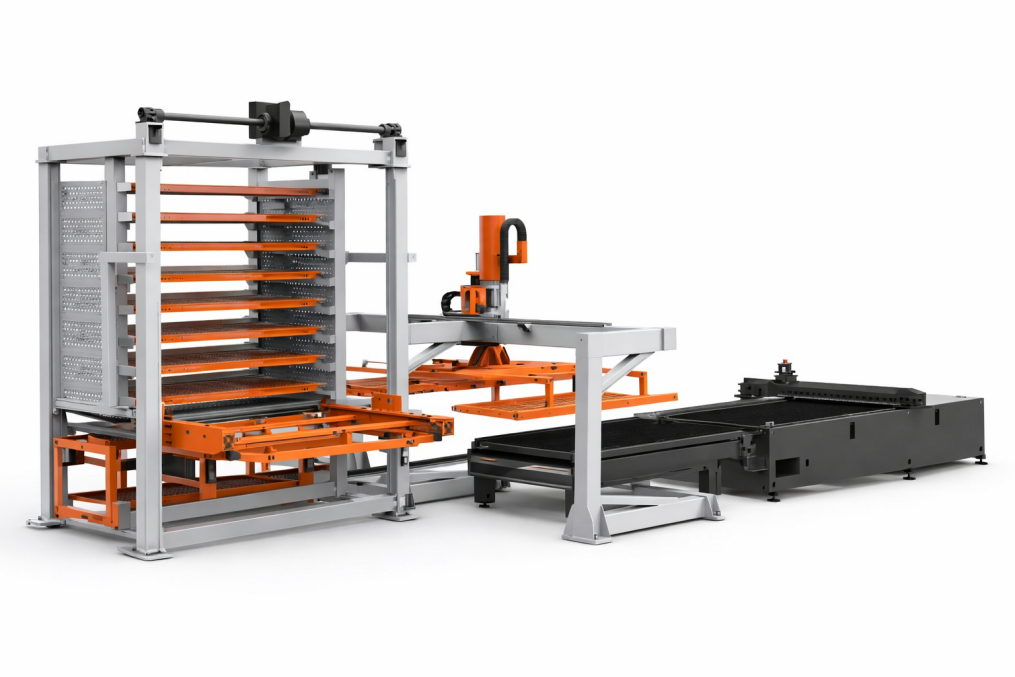
A higher-priced machine earns its premium only when it removes enough recurring work or production risk. The relevant work includes loading and orienting blanks, selecting and proving programs, correcting angles, staging tools, handling finished parts, diagnosing alarms, and restarting production after failures.
Each claimed advantage should map to an observable event. If automatic positioning eliminates repeated handling, measure the operator minutes removed. If closed-loop angle control prevents adjustment pieces, count the scrap and setup time avoided. If software creates executable programs from CAD data, measure the engineering and console work replaced. If remote diagnostics shorten stoppages, measure the production time recovered.
A feature that cannot be tied to labor, yield, throughput, uptime, or risk may be technically impressive, but it is not yet economically justified.
Automation Depth
Do not accept the word “automatic” without following a complete order through the cell. A blank must be collected, separated, oriented, supported, positioned, bent, removed, and placed without damage. Programs and tools must also be prepared.
A machine can automate the bending motion while leaving most of this chain in human hands. If an operator must load every blank, correct its orientation, support it against sag, confirm the cycle, and unload the part, the machine has automated a motion rather than a job. Its automatic cycle may be fast, but the operator remains captive.
Classify every remaining task as continuous attendance, one intervention per part, one intervention per batch, or exception-only work. Residual tasks matter as much as automated ones. Automatic unloading has limited value if every part must immediately be inspected and restacked by hand.
Maximum automation is not always the best purchase. Low-volume plants with available labor may gain more resilience from two simpler machines than from one highly automated system. The premium becomes rational when batch frequency, handling difficulty, labor scarcity, or order volume makes the removed touches recur often enough to repay it.
Process Control
Static calibration relies on established offsets for a known combination of material, thickness, geometry, and machine condition. When incoming material behaves differently, the operator often makes a trial bend, measures it, changes an offset, and tries again. Those minutes and discarded blanks are absent from the machine price but present in the process cost.
Real-time angle correction can measure or infer material behavior during bending and adjust machine motion instead of depending entirely on stored values. Frame compensation can reduce variation caused by deformation across the working length. Together, these controls may reduce first-part correction, adjustment scrap, and dependence on a highly experienced operator.
Their value is greatest where material lots change, long panels amplify small deviations, or tolerances leave little room for experimentation. However, sophisticated control cannot rescue unsuitable mechanics or handling. If a sheet sags beyond the positioning system’s capability, correction technology is addressing the wrong problem.
Test the relevant lengths, geometries, and material variation. Record first-pass yield, operator entries, correction attempts, and time to the first accepted part. “Real-time” has economic value only when it produces measurable stability.
Software and Programming
For short batches, programming may take longer than bending. A drawing must be interpreted, tooling assigned, the bend sequence selected, collisions checked, and the program proved. Fast hardware cannot recover hours lost before the first blank reaches the machine.
Autonomous CAD-to-part programming aims to reduce that preparation. The meaningful question is not whether the machine imports a drawing, but how much work remains afterward: geometry cleanup, feature recognition, tooling decisions, sequence selection, collision resolution, manual edits, simulation review, and first-part correction.
Measure engineering minutes per new or revised part. Advanced software can be highly valuable in a high-mix plant where programs change frequently and skilled programmers constrain output. Its value is lower when the plant runs a stable set of repeat parts whose programs have already been proved.
Software can also reduce dependence on undocumented expert knowledge. A standardized digital process makes established methods easier to reproduce. But it must be tested with the buyer’s actual CAD quality, file conventions, part complexity, and approval rules. A polished supplier model does not show how much intervention the buyer’s files will need.
Tooling Economics
One quotation may include a universal tool set covering most of the required mix. Another may need optional tools for particular flanges, returns, materials, or cosmetic requirements. Both machines may be described as capable, although only one price contains the required process.
Universal tooling can reduce changeovers, storage, staging errors, and dependence on finding the correct tool between jobs. Specialized tooling may be the best technical solution for difficult geometry, but it creates additional purchasing, storage, installation, maintenance, and replacement work.
Automatic tool setup has value only when the production mix requires frequent changes and the automation covers the tools involved. If special tools still require manual staging, the interruption has moved outside the advertised automatic cycle rather than disappeared.
Compare tooling-complete configurations for the validated part basket. Identify included tools, optional tools, manual changes, wear points, replacement costs, lead times, and the effect of damage on production.
Validation and Service
Automation, controls, software, and tooling create value only when they work together on the buyer’s parts. Application validation should use the proposed machine configuration, representative CAD files, production materials, required tools, realistic staffing, and agreed acceptance criteria.
Document every exclusion. A geometry requiring manual support, a material outside the correction guarantee, or a program needing supplier engineering may be acceptable, but it must be treated as retained labor or process risk.
Service determines what happens when production stops. Remote diagnostics can reduce fault-finding time when the system captures useful data and trained support personnel are available. Local service can reduce physical recovery time when a sensor, drive, tool, or handling component requires hands-on work.
Ask for the real recovery path: who responds, coverage hours, what can be diagnosed remotely, where critical parts are stocked, how quickly an on-site technician can arrive, and what the plant must do while waiting. Downtime cost depends on both failure frequency and recovery duration.
Define the Production Promise Before Reviewing Quotes
Put the quotations aside and describe the work both alternatives must complete. One automated machine and two simpler machines are comparable only if they are held to the same production promise: the same accepted parts, delivery schedule, quality standard, staffing limit, and disruption exposure.
Map requirements by part family rather than by machine specification. Record annual demand, normal and peak batch sizes, runs per year, materials, thicknesses, changeovers, tolerances, cosmetic standards, delivery windows, and downstream destinations. Include work outside the automatic cycle, such as file preparation, program revision, material staging, unloading, inspection, sorting, and transfer to assembly.
Labor requirements must be equally specific. “One operator required” is incomplete if the process also needs a programmer, material handler, inspector, or maintenance specialist. Identify who intervenes, for how long, with what skill, and on which shift.
Quality requirements should name critical features and measurement methods. Separate first-pass acceptance from parts recovered through rework. Define visible surfaces, prohibited marks, protective requirements, and inspection standards. A fast part that requires rebending, polishing, or sorting is not a fast good part.
Focus attention on the families that consume scarce labor, create defects, constrain assembly, or threaten delivery commitments. Risk follows consequence, not visual complexity. A simple panel produced continuously at the main bottleneck may matter more than an expensive geometry made occasionally.
Also separate requirements into three categories: needed at acceptance, supported by a credible future demand change, and merely possible. Present needs belong in the core case. Credible future needs deserve a separate option value. Speculative capacity should not rescue weak payback assumptions.
Unused automation does not save labor, and unused capacity does not lower cost per part.
Use Benchmark Parts and Acceptance Tests to Expose Hidden Differences
Give every vendor the same production drawings, materials, inspection methods, batch assumptions, and staffing limits. Define when the clock starts, what counts as an accepted part, which interventions are permitted, and which operations must be included.
Build a compact benchmark portfolio. Include a normal production part as a control, several high-consequence difficult parts, and at least one changeover between unlike jobs. Test actual combinations the plant expects: small flanges, large panels, hems, variable materials, tight tolerances, cosmetic surfaces, and parts affected by several bends or repositioning steps.
Do not allow substitute materials, simplified sequences, relaxed tolerances, or redesigned features unless the exception is documented. A vendor may propose a legitimate alternate process, but its cost and consequences must remain visible.
Measure several time boundaries:
- Order release to the first accepted part.
- Changeover to the first accepted part.
- Steady-state time per accepted part.
- Total elapsed time for the benchmark batch.
Include file preparation, programming, tool work, staging, loading, positioning, bending, corrections, inspection, unloading, identification, and movement to the agreed handoff point. If work occurs offline, count its labor and required software. Moving work away from the machine does not remove it.
Record every intervention: who performed it, why it was needed, how long it took, and whether that person is included in the proposed staffing model. Test changeovers live using normal production staff, including program retrieval, tooling, adjustment, inspection, and approval.
The trial should leave an auditable evidence package: timestamped process records, intervention logs, tooling and software identification, inspection reports, surface findings, scrap and rework records, and the disposition of every test part.
Check repeatability across early, middle, and late output, and after a restart, changeover, or material-lot change where those events reflect normal production. A short run can prove trial conformance and reveal obvious variation, but it cannot establish long-term statistical capability across shifts, tools, lots, and maintenance states. When the risk is high, make extended production validation an acceptance condition.
Document capability exceptions clearly. A part may require extra tooling, reduced speed, manual intervention, a material or design change, routing to another process, or may simply be unsupported. Exceptions are not automatic disqualifiers, but their labor, scheduling, tooling, inspection, and work-in-process costs must enter the comparison.
Use blanks from the buyer’s normal cutting process whenever possible. Ordinary variation in dimensions, flatness, burrs, coatings, and protective film may reveal dependencies that specially prepared samples conceal. If the machine needs better blanks, include the added cutting precision, inspection, sorting, or deburring in the economic case.
Finally, follow good parts downstream. Confirm that they leave in the right orientation, stack without damage, fit plant containers, carry required identification, and reach the next operation at a usable rate. Faster bending creates no saving if unloading, inspection, or downstream capacity becomes the new constraint.
Normalize Every Quote into a Production-Ready Configuration
A validated trial may use automatic loading, application-specific tools, offline software, and supplier engineering even though the base quotation includes only the machine and controller. Comparing bottom-line prices would then compare an incomplete purchase with an operating system.
Create a bid-equalization schedule from the frozen trial configuration. For each required function, record the supplier’s technical method; whether it is included, optional, excluded, or buyer-supplied; one-time and recurring costs; responsibility for design, integration, testing, and acceptance; and the evidence required for completion.
Normalize the following scope:
- Base machine, controls, standard accessories, and production tooling.
- Loading, centering, manipulation, unloading, stacking, and identification.
- Tool storage, tool-changing equipment, measurement devices, and special tools.
- Guards, scanners, interlocks, fencing, and safety interfaces.
- Conveyors, carts, racks, lifting devices, and upstream or downstream connections.
- Utilities, foundations, networks, plant controls, engineering, programming, and testing.
- Freight, rigging, installation, commissioning, training, validation, and ramp support.
Do not add every feature from the expensive offer to the cheaper one automatically. The baseline is the least costly complete configuration that delivers the production promise, not the maximum available automation.
Software must be normalized separately. Identify every product by function, version, license model, term, and users or machines covered. Separate control software from offline programming, simulation, tool libraries, planning, reporting, and data interfaces. Record renewal costs, update rights, postprocessor support, compatibility obligations, backup procedures, remote access, and the consequences of expired support.
Keep installation, commissioning, and validation distinct. Installation makes the equipment physically complete. Commissioning confirms that its systems operate. Validation proves that the installed configuration produces the agreed parts, output, quality, changeovers, and staffing result.
Training should define outcomes for operators, programmers, maintenance technicians, engineers, and supervisors. Early ramp support should cover program gaps, material sensitivity, tool wear, maintenance questions, and handling failures. Final payment should depend on the installed system reproducing the agreed production result, not simply powering on.
Standardize warranty coverage, start dates, exclusions, travel charges, response definitions, remote support, on-site arrival expectations, and spare-parts terms. Confirm who services third-party loaders, safety controls, and software interfaces. Multiple suppliers can turn a single failure into a dispute unless one party owns cell-level performance.
Use a responsibility matrix for foundations, utilities, guarding, permits, cybersecurity, software interfaces, blank standards, downstream handling, gauges, data, and operator availability. Assign each task to a named party with a cost, date, interface requirement, and acceptance test. Every exclusion must have an owner.
The normalized price is the quoted amount plus all options, licenses, implementation services, buyer-supplied tasks, integration work, and provisions required to reach accepted production. Only after this adjustment is the remaining price gap real.
Judge the Gap by Cost per Good Part
After commercial scope is equalized, compare both systems over the same period using the same denominator:
Cost per good part = (annualized ownership cost + operating cost + expected disruption and quality losses) / accepted parts delivered.
Annualized ownership should use one consistent financial convention, including purchase cost, financing or capital recovery, expected residual value, and cost of capital. Do not count purchase price and loan principal twice.
Operating cost should include all recurring labor, programming, setup, inspection, material handling, tooling, software, maintenance, spare parts, service, and energy. Count labor savings only where reduced touch time avoids cost, prevents overtime or hiring, or releases people for productive work.
Scrap includes more than raw material. A rejected panel may already contain cutting, deburring, handling, and inspection cost. Rework consumes capacity and labor even when the part later passes. Rejects increase the numerator and reduce the denominator.
Downtime must be modeled carefully. If output can be recovered, count overtime, expediting, subcontracting, restart cost, and idle labor. If it cannot be recovered, include the economic consequence of unfilled demand. Avoid counting the same loss twice as both reduced output and full lost revenue.
A faster automatic cycle matters only if bending is the active system constraint. If loading, inspection, downstream capacity, or demand limits output, the machine creates waiting time or inventory rather than useful capacity. Measure accepted system output from a production-ready blank entering the cell to an accepted part reaching the next operation.
Calculate the Break-Even Threshold
Assume two normalized configurations cost $300,000 and $450,000. If the $150,000 premium, financing assumptions, software, service, and tooling create $42,000 in additional annual fixed cost, while validated labor, setup, scrap, energy, and downtime savings equal $1.75 per accepted part, then:
Break-even annual volume = $42,000 / $1.75 = 24,000 accepted parts.
At 18,000 parts, savings equal $31,500, leaving the premium system $10,500 behind. At 30,000 parts, savings equal $52,500, creating a $10,500 annual advantage. Technical superiority does not remove the volume threshold.
Translate volume into utilization. At a validated blended rate of 12 accepted parts per hour and 2,500 scheduled hours per year, theoretical output is 30,000 parts. Reaching 24,000 parts requires 80 percent effective utilization after availability loss, changeovers, production gaps, and rejects.
If credible demand and operating history cannot support that utilization, the cheaper configuration is financially correct even if the premium machine is more capable. Where setup dominates, model batch count separately. Where rates and yields vary by part family, calculate each family and combine the results using the expected mix.
Stress-Test the Result
Challenge the assumptions that make the premium win. Test lower uptime, weaker labor savings, slower ramp-up, reduced volume, more difficult product mix, higher tooling costs, and longer service recovery.
If per-part savings fall from $1.75 to $1.10, the break-even volume rises to about 38,200 parts. If attainable annual output is only 22,000, the premium cannot cross that threshold regardless of nominal speed.
Labor deserves particular scrutiny. Automation may reduce touch time without eliminating a staffed position. Model only the cost that can actually be avoided or productively reassigned. Ramp-up should also be modeled by year because financing and software payments begin while operators are learning and scrap may remain above steady-state levels.
Risk should not be hidden inside one guessed percentage. When reliable failure data are unavailable, compare explicit scenarios: normal operation, an absent operator, a failed batch, an urgent order interrupting planned work, a key machine unavailable for a shift, or a delayed spare part. Clear scenario consequences are more useful than false precision.
Approve the Premium Only When It Matches a Valuable Constraint
A premium purchase should pass three gates. First, identify the constraint in operational terms: long changeovers, scarce skilled labor, excessive scrap, unstable quality, missed deliveries, or costly downtime. Second, prove with representative parts that the proposed configuration removes enough of that constraint. Third, bind the delivered scope and acceptance terms to the performance used in the economic model.
Deeper automation is more likely to pay in high-mix production, frequent changeovers, difficult handling, scarce labor, demanding geometries, or bottlenecks where downtime is costly. Even then, approval should depend on measured reductions in elapsed setup, operator intervention, defects, and recovery time—not on feature names.
A simpler machine is often the better choice for stable parts, long batches, low utilization, available skilled operators, and limited integration needs. Spare capacity may allow staff to manage setups and exceptions without delaying orders. Simplicity is not a compromise when it fulfills the production promise at a lower cost per good part.
Before selection, maintain two linked documents. The first is a part-by-part capability matrix covering materials, geometry, tolerances, tools, handling, programming, setup, cycle time, yield, interventions, exceptions, and evidence. The second is a line-item commercial comparison covering every option, license, interface, installation task, training requirement, service term, spare part, and buyer responsibility.
Every capability supporting the investment case must appear in both. If it exists only in a presentation or demonstration, it is not yet part of the purchase.
Acceptance language should specify representative parts, materials, drawings, batch conditions, staffing, measurement methods, required output, permitted interventions, and recovery behavior. Factory testing can establish capability before shipment, but site testing must confirm that the delivered machine, local utilities, tooling, software, and material flow work together.
The contract should also define training outcomes, software and data rights, service coverage, escalation paths, spare-parts obligations, and remedies for missed performance. Remedies may include corrective action, a cure period, retesting, payment retention, or another negotiated response. Buyer-controlled conditions—such as materials, utilities, maintenance, staffing, and access—should be equally clear.
After installation, track the same measures used for approval: setup time, operator hours, first-pass yield, accepted output, downtime, service response, and ramp progress. Otherwise, acceptance becomes a ceremony rather than accountability.
Reject a low quotation when required capabilities remain optional, excluded, unvalidated, or dependent on unpriced operator effort. Treat supplier assurances about difficult parts as unresolved risk until representative trials support them. Programming, handling, inspection, troubleshooting, and integration do not disappear when excluded from the quote; they return as labor, delay, scrap, and additional purchase orders.
The final decision should name the valuable constraint, the validated configuration that removes it, the downside case under which the investment still works, and the contract terms that preserve the capability through delivery and ramp-up.
The denominator is accepted output. Every blank cell in the capability matrix is a future cost without an owner. Do not approve the premium—or the apparently cheaper alternative—until every required function has been validated, priced, and assigned.
Apply this guidance to your production
Share your material, thickness, part drawing, tolerance, and target output with the ZWCNC engineering team for an application-specific equipment review.
More news, insights, and updates from ZWCNC.
Panel Bender Cost Factors Behind Supplier Quote Differences
Panel Bender Advantages: Automation, Labor Savings, and Production Value
Panel Bender Productivity: How to Increase Good Parts per Shift
Panel Bender ROI: Calculate Payback from Real Production Data
9 Panel Bender Advantages: Automation, ROI, and Best-Fit Jobs