Licensed editorial adaptation
Adapted and localized by the ZWCNC Editorial Team from licensed technical material. The source record is published for traceability.
Technical boundary: confirm machine-specific capacity, configuration and safety requirements against the current quotation, manual and application review.
Two suppliers can quote a panel bender for the same headline output and still describe very different production systems. One may assume a long run of simple panels, one operator, and almost no job changes. The other may price short lots, several setups, inspection, handling, and the scrap created while the process is being stabilized.
Both quotes can be internally reasonable. They are not comparable until they are tied to the same production result.
The most useful buying question is not “Which machine has the lowest price?” It is:
Which proposal can produce the required good parts, at the required quality and schedule, at the lowest credible cost per good part?
That question turns a machine quote into a production comparison. The following eight cost factors explain where supplier assumptions usually diverge and how to make them visible.
Start with a common production brief
For application-specific equipment selection, contact ZWCNC.
The difference disappears when a request for quotation includes only maximum blank dimensions and thickness. Suppliers then fill in the missing schedule, staffing, quality, and changeover assumptions themselves.
Before comparing prices, give every supplier the same production brief. It should define:
- Required good parts per shift, not simply bends or machine cycles.
- Material grades and thicknesses, blank sizes, surface requirements, bend counts, flange ranges, hems, returns, and other difficult features.
- The quantity of each part family, expected lot sizes, and the sequence in which jobs will run.
- Shift length, planned production time, number and skill level of operators, and inspection responsibilities.
- Acceptable setup pieces, scrap, rework, and first-piece approval requirements.
- Included tooling, software, loading, unloading, programming, and material-handling tasks.
A good part has passed the stated dimensional and cosmetic requirements and is ready for the next operation. A formed blank that needs correction or replacement consumed capacity but did not satisfy the target.
Use the same representative sample parts for every bidder: an easy high-volume part, a typical part, and a difficult part that exposes limits in tooling, handling, or geometry. Ask suppliers to state which results are proven by testing and which are estimates. If a part cannot be tested, the quote should explain how its cycle time, staffing, and scrap allowance were calculated.
1. Throughput requirements determine how much speed and machine architecture are worth buying
The first cost factor is the output the machine must sustain. Start with the required accepted parts and the net production time available. The result is the maximum average time allowed for one good part, often called takt time:
Takt time = net available production time ÷ required good parts
If the complete cycle is slower than that limit, faster bending motions alone will not rescue the proposal. If several machines meet the limit, additional speed is valuable only when it reduces labor, overtime, energy, scrap, or another real cost.
Compare complete cycle time, not bending speed alone
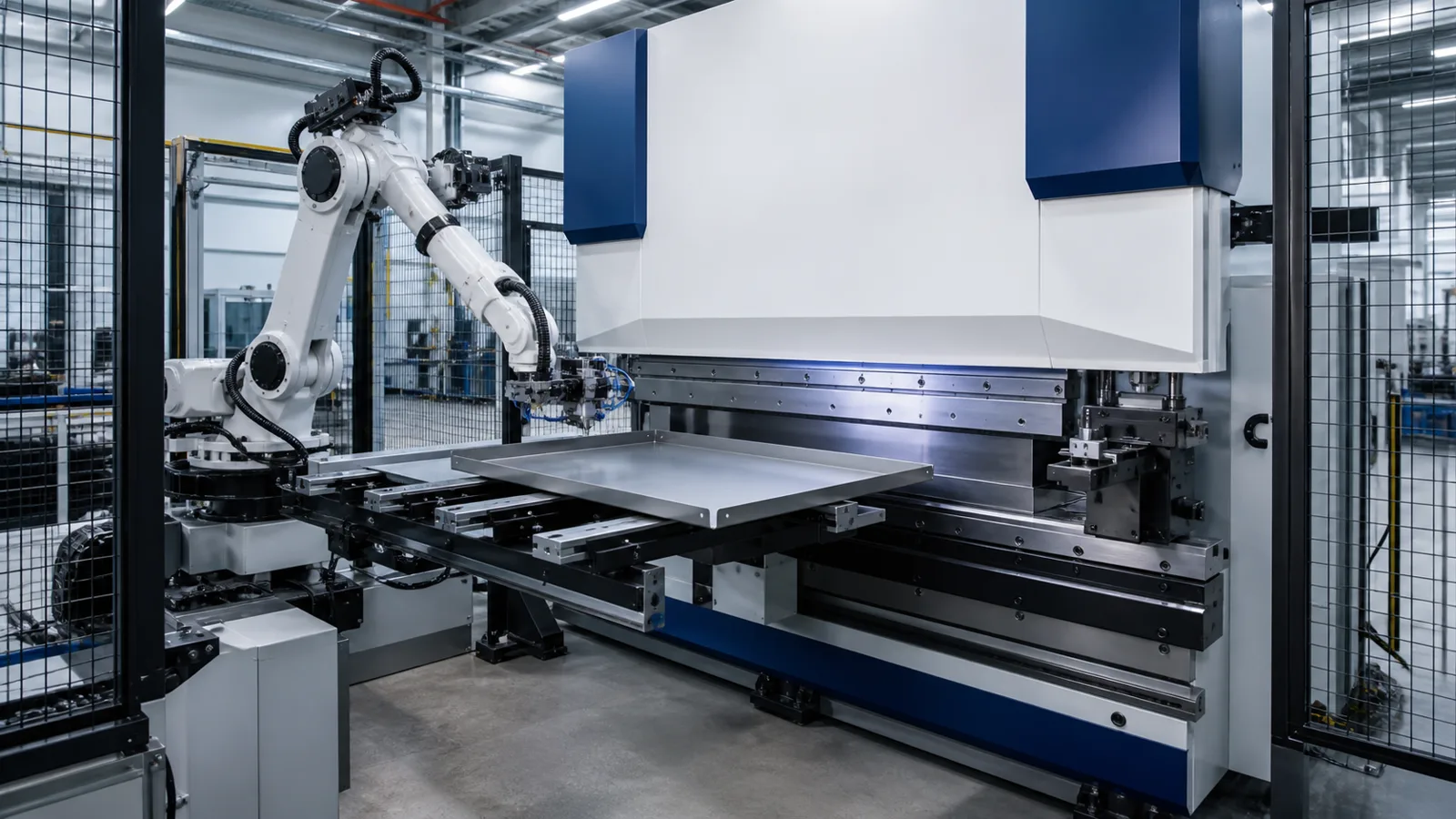
Bending-sequence time covers only the forming motions. Complete cycle time covers the production event from one blank entering the process to an accepted part leaving it and the machine becoming ready for the next part.
One documented automated panel-bending example reported 11 bends in 33 seconds, while loading and unloading extended the full cycle to 52 seconds. The first figure suggests roughly 109 parts per hour; the second supports about 69, before inspection, changeovers, stoppages, and rejected parts. Both numbers can be accurate. Only the second is useful for capacity planning.
Require each supplier to report three numbers for every sample part:
- Bending-sequence time.
- Complete time from blank ready for loading to finished part ready for the next operation.
- Sustained good-part output across the quoted shift, including the specified job sequence and changeovers.
The third number governs the purchase. A machine that completes 80 cycles but releases only 75 conforming parts delivered 75 useful units of output.
Allocate setup, handling, inspection, and changeover time
Separate tasks by how often they occur. Loading, positioning, bending, inspection, and unloading may occur on every part. Programming, tool changes, first-piece verification, and material preparation usually occur once per job or batch. Fault recovery, corrections, and rework occur irregularly but still consume the shift.
A practical measure is:
Average time per good part = total scheduled production time consumed ÷ accepted parts produced
The numerator should include repeat cycles, allocated setup and programming time, changeovers, normal inspection, expected stoppages, and the time consumed by scrap or rework. Offline programming moves some work away from the machine; it does not make the labor or validation effort free.
Batch size can reverse the apparent ranking. Long runs reward repeat-cycle speed because setup is spread across many parts. Short, varied runs reward fast job recall, tool changes, first-part accuracy, and simple recovery. A machine that is fastest on a repeated panel may not be the lowest-cost machine for prototypes or small lots.
Evaluate machine architecture through production results
Hydraulic, hybrid, and servo-electric designs should be compared by what they do for the specified workload, not by the technology label. Examine sustained good parts per hour, energy per good part, accuracy without manual correction, first-good-part scrap, planned maintenance, and recovery time after a fault.
A hydraulic system may be robust for demanding force and duty-cycle requirements but may carry fluid, filter, heat, and leak-related maintenance. A hybrid design may improve control or energy use in some parts of the cycle. A servo-electric design may reduce idle energy and some hydraulic maintenance. None of these outcomes is automatic. Tooling, sensing, material variation, support, and software still determine the accepted part.
The premium is justified only when the architecture produces a measurable benefit under the buyer’s conditions: lower scrap, less setup, lower energy, less labor, higher uptime, or useful additional capacity.
Buy future capacity only when a credible scenario will use it
If the current schedule allows a 50-second average complete cycle and one machine demonstrates 46 seconds while another demonstrates 34, both may meet present demand. The faster machine does not automatically reduce today’s cost if accepted output stays unchanged and the extra capacity sits idle.
Test each proposal against the current schedule, a likely future mix, and a realistic peak. Include future materials, geometry, batch sizes, and changeover frequency. Compare the premium with costs it could avoid, such as overtime, a second shift, outsourcing, delayed orders, or another machine purchase. Capacity is worth paying for when the expected workload will use it.
2. Part size, material, and geometry make edge capacity increasingly expensive
Machine capacity is a forming envelope, not one maximum dimension. It combines blank length and width, material, thickness, finished depth, flange size, bend sequence, tool clearance, handling reach, and surface requirements.
Published panel-bender specifications show why this matters. A model may accept incoming sheet lengths around 3,050 mm while width remains limited to about 1,600 mm, and bend height varies by model. Another machine may advertise approximately 3,120 mm length and 3 mm carbon-steel capacity, but only 2.2 mm stainless steel and 4 mm aluminum. The headline dimension remains similar while usable capacity changes with material.
Build a part matrix before choosing the machine size
For each recurring part family, record blank length and width, material grade and thickness, finished height and depth, smallest and largest flange, bend angles and sequence, surface protection, expected batch size, and production frequency.
Separate routine work from exceptions. If one enclosure runs twice a month and forces a much larger machine, compare the full premium with other routes: an existing press brake, outsourcing, a design change, or a second process. The larger machine spreads its purchase and installation cost across every part made on it, not only the unusual panel that justified the decision.
Price the demands at the edge of the envelope
Long panels need structural rigidity, accurate positioning, support across the workpiece, and safe handling. Thick or high-strength material increases forming force and springback and may require stronger tooling, slower motion, or angle correction. Deep boxes need enough bend height, travel, and collision clearance after earlier bends have changed the workpiece shape. Large flanges can exceed the manipulator’s grip, support, or swing envelope even when the blank fits on the table.
Ask the supplier to state capacity by material grade, thickness, blank size, finished depth, flange range, and bend sequence. A single “maximum sheet size” line cannot prove that a machine will produce the required parts.
Verify difficult bends with production-like parts
A sheet can fit through the loading area and still fall outside the actual process envelope. Very small parts, narrow flanges, deep formed parts, and variable bend angles along one edge can expose limits that a larger table does not solve.
Acceptance trials should use the specified or equivalent material grade, thickness, blank tolerance, finish, protective film, and bend sequence. Record first-good-part setup time, setup scrap, sustained accepted output, dimensional results, marks or scratches, manual interventions, and failures caused by collision, gripping, support, or sequencing.
If a difficult part requires slow cycles, repeated correction, or a secondary operation, the machine does not deliver the quoted productive throughput even if it technically “handles” the sheet.
Include the site cost of an oversized machine
Additional length or weight may change freight, unloading, rigging access, door and aisle clearances, floor loading, anchoring, foundation work, service access, storage racks, lift tables, cranes, conveyors, or automated loading equipment.
Request a site-requirements schedule with each quote. Price delivered and installed cost, foundation work, rigging, utility modifications, material storage, and additional handling equipment. An oversized machine is economical only when the recurring parts use its envelope and the added site cost is supported by enough accepted output.
3. Automation raises purchase price but can lower labor dependence
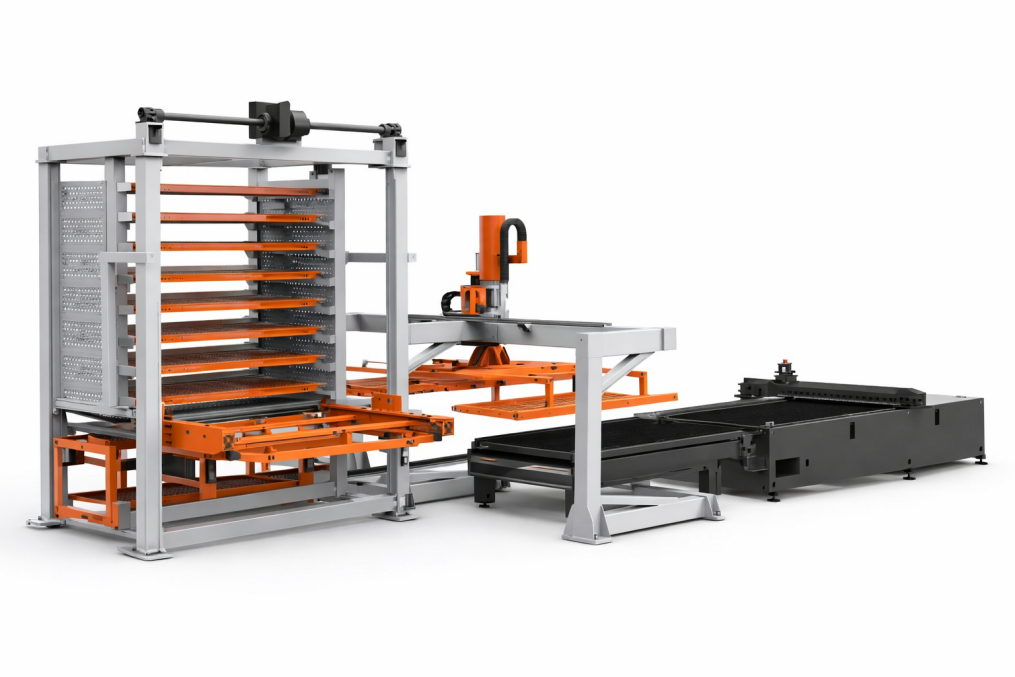
“Automatic panel bender” does not mean that all material handling disappears. A person may still need to separate and load blanks, square the sheet, rotate or support awkward work, remove finished panels, replenish stacks, clear faults, and manage rejected parts.
Break the automation claim into physical tasks:
- Loading and orientation verification.
- Squaring, referencing, rotation, and repositioning.
- Support of long, flexible, narrow, or partly formed parts.
- Unloading and organized placement of finished panels.
- Replenishment, fault recovery, inspection, and rejected-part handling.
Require a task-by-task responsibility map that identifies automatic actions, operator actions, geometry-specific interventions, and tasks excluded from the quoted cycle time. Two quotes for the same nominal machine may contain very different amounts of loading, unloading, robot, conveyor, or stack-management equipment.
Match automation to the production pattern
Automation earns value through recurring work. Larger batches provide many uninterrupted cycles over which a loader or robot can recover its price. High product variety may require new stacks, gripper settings, destinations, programs, and first-piece validation. Staffing shortages increase the value of automatic handling, while a fully staffed single shift may offer fewer opportunities. Multiple shifts or useful unattended periods can spread the investment across more accepted output.
“Unattended” still requires material availability, destination capacity, alarm response, quality control, and recovery from minor faults. Credit an unattended claim only if the cell can sustain the stated period without waiting for an operator.
Compare configurations with:
Cost per good part = total ownership and operating cost ÷ accepted parts produced
Include automation purchase and maintenance, direct labor, setup, programming, downtime, scrap, rework, and secondary handling. Automation earns its premium only when reduced labor or increased accepted output outweighs added ownership cost.
Evaluate robots, suction manipulators, and inverters by the problem they solve
Every handling option should remove a named recurring task or failure mode. A robot is valuable when repeated transfers occur often enough and release labor that can be redeployed. A suction manipulator may be necessary for narrow or frame-like parts that lack enough material for standard gripping, but actual blanks must prove compatibility with holes, surface condition, protective film, and gripping area.
A sheet inverter is justified when turning the blank or partly formed panel is a repeated process requirement. If only an occasional exception needs it, manual handling or another route may cost less.
For each option, ask the supplier to demonstrate the affected parts, the action it removes, sustained output with and without it, new setup and maintenance requirements, remaining operator involvement, and floor-space impact.
Preserve flexibility in low-volume, high-mix work
Full automation can move labor upstream rather than eliminate it. A new blank size or material may require compatible stack layout, gripping strategy, unloading logic, and recovery instructions before the first part runs. The cell has removed repetitive motion but added data preparation and coordination.
Compare operator-assisted, selectively automated, and fully automated configurations using representative short batches and changeovers. Retain press-brake capacity where unusual geometries do not fit the panel bender’s handling or forming sequence. Full automation deserves its premium when repeatable families, staffing constraints, and shift use keep it producing accepted work.
4. Tooling and quality controls determine whether the quote is production-ready
Two suppliers may both write “standard tooling included” while offering very different coverage. One may include four universal tools for a wide material range. Another may include a smaller set that requires changes when dimensions or profiles change. The relevant question is not the number of tools delivered, but how much of the required production can run without hidden purchases or secondary processing.
Confirm tooling coverage by part family
Require a coverage matrix for representative drawings. It should identify bend profiles, material and thickness limits, minimum and maximum flanges, box-depth and collision limits, hems and returns, surface-protection provisions, tolerance, and expected sustained cycle for each part.
Classify each part as covered by included tooling, dependent on an added option, or unsupported without another process. “Possible” is not a sufficient classification unless the supplier states the required tools, handling, setup, and production rate.
Group parts by shared geometry. Core families should be covered in the machine price. Recurring special families deserve a separate tooling-return calculation. Rare exceptions may be better routed to a press brake or outsourced than supported with tools that spend most of their life in storage.
Custom tooling also adds storage, identification, programming, maintenance, replacement, and changeover requirements. Universal tooling can be highly valuable where it genuinely covers the buyer’s material and profile range, but the drawings and sample runs must prove that coverage.
Compare complete tool-change time
Tool-change claims often measure different portions of a job. An operator may still unlock, slide, position, and relock tools on a semi-automatic machine, while another system automates a broader change. Published figures such as 10–15 seconds for an upper-tool change or about 90 seconds for a wider changeover cannot be compared without a common boundary.
Time from the last accepted part of one job to the first accepted part of the next. Include tool retrieval, removal, positioning, locking, program confirmation, first-piece inspection, corrections, and tool return. Then calculate:
Changeover burden = number of changes × complete elapsed time per change
A one-minute saving matters little in a long run and can matter greatly in a high-mix schedule. Require competing suppliers to perform the same representative job transition rather than demonstrating an isolated tool movement.
Price measurement and correction by avoided scrap
Angle measurement, deflection compensation, and real-time correction address different sources of variation. Measurement observes the result. Deflection compensation adjusts for deformation along a long bend. Closed-loop correction uses measured error to alter the process rather than relying entirely on manual trial bends.
These options are most valuable when tolerances are tight, bends are long, material varies, jobs change frequently, or production is unattended. A stable repeat part with forgiving tolerances may run economically with first-piece inspection and manual adjustment.
Ask for a demonstration against the actual tolerance requirement. Record setup scrap, first-part acceptance, corrections before stable production, operator interventions, rework, and sustained accepted output. Establish whether the system measures, displays an error, or automatically corrects it. Compare the premium with avoided scrap, inspection labor, rework, and lost capacity.
5. Software and integration costs grow with job variety
Two proposals may both say “CAD import” while describing different workflows. One may take released CAD and order data through automatic programming and postprocessing into a validated NC program. The other may display a drawing but leave the programmer to rebuild geometry, select operations, correct data, and prepare the code manually.
In high-mix production, that difference becomes engineering labor, machine waiting time, transfer errors, and delayed first parts. In low-mix production, machine-side programming may be perfectly adequate. The software premium should follow the actual job queue.
Test offline programming and CAD import with real files
Require a digital acceptance test using new jobs, repeat jobs, revisions, and representative order data. Measure time from job release to a verified program ready for production. Record programmer labor, manual entry, import failures, geometry repairs, collision corrections, network transfer, and first-part edits.
Offline programming is operationally important when the machine would otherwise wait for new programs. Native CAD import is valuable only if it handles the shop’s actual design formats and preserves the information needed downstream. A clean demonstration model proves little if production drawings routinely require manual repair.
Normalize licenses, postprocessors, updates, and support
“Programming software included” should be expanded into modules, user seats, installation rights, machine-control licenses, postprocessors, supported control versions, update periods, training, and technical support. Identify subscription, renewal, database, and remote-access fees. State what stops or becomes unsupported if a plan expires.
Postprocessors deserve special attention. Generic programming capability has limited value if the software cannot produce validated machine-specific NC code without manual editing. If one environment is expected to serve other machines, name and price each required connection.
Define ERP, scheduling, design, inspection, and network interfaces
A connected workflow must preserve the correct revision, quantity, material, priority, and completion status. Define what information crosses each boundary, which system owns the authoritative record, what triggers the transfer, and what happens when data are missing or inconsistent.
“Integration included” should have no commercial value unless the quote names the interfaces, seats, recurring fees, data mapping, testing, error handling, documentation, and custom engineering. A bundled ecosystem may reduce implementation work even with a higher license price; an open collection of systems may preserve flexibility while placing more responsibility on the buyer.
6. Site preparation, installation, and training add cost before the first good part
An arriving machine is not yet production capacity. It still needs a verified route, unloading method, foundation, utilities, network access, safety layout, commissioning, programs, trained staff, and acceptance testing.
Confirm the exact configuration’s requirements for floor loading and anchoring, door and aisle clearances, electrical service, compressed air, networking, climate, ventilation, guarding, emergency stops, and local compliance. For each requirement, record a measured value, supplier acceptance criterion, and responsible party.
“Available” utilities are not necessarily adequate. Air flow may fall under plant load, a nearby panel may need upgrading, or network security may block remote diagnostics. Ask the supplier to approve the final layout and site-readiness checklist before shipment.
Assign the delivery and startup scope
Freight may stop at the dock. The quote may exclude unloading, crane or forklift rental, specialist rigging, movement through the building, final positioning, leveling, anchoring, utility connections, waste removal, technician travel, or repeat visits.
Assign responsibility for shipment, unloading, rigging, positioning, connections, power-up, software activation, trial bending, training, and site acceptance. The acceptance test should use agreed parts, materials, programs, quality criteria, cycle boundaries, and operating conditions. “Machine starts” is not a production acceptance criterion.
State what happens if testing fails because of the buyer’s site and what happens if the machine cannot produce the agreed part under quoted conditions. Resolve that distinction before delivery.
Measure ramp-up and role-specific training
Installation downtime includes blocked aisles, displaced work, utility interruptions, internal engineering and IT labor, startup material, and production lost while the new machine replaces existing capacity. Build a dated plan from delivery through stable independent production.
Acceptance and ramp-up are different. A machine may pass a controlled supplier demonstration and then run more slowly with regular staff, real job changes, material variation, inspection, and shift handoffs. Measure good parts, scrap, rework, downtime causes, operator attention, programming time, and outside support during ramp-up.
Separate training for operators, programmers, maintenance staff, and supervisors. Operators need safe loading, job selection, routine setup, inspection, alarms, and recovery. Programmers need import, sequencing, tooling, simulation, collision resolution, corrections, and revision control. Maintenance staff need inspection, lubrication, calibration, backups, fault isolation, and escalation. The strongest acceptance criterion is that the buyer’s staff can produce an agreed lot and recover from normal interruptions without the supplier running the process for them.
7. Service coverage and downtime risk can outweigh a lower purchase price
Response time is not the same as time to production. A service provider may promise a rapid acknowledgment or technician arrival while a special component takes several business days to arrive. The machine remains idle until it is repaired, calibrated, test-run, inspected, and released.
Require the service sequence in writing: acknowledgment, remote diagnosis, dispatch decision, technician arrival, fault identification, parts availability, repair completion, and verification of accepted production. Compare qualified technician coverage for every planned shift, including nights and weekends, and confirm that remote access works with the shop’s cybersecurity rules.
Review warranty and parts exposure
A warranty may cover a failed component while excluding travel, labor, diagnosis, expedited freight, software recovery, wear items, contamination, utility problems, or production losses. Read the warranty against a realistic failure sequence.
Ask suppliers to separate covered parts and labor, travel rates, after-hours charges, stocked critical parts, special-order lead times, recommended spares, software backups, and claim procedures. Standard sensors, drives, valves, and computers may be available locally; proprietary controls may require one source. Proprietary components are not automatically wrong, but their supply risk belongs in the comparison.
Also separate warranty length from service coverage, parts availability, and delivery timing. A long manufactured-parts warranty does not guarantee a short outage.
Calculate the cost of lost production
Use sustainable accepted output, not theoretical cycles. If a machine produces 25 good parts per hour and each part contributes $20 after avoidable costs, an unrecoverable outage costs $500 of contribution per hour. An eight-hour day costs $4,000 before repair, freight, restart scrap, overtime, outsourcing, or customer consequences.
Estimate downtime in three steps:
- Determine hourly production exposure from good parts and product value.
- Estimate time to production, including detection, diagnosis, travel, parts, repair, calibration, test bends, and release.
- Model low, expected, and severe outage scenarios when failure history is uncertain.
Expected downtime cost = expected outage events × average hours to production × cost per lost hour + direct repair and recovery expenses
Carry the allowance into total ownership cost. A premium machine is justified when verified support reduces a risk the shop cannot absorb. A lesser-known or used machine may be economical when components are accessible, regional support is competent, internal maintenance is strong, and alternative capacity exists. The purchase discount may need to fund critical spares, training, remote support, and an outsourcing plan.
8. Freight, duties, financing, options, and recurring expenses create the final gap
An EXW or factory-gate price is not comparable with a delivered, installed, and commissioned proposal. A lower invoice may still exclude freight, insurance, unloading, rigging, duties, utilities, tooling, software, training, and acceptance support.
Define the commercial endpoint precisely:
- Factory-gate: Buyer manages collection, transport, import, delivery, unloading, and installation.
- Delivered: Machine reaches a named destination, but may stop at the dock or truck.
- Installed: Machine is positioned and connected, but may not be commissioned or accepted.
- Production-ready: Required tooling, software, safety work, commissioning, training, test material, programs, and acceptance support are included to a defined standard.
Tie the endpoint to a measurable event: trained buyer staff produce specified parts at the agreed quality and sustained rate.
Add financial and site-specific charges
Price freight, cargo insurance, customs brokerage, duties, tariffs, nonrecoverable taxes, bank fees, exchange-rate exposure, interest, financing charges, deposits, progress payments, and final acceptance payments. Do not count loan principal twice: either model the purchase price with financing charges or use actual loan cash flows consistently.
Include foundation work, utility upgrades, safety packages, network engineering, commissioning, training, and site labor. Payment timing matters because early deposits tie up cash before production begins.
Price the complete production package
Ask for scheduled maintenance, service labor, filters and fluids, tooling wear, gripper components, spare tooling, critical replacement parts, safety equipment, software renewals, and future upgrades that the planned configuration is likely to require. Do not charge every possible option to the current decision, but include foreseeable upgrades as clearly labeled scenarios.
Normalize every proposal in a line-item ledger:
| Cost category | Scope and timing to identify | Production consequence |
|---|---|---|
| Machine, options, and tooling | Included, excluded, or optional; one-time | Establishes usable forming capability |
| Freight, duties, rigging, and site work | Destination-specific; one-time | Gets the machine to production |
| Software, interfaces, training, and safety | Initial, recurring, or deferred | Enables programming and safe operation |
| Labor, energy, maintenance, consumables, and parts | Annual or output-based | Supports routine production |
| Downtime, scrap, rework, and recovery | Expected scenario cost | Reduces accepted output and raises cost |
| Financing and currency exposure | Payment-specific | Changes economic and cash cost |
| Residual value or disposal | End of analysis period | Changes net lifetime cost |
Use the same analysis period, volume, currency, tax basis, financing assumptions, and residual-value method for every proposal.
Compare cost per good part, not sticker price
The final decision should follow a fixed sequence. First, reject machines that cannot meet the required part range, quality, or accepted-part throughput. Next, compare the remaining machines over the same ownership period and production assumptions. Finally, test the assumptions most likely to reverse the ranking.
Use a three- to five-year ownership model
For each machine, calculate:
Ownership cost = production-ready acquisition cost + financing + recurring operating and support costs + deferred upgrades and replacements + expected downtime and recovery costs + end-of-life costs − residual value
Then calculate:
Cost per good part = total ownership cost ÷ total accepted parts
The denominator must reflect realistic throughput after changeovers, scrap, rework, maintenance, and downtime. Include every operator, programmer, material handler, inspector, and maintenance touch required by the proposed process. Count labor savings only when they become avoided cost, useful reassignment, deferred hiring, or additional output.
Run at least an expected case and a demanding case. The demanding case can include slower changeovers, higher scrap, lower output, more service expense, or additional downtime. A machine that wins only under perfect assumptions is the fragile choice.
Test supplier claims and sensitivities
Define the timed cycle before demonstrations. It should begin with a blank ready for loading and end with an unloaded, accepted part ready for the next operation. Include positioning, gauging, flipping, tool movement, operator intervention, unloading, and routine confirmation. Record excluded activities separately.
Test labor cost, demand, product mix, and shift count. Find the crossover point at which the automation premium becomes economical through higher utilization, lower labor, faster changeovers, less scrap, or better uptime. When a small assumption change reverses the result, resolve it with another trial, actual shop data, or a written supplier commitment rather than averaging it away.
Recognize when the basic machine is enough
The cheapest machine is the right choice when it meets the documented production gate and its premium competitors cannot convert extra capability into lower cost or protected output. A basic configuration is often defensible when designs and materials are stable, volume is modest, changeovers are manageable, qualified labor is available, and alternate capacity can absorb ordinary interruptions.
Check the real constraint. If bending does not limit shipments, faster cycles may create inventory instead of revenue. If labor is available and touch time does not restrict output, labor-saving automation may not repay its premium. If designs rarely change, advanced programming and correction systems may wait unused.
The basic machine becomes false economy when it forces routine overtime, depends on scarce operators, loses too much time to setup and rework, or cannot recover from downtime. The boundary is the required production result, not the feature list.
Put the decisive assumptions in the purchase documents
A spreadsheet can rank machines incorrectly if missing scope is silently assigned a cost of zero. Attach a final scope sheet to the order and identify:
- Exact machine configuration, capacity, automation, tooling, software, safety equipment, and interfaces.
- Freight, rigging, utilities, installation, commissioning, training, integration, and buyer-supplied responsibilities.
- Every exclusion, optional charge, recurring fee, and foreseeable deferred purchase.
- Representative parts, materials, drawings, tolerances, cosmetic requirements, and validation conditions.
- Complete-cycle definition, staffing, tooling, program, and material conditions behind the performance commitment.
- Required accepted-part output, changeover performance, first-piece requirements, and permitted operator interventions.
- Acceptance-test procedure, measurement method, deadline, responsible parties, and remedy if the result is not achieved.
- Warranty boundaries, service obligations, and production-critical assumptions affecting downtime or ownership cost.
Do not leave disputed items blank. Mark each as included, excluded, buyer-supplied, not applicable, or subject to an agreed allowance.
A panel-bender quote is a production hypothesis until its assumptions are tested. The strongest proposal is the one that meets the required part range and accepted output, carries the lowest credible cost per good part under realistic scenarios, and puts its decisive promises into the acceptance documents. That is how a higher machine price can become lower-cost production—and how the simplest machine can be recognized as enough when it truly is.
Apply this guidance to your production
Share your material, thickness, part drawing, tolerance, and target output with the ZWCNC engineering team for an application-specific equipment review.
More news, insights, and updates from ZWCNC.
Panel Bender Productivity: How to Increase Good Parts per Shift
Panel Bender ROI: Calculate Payback from Real Production Data
Auto-Tool Panel Bender vs. Press Brake: Which Machine Fits Your Parts?
How to Program a CNC Panel Bender: A Collision-Free Workflow
What Is a Panel Bender? Uses, Benefits, Limits, and Press Brake Comparison