Licensed editorial adaptation
Adapted and localized by the ZWCNC Editorial Team from licensed technical material. The source record is published for traceability.
Technical boundary: confirm machine-specific capacity, configuration and safety requirements against the current quotation, manual and application review.
For application-specific equipment selection, contact ZWCNC.
Here is the calculation the glossy brochures overlook. Electric press brakes generate the most visible marketing in fabrication, yet they account for only about 22% of total market revenue. Why? Because the operators responsible for the remaining 78% understand a hard truth about surviving on the shop floor. Your real margin does not come from the predictable, lightweight jobs you run every Tuesday. It comes from the heavy, unpredictable outliers.
Related: Press Brake Specifications
The Replacement Trap: You Are Not Just Buying a Machine, You Are Locking In a Decade of Capability
What happens when you size a press brake for today’s most common job instead of tomorrow’s outliers?
Review your production log from the past six months. If you resemble most mixed-production shops, 80% of your bends are probably 14-gauge or thinner, spanning roughly four feet. It is very tempting to look at that data and specify a 40-ton electric brake. It feels like efficient, lean engineering. You are purchasing exactly what you need for the work currently in front of you.
However, a press brake is not a consumable item. It is a ten-year concrete anchor defining your shop floor’s capability.
When you specify a machine strictly for the lightweight batches you handle today, you are effectively bringing a skid steer to perform a crane’s job when a 10-foot, 3/8-inch plate contract comes through the bay doors next year. Bending 10 feet of 3/8-inch A36 mild steel requires approximately 225 tons of force. Your 40-ton electric machine will simply sit idle and alert you. You have essentially limited your company’s growth to 14-gauge brackets. Why do we allow the appeal of speed to reduce our own market potential?
Is the promise of zero oil maintenance obscuring real capacity limits?
Sales representatives like to focus on oil. They calculate the cost of hydraulic fluid, the downtime associated with filter changes, and the environmental implications of disposal. They present an image of a clean, quiet, medical-grade facility. It is a compelling pitch. But it diverts attention from the core issue.
Zero oil maintenance is a luxury; sufficient tonnage is a requirement. Once you move beyond 100 tons, the mechanical realities of pure-electric drives become limiting. To produce significant force without hydraulics, electric brakes depend on large ball screws and complex pulley systems. These components experience wear under heavy, continuous loads. Marketing materials highlight faster cycle times and quieter operation, yet they often minimize the tonnage ceiling. Physics cannot be overridden.
This places the mixed-production shop in a risky middle position. You may want the servo-level precision and speed of an electric machine for light work, but you also require the brute-force capacity of hydraulics for heavier jobs. If you commit entirely to electric, you are wagering that you will never again need to bend thick plate. Is that a prudent assumption for the next decade?
The Conventional Hydraulic Workhorse: When Brute Force Turns Into a Liability
When raw tonnage is non-negotiable, does anything else matter?
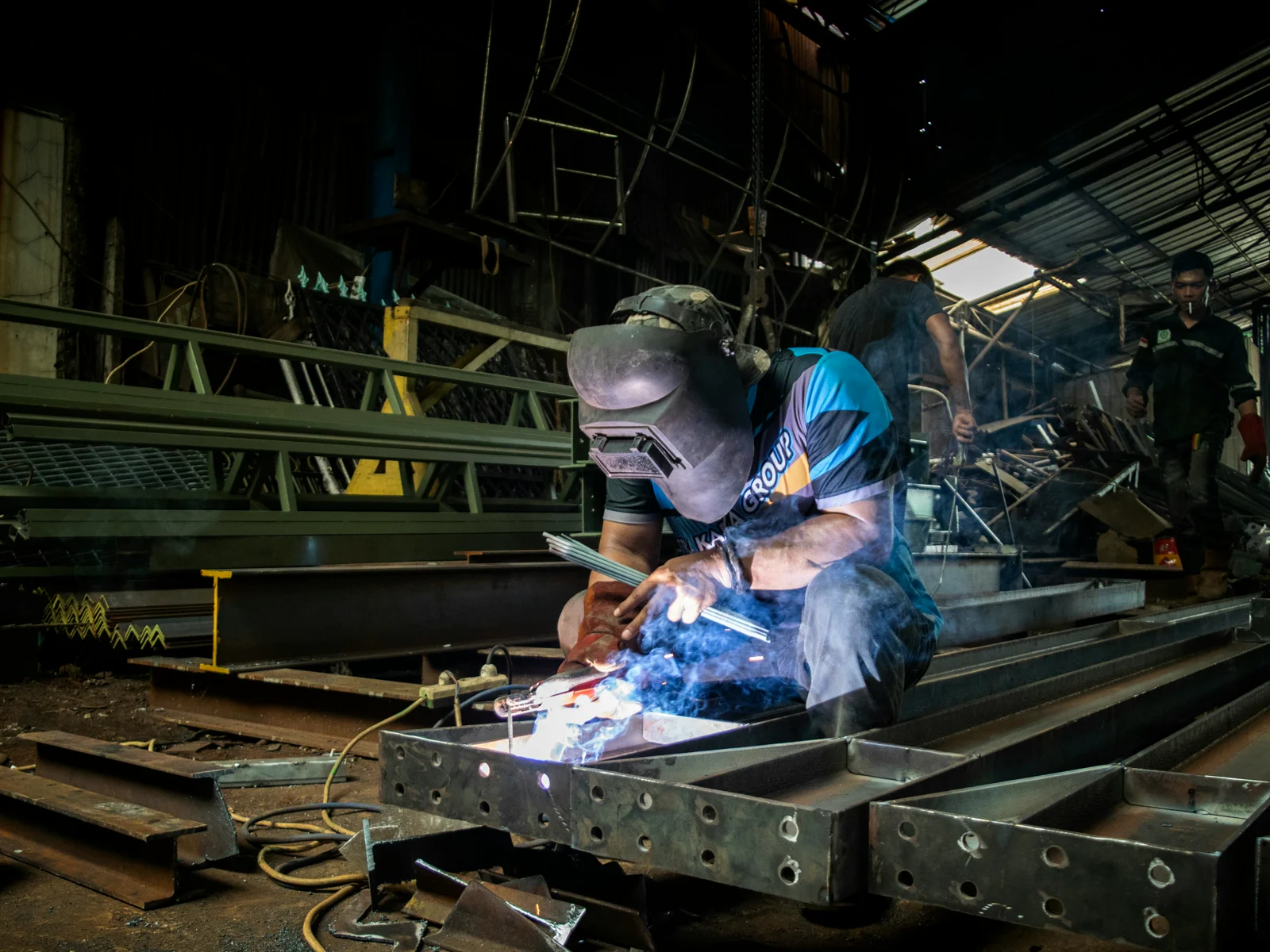
You have a 12-foot sheet of half-inch AR400 wear plate positioned on the dies. To air-bend that material over a 4-inch V-die, you need approximately 480 tons of force. An electric brake would snap its ball screws attempting to move that load. A traditional hydraulic brake simply groans and drives through it. When you are moving heavy shipping containers across the freight yard of your shop floor, raw hydraulic tonnage is the only engine capable of doing the job.
However, brute force is no longer the sole metric that determines survival.
The era of "close enough for a weld gap" has ended. Today's assemblies are laser-cut to thousandths of an inch and fitted together by robots that do not tolerate a two-degree variation in a flange. Traditional hydraulics provide the muscle to make the bend, but they challenge you on repeatability. The very mechanism that produces that immense force—pumping gallons of pressurized oil through a maze of valves—sets off a chain reaction of physical variables that actively undermine your precision.
The thermal expansion issue: Why your first bend of the day rarely matches your last
Approach a conventional hydraulic brake at 7:00 AM. The oil in the reservoir is at 65 degrees Fahrenheit. It is thick, slow-moving, and highly viscous. By 2:00 PM, after seven hours of pushing fluid through proportional valves at 3,000 PSI, that same oil is running at 130 degrees.
This is not merely a maintenance inconvenience; it represents a mechanical breakdown in precision.
As hydraulic fluid heats up, its viscosity drops sharply. Thinner oil moves past valve spools more quickly and compresses differently under load. The machine's CNC controller sends the exact same electrical signal to the valve at 2:00 PM as it did at dawn, but the ram’s physical response has changed. Your Y1 and Y2 axes begin to over-travel by a few thousandths of an inch. On a tight-tolerance job, that microscopic over-travel results in a bend angle that drifts by half a degree or more by the afternoon shift.
You are compelled to rely on your operators to chase the angle throughout the day, adjusting offsets in the controller to compensate for shifting fluid dynamics. You are not just paying for a machine; you are paying a skilled operator to manage the laws of thermodynamics.
What does all that idling power truly cost in energy waste and maintenance overhead?
Observe a traditional hydraulic press brake during a normal shift. The operator loads a part, positions it against the backgauge, cycles the ram, removes the finished piece, and stacks it. Throughout that entire sequence, the ram is actually moving under load for perhaps four seconds.
Yet the main drive motor runs at full RPM the whole time.
A conventional hydraulic system keeps its pump running continuously to maintain system pressure, even while the machine is idle. Pumping 3,000 PSI of hydraulic fluid merely to hold a ram at top dead center is comparable to leaving a diesel locomotive idling at full throttle in the yard while waiting for the next train. You are consuming substantial amounts of three-phase power to accomplish nothing. This nonstop operation degrades the oil, accelerates wear on pump seals, and turns the shop into a sauna. You end up paying for the electricity to heat the oil and then paying again for an industrial chiller to cool it back down.
We have established that pure electric machines lack the tonnage required for a mixed-production shop, and now we see that traditional hydraulics drain profits through thermal drift and idle waste. The industry has created a deliberate gap. You need the strength of the locomotive, but you can no longer afford to let it idle.
The Hybrid Architecture: Capturing Servo Precision Without Giving Up Hydraulic Muscle
Servo-hydraulic systems: A compromised middle ground or a true third category?
Consider the 2025 procurement data. The automated pure-electric press brake market is expected to nearly double to $3.14 billion over the next decade, significantly outpacing hybrid sales. European green incentives and strict emissions regulations are steering shops toward fully oil-free designs. If you looked only at financial forecasts, you might assume servo-hydraulics are merely a transitional step—a compromised middle ground headed for obsolescence once electric systems become more powerful.
But physics is indifferent to market trends and green subsidies.
When you need to bend a 10-foot length of 3/4-inch A36 steel over a 6-inch V-die, you require roughly 340 tons of force. A pure electric machine cannot produce that without destroying its own ball screws. Calling a hybrid a "compromise" is like calling a diesel-electric freight train a compromise because it is not a Tesla. It represents an entirely different class of machinery designed to solve a different problem. A true hybrid does not dilute electric speed to accommodate hydraulic oil; it applies electric intelligence to harness hydraulic force.
How, precisely, does an electric motor alter the behavior of pressurized oil?
How a closed-loop servo-pump removes the heat, noise, and drift caused by constant idling
Remove the side panels of a true hybrid press brake and examine the drive system. Instead of a large, continuously operating AC induction motor attached to a single-direction pump, you will see a high-torque AC servo motor directly coupled to a bidirectional gear pump. There are no complex proportional valves bleeding off excess pressure. The servo motor governs the ram solely by adjusting its own RPM and direction of rotation.
When the operator’s foot is off the pedal, the servo motor remains at zero RPM.
The pump is completely silent. The oil does not move. Because the fluid is pressurized only during the few seconds when the ram is actively driving the punch into the die, no friction is created to produce heat. Oil that starts the morning at 65 degrees stays at 65 degrees throughout the afternoon. By removing constant idling, you remove the thermal drift that affects conventional hydraulic systems. Pure electric manufacturers promote their energy efficiency because their motors draw power only under load. A closed-loop servo-hydraulic system delivers the same on-demand power efficiency, but it uses that power to move incompressible fluid rather than forcing metal threads against a ball nut.
If thermal drift is eliminated, what does that mean for bending accuracy?
Tonnage vs. Tolerance: Is it truly possible to maintain a half-degree angle on half-inch steel?
You are forming a 3/8-inch-thick, 8-foot-long bracket from Grade 50 steel. The job requires 240 tons of force and a tight +/- 0.5-degree tolerance. On a traditional hydraulic machine, proportional valves would respond slowly, heated oil would compress unpredictably, and the operator would end up adjusting the angle with a protractor.
On a hybrid machine, the CNC controller communicates directly with the servo motor.
As the punch makes contact with the material, dual linear glass scales mounted on the side frames measure the ram’s position to within 0.0001 inches. They send this information back to the servo drive hundreds of times each second. If the left cylinder must apply slightly more force to overcome a harder area in the plate, the left servo motor immediately increases its torque, delivering just enough oil into the cylinder to keep the ram perfectly parallel. It is like fitting a wrecking ball with a sniper’s trigger. You obtain the 240 tons of raw force needed to yield high-strength steel, while controlling that force with the minute, closed-loop precision of a circuit board.
Where Hybrids Fall Short (And Which Shops Should Walk Away)
Let us discuss what occurs when a hybrid system fails.
On a traditional hydraulic brake, a blown O-ring or a stuck directional valve is typically a simple afternoon repair for a maintenance technician with a wrench and a rag. On a pure electric machine, a failed drive usually means replacing a clean, modular component. On a servo-hydraulic hybrid, however, you are combining high-pressure fluid dynamics with closed-loop digital encoders. You are expecting oil to behave like electricity.
When a hybrid fails, you do not call a mechanic. You call an engineer with a laptop.
You are paying for maximum versatility, and that versatility comes with a maintenance premium. If you are a mixed-production shop, that premium is simply the cost of doing business. But if your shop floor operates entirely at one end of the fabrication spectrum, purchasing a hybrid is like buying a Swiss Army knife when all you need is a scalpel—or a sledgehammer. Let us examine the edges of the landscape where hybrids lose their advantage.
High-volume, thin-gauge production lines — does cycle time still favor pure electric?
Picture a shop floor devoted entirely to producing 20-gauge aluminum electronics enclosures. You are running 300 bends per hour, day after day.
In this setting, pure electric machines are unmatched. A hybrid is fast—far faster than a traditional hydraulic—but it still depends on moving oil through a gear pump to actuate a cylinder. Fluid has mass. It has inertia. Reversing the flow of pressurized oil takes a fraction of a second longer than simply reversing the polarity of an electric motor driving a ball screw.
Over a single bend, you will not notice the difference. Over a million bends, that fraction of a second accumulates into weeks of lost production. A pure electric brake accelerates and decelerates with a sharp, snapping efficiency that fluid power cannot physically match. If your entire business model depends on trimming milliseconds from light-gauge cycle times, placing a hybrid on your floor is like using a dump truck for a paper route. You are paying for heavy-duty strength you will never use.
Extreme heavy-plate applications: Is there a tonnage threshold where hybrids simply cannot compete?
Now move to the opposite end of the industrial park. You are a heavy equipment manufacturer. Your daily work involves bending 1-inch A36 steel over an 8-inch V-die across a 12-foot bed.
To form that steel, you need roughly 1,400 tons of force.
Can you build a servo-hydraulic hybrid at that scale? Technically, yes. Practically, no. The effectiveness of a hybrid depends on highly responsive servo motors directly driving the pumps. As tonnage requirements rise into the thousands, the volume of oil needed to move those massive cylinders increases dramatically. To spin a pump of that size with the instant acceleration required for closed-loop precision, you would need servo drives the size of refrigerators. The cost curve becomes exponential.
If your work is narrow and predictable, is specialization wiser than versatility?
Versatility is valuable only if your production requires it. If your contracts are fixed, your material gauges never vary, and your product lines remain the same year after year, versatility becomes unnecessary overhead.
Every machine on your floor should represent a calculated solution to a defined production need. A hybrid press brake addresses one of the most common and frustrating challenges in fabrication: the ability to shift immediately from precise light-gauge work to heavy-plate forming without changing equipment. If you never need to shift, you do not need a machine designed for that flexibility.
Specifying Your Next Machine: Aligning Drive Technology with Your Shop’s Reality
Before comparing machines — do you truly understand your actual job mix?
Most shop owners misrepresent to themselves what they actually produce. They purchase machines for the clean, high-volume contracts they hope to secure, while overlooking the dirty, heavy-plate jobs that sustain cash flow during downturns.
Review your invoices from the past twelve months. Do not estimate. Examine the steel. In most mixed-production shops, approximately 80% of bends are likely 14-gauge or thinner, typically spanning around four feet. That work is straightforward. But consider the remaining 20%. If you regularly form 8-foot sections of 1/4-inch A36 steel using a 2-inch V-die, you need at least 120 tons of force to complete the bend, plus a 20% safety margin. That requires a 150-ton machine.
If you purchase a high-speed, 80-ton all-electric brake because it cycles 30% faster on light-gauge jobs, you have effectively dismissed your heavy-plate customers.
The energy versus capital equation: How many operating hours are required for a hybrid to surpass the ROI of an all-electric machine?
Let us set aside the glossy brochure claims and examine the actual math behind moving metal.
A standard hydraulic brake is a significant energy drain. The gear pump runs continuously, forcing oil through the manifold at full RPM simply to maintain system pressure, even while the operator studies a blueprint. A hybrid brake uses servo motors to power the pump only when the ram is actively moving. During setup, gauging, and part removal, the motor is completely silent. It consumes no power.
At an average industrial rate of $0.15 per kilowatt-hour, a 150-ton hybrid saves approximately $5,000 per year in electricity alone compared with a conventional hydraulic machine.
That energy difference forms your CapEx justification. A 150-ton hybrid typically carries about a 20% price premium over a standard hydraulic model. Through energy savings and reduced cooling costs alone, the hybrid recovers that premium in roughly 3,500 operating hours. That equates to about a year and a half of two-shift production.
Against an all-electric machine, however, the math reverses. Building a pure electric brake capable of 150 tons requires massive, specialized ball screws and planetary roller gears that drive the initial purchase price extremely high. Buying a 150-ton all-electric is comparable to equipping a local delivery van with a Formula 1 transmission. The capital expense undermines the ROI long before the energy savings can offset it. The hybrid occupies the financial middle ground: hydraulic-level capital costs combined with electric-level energy efficiency.
Why optimizing for "good enough at everything" is the ultimate risk management strategy
The fabrication industry is fixated on optimization. We are encouraged to find the perfect machine for the perfect part. On a mixed-production floor, however, the perfect part does not exist.
Your shop floor resembles a heavy-duty freight yard. You need equipment capable of handling both the high-speed logistics of light parcels and the brute-force transport of heavy shipping containers. If you optimize solely for speed with a low-tonnage all-electric, a sudden market shift toward heavy structural work can leave your floor stalled. If you optimize entirely for brute force with a conventional hydraulic, thermal drift and slow cycle times will erode your margins on precision jobs.
Versatility is not a compromise. It is financial protection.
In highly volatile, price-sensitive markets, the shops that endure are those using hybrid architecture to hedge their exposure. A hybrid press brake performs well enough in high-speed thin-gauge work to compete with pure electrics and well enough in heavy-plate forming to replace conventional hydraulics. By avoiding over-specialization, you shield your business from the critical bottleneck created by a shifting economy. You are not merely purchasing metal-forming equipment.
You are securing the ability to say yes to whatever enters your bay doors over the next fifteen years.
Apply this guidance to your production
Share your material, thickness, part drawing, tolerance, and target output with the ZWCNC engineering team for an application-specific equipment review.
More news, insights, and updates from ZWCNC.
Panel Bender Advantages: Automation, Labor Savings, and Production Value

Power Plate Press Brake: How to Identify and Buy the Right Machine
Panel Bender for Job Shops: When It Beats a Press Brake
Press Brake Robot Integration: Building a Safe, Productive Cell
Press Brake Advantages and Disadvantages: Is It Worth the Investment?