Licensed editorial adaptation
Adapted and localized by the ZWCNC Editorial Team from licensed technical material. The source record is published for traceability.
Technical boundary: confirm machine-specific capacity, configuration and safety requirements against the current quotation, manual and application review.
Step into any fabrication shop and your attention is immediately captured by the spectacle—the shower of sparks from laser cutters slicing through steel like butter, the welders laying down bright, molten beads with practiced precision. It’s loud. It’s hot. It looks exactly like the kind of raw, brute-force metalwork you’d expect.
But glance toward the back of the shop. There stands a massive, quiet machine resembling an oversized guillotine. No sparks. No flames. Just a steady hum and a slow, deliberate downward stroke.
That’s the press brake. And despite appearing to be the simplest, most unassuming block of iron in the room, it is, in reality, the most mathematically sophisticated piece of equipment we own. Whether it’s a standard hydraulic model or a fully automated press brake solutions, this machine is the precision backbone of modern sheet metal fabrication.
The Real Problem: “Bending Metal” Is Too Vague to Mean Anything
Tell someone you bend metal for a living, and they’ll picture a sweaty blacksmith swinging a sledgehammer over an anvil—or maybe someone wrestling a crowbar into submission. It sounds like brute strength, not brainpower. But try folding a thick, corrugated pizza box perfectly in half without scoring it first. The cardboard resists. It bows at the center. The crease drifts off your line. The flaps refuse to align.
Now imagine that pizza box is a ten-foot sheet of half-inch cold-rolled steel—and instead of mild resistance, it’s pushing back with tens of thousands of pounds of force.
If all we needed was a crude fold, we could chain the sheet to a forklift and yank. But we don’t just need a bend—we need a precise 90.0-degree angle, perfectly straight across a span longer than a pickup truck, without distorting the rest of the panel.
If It “Just Bends Metal,” Why Do Shops Spend Six Figures on One?
A modern press brake can easily cost $300,000 or more. To an outsider, spending a quarter of a million dollars on a machine that simply moves up and down can look like financial insanity.
Shop Floor Reality Check: Newcomers assume that steep price tag buys sheer crushing force. But raw hydraulic power is relatively inexpensive—you can purchase a 50-ton shop press for about the price of a used sedan.
What commands six figures isn’t the force—it’s the ability to control that force to within five-thousandths of an inch.
When a 250-ton ram descends onto a ten-foot span of steel, the machine’s own frame deforms under the load. Even that massive structure flexes, bowing slightly at the center like an overloaded bookshelf. Without active compensation—hydraulic cylinders embedded in the bed that push upward precisely where the frame sags—the finished bend would be tighter at the ends and flatter in the middle. What you’re investing in is a system that senses its own structural deflection in real time and corrects it instantly. Why does that level of precision matter beyond the shop floor?
Where Do You Encounter Press Brake Parts Without Even Knowing It?
Consider the stainless steel sterilization tray in a hospital operating room. At a glance, it’s just a simple metal box. But if its corners are off by even a fraction of a degree—say, ±0.1°—the lid won’t seal properly, steam pressure in the autoclave won’t build as designed, and the surgical instruments inside may never achieve full sterility.
That tray wasn’t cast from a mold. It began as a perfectly flat sheet of metal, precision-cut by laser and then carefully formed into a box.
You’re surrounded by this kind of invisible industrial origami. The electrical cabinet shielding the traffic lights at your nearest intersection. The stainless steel panels lining a commercial elevator. The structural channels supporting the server racks that carry your emails across the globe. Each one depends on a flat sheet of steel being pressed into a V-shaped die with enough calculated force to permanently reshape its internal structure—yet not so much that it fractures. So how do we determine exactly where that breaking point lies?
The Physics of Precision: What a Press Brake Really Does
A ten-foot sheet of quarter-inch steel demands roughly 150 tons of downward force just to begin yielding. That’s 300,000 pounds of pressure concentrated along a single line no wider than a pencil tip.
The Punch and the V-Die: How Do Thousands of Pounds Deliver Millimeter-Level Accuracy?
The upper tool on our machine—the punch—resembles a thick, blunt blade. Beneath it sits the V-die, a solid steel block with a precisely machined channel running down the center. When 300,000 pounds of force drive a flat sheet into that channel, a fierce internal struggle unfolds within the metal. The outer surface stretches under tension, while the inner surface compresses and compacts. Between those opposing forces lies a microscopic neutral axis—a narrow boundary where stretching and compression balance out. That invisible pivot point ultimately determines the strength and accuracy of the entire bend. With the material simultaneously stretching and compressing under immense pressure, how do we know the exact moment to stop applying force?
Air Bending vs. Bottoming: Does the Metal Really Need to Hit the Bottom?

Watch a veteran operator running an old mechanical press brake, and you might see them drive the sheet straight down until it slams hard against the bottom of the V-die with a sharp metallic crack.
Shop Floor Reality Check: Many beginners assume that achieving a perfect 90-degree bend is as simple as buying a 90-degree die and forcing the metal into it until it bottoms out. In a modern fabrication shop, however, that approach is rarely used.
If you double the thickness of a sheet, bottoming it out requires four times the tonnage. That exponential increase in resistance can actually distort the massive steel frame of the press before you ever achieve a precise bend. Instead, most modern shops rely on "air bending." In this method, the punch presses the sheet into the V-die without allowing it to touch the bottom. Picture a hammock stretched between two trees: as you press down in the center, the fabric forms a deeper V-shape, yet it never reaches the ground.
In air bending, accuracy comes not from the die’s angle, but from the exact depth of the punch stroke.
We are shaping the angle entirely in open space, relying on the machine’s computer to control the downward movement to within thousandths of an inch. This is where a modern press brake solutions demonstrates its true value—programmed stroke depth, repeatable backgauge positioning, and automatic compensation for deflection. But if the sheet is essentially suspended between the punch and die, what happens the instant that massive tool retracts and the pressure disappears?
Springback Calculation: How Do You Bend Metal When You Know It Will Push Back?
When you bend a piece of high-strength steel to a precise 90 degrees and then lift the punch, the angle doesn’t stay put—it springs open to 93. Metal has memory. As the punch forces into the sheet, the outer layers undergo permanent deformation, but the inner core remains elastic. It still “remembers” its original flat state. The instant those thousands of pounds of pressure are released, that elastic core pulls back. This phenomenon is known as springback.
To achieve a true 90-degree corner, we intentionally overbend the steel to 87 degrees. We push it past the target angle, anticipating exactly how far it will relax once the pressure is removed. This isn’t guesswork—it’s a precise calculation based on the alloy’s hardness, the grain direction from the mill, and the radius of the punch tip. If a new batch of steel arrives slightly harder than the last, that elastic core resists more aggressively, and our 87-degree bend may rebound to 94 instead of 90. We’re not simply forcing steel into a corner; we’re driving it deliberately into empty space so that, when its internal tension releases, it settles exactly where we want it. If the material is constantly trying to spring back open, how do those meticulously calculated angles withstand the physical abuse of the real world?
Beyond the Shop Floor: What Is a Press Brake Really Used For?
Take a look at the heavy gray electrical cabinet standing at any major intersection. It endures driving rain, freezing temperatures, and the occasional impact from a stray shopping cart. The box’s rigidity doesn’t come from thick steel alone. It comes from the controlled tension we lock into its corners at the press brake. When we overbend the metal and allow it to spring back to a perfect 90 degrees, the steel’s elastic core remains under permanent load, bracing against the permanently deformed outer layers. That stored energy behaves like a tightly wound spring, giving the corner structural stiffness a flat sheet could never provide. But how does this brute-force tension protect the delicate components housed inside?
The “Invisible” Enclosures That Keep Your Electronics Intact
Open the thick steel door of that traffic cabinet and you’ll see rows of delicate circuit boards secured to slim aluminum chassis. These inner enclosures are formed from lightweight 18-gauge sheet metal. At this scale, we’re no longer wrestling with massive tonnage—we’re battling microscopic tolerances. If the mounting flange for a power supply is bent to 89.5 degrees instead of a true 90, the screw holes shift by mere fractions of a millimeter. When a technician forces the screw into place, that slight misalignment turns the aluminum flange into a lever, twisting the green fiberglass circuit board until the tiny silicon traces fracture.
Think about folding a stiff cardboard pizza box. If the back corners aren’t creased perfectly square, the lid won’t shut, the sides bulge outward, and the whole box warps in your hands.
We invest in machines that can monitor their own structural deflection in real time and compensate instantly, ensuring a flat sheet of aluminum folds into a perfectly square enclosure—one that shields sensitive electronics from the twisting forces of the outside world. But if precision is the only priority for thin-gauge enclosures, what happens when a bent component is expected to help support a building?
Structural Brackets: Where Form Meets Load-Bearing Function
Look at the thick, galvanized steel brackets holding a 500-pound commercial HVAC unit against a brick wall. Each one began as a flat piece of quarter-inch steel plate. When we press a punch into metal that thick, we’re doing more than reshaping it—we’re transforming its internal structure through a process known as work hardening.
As the inner radius of the bend compresses under 150 tons of force, the steel’s crystalline grains are compacted and forced into tighter alignment than when they left the mill. The corner becomes measurably harder and stiffer than the flat flanges extending from it. In effect, the bend turns into the bracket’s primary structural spine, capable of absorbing the steady, low-frequency vibration of a large fan motor without succumbing to fatigue. For heavy plate applications like these, manufacturers often rely on a purpose-built press brake solutions designed to handle extended bending lengths and high tonnage without compromising accuracy. If bending a single piece of steel can make it this strong, why do so many still assume that cast or welded metal must be superior?
Why Not Simply Cast or Weld These Parts?
Pouring molten iron into a sand mold may seem like the simplest way to produce a heavy, complex form.
Shop Floor Reality Check: Many newcomers believe a solid cast block of metal represents the ultimate form of strength. But the behavior of molten metal tells a very different story.
As molten metal cools inside a mold, it traps microscopic gas pockets. These invisible pinholes become voids within the material’s internal structure. Under intense vibration or repeated stress, those voids act as starting points for cracks. A decade ago, a wave of low-cost press brakes entered the market built with cast iron frames instead of solid steel. When subjected to the extreme tonnage required to bend heavy plate, some of those cast frames failed catastrophically—snapping mid-stroke because their hidden internal voids could not withstand the tensile forces.
Welding two thick plates together at a 90-degree angle eliminates the pinhole issue, but introduces a different enemy: heat. A 3,000-degree welding arc running along a joint forces the steel to expand aggressively and then contract unevenly as it cools. The finished bracket may be strong, but heat distortion can warp the metal, pulling carefully drilled bolt holes out of alignment. By contrast, bending cold-rolled steel on a press brake preserves the continuous, unbroken grain structure of the original sheet. You get the efficiency of a single machine stroke and precise dimensional accuracy—without a trace of heat-induced warping. But if the press brake is so effective, what happens when a part is simply too massive to load into the machine, or when you need one hundred thousand identical pieces by tomorrow morning?
Hydraulic vs. Electric: Which Machine Powers the Modern Shop?
When a component is too large to maneuver easily—or when production demands a hundred thousand identical parts by the next morning—the physics of metal bending shift dramatically. No single machine can solve both challenges efficiently. Forming a twelve-foot sheet of armor plate requires a completely different mechanical strategy than rapidly folding thousands of thin aluminum brackets. This fundamental reality divides the modern fabrication floor into two distinct camps, defined by how each machine generates and controls force. To understand how flat sheet metal becomes structural form, you have to examine the power source driving the ram.
The Hydraulic Workhorse: When Do You Really Need 1,000 Tons of Force?
Step into a heavy equipment plant and study the boom of a massive excavator. That half-inch steel plate wasn’t gently persuaded into form—it was forced into submission. Bending stock that thick demands a deep-throated hydraulic press brake, a machine that channels pressurized oil into enormous overhead cylinders, driving a hardened steel punch downward with steady, unyielding force.
Shop Floor Reality Check: Many newcomers assume that owning a 1,000-ton press brake means they’re equipped for anything, treating tonnage like horsepower on a sports car. In practice, shops often overspend on these 1,000-ton giants for the sake of impressive specifications they rarely tap into—while dealing every day with the inefficiencies and operational drag of running an oversized machine.
Using a massive hydraulic ram to bend thin-gauge sheet metal is like swinging a sledgehammer to set a finishing nail. It burns through hydraulic oil, produces excess heat, and the sheer scale of the machine’s frame makes precise work more difficult to see and control. We determine required tonnage strictly by the forming method. A standard "air bend"—where the punch presses the sheet into a V-die without bottoming out—typically needs only about 20 percent additional capacity to account for friction and material variation. But if the job calls for "coining"—driving the punch into the steel with enough force to make the material flow like clay and lock in a sharp angle—that very same bend can require up to ten times the baseline tonnage. If brute strength solves the problem of heavy plate, how do we handle high-volume runs of delicate parts without draining our power budget and slowing production to a crawl?
The Servo-Electric Uprising: Are Speed and Energy Efficiency Worth the Investment?
Now step into the rear of a high-volume facility churning out server racks. You won’t hear the low rumble of hydraulic pumps idling in the background. Instead, there’s the sharp, high-pitched whir of servo-electric motors. Rather than moving fluid, these systems rely on direct-drive electric motors paired with heavy-duty belts and pulleys to propel the ram with precision and speed.
That tray wasn’t poured into a mold—it began as a perfectly flat sheet of metal, laser-cut and then formed into a box. Repeating that process 100,000 times without deviation demands surgical precision and speed. A hydraulic press is always running, continuously circulating oil just to stay ready, quietly draining energy. A servo-electric press brake, by contrast, consumes power only during the exact milliseconds the ram is in motion. With the motor directly coupled to the drive system, it stops precisely where the controller commands—down to the micron—and does so instantly. There’s no valve lag, no shifts in oil viscosity on a hot summer afternoon that nudge the bend angle off by half a degree.
We’re investing in a machine capable of measuring its own structural deflection in real time and correcting it on the fly. Yet whether the ram is powered by pressurized oil or electric motors, the force ultimately meets the metal. When that force is distributed across a long span of steel, how does the math change?
Tonnage vs. Bending Length: Which Specification Truly Defines a Machine’s Capability?
If bending one foot of steel requires 10 tons of force, bending ten feet of the same material demands 100 tons. But force doesn’t spread perfectly across a long span. The press brake’s cylinders are mounted at the far left and right edges of the frame. When 100 tons are applied, the massive steel bed physically deflects, bowing downward at the center under load.
Picture pressing a wooden rolling pin into a block of stiff clay. If you apply pressure only at the handles, the center of the pin flexes upward, leaving the clay thicker in the middle than at the edges.
If left uncorrected, the ends of a ten-foot steel part may form a perfect 90-degree bend, while the center reaches only 92 degrees—producing a warped, canoe-shaped component. To prevent this, modern press brakes use mechanical “crowning” systems: precision-engineered wedges integrated into the lower bed that push the center upward, counteracting the frame’s natural deflection and restoring uniformity along the bend.
Even so, bending length and raw tonnage still obscure the real determinant of a machine’s capability: tooling geometry.
Run the same ten-foot sheet of 10-gauge mild steel through different lower V-dies, and the required force shifts dramatically:
| Lower V-Die Opening | Required Force (Tons per Foot) |
|---|---|
| 0.75 inch | 12.8 |
| 1 inch | 9.6 |
By simply switching to a wider die opening, you can alter the machine’s underlying physics and reduce the required tonnage, easing stress on the frame. The tradeoff, however, is a larger internal bend radius, which increases the likelihood of springback and dimensional drift. So how do you determine the precise combination of punches and dies needed to tame such a forceful physical reaction?
The Human Element: Why a Machine Is Only as Smart as the Math Behind It
Let’s zoom out for a moment. We’ve been discussing tonnage, deflection, and servo motors. With modern press brakes—complete with glowing touchscreens and slick 3D simulations—it’s easy to assume the machine is doing the thinking.
It isn’t.
What you’re really paying for is a system that can measure its own structural deflection in real time and compensate instantly. But feed it bad math, and it will execute a bad bend with absolute precision. This is industrial origami: the paper is cold-rolled steel, the creases are calculated to the thousandth of an inch, and the material pushes back with thousands of pounds of force. The machine supplies the muscle; the human supplies the geometry.
The CNC Revolution: Are Manual Operators Becoming Obsolete?
Shop Floor Reality Check: Many newcomers assume the CNC revolution turned press brake operation into a video game—load a file, tap the foot pedal, and you’re done. In reality, it can take up to a year of scrapped parts and hard lessons before an apprentice is trusted to run a complex, multi-bend job independently.
Why does it take that long? Because the computer models a perfect world. Steel lives in the real one.
The CNC will calculate the exact backgauge positions needed to achieve your target flange length. What it won’t tell you is that the grain structure in this batch of steel may cause the bend to spring open two degrees more than yesterday’s material. The operator has to read the metal—feel the resistance, verify the angle, tweak the numbers on the screen, and intentionally overbend just enough so the steel relaxes into the correct geometry.
Tooling Over Machinery: Why the Die Set Often Determines What You Can Actually Build
Walk into the back of any serious fabrication shop and you won’t just see machines. You’ll find rows upon rows of heavy steel punches and V-dies lining the walls.
Your die set defines the real-world limits of your calculations. That tray wasn’t poured into a mold; it began as a perfectly flat sheet of metal, laser-cut to shape and then folded into a box. To make those folds, the descending punch must clear the sides that have already been bent. Choose a punch that’s too bulky, and the rising flanges of the box will collide with the tooling before the bend is complete.
Imagine trying to fold a stiff pizza box while wearing thick winter gloves. If your hands are too clumsy, you can’t form the final tight corners without crushing the walls you just set upright. Press brake work is no different. The operator has to plan the bend sequence with precision, selecting a slim, hooked “gooseneck” punch that can reach deep into narrow channels without interference. The machine doesn’t choose the tool—you do.
Light Curtains and Lasers: How Do We Keep Fingers Safe During High-Tonnage Bends?
When human hands are feeding steel into a machine capable of generating fifty tons of force, there is no room for error.
In the past, operators relied solely on foot-pedal timing and steady nerves. Today, we depend on laser safety curtains. These aren’t basic motion detectors—they’re precision light grids projected just two millimeters below the punch tip. As the ram descends at high speed, the laser continuously scans the gap. If it detects anything thicker than the programmed sheet metal—such as a misplaced thumb—it instantly halts the downward stroke.
The ram stops within milliseconds.
But lasers only shield you from the punch—not from the material itself. When bending a large sheet, the metal can whip upward violently as it forms the angle. If you hold it too rigidly, that sudden arc can wrench your wrists. Skilled operators let the sheet float lightly in their hands, guiding the geometry without resisting the physics.
A New Mental Model: Seeing the World Through Folded Metal
The word “brake” traces back to the Middle English breken, meaning to break or force a change in direction. In the 1880s, manual cornice brakes lived up to that definition—workers used sheer leverage to pull rough bends into thin tin sheets for roofing. But the term is misleading. It suggests we’re simply redirecting half of a flat surface. In reality, we’re doing far more than changing the steel’s direction—we’re transforming its physical properties.
Shop Floor Reality Check: A beginner looks at a bent piece of steel and sees a simple corner. A seasoned professional looks at that same bend and sees a continuous, highly stressed structural beam brought into existence from a flat sheet.
Slide a wide sheet of 11-gauge steel across the machine bed and it offers almost no structural integrity. It flexes, droops, and shudders under its own weight. But the instant the punch forces that sheet into the V-die, the outer fibers stretch while the inner fibers compress. Permanent tension is locked into that crease.
That single calculated line turns a flimsy membrane into a rigid framework.
Think Transformation, Not Bending: From Flat Stock to Functional Geometry
This is industrial origami. The paper is cold-rolled steel, the creases are measured in thousandths of an inch, and the material pushes back with tens of thousands of pounds of force.
Picture lifting a wide, piping-hot slice of thin-crust pizza. Hold it flat by the crust and the tip droops, sending the toppings sliding. But pinch the crust to form a sharp crease down the center, and the slice suddenly stiffens enough to extend straight out. You haven’t added material or altered the chemistry of the dough. You’ve simply used geometry to create a load-bearing axis.
We do precisely the same thing with steel—only the consequences are far greater. If we miscalculate the tooling or fail to account for the press brake’s massive frame deflecting under load, that structural axis distorts. And when the axis distorts, bolt holes won’t align as the welder assembles the final chassis. We apply immense hydraulic force not to overpower the metal, but to define—exactly—where flat geometry ends and structural strength begins.
How Understanding This Machine Helps You Read Fabrication Specs with Confidence
Once you understand that bending is a structural transformation—not a cosmetic tweak—the shop-floor blueprints stop looking like simple drawings.
You come to see that an engineer’s print is not merely a set of instructions—it is a map of intended physics. When you encounter a specified internal bend radius, you recognize it is far from arbitrary. It marks a precise threshold designed to keep the outer surface of the steel from tearing under tension while ensuring the material springs back to the exact angle required. You also understand why holding a tight tolerance on thick plate demands a machine sophisticated enough to monitor its own structural deflection in real time and automatically compensate for it.
From this point on, you will never look at a flat sheet of metal the same way again.
When you pass an electrical enclosure, the frame of a heavy-duty truck, or the stainless-steel housing of an ATM, you will no longer see just a metal box. You will see the invisible geometry of applied physics. You will picture the precise sequence of punches and dies needed to form those flanges, the carefully controlled tonnage that prevents frame deflection, and the skilled human judgment that persuaded a stubborn sheet of cold-rolled steel to assume its new form.
If you're evaluating equipment for your own fabrication shop, reviewing detailed technical specifications and product configurations can clarify which system matches your workload. You can explore technical brochures for in-depth parameters, or contact ZWCNC to discuss specific bending requirements, tonnage calculations, and production goals with a specialist.
Download the Infographic With High Resolution
Apply this guidance to your production
Share your material, thickness, part drawing, tolerance, and target output with the ZWCNC engineering team for an application-specific equipment review.
More news, insights, and updates from ZWCNC.
What Is a Shearing Machine? Physics, Types, Capacity & Laser vs Shear Comparison
Can You Bend Tube on a Press Brake? Physics, D/t Ratio, and When It Actually Works
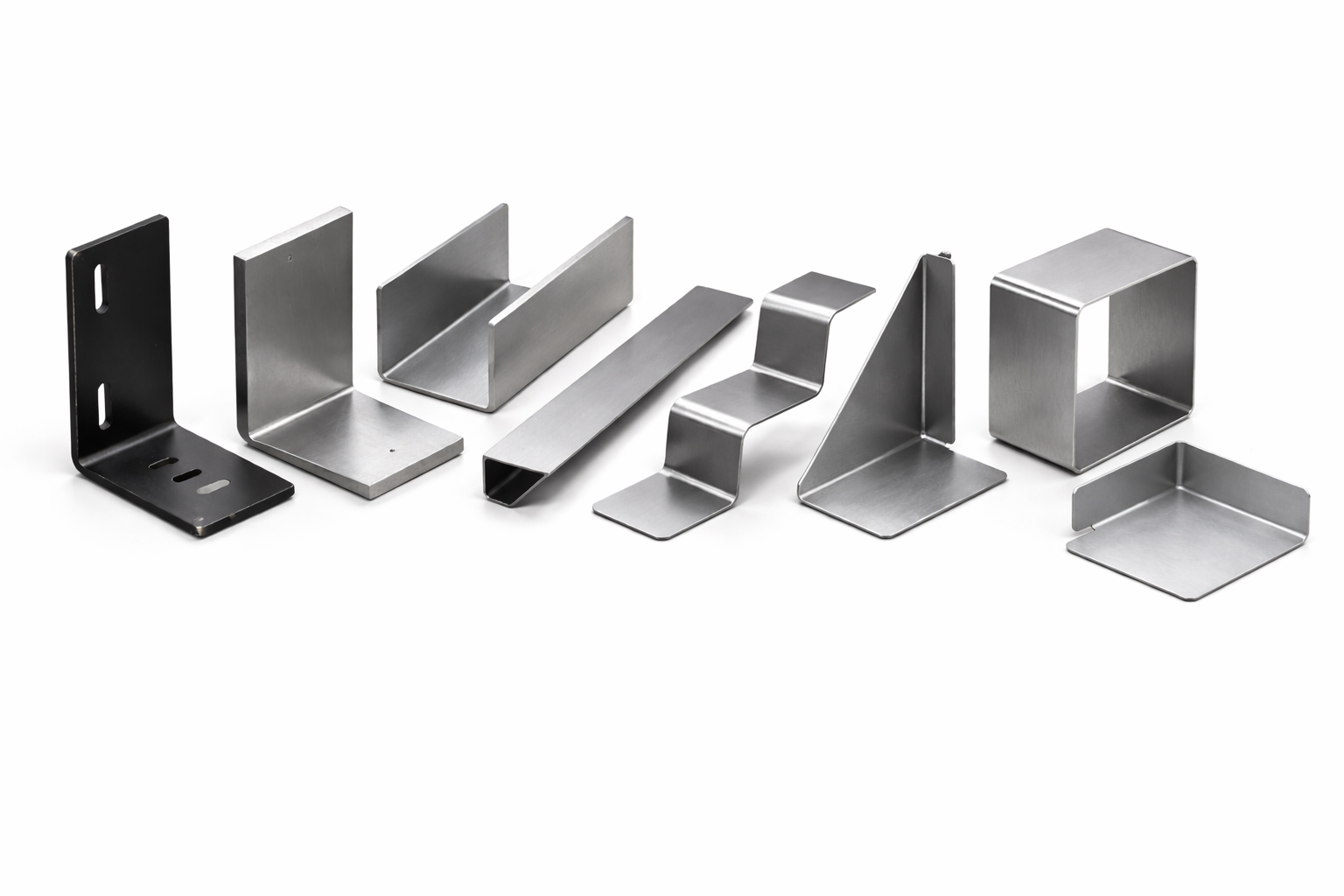
Press Brake and Shearing Machine Overwiew
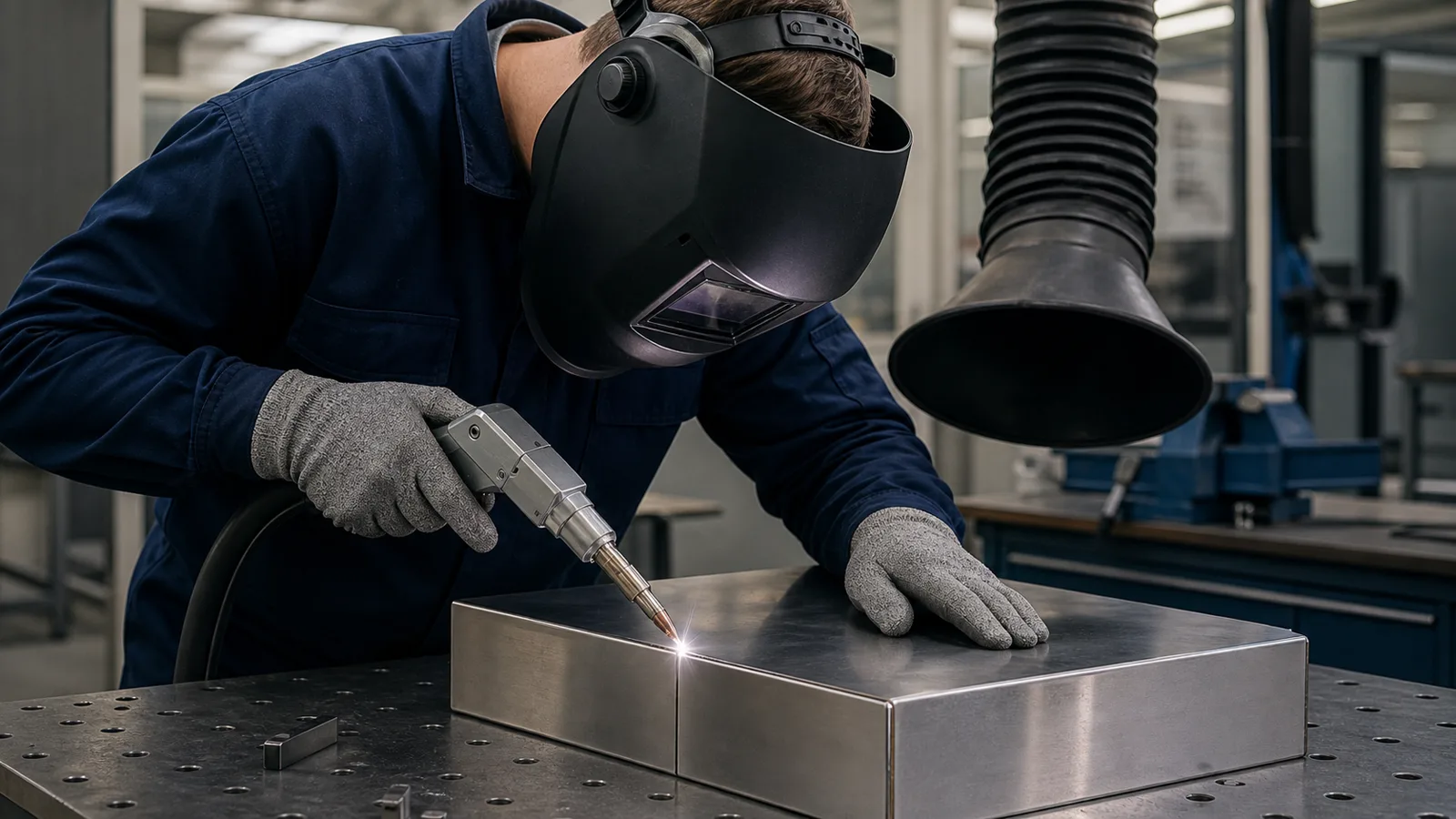
Press Braking, Stamping, and Roll Forming Explained
Shearing Machine Applications: Materials, Capacity, and Machine Selection