Licensed editorial adaptation
Adapted and localized by the ZWCNC Editorial Team from licensed technical material. The source record is published for traceability.
Technical boundary: confirm machine-specific capacity, configuration and safety requirements against the current quotation, manual and application review.
I. Core Concept Reconstruction: The Twin Pillars of Metalworking
Before diving into technical parameters, we must first break a common misconception: a shear and a press brake are not just tools for cutting and bending—they represent two physical extremes in metalworking: separation and reconstruction. Understanding this foundational logic is essential for making precise decisions in equipment selection and production line planning.
1.1 Definition and Essence: Shape Creation vs. Physical Separation
If we liken sheet metal processing to tailoring a high-end garment, the shear is the “couturier” wielding sharp scissors, while the press brake solutions is the “sculptor” shaping the fabric into a three-dimensional form. The fundamental difference lies in how each manipulates the material’s physical state:
- Shear: The Two-Dimensional Separator
- Core Logic: Controlled Fracture. The shear operates by applying force that exceeds the material’s shear strength. It doesn’t aim to preserve continuity; rather, the upper blade presses down, forcing the material through a sequence of “elastic deformation → plastic deformation → crack initiation → instantaneous fracture.”
- Process Nature: A subtractive process from a functional perspective. Its focus is on quickly and cleanly dividing a large sheet into discrete two-dimensional units. The key output is “dimension,” not “shape.”
- Key Considerations: Surface smoothness of the cut, edge perpendicularity, and burr control.
- Press Brake: The Three-Dimensional Formator
- Core Logic: Plastic Flow. The press brake’s operation is far more delicate—it applies pressure just beyond the material’s yield strength, yet well below its tensile strength (fracture point). This induces lattice slip within the metal while maintaining continuity.
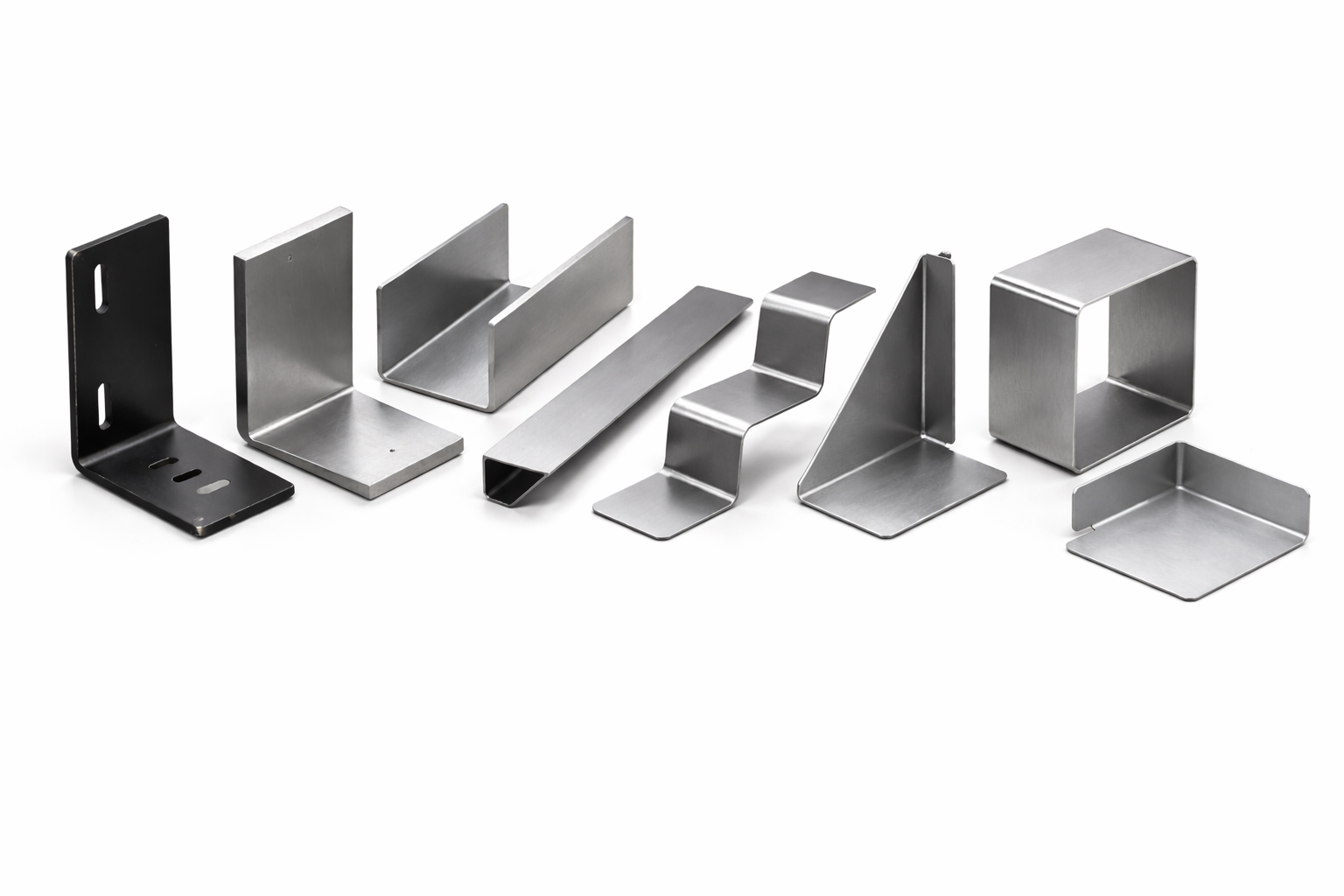
- Process Nature: A formative manufacturing method. It doesn’t alter the material’s volume or weight but reshapes its geometry, folding a flat sheet into three-dimensional space to create structural strength and functional form.
- Key Considerations: Precision of angles, compensation for springback, and the quality of the formed radius (R-corner).
For those looking to explore detailed specifications of bending equipment, you can browse our brochures for technical insights.
1.2 Process Positioning: A Symbiotic Upstream–Downstream Relationship
Within modern sheet metal manufacturing, the shear and press brake are not competitors but interdependent stages of production, each affected differently by the rise of laser cutting technology.
- The Irreversible Law of Process Every sheet metal product follows the physical rule of “separation before forming.” Raw material must first be cut—by shear, laser, or punch press—to produce blanks with defined contours. Only then can the press brake perform three-dimensional shaping. This means the shear’s cutting precision directly determines the press brake’s reference accuracy. If the shear produces trapezoidal blanks with parallelism errors, the accumulated misalignment during bending leads to uncontrolled final dimensions.
- Analysis of Irreplaceability Under Technological Disruption
- Why can laser cutting partially replace shearing? A fiber laser cutter is also a “separation” technology. It excels at complex contours, holes, and non-linear edges. However, for high-volume rectangular sheets—such as elevator panels, ducts, or cabinet backs—the shear still dominates “high-value mass production” thanks to its ultra-low operating cost (no assist gas, minimal consumables) and second-level cutting speed.
- Why can’t laser cutting replace press braking? This is the barrier between two and three dimensions. Lasers operate solely in a plane and cannot impart depth to a sheet. Unless expensive panel benders or stamping dies are introduced, the press brake remains the most versatile and flexible tool for converting flat sheets into 3D structures. In multi-variety, small-batch flexible production, the press brake is the crown jewel.
Core Understanding Summary: The shear defines production efficiency and blank cost, while the press brake determines final precision and added value. Together, they form the twin physical pillars of any metalworking workshop.
II. An Overview of Press Brake
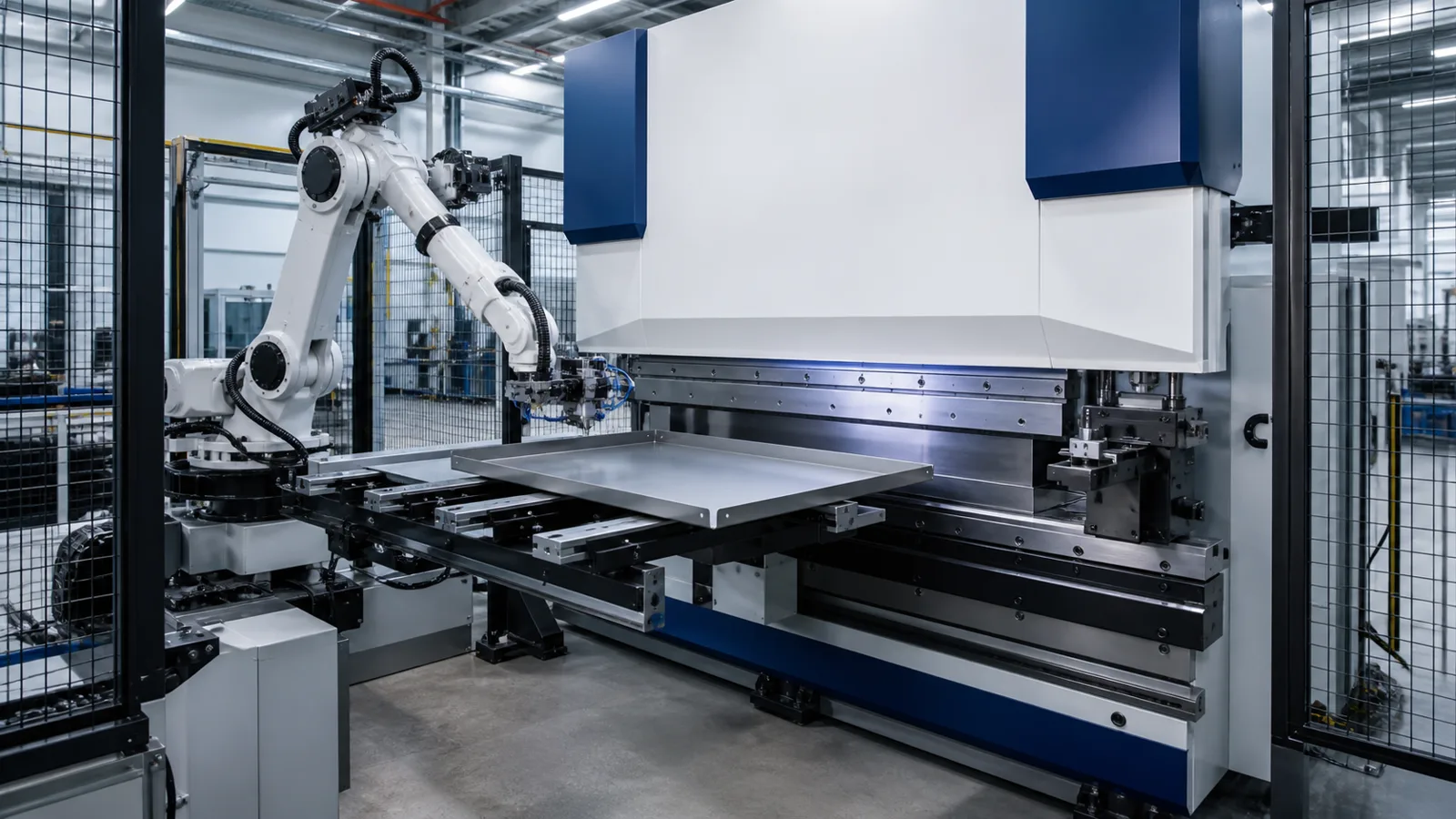
press brake solutionsis used for bending and folding metal sheets to produce profiles with different angles and shapes in sheet metal fabrication, which can be used for secondary processing in industries such as construction, aviation, automobile, metallurgy, and chemicals.
There are several types of press brakes, including mechanical press brakes, hydraulic press brakes, pneumatic press brakes, and servo-electric press brakes. The press brake works by clamping the piece of metal between a punch and one of various types of dies.
The ram of the machine tool moves the punch to press the workpiece into the lower die, allowing for repeated bending. In a press brake solutions, the back gauge and controller accurately control the bending angle and stroke.
III. An Overview of Shearing Machine
1. Definition of Shearing Machine
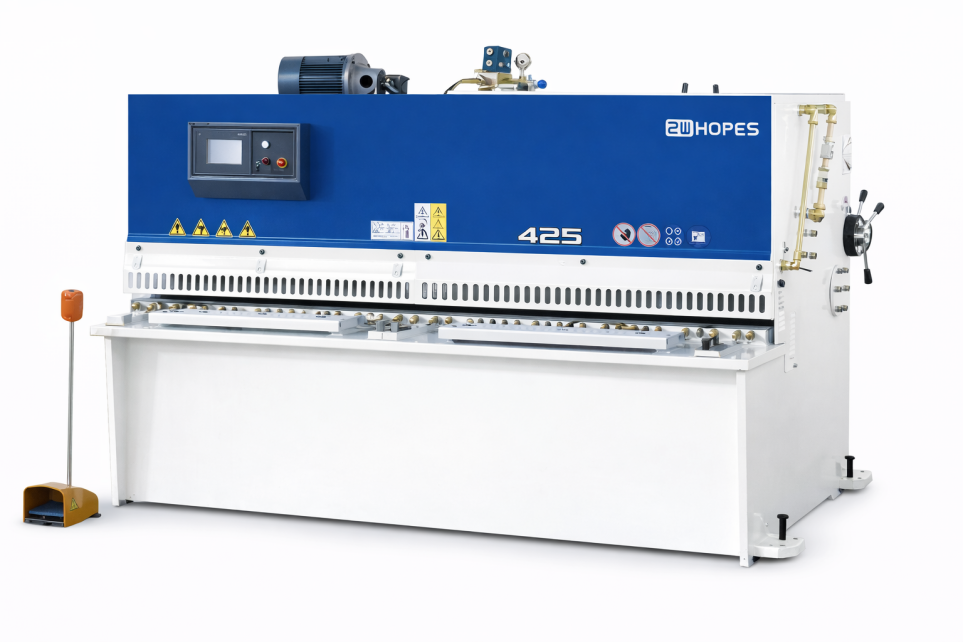
Shearing is a metal fabrication process used to cut materials, performed by a shearing machine. The shearing machine is equipped with blades or rotating discs and is commonly used in industries to cut metal plates, pipes, bars, and rods, as well as other materials such as paper, fabric, and plastic.
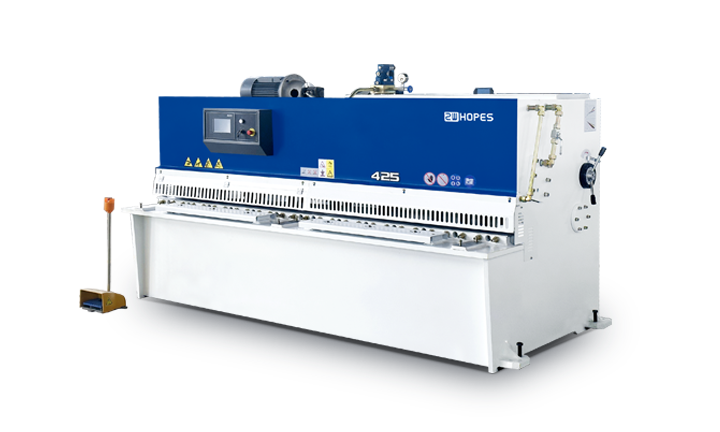
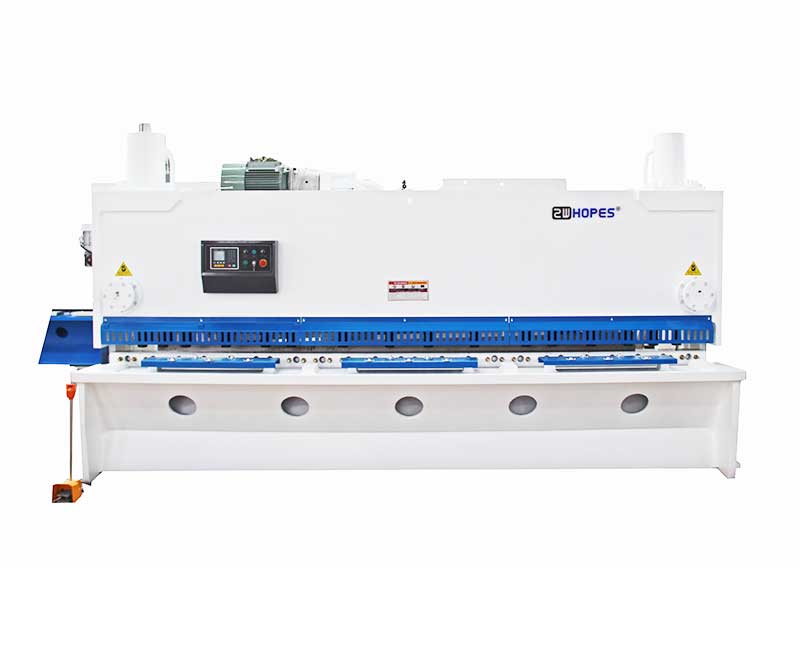
For more professional specifications and configuration details of hydraulic and guillotine models, you can refer to our product catalog of shearing machine.
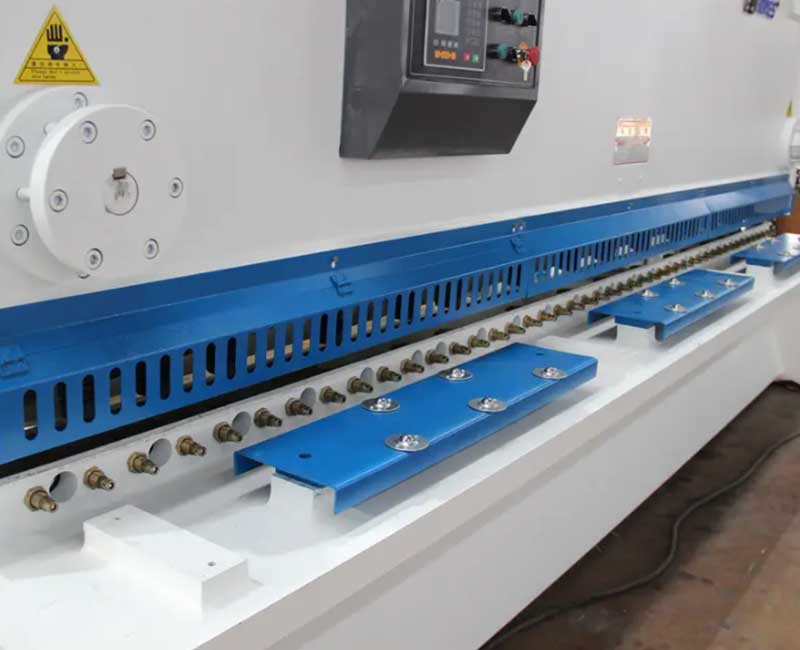
The process starts with fixing the metal plate in place using the squaring arm between the blades and molds. The upper blade holds the workpiece and moves it downward through the stationary blade for cutting. Straight blade shearing is typically used to cut rectangular and square sheets and strips.
The upper and lower blades of the shearing machine are not perfectly parallel, with the upper blade angled at a range of 0.5° to 2.5°. A clearance between the blades is necessary, the size of which is determined based on the thickness of the material being cut. This clearance affects the smoothness of the cut surface and if the shear stress is excessive, can lead to material fracture.
For a deeper understanding of how blade types and clearance impact cutting performance, you can refer to this Guide to Hydraulic Shearing Machine Blades.
2. Types of Shearing Machines
The shearing machine can be categorized into several types based on different classification standards. These include guillotine shearing machines, bench shearing machines, swing beam shearing machines, hydraulic shearing machines, mechanical shearing machines, and power shears.
The mechanical shearing machine offers high strokes per minute but generates excessive noise. Furthermore, it lacks the ability to adjust blade clearance and can't handle heavy metal plates, so it is not commonly used.
The hydraulic shearing machine operates by using a hydraulic cylinder to drive the ram and upper blade for cutting the plate. It has a strong load capacity and can perform a long shearing stroke.
The shearing machines can be either mechanically or hydraulically driven, and it boasts high speed and low cost. However, it leaves burrs on the cutting surface of the workpiece, making it suitable for mass production.
The bench shearing machine offers multiple functions, including the ability to cut 90-degree angles, round and square steel bars, and T-shaped sections. It boasts high cutting efficiency and a clean cutting surface without burrs.
Power shears, including electric and pneumatic shears, are ideal for cutting large metal plates with straight lines or large radius curves. They are flexible, efficient, and precise, and result in a high-quality, burr-free cutting surface.
Ⅳ. Deep Analysis: The 10 Fundamental Differences Between Press Brake and Shear
In manufacturing decision-making, many see only the surface—one cuts, the other bends. But to truly optimize production efficiency, one must go deeper, understanding their underlying differences in physical mechanics, processing performance, and economic models.
Below is a systematic comparison, from physical principles to commercial implications:
Dimension 1: Physical Mechanisms and Process Principles (The Physics)
This dimension is the source of all subsequent process variations and final quality outcomes.
Difference 1: Force Application (Force Mechanics)
- Shear: Controlled Fracture The essence of shearing is destruction. The blade must rapidly surpass the material’s shear strength. The entire process occurs almost instantaneously: elastic penetration → plastic shearing (producing a bright zone) → crack initiation and rapid propagation (forming the fracture zone).
- Press Brake: Plastic Flow The essence of bending is reconstruction. The applied bending moment must be precisely controlled above the yield strength but below the tensile strength (fracture point). The metal’s lattice slips without breaking—tension on the outer surface, compression on the inner, with a theoretical length-preserving neutral axis in between.
Difference 2: Tooling and Contact Interface
- Shear: Universal Blades Highly versatile. The main variable isn’t blade shape but blade clearance—typically set to 5–8% of sheet thickness. Excessive clearance causes burrs; too little accelerates blade wear.
- Press Brake: Geometry Library — This process relies heavily on tooling geometry. You must establish a comprehensive die library based on the finished part’s bend radius (R) and material thickness. The punch tip radius and the die’s V-opening width—typically 6 to 12 times the sheet thickness—directly determine both the required bending tonnage and the final forming quality.
Difference 3: Material Deformation Outcome (Material State)
- Shear: Shear Affected Zone (SAZ) — A frequently overlooked issue. The edges of a sheared sheet undergo intense instantaneous deformation, causing work hardening that increases edge hardness while reducing ductility. This thin hardened layer often becomes the root cause of cracking in subsequent processes.
- Press Brake: Springback and Residual Stress — Metal naturally seeks to return to its original form. High-strength steels can rebound by as much as 10°–20° once pressure is released. The central challenge of bending lies in predicting and compensating for this physical behavior, typically achieved through over-bending.
Difference 4: Structure
The structure of the press brake mainly includes a frame, a workbench, ram, a power device and upper and lower dies. The structure of the shearing machine mainly includes the frame, shear table, squaring arm, power device and upper and lower blades.
The upper die of the press brake generally has a right angle, acute angle and obtuse angle punches, as well as gooseneck punches. The lower die generally has V-shaped and U-shaped, single die and double die, while the die of the shear is not a knife, but a square blade.
Dimension Two: Processing Performance & Precision (Performance)
Difference 4: Dimensional Capability and Flexibility
- Shear: The 2D Terminator — It can only handle two-dimensional profiles and is constrained by its guillotine mechanism: once the blade descends, the cut must go through the entire length. Internal holes or partial cuts are impossible.
- Press Brake: The 3D Builder — This machine transforms flat sheets into three-dimensional structures. Modern multi-axis backgauges (X1, X2, R1, R2, Z1, Z2) provide exceptional flexibility, enabling the formation of non-parallel flanges, tapered parts, and complex geometric shapes.
Difference 5: Accuracy Metrics
- Shear: Twist and Bow — To reduce cutting force, shears use an inclined upper blade (rake angle). This design causes long, narrow pieces to twist like propellers—a precision limitation unique to shearing.
- Press Brake: Angular Consistency — The challenge is compensating for ram deflection under high tonnage. Without a crowning system, long parts often exhibit the "canoe effect," where the center angle is larger than the edges.
Difference 6: Waste Rate and Material Utilization (Waste Profile)
- Shear: Minimal Waste — By using common-line cutting, each previous cut edge serves as the starting edge for the next, theoretically achieving nearly zero skeleton waste.
- Press Brake: Setup Scrap — Although bending itself produces no chips, tuning for accurate angles—especially when springback varies in new material batches—often requires sacrificing the first piece. Moreover, incorrect bend deduction calculations can lead to entire batch rejection, making this form of “invisible waste” extremely costly.
Dimension Three: Operations & Economic Model (Operations & Economics)
Difference 7: Production Rhythm and Efficiency (Cycle Time)
- Shear: Second-Level Speed — High-speed shears can achieve 60–100 strokes per minute (SPM). For dividing large sheets into regular smaller panels, they remain the most efficient mechanical option available.
- Press Brake: Minute-Level Process — The bottleneck lies in physical handling. Each cycle involves positioning, flipping, aligning, foot-pedal activation, pressure holding, and unloading. Even with robotic assistance, single-part cycle times are significantly longer than shearing.
Difference 8: Skill Requirement (Skill Gap)
- Shear: Standardized Operation — Training is brief, focusing mainly on safety and gap adjustment. Once set, operators primarily act as material feeders.
- Press Brake: The Black Art — Skilled bending technicians are invaluable assets. They must possess strong spatial reasoning, plan bend sequences to avoid machine interference, and compensate by feel for variations between material batches.
Difference 9: Maintenance Cost Structure (Maintenance Costs)
- Shear: Low-Frequency, Rigid Costs — Simple and durable design. Blades typically have four usable edges that can be rotated. Maintenance focuses on the hydraulic system and blade grinding.
- Press Brake: High-Frequency Precision Costs — Precision-ground dies are expensive and wear quickly. Linear scales and proportional hydraulic valves demand immaculate environments, as even minor contamination can cause angular inaccuracies.
Difference 10: Safety Mechanisms (Safety Protocols)
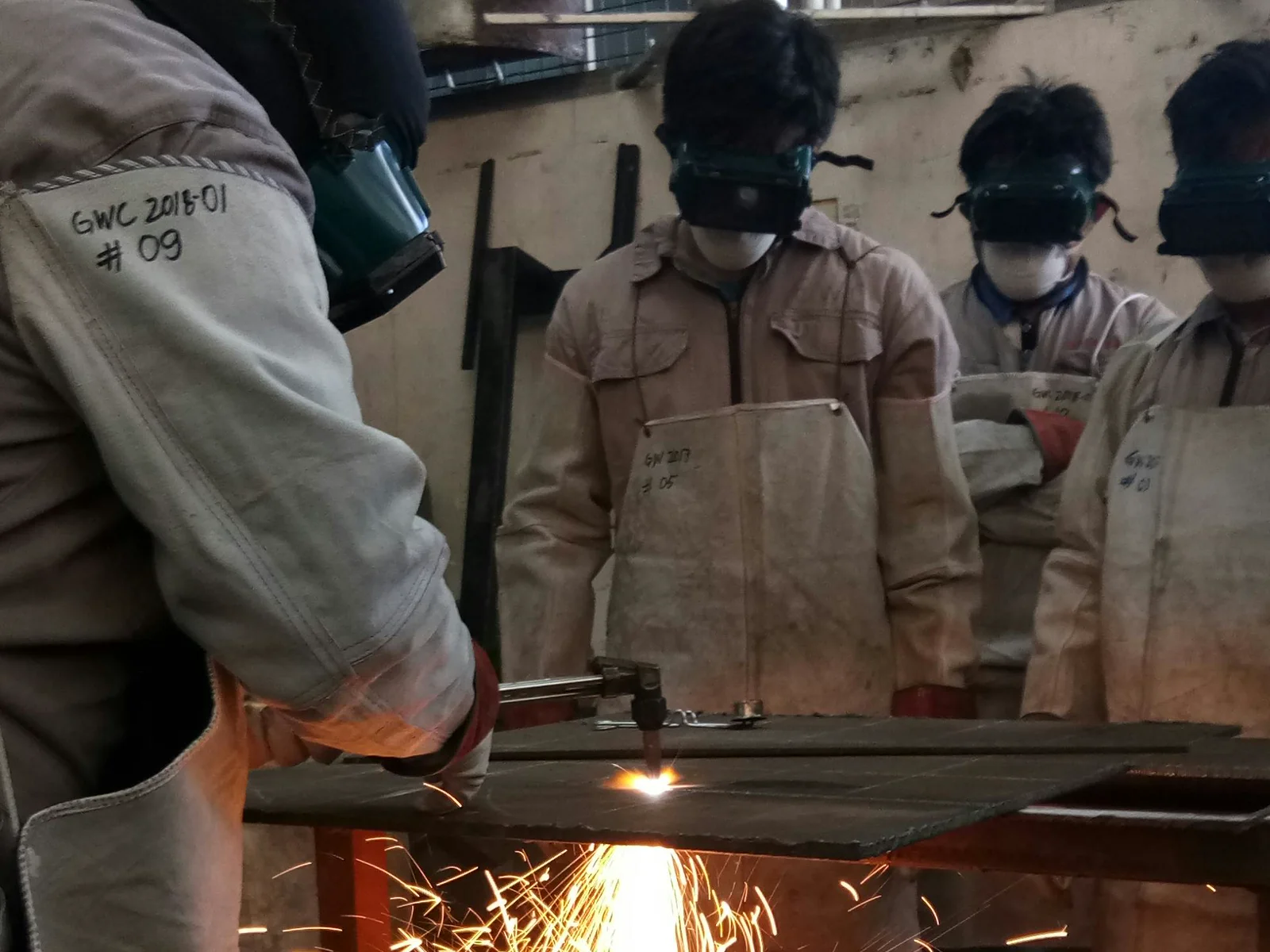
- Shear: Physical Isolation — The main risk lies in the hold-down foot potentially injuring hands. Fixed safety barriers and rear photoelectric sensors typically provide sufficient protection, keeping hands outside the danger zone.
- Press Brake: Active Optical Protection (AOPD) — Because operators must hold workpieces close to the ram’s motion, this is a high-risk machine. It requires costly active optical protection systems (AOPD) such as Lazer Safe, which allow the ram to descend rapidly but stop within milliseconds if a finger enters the danger zone.
💡 Insider Tip: The “Poisoned Edge” Phenomenon
Many newcomers stumble here: if you shear material and then send it directly to the press brake, always pay attention to the burr side orientation.\n> Golden Rule: Keep the burr side on the inside radius of the bend.\n> Why: The microscopic cracks and hardened layer (SAZ) formed by shearing, if placed on the outer bend (where tensile stress peaks), can propagate instantly like scratches on glass—causing visible cracks or even fractures. If burrs must face outward, perform deburring first. This small but critical detail, often absent from textbooks, can dramatically reduce scrap rates.
Ⅴ. Scenario-Based Application: Building the Optimal Production Line
After grasping the physical mechanisms and performance differences, it’s time to elevate our perspective from a simple “machine-to-machine comparison” to the strategic level of production line design and business decision-making. True leaps in productivity rarely come from buying the most expensive equipment; they stem from aligning your shear and press brake precisely with the unique ecosystem of your industry.
5.1 Industry Application Matrix
Different manufacturing environments vary dramatically in their sensitivity to precision, efficiency, and cost. This drives the fundamental logic behind equipment configuration. The following matrix breaks down optimization strategies for four representative industries:
| Industry Scenario | Recommended Core Setup | In-Depth Strategy |
|---|---|---|
| Steel Service Center | Shear (the undisputed champion) | The key principle is rectangular blanking after leveling. When handling tons of coil material, a shear integrated with a leveling line can slice sheets up to 4 meters wide in just one second per stroke—an efficiency level that lasers or plasma cutters simply can’t match. |
| Elevator Manufacturing | Shear + Laser | A hybrid approach dominates. Structural parts hidden inside the shaft—such as guide rails and reinforcement ribs—are best processed by a shear for speed and cost efficiency. Visible parts like cabin panels and control boards, which require precise openings and scratch-free surfaces, go to the laser. One leading elevator manufacturer achieved optimal cost balance by using shears for 80% of structural components and lasers for 20% of visible ones. |
| HVAC Duct Fabrication | Shear + Coil Line | Dedicated production logic. Duct layouts are almost entirely rectangular, so the industry-standard solution isn’t a general-purpose shear, but a fully automated coil line integrating shearing, beading, and edging. In this domain, laser cutting is overkill—too slow and too costly to compete. |
| Precision Enclosures / Electronics | Laser + Brake | Precision rules here. The slight strip distortion and 0.5 mm-level tolerance from shearing are fatal for tight electronic enclosures. As a result, shears have virtually disappeared; production lines rely entirely on laser or punch blanking combined with high-accuracy press brakes to guarantee seamless assembly. |
5.2 The Disruptive Role of the Laser Cutter
In modern manufacturing, one often hears the claim that “fiber laser cutters will completely replace shears.” Yet, financial and production data tell a more nuanced story. Building an optimal line requires understanding the fundamental trade-offs between the two.
1. Efficiency Reality: Sprint vs. Marathon
- Guillotine Effect: A shear completes the entire width cut instantaneously. Whether the sheet is 1 meter or 6 meters wide, each stroke takes a constant 1–1.5 seconds.
- Travel Speed: Although lasers move rapidly at over 100 m/min, their actual cutting speed is limited by material melting. For example, cutting a 3-meter-wide, 10 mm-thick carbon steel plate takes a shear just 1 second, while a 6 kW fiber laser needs about 20–30 seconds to trace the same path.
- Conclusion: In the competition of “long straight cuts and thick plates,” shears are unbeatable; in “short contours, complex shapes, and thin sheets,” lasers reign supreme.
2. Cost Reality: More Than Just Electricity
- The Consumable Black Hole: A laser cutter’s operating cost extends far beyond electricity—it includes costly assist gases (nitrogen/oxygen), protective lenses, ceramic rings, and nozzles. Typical mid-power laser systems run at $15–$30 USD per hour.
- Extreme Simplicity: A shear’s cost per operation is limited to motor power and infrequent blade wear. Roughly estimated, the cost per straight cut is only one-fifth to one-tenth that of a laser.
- Hidden Costs: Laser cutting creates a heat-affected zone (HAZ) that can oxidize or harden the edge, often requiring post-grinding before precision welding or coating. Shearing, though it leaves burrs, causes no oxidation—making it more weld-friendly for carbon steel structures.
5.3 Conclusion: The Shear’s Endgame and Optimal Placement
The shear hasn’t vanished—it has simply evolved from being a “universal blanking master” into a specialist for rectangular sheet processing.
🚀 Expert Production Line Configuration Verdict:
- If you handle structural components, heavy industry, or steel distribution: Keep your shear—it’s the guardian of your bulk throughput and profit margin. 2. If you run a job shop with diverse orders: Prioritize investing in a laser cutter, since you can’t predict tomorrow’s complex designs. 3. The smartest “golden combo”: For mid-sized sheet metal plants, the ideal setup is a high-performance laser for high-value jobs, alongside a basic or second-hand shear for heavy-duty work. Use the shear for straight cuts, scrap trimming, and spacer cutting—freeing your costly laser head from low-value tasks so it can focus on intricate contour processing. That’s how you truly maximize ROI (Return on Investment).
Ⅵ. Practical Procurement Decisions: Selection and ROI Analysis
With the physics and application scenarios clear, we now shift from theory to real-world investment decisions. Many manufacturers fall into the trap of comparing specifications while ignoring the full economic lifecycle of their equipment. This chapter introduces a practical framework for procurement and risk avoidance, helping you accurately calculate ROI and sidestep the hidden pitfalls that even seasoned professionals sometimes overlook.
6.1 The Five-Step Demand Assessment
Before requesting quotations from suppliers, complete this self-assessment. This model can save you at least 20% in unnecessary premiums—or prevent you from buying a machine that looks impressive but proves useless on the shop floor.
Material DNA Analysis
- Key Metric: Don’t focus solely on “maximum thickness”—pay attention to yield strength. Many buyers purchase machines rated for carbon steel but end up processing stainless steel instead.
- Real-World Impact: When cutting 304 stainless steel of the same thickness, a shear requires about 50% more shear force than for carbon steel. Likewise, a press brake needs roughly 60% more tonnage and must also account for more pronounced springback.
- Trap Alert: If you plan to process high-strength steels such as Hardox or Weldox, be aware that a standard hydraulic shear’s blade life can drop from three years to just three months. Always opt for dedicated wear-resistant blades.
Geometry Profile
- Straight-Line Ratio: Review your annual orders. If more than 70% of your products are regular rectangular panels—like distribution box backplates, simple brackets, or covers—a shear is indispensable. It’s your moat for maintaining profit margins.
- Irregular Shape Ratio: If your orders are full of notches, radii, or curved edges, skip the shear entirely and invest that budget in a laser cutter or turret punch press instead.
Volume and Workflow Characteristics
- High Mix / Low Volume: This is typical for contract manufacturers. You’ll need a press brake equipped with quick clamps and an advanced CNC system to minimize setup time. In this scenario, a shear will see very low utilization.
- Low Mix / High Volume: You’ll benefit from a high-speed shear with an automatic backgauge and stacking system, possibly integrated with a robotic bending cell.
Tolerance Stack-Up
- Downstream Processes: If the bent parts will enter a robotic welding cell, the bending angle error must be controlled within ±0.5°. This requires an advanced real-time laser angle measurement system.
- Manual Assembly: For traditional riveting or bolted assembly, manual flexibility compensates for minor deviations, so a standard electro-hydraulic synchronized press brake (±1°) is sufficient.
Future Proofing
- Interface Reservation: Even if you’re not planning automation today, insist that the press brake manufacturer provides an open robot communication interface. Without it, upgrading to automation in three years could cost more than buying a new machine.
6.2 ROI (Return on Investment) Model
A sound purchasing decision considers more than just CAPEX (initial investment)—it must also evaluate TCO (Total Cost of Ownership). The following table compares the 10-year TCO of hybrid/pure electric press brakes versus traditional hydraulic models:
| Cost Dimension | Traditional Hydraulic Press Brake | Hybrid / Electric Press Brake | Delta Analysis |
|---|---|---|---|
| 1. Initial Purchase | Baseline ($1.0X) | 20–30% Premium ($1.25X) | Initial cost is higher for electric models, but the gap is narrowing rapidly as servo technology becomes mainstream. |
| 2. Energy Consumption | High | Very Low | Hydraulic machines keep the motor running at full speed even in standby; electric servos only draw power when moving. Annual electricity savings can reach up to 50%. |
| 3. Hydraulic Oil Maintenance | $1000+/year | $0–$100/year | Hydraulics require regular oil changes, filters, and waste oil disposal (including environmental compliance costs); electric models need almost no hydraulic maintenance. |
| 4. Production Efficiency | Slow | Fast | Servo-driven sliders descend and return over 30% faster than hydraulic ones, with higher positioning accuracy and significantly higher daily output. |
| 5. Noise & Fatigue | 75 dB+ (Noisy) | 65 dB (Quiet) | Lower noise levels align with environmental standards and reduce operator fatigue, indirectly lowering defect rates during late shifts. |
ROI Conclusion: For factories operating more than six hours per day, hybrid or fully electric models typically recover their higher upfront cost within 2.5–3 years through savings in electricity, hydraulic oil, and improved efficiency. After that, every working day adds directly to profit.
6.3 Pitfall Guide: Three Hidden Traps Only Insiders Know
Trap 1: Using a Press Brake as a Shear
- What Happens: Some factories try to save money by fitting a cutting die onto a press brake to cut flat bars or short strips.
- Consequence: This is extremely dangerous. A press brake is designed for centrally aligned vertical loads, while cutting generates significant lateral forces and sudden tonnage shocks. These can quickly destroy the machine’s guides, cylinder seals, or even its frame.
- Lesson: Use each machine for its intended purpose—don’t use a carving knife to chop firewood.
Trap 2: Ignoring Throat Depth
- What Happens: Buyers order a large-tonnage, long-bed press brake, only to find it can’t bend large boxes or trays once delivered.
- Reason: The throat depth determines how far the sheet can extend into the machine’s side frame. If the throat depth is only 400 mm, you’ll never be able to bend the bottom of a U-shaped part wider than that—unless it’s a shallow tray.
- Solution: Define the required throat depth in your purchase contract based on your largest part’s flat dimensions, and request a deep-throat design if necessary.
Trap 3: Paying for an Underpowered Controller
- What Happens: Some buyers spend big on a high-grade mechanical frame but pair it with a low-end CNC controller—sometimes just an X/Y digital readout.
- Risk: Entry-level systems lack graphical programming and collision simulation. Operators must mentally convert 2D drawings into 3D bending sequences, which is error-prone and heavily reliant on experienced technicians. If those key operators leave, the entire production line could grind to a halt.
- Recommendation: Delem (DA-50/60T series) and Cybelec (VisiTouch series) are industry-standard benchmarks. These systems automatically calculate the optimal bending sequence, enabling even beginners to achieve results comparable to seasoned professionals—a critical investment to reduce reliance on skilled labor.
Ⅶ. Advancing Toward the Future: The Rise of Intelligence and Automation
After mastering the physical mechanisms, application scenarios, and cost structures, it’s time to look ahead. Once considered bulky and unsophisticated, traditional shears and press brakes are undergoing a profound transformation—from muscle to mind. For today’s manufacturing decision-makers, it’s no longer enough to buy a machine that simply cuts or bends; you’re investing in algorithm-driven productivity and automation solutions that tackle workforce challenges head-on.
7.1 CNC and Data-Driven Manufacturing (Software Is the New Hardware)
By 2025, hardware homogenization will be inevitable—the true competitive edge will lie in software capability and closed-loop data systems.
- Shear Intelligence Upgrade: Auto-Gap Adjustment
- Pain Point: In conventional operations, when an operator switches from cutting 10mm carbon steel to 1mm stainless steel, they often need to crawl behind the machine with a feeler gauge to manually adjust blade clearance. This process takes 15–20 minutes and is prone to errors that can destroy the blades.
- Solution: Modern CNC shears—equipped with systems such as Delem DAC-360—offer fully automated control. Operators simply input the material type and thickness, and servo motors adjust the blade gap within seconds to micron precision. This isn’t just convenience—it’s a multiplier for blade lifespan.
- Press Brake Intelligence Evolution: Eliminating Trial-and-Error Costs
- Offline Programming: With software such as Metalix or Radan, bending process design has shifted from the shop floor to the office.
- Old Model: Machines sit idle for an hour while technicians sketch, calculate, and repeatedly test bends on-site.
- New Model: Engineers simulate bending on a computer, automatically detect interference, and generate optimal CNC code for direct machine execution. The machines never stop—maintaining continuous productive time (Chip-making time).
- Real-Time Angle Correction: Systems like Lazer Safe Iris Plus or Trumpf ACB deliver this capability.
- The Breakthrough: This is the ultimate countermeasure against material springback. During the millisecond of ram descent, laser sensors measure the sheet angle in real time. If springback is detected, the system commands the ram to deliver an instant corrective press. The result: no more trial pieces or wasted material—first-piece perfection every time.
- Offline Programming: With software such as Metalix or Radan, bending process design has shifted from the shop floor to the office.
7.2 Integrated Automation Solutions (The Automation Shift)
As skilled press brake operators become increasingly scarce and expensive, automation has shifted from a luxury to a necessity for survival.
- Robotic Bending Cell
- Positioning: Its value lies not in speed but in stability and endurance. Bending is among the most physically demanding and hazardous tasks on the shop floor.
- ROI Logic: Robotic bending isn’t ideal for prototype shops with constant part changes. In continuous runs of over 50 identical pieces, it ensures 100% consistency and—more importantly—never eats, smokes, or scrolls through its phone, enabling 24-hour unmanned “lights-out” production.
- Panel Bender — A Powerful Complement to the Traditional Press Brake
- Disruptive Principle: Unlike a press brake that uses dies to press material inward, a panel bender employs mechanical arms to fold the edges of the sheet.
- Key Strength: Zero changeover time. A single universal toolset handles all bending tasks. For cabinet doors, electrical panels, and box-type products, its overall efficiency is typically 3–4 times higher than that of a conventional press brake.
- Limitations and Synergy: It cannot handle complex internal bends or sheets thicker than 3–4mm. Thus, it complements the press brake rather than replacing it.
7.3 Green Manufacturing and the Servo Revolution (Green & Silent)
The twin pressures of environmental regulation and rising energy costs are accelerating the transition from hydraulic to electric power.
- The Rise of Servo-Electric Technology
- Energy Efficiency: Traditional hydraulic press brakes require their main motor (typically over 15kW) to run continuously to maintain oil pressure, generating heat and noise. Servo-electric press brakes, on the other hand, operate on a “power-on-demand” principle—no power consumption when idle. Tests show total energy savings of 50–70%.
- Maintenance Advantages: With no hydraulic oil involved, there’s zero risk of leakage, no need for regular oil changes, and no thermal drift affecting accuracy. For industries demanding ultra-clean environments—such as food or medical equipment manufacturing—this is often the only viable choice. Factory floors can finally stay as spotless as an operating room, reflecting a new level of respect for the modern workforce.
Ⅷ. Summary and Action Guide
After our deep dive into physical mechanisms, technical parameters, and economic models, we return to the core of decision-making. In today’s age of information overload, what you need isn’t just data comparison but a set of actionable principles that can directly guide tomorrow’s production.
8.1 Decision Cheat Sheet
When faced with overwhelming parameter lists, refer to this ultimate comparison chart—which contrasts shears and press brakes while introducing the “hidden competitor,” the laser cutter. It helps you quickly clarify each machine’s ecological niche on the production line.
| Core Dimension | Shear | Press Brake | Laser Cutter |
|---|---|---|---|
| Essential Function | 2D separation: fast straight and rectangular cuts | 3D transformation: turning flat sheets into structural forms | Precision contouring: complex shapes and perforations |
| Ideal Battlefield | Steel distribution centers, duct lines, standard cover plates | Enclosures, precision sheet metal, structural parts | Custom-shaped components, prototypes, high-end electronics |
| Unit Cost | (Very low) – Only electricity and minimal blade wear | (High) – Labor-intensive with costly tooling wear | (Medium) – Includes assist gas, lenses, and nozzle consumables |
| Accuracy Level | ±0.5 mm (Coarse) – prone to distortion | ±0.3° / ±0.1 mm (High precision) – depends on compensation systems | ±0.05 mm (Ultra-precise) – non-contact processing |
| Skill Barrier | Low – Operators can be trained within half a day | Very high – Requires experienced technicians or advanced offline software | Moderate – Needs skilled nesting and CAD operators |
| Substitutability | Weak – Lasers can replace it, but efficiency and cost are inferior | Strong – Except for expensive bending centers, no real substitutes | Strong – The only solution for complex geometries |
| One-Line Positioning | The Workhorse (Throughput King) | The Moneymaker (Profit Generator) | The Rainmaker (Order Magnet) |
8.2 Pro Tips
Through two decades of industry observation, we've found that many factories suffer from serious “capacity mismatches” in their equipment mix. Here’s the strategic formula for The Golden Combination tailored to mid-size sheet metal manufacturers:
💡 Reject the ‘1-to-1’ Linear Mindset Never try to match one laser cutter with one press brake. It’s one of the most common and costly productivity traps.
- Physical Bottleneck: The material output rate of a 6kW fiber laser cutter is typically 3–4 times faster than a skilled operator’s bending speed.
Optimal Configuration Strategy:
• 1 Fiber Laser Cutter – Focus exclusively on high-value, high-precision contoured and perforated parts. Let it cut only what’s worth cutting.
• 1 Hydraulic Shear – The underrated workhorse. Assign it to long strips, pads, scrap reclaiming, and high-volume rectangular cutting. Free your expensive laser from low-value straight cuts—this is the secret to ROI maximization.
• 3–4 CNC Press Brakes (or one robotic bending cell + two manual units) – Ensure enough bending capacity to absorb the laser’s massive output and prevent a “bottleneck lake” in your production flow.
8.3 Action Plan
Knowledge only creates value when it’s turned into execution. Tomorrow, when you arrive at your factory, carry out these three diagnostic checks:
Audit Your Prints
- Pull up production orders from the past three months and run a quick data analysis.
- Decision Rule: If more than 60% of your orders consist of regular rectangular parts, even if you already own a laser cutter, make sure to keep—or purchase—a shear. The savings from nitrogen gas and laser tube lifespan will cover its cost within a year.
Check the Scrap Bin
- Head to the scrap area and look for pieces with cracks at the bending points.
- Diagnostic Method: Scratch across the fracture surface with your fingernail. If the part was cut on a shear, check whether the burr is on the outer (tensile) side of the bend.
- Immediate Fix: If it is, that’s a basic process mistake. Add “Burr Inside” to your Standard Operating Procedure (SOP) and post it near the press brake.
Challenge the Vendor
- When buying a press brake, don’t just ask about “maximum tonnage” and “price.”
- Critical Question: Does this machine support offline programming at the Delem DA-60T level? Is it equipped with Lazer Safe automatic speed protection?
- Observe the Reaction: If the salesperson hesitates or tries to convince you that “you don’t need something that advanced,” find another supplier. But if they start enthusiastically discussing data interfaces and safety efficiency—congratulations, you’ve found someone who truly knows their craft.
Ⅸ. Conclusion
If your production requires strips and sheets, then a press brake solutions is the right choice. On the other hand, if a practical machinist is producing boxes, pans, lids, and similar items, then a shearing machine is the ideal option. Remember, the shearing machine is used for cutting, and the press brake is used for bending.
You can select the appropriate metal processing equipment based on your production and maintenance needs. Our press brakes and shearing machines have high-cost performance, multi-functionality, and low maintenance costs. If you need assistance in choosing the right machine, please contact ZWCNC — our product experts will help compare the advantages, disadvantages, and features of different machines and provide relevant brochures for reference.
Apply this guidance to your production
Share your material, thickness, part drawing, tolerance, and target output with the ZWCNC engineering team for an application-specific equipment review.
More news, insights, and updates from ZWCNC.
Can You Bend Tube on a Press Brake? Physics, D/t Ratio, and When It Actually Works
What Is a Press Brake Used For? From Brute Force to the Precision Backbone of Modern Manufacturing
Ironworker vs. Press Brake vs. Shear: The Ultimate Guide to Selection and Operation
Auto-Tool Panel Bender vs. Press Brake: Which Machine Fits Your Parts?
Press Brake Drawing Files: Preparing DXF, STEP, and Controller Files