Licensed editorial adaptation
Adapted and localized by the ZWCNC Editorial Team from licensed technical material. The source record is published for traceability.
Technical boundary: confirm machine-specific capacity, configuration and safety requirements against the current quotation, manual and application review.
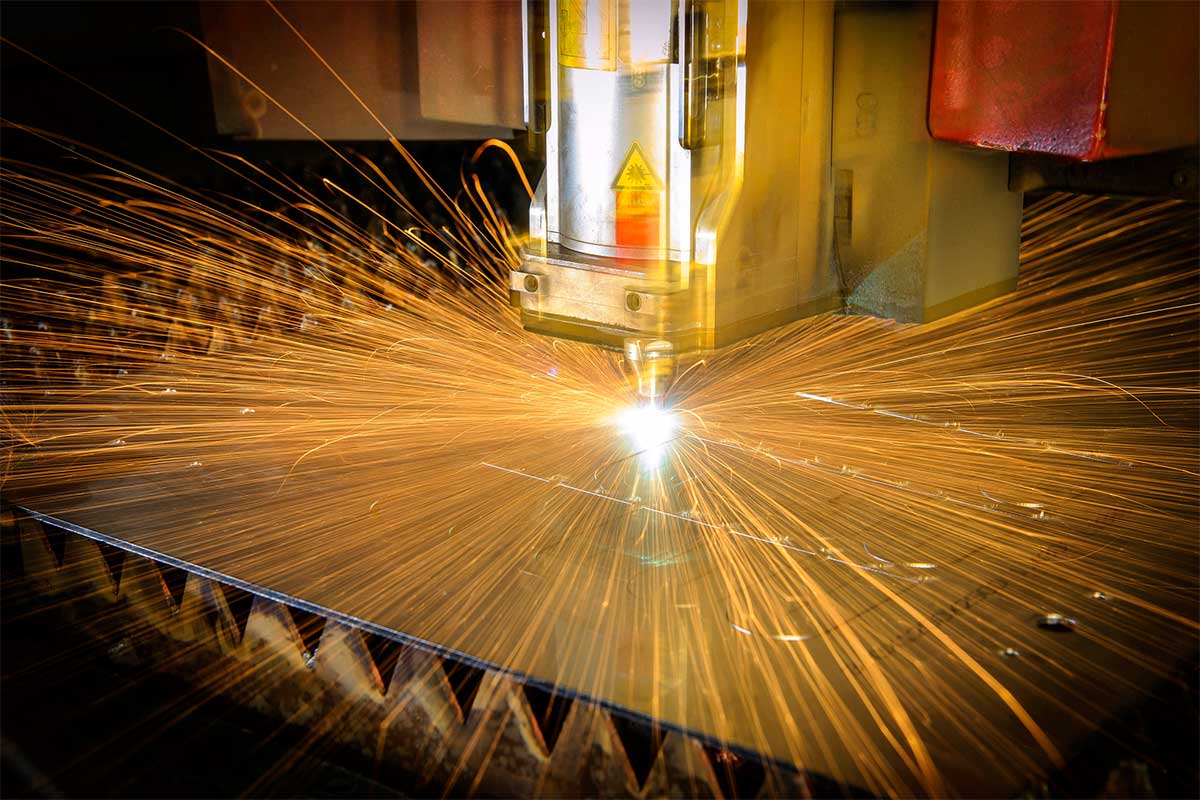
Watch a half-inch endmill plow through a block of 6061 aluminum. The shop floor vibrates, hot chips fly like shrapnel, and the spindle groans under the torque. Now watch a 4kW fiber laser cut that same aluminum in sheet form. There is no vibration and no screaming spindle—just a blinding point of light and a shower of sparks.
If you assumed a laser cutter is simply a faster, more precise version of a router, that assumption is about to cost you money. Choosing between laser and mechanical CNC is not a contest of specifications; it is a fundamental decision between the zero-contact speed of 2D light processing and the high-torque necessity of 3D material removal.
The Physics of the Cut: Why Contactless Processing Redefines Material Waste
Evaluating a machine tool begins with examining the floor beneath it. The difference between a bin full of jagged metal chips and a tray of fine metallic dust tells you exactly how a machine forces material to give way.
Friction vs. Photons: Choosing Between a Scalpel and a Sledgehammer
A spinning carbide endmill removes material through sheer mechanical force. It drives a hardened wedge into the workpiece, forcing the metal to yield, shear, and break away as a chip. This demands immense torque and produces massive friction. A laser bypasses friction entirely. It delivers a narrow, coherent beam of light that excites the material's electrons until the metal melts or vaporizes. But the beam alone does not clear the path. Laser cutting relies on a high-pressure jet of assist gas—usually oxygen or nitrogen—to blow that molten slag through the bottom of the cut.
This means the laser is not really a scalpel. It is a highly localized thermal-fluid event. If your material reflects the light—such as highly polished copper or brass—the photons bounce off, and the cut fails. You cannot force a laser through a material that refuses to absorb its wavelength. A physical cutter does not care about reflectivity; if the tool is harder than the workpiece, it will dig in. Why does this fundamental difference in material removal determine your raw stock budget?
The Kerf Conflict: How Much Material Are You Willing to Sacrifice to the Tool?
Take a standard quarter-inch endmill. Every time it makes a pass, it destroys a quarter-inch path through your raw material. If you are nesting fifty complex brackets on a single sheet of titanium, that 0.25-inch kerf adds up to a huge amount of expensive metal turned into worthless chips. You are paying for material that you are actively destroying.
A fiber laser's beam focuses down to a spot roughly the width of a human hair. The kerf is practically invisible. You can nest parts so tightly that they share a single cut line, leaving almost no skeleton behind. This zero-contact precision fundamentally changes how you buy and use raw stock. But trading a wide mechanical kerf for a microscopic thermal one introduces a hidden variable. What happens to the metal immediately next to that microscopic cut?
Heat-Affected Zones vs. Mechanical Stress: Which Type of Damage Can Your Part Tolerate?
It is a dangerous beginner’s mistake to assume that “contactless” means “damage-free.” When a mechanical router cuts through a piece of aluminum, it introduces physical stress. Clamping forces and the aggressive tearing action can warp thin sheets or leave micro-fractures along the edge. You manage this by adjusting feed rates or leaving a roughing allowance for a final finishing pass.
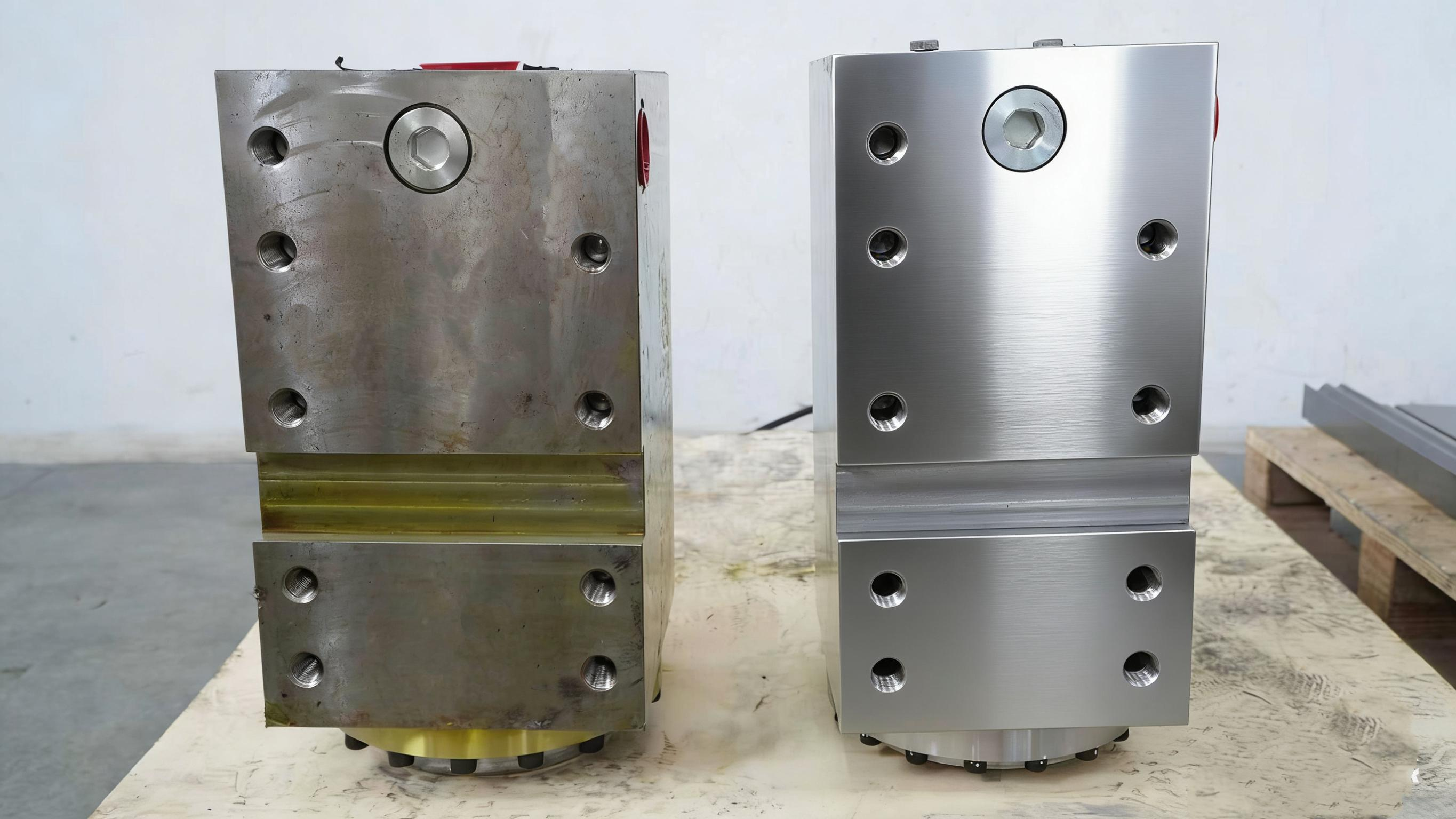
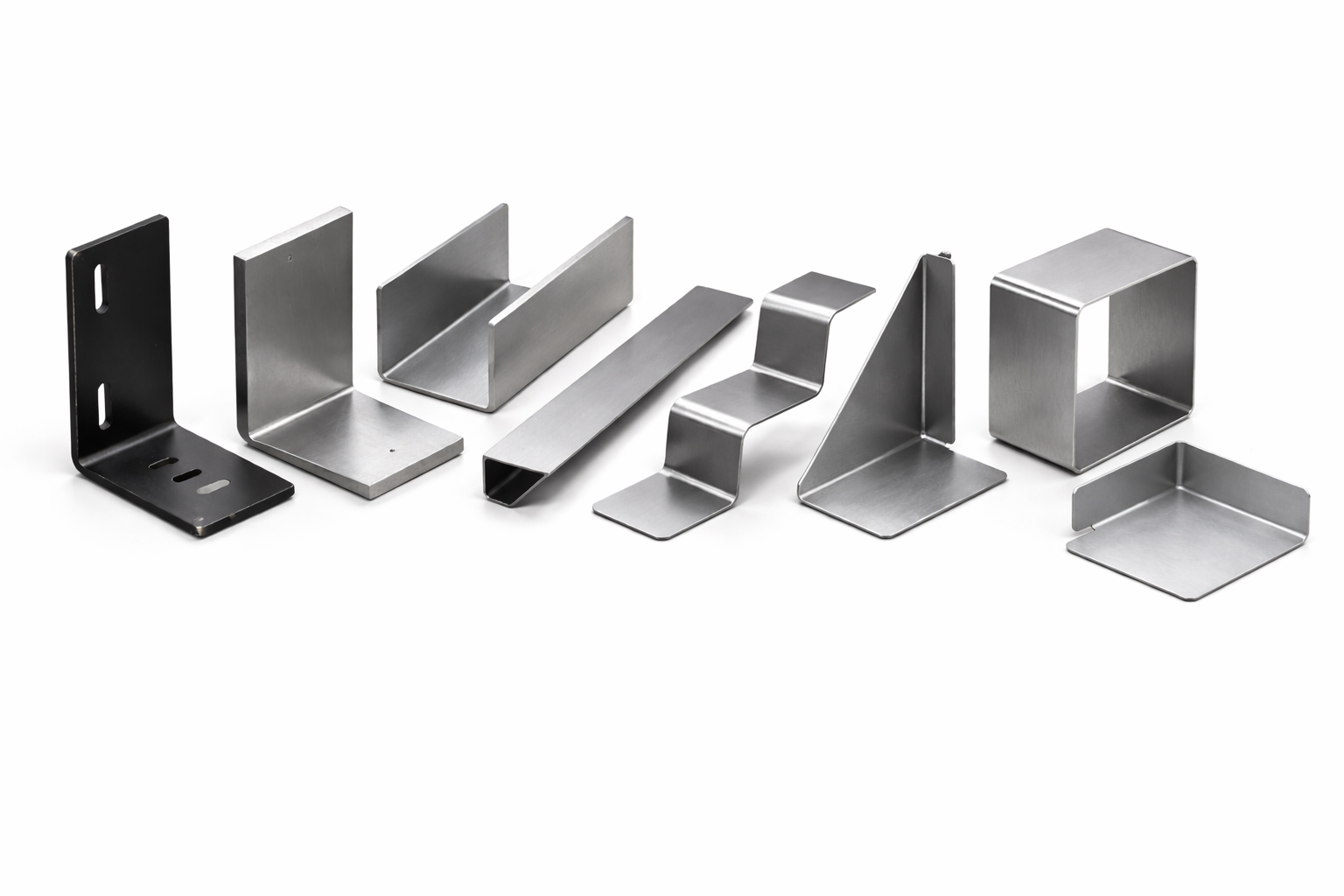
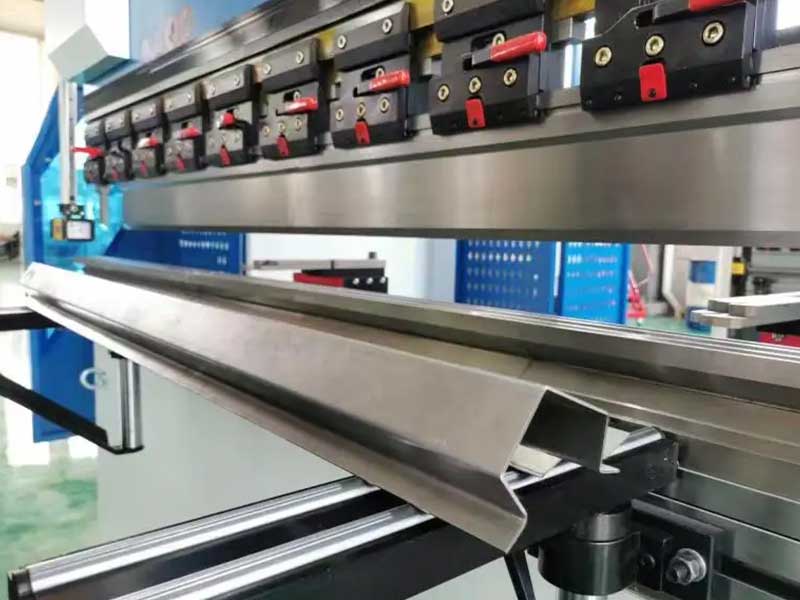
A laser removes mechanical stress entirely, but it replaces it with a Heat-Affected Zone (HAZ). The intense thermal energy needed to vaporize metal spreads into the surrounding boundary. This heat can harden the edge, discolor the surface, or change the part’s metallurgical properties. If your next step is tapping a hole or bending that edge on a press brake, a laser-hardened boundary will break your taps and crack your bends. You have to decide which trade-off you prefer. Can your downstream processes handle a thermally altered edge, or are you better prepared to manage the physical distortion caused by a spinning tool?
Rigidity Requirements: Why Physical Tools Require Heavier, Costlier Workholding
Push a heavy chisel into a block of wood, and the wood slides away. You have to clamp it down. The same physics apply to a CNC mill or router. The spindle applies hundreds of pounds of lateral force against the workpiece. To keep the part from shifting, chattering, or launching across the shop, you must invest in heavy vises, custom fixtures, and robust vacuum tables. Workholding often costs as much as the tooling itself, and setting it up consumes hours of operator time.
Because a laser applies zero lateral force, the part only needs to support its own weight. A sheet of steel rests passively on a simple slat bed while the cutting head moves millimeters above it at a thousand inches per minute. You set the sheet down, press start, and walk away. But this elegant, frictionless setup has a strict geometric limit. If the laser is optimized for flat sheets resting passively on a bed, what happens when your part requires deep, three-dimensional excavation?
The 2D vs. 3D Bottleneck: Where Slicing Ends and Carving Begins
Flat Sheet Perfection: Why Lasers Dominate the Intricate Profile Market
A 2kW fiber laser profiling a stack of stainless steel gaskets moves at 500 inches per minute, tracing lace-like patterns that would snap a 1/32-inch carbide endmill in seconds. Because the laser has no physical diameter—the “tool” is essentially a point of light—it can create interior corners with a radius of nearly zero. In mechanical cutting, if you want a sharp 90-degree interior corner, you must use a tiny bit that vibrates, deflects, and eventually breaks under cutting pressure. The laser avoids these mechanical limits because it never touches the material.
This speed is not only about moving the head faster; it is also about eliminating “toolpath compensation.” On a router, the computer must constantly calculate the offset of the spinning bit’s radius to ensure the part comes out at the correct size. A laser’s kerf is so thin—often less than 0.1mm—that for many jobs, you can simply “print” the drawing onto the metal. It is the ideal tool for 2D geometry when the only goal is to separate a shape from a sheet as quickly as possible. This specialized efficiency is why the laser dominates 2D geometry, while leaving the mechanical spindle as the only practical choice for anything requiring depth or texture.
The Depth Dilemma: Why Ordinary Equipment Still Controls Volume and Texture
Imagine trying to use that same high-powered laser to mill a one-inch-deep square pocket halfway into a two-inch-thick block of aluminum. You would fail. A laser beam is shaped like an hourglass; it is only “sharp” at its narrowest point, known as the focal point. After the beam passes that point, it spreads out and loses the intensity needed to vaporize metal. Although you can move the focal point lower for later passes, a laser cannot efficiently “excavate” volume. It is built to pierce and move, not to churn through and remove bulk material like a shovel.
A mechanical CNC mill excels at this kind of bulk removal. It uses the “flute length”—the spiral cutting edge of the bit—to engage the material along its full vertical surface. When a mill cuts a pocket, it physically lifts chips out of the hole and clears the path for the next pass. A laser has no way to “lift” material; it depends on assist gas to blow molten slag out through the bottom of a hole. If there is no bottom for the slag to exit through, the laser simply creates a messy, re-welded pool of slag. This failure points to the core limitation of light: it is ideal for slicing, but useless for the controlled vertical excavation needed for complex parts.
Variable Z-Axis: The Operational Cost of Losing Pockets and Chamfers
A simple 45-degree chamfer on a bolt hole is a thirty-second job for a mechanical router fitted with a V-bit. The tool’s physical form creates the shape of the part. A laser, however, is a binary tool: it is either cutting completely through the sheet or etching the surface. It cannot easily create “slopes” or varied depths because it has no physical geometry to press into the material. If your business model depends on countersunk holes, stepped pockets, or 3D carvings, a laser is a six-figure paperweight.
This makes the “Z-axis”—the tool’s vertical movement—the major dividing line in shop capability. On a mechanical CNC, the Z-axis is a primary actor, constantly moving up and down to create 3D contours and varying depths. On most laser cutters, the Z-axis is a secondary utility used only to maintain a consistent gap between the nozzle and the flat sheet. You are buying a machine that is excellent at X and Y, but essentially blind to Z. This limitation reaches beyond simple geometry and into the very chemistry of the materials you plan to process.
Material Limitations: Why Some Materials Are “Laser-Blind” Regardless of Power
What happens when the chemistry of the material refuses to recognize the tool? If you try to cut a sheet of highly polished copper with a standard CO2 laser, the machine may destroy itself. Copper is an excellent reflector of the 10,600-nanometer wavelength produced by CO2 lasers; the beam strikes the metal, reflects like a mirror, and travels straight back up the optics, melting the expensive lens. This is not a lack of “brightness” or power; it is a fundamental wavelength mismatch. Some materials are simply “blind” to certain kinds of light, making the laser’s power irrelevant.
Mechanical tools are unaffected by optics. A carbide endmill does not care whether the aluminum is shiny, the plastic is clear, or the wood is dark. It depends on the hardness of the tool relative to the softness of the workpiece. While some “laser-blindness” can be addressed by switching from a CO2 laser to a fiber laser, which uses a much shorter wavelength that metals absorb more readily, you are still governed by physics. A mechanical spindle provides a “brute force” versatility that no single laser wavelength can match across the full range of shop materials.
This geometric and material limitation shows that the “modernity” of a laser is irrelevant if the material itself is physically unable to absorb the energy directed at it.
The Speed Paradox: Why “Fastest” Often Is Not “First”
Cutting Speed vs. Setup Time: The Hidden Production Delay
For application-specific equipment selection, contact ZWCNC.
Mechanical CNCs are slower at first, but often more honest about their operating rhythm. You spend more time on “fixturing”—the process of bolting, clamping, or vacuum-sealing a workpiece to the bed so it does not move under the massive lateral force of a spinning bit. However, once that setup is dialed in, a mechanical router can often process a stack of three or four sheets at the same time. While the laser races across a single surface, the mechanical spindle is “plowing” through a three-dimensional sandwich of material.
The bottleneck is not the travel speed of the head; it is the human hands needed to feed the beast.
How much of your workday is spent watching a machine move, and how much is spent preparing it to move?
Single-Part Agility vs. Batch Efficiency: Which Machine Wins for Your Specific Volume?
A laser is the undisputed king of the “one-off” job because it requires no physical tool changes. You can go from cutting a circular flange to a star-shaped bracket simply by loading a new file. There is no bit to swap, no collet to tighten, and no need to worry about tool diameter interfering with a tight corner. This makes the laser a high-velocity tool for shops that never know what the next phone call will bring.
Mechanical CNCs, by contrast, are creatures of habit. They thrive in environments where the setup stays the same for eight hours at a time. If you are milling 500 identical aluminum housings, the mechanical machine’s ability to use a “gang fixture”—holding dozens of parts at once—begins to erode the laser’s speed advantage. On a laser, you are limited by the surface area of the sheet; on a mill, you can use the vertical space of the machine’s travel to your advantage.
Versatility is a trap if you only ever do one thing.
Does your business model depend on the chaos of custom orders or the steady heartbeat of a production line?
The Thickness Wall: Where Laser Efficiency Plummets and Mechanical Force Takes Over
Physics has a way of humbling even the most expensive lasers as soon as the material gets thick. In thin sheet metal, a laser is a ghost—it passes through the material so quickly that the heat has no time to spread. But as you move from 1/8-inch to 1-inch plate, the game changes completely. The laser must slow to a crawl because it has to melt every atom of steel in that path and blow it out the bottom with a jet of oxygen or nitrogen.
When you hit this “thickness wall,” the efficiency of light drops off a cliff. A 4kW laser might cut 1/4-inch steel at 150 inches per minute, but by the time you reach 1-inch plate, it might struggle to reach 20 inches per minute. This is because the metal acts as a massive “heat sink,” pulling energy away from the cut before it can reach the melting point. You are no longer cutting; you are essentially trying to boil a lake with a magnifying glass.
Mechanical spindles are not concerned with heat dissipation. A high-torque CNC mill approaches 1-inch plate with the same aggressive logic it applies to 1/4-inch plate: it uses physical force to shear the material away as chips. If the machine is rigid enough and the tool is sharp enough, you can maintain a high material removal rate (MRR) by taking deeper cuts that a laser simply cannot match. The mechanical tool wins through brute force where the laser loses to thermal physics.
If the machine slows to a crawl as the material gets thicker, are you really paying for a high-speed tool, or for an expensive heater?
The Maintenance Tax: Calculating Total Cost Beyond the Sticker Price
The Invisible Consumables: Navigating the Recurring Cost of Optics, Gas, and Power
A technician’s stray fingerprint on a laser focus lens can turn a $500 piece of glass into a cracked liability the moment the beam fires. Because the laser operates according to the physics of light, any microscopic contaminant on the lens absorbs energy instead of allowing it to pass through, causing localized heating that shatters the substrate. This is the laser’s first “invisible” tax: the need for a surgical-grade environment. You are not just paying for the electricity to run the resonator; you are paying for the discipline required to keep a high-powered optical chain pristine in a dirty shop environment.
Then there is the assist gas, a cost that catches every first-time buyer off guard. To cut 1/4-inch stainless steel with a clean, silver edge, you cannot use shop air; you need high-purity nitrogen to blow the molten metal out of the kerf before it can Lab-oxidize. At high pressures, a fiber laser can consume a standard cylinder of nitrogen in under an hour. If you are running three shifts, you are no longer just a manufacturer—you are a middleman for a gas utility company. Even when using oxygen for carbon steel, the cost of the gas often exceeds the cost of the electricity used to power the machine.
The laser offers speed, but it requires a constant, expensive diet of consumables to maintain that velocity.
If gas and optics are the hidden “fuel” of the laser, what does the mechanical equivalent look like when the tool actually touches the part?
Mechanical Fatigue: Managing the Predictable Decay of Spindles and Physical Bits
Hold a dull carbide endmill up to the light and you will see a rounded, shiny edge where a razor-sharp profile should be. This is the “loud” failure of the mechanical CNC. Unlike the laser’s invisible optical degradation, mechanical wear is tactile and audible. You hear the spindle load increase, the vibration in the table change, and the “chatter” marks appear on the finish of the part. You are paying a “friction tax” in the form of $20 to $200 bits that must be replaced or reground every few dozen hours of cutting.
The heart of the machine, the spindle, is a ticking clock. A typical high-speed spindle uses precision ceramic or steel bearings rated for a specific number of hours—usually between 3,000 and 8,000, depending on the load. Every time you push a 1/2-inch bit through a slab of 6061 aluminum, you are trading a microscopic fraction of that bearing’s life for a finished part. When the bearings finally give out, you are not looking at a lens swap; you are looking at a $5,000 rebuild and three days of downtime while the spindle is balanced and reseated.
Mechanical CNC maintenance consists of predictable, physical hurdles that can be managed with a simple calendar.
But because these machines fail in such different ways, which one is actually more dangerous for a shop that skips weekly maintenance?
Calibration vs. Repair: Which System Penalizes Operator Neglect More Severely?
A laser can “fail quietly,” which is the most expensive type of failure in a production environment. If the focus shifts by a fraction of a millimeter because of thermal movement in the mirrors, the machine will still “cut,” but it will leave a large burr on the underside of the part and an oversized heat-affected zone (HAZ) that ruins the material’s temper. An operator might run an entire sheet of expensive aerospace-grade alloy before realizing the parts are scrap. The laser does not stop when it is sick; it simply produces increasingly expensive waste.
The mechanical CNC is less forgiving in a way that actually protects your bottom line: when something goes wrong, it usually breaks the tool or stalls the motor. If an operator forgets to tighten a collet or sets the wrong offset, the machine makes a noise like a car crash, and the process stops. It is a violent, binary form of feedback. You lose a bit and perhaps one part, but you rarely lose an entire shift’s production to a subtle “drift” in the machine’s performance.
One system requires a physicist’s eye for calibration, while the other requires a mechanic’s ear for trouble.
When you map these two different philosophies across several years of ownership, how does the math actually work out?
Total Cost of Ownership: Projecting Expenses Across a Five-Year Production Cycle
By the time you reach year five of owning a mechanical CNC, you have likely replaced three spindles, a dozen sets of drive belts, and hundreds of carbide bits. The costs are incremental and spread out, acting like a slow drain on your monthly overhead. You can predict these costs with high accuracy based on your material throughput. The mechanical machine is a “pay-as-you-go” asset whose maintenance costs scale linearly with how hard you run the equipment.
The laser’s financial profile is more like a heartbeat monitor: long periods of relatively low cost interrupted by massive, heart-stopping spikes. A fiber laser source is generally “maintenance-free” over its lifespan, but if that source fails out of warranty in year five, the replacement cost can amount to 30% to 50% of the machine’s original purchase price. You save money on tool bits every day, only to potentially lose those savings in a single invoice for a new resonator or a complete overhaul of the beam delivery system.
Choosing between them is not about which machine is “cheaper,” but about which type of financial risk your shop is prepared to handle.
Does your business do better with the predictable, incremental costs of mechanical wear, or can it handle the high-stakes, high-precision maintenance of a light-based system?
The Decision Framework: Four Questions to Match Your Machine to Your Revenue
You now understand how each machine fails and what it costs to keep it operating; the remaining question is which failure profile your shop can actually survive.
The Material Audit: Letting Your Inventory Determine Your Equipment
1. Is your material inventory mainly flat sheets or solid billets?
Geometry vs. Volume: Finding Your Profitable Sweet Spot
2. Is your revenue driven by high-volume profiling or complex geometric depth?
High-volume production of simple flat brackets favors the laser. You can nest parts tightly with no bit-diameter offset and run at speeds that mechanical spindles cannot withstand. But if your margin comes from aerospace parts with counterbores, chamfers, and precise Z-axis depths, speed is a trap. You need high-torque material removal to create 3D geometry. A laser is a scalpel for surfaces; a spindle is a tool for volume.
The "Mixed Shop" Reality: Signs You Actually Need Both Technologies
3. Does your workflow require manual secondary operations to add features to flat blanks?
If you are laser-cutting blanks only to move them to a manual drill press for tapping or to a Bridgeport for pocketing, you are losing profit through a bottleneck. You are trying to bend physics to save floor space. In a "mixed reality" shop, you need the scalpel to separate the blank and the chisel to finish the 3D features. If your parts require both high-speed profiling and mechanical depth, you need both machines.
Final Pre-Purchase Checklist: Avoiding the "Speed-at-Any-Price" Trap
4. Are you buying based on brochure speed or on the physical requirements of the finished cut?
Ignore the “maximum inches per minute” marketing claims. Focus on your five highest revenue-generating parts. If they are all through-cuts on flat stock, buy the laser and accept the maintenance costs of an optical system. If they require any depth, texture, or multi-axis shaping, buy the mechanical CNC. You are not choosing between “old” and “new” technology; you are choosing the physics engine—light or force—that will actually determine your shop’s survival.
Related Resources and Next Steps
- For teams evaluating practical options here, laser cutting machines is a relevant next step.
Apply this guidance to your production
Share your material, thickness, part drawing, tolerance, and target output with the ZWCNC engineering team for an application-specific equipment review.
More news, insights, and updates from ZWCNC.
Panel Bender and Laser Cutting Integration for Higher Throughput
Fiber Laser Cutting for Kitchen Equipment: Parts, Quality, and Cost
Laser Cutting Machine Applications Across 12 Industries
Sheet Metal Tolerance Standards: Defaults, GD&T, and Drawing Notes
Fiber Laser Cutting Aluminum: Practical Thickness Limits by Power