Licensed editorial adaptation
Adapted and localized by the ZWCNC Editorial Team from licensed technical material. The source record is published for traceability.
Technical boundary: confirm machine-specific capacity, configuration and safety requirements against the current quotation, manual and application review.
Walk into any fabrication shop that survived the nineties, and you will probably find a laminated chart pinned to the foreman’s wall. It lays down a simple rule: plasma is for thick, heavy plate, and laser is for thin, precise sheet.
That chart used to be a sound business plan. Today, it is a blueprint for insolvency. The machines have changed, but the math we use to buy them has not.
Related: what is cnc laser cutting machine
Why the Old “Plasma for Thick, Laser for Thin” Rule Bankrupts Modern Shops
Buying heavy equipment is like choosing a wound. You can take one massive, clean cut upfront—borrowing half a million dollars to wire your shop for a fiber laser and bleeding cash to the bank every month. Or you can take a thousand tiny paper cuts on the shop floor, losing hours while your crew grinds dross off plasma-cut plate. Neither option is painless. But if you make this decision from an outdated thickness chart instead of the realities of your own facility, you are not choosing a wound. You are just waiting to bleed out.
The Fiber Laser Revolution: How High-Wattage Lasers Invaded Plasma’s Territory
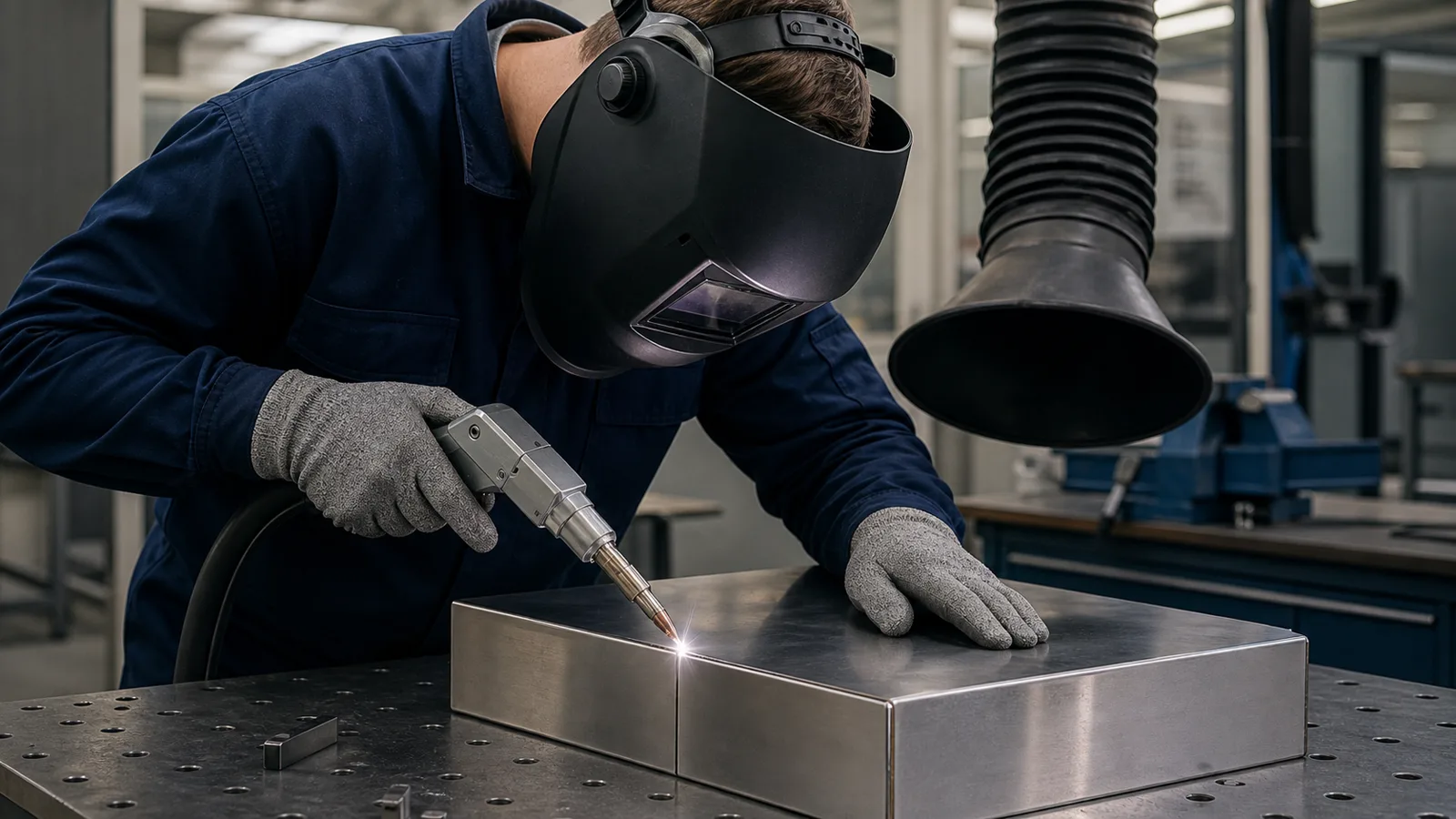
IPG Photonics recently ran a 60 kW fiber laser against a 460-amp plasma system. The material was 40 mm (about 1.5 inches) mild steel—exactly the kind of thick, rough plate that plasma salesmen used to own outright. The laser did not just match the plasma. It cut two and a half times faster. On 40 mm stainless, the laser was more than three times faster.
Ten years ago, a laser that could punch through two inches of steel at production speeds sounded like science fiction. Today, 100 kW fiber lasers are on shop floors, slicing through heavy plate with edge quality plasma simply cannot match. The physical barrier is gone. If a modern fiber laser can beat a high-definition plasma system on both speed and finish in the two-inch range, the argument that “plasma is for thick metal” falls apart entirely.
If the laser can cut everything the plasma can cut, but faster and cleaner, why would anyone still buy plasma?
The Capital vs. Labor Trap: Which Upfront Cost Are You Actually Trying to Minimize?
A high-definition plasma system might cost only a fraction of what a laser costs. A high-wattage fiber laser capable of cutting the same thick plate can easily require two to five times the initial investment, plus the hidden costs of upgrading your facility’s electrical service and installing bulk assist-gas storage.
This sticker shock is the trap. When shop owners see that massive price tag, they flinch. They look at the plasma system’s cheaper invoice and convince themselves they are saving money. But a machine’s purchase price is only the down payment on its total cost of ownership. Plasma is cheap to buy, but it leaves behind dross, hardened edges, and a wider heat-affected zone. That means every part coming off that table has to be handled again. You are trading a fixed, predictable capital cost—the laser’s loan payment—for an unpredictable, escalating labor cost: the guy with the angle grinder.
You are not choosing between two cutting technologies. You are choosing who receives your money. You will either pay the bank for the laser's infrastructure, or you will pay your fabricators to clean up the mess left by plasma.
The question is not how thick your steel is. The question is your shop's hourly labor rate, and how many hours you can afford to waste before that "cheap" plasma machine becomes the most expensive tool in your building.
The Hidden Cost of the Cut: Why Edge Quality Determines Your Real Profit Margin
Dross, Taper, and Heat-Affected Zones: Who Pays for the Grinding Time?
Hypertherm engineers will readily point out a physical reality that most laser salesmen conveniently overlook: once you go beyond 16 millimeters (about 5/8 of an inch), a properly tuned high-definition plasma system can actually leave a smoother edge than a fiber laser. On thick plate, plasma's lower gas consumption and fluid cutting dynamics can produce an excellent finish. But that pristine edge comes with a major caveat. It exists only when the consumables are fresh, the gas mix is perfect, and the operator knows exactly what they are doing.
When those variables drift, plasma leaves a mess. The arc trails, creating a beveled edge known as taper. Molten metal sticks to the bottom of the cut and hardens into dross. More importantly, plasma cutting depends on an aggressive thermal process that drives a wide heat-affected zone (HAZ) into the surrounding steel. That edge does not merely look different; its metallurgical structure is fundamentally changed. It becomes work-hardened.
Send a hardened, dross-heavy plasma-cut part to your machining center and watch what happens. Your machinists will burn through expensive carbide taps and end mills trying to cut through that hardened crust. If the part needs welding, the dross must be ground off completely, or the weld will fail inspection. A laser, particularly in the 40 kW and higher range using a mixed assist gas, leaves a narrow HAZ and an edge that IPG Photonics accurately classifies as "weld-ready." The part drops through the slats and goes straight to the press brake or the weld cell. No grinders. No chipped taps. No wasted hours.
The Secondary Operation Tax: When Does a "Cheaper" Plasma Cut Become More Expensive?
Suppose you review Framos Fabrications' equipment data and decide to buy a high-end plasma table for $80,000 instead of a comparable fiber laser for $400,000. Your accountant is pleased. You just avoided taking on $320,000 in debt. Framos calculates the breakeven point on that plasma machine at two to three years, compared with a grueling five-year timeline for the laser.
That math works perfectly in a spreadsheet. On the shop floor, it routinely breaks down.
Consider the real cost of that $320,000 in "savings." If your plasma table runs a single shift and produces parts that require just one employee to spend four hours a day grinding dross, squaring tapered edges, and preparing joints for welding, you are bleeding cash. At a fully burdened labor rate of $40 an hour, that single grinding station costs you $40,000 a year. Over the five-year lifespan of a typical equipment loan, you will pay $200,000 just to clean up the plasma's cuts. Add the cost of grinding wheels, the bottleneck at the weld cell while it waits for prepped parts, and the tooling destroyed by hardened edges, and that $320,000 capital savings disappears entirely.
This is the secondary operation tax. Plasma shifts your equipment debt onto your payroll. If you are running a high-volume production shop where parts need to move smoothly from the cutting bed to assembly, a 40 kW fiber laser's weld-ready edge is not a luxury. It is the only way to protect your margins from being consumed by angle grinders.
Precision vs. Tolerance: Are You Paying for Accuracy Your Client Does Not Need?
Xometry’s manufacturing guidelines draw a clear line on tolerance: lasers can hold tight, predictable dimensions that plasma simply cannot match. If you are cutting intricate brackets, nesting complex geometries, or working with non-conductive materials where plasma cannot even strike an arc, the laser's precision is non-negotiable.
Yet precision has value only if someone is willing to pay for it.
Fabricators often fall into the trap of buying a machine capable of aerospace tolerances to cut base plates for structural columns. If your primary contract involves slicing 1-inch-thick mild steel for heavy equipment bumpers, your client does not care if the bolt holes are off by a thirty-second of an inch. They do not care about a slight edge bevel. They care about price and delivery time. Buying a 60 kW fiber laser to cut tractor weights is a fast track to bankruptcy because you are paying a premium for a level of accuracy the market will not reimburse.
You must audit your actual job mix, not the one you aspire to have. If your clients demand tight tolerances, zero HAZ, and immediate downstream assembly, the laser's massive upfront cost is justified by the labor it eliminates. If your clients simply need heavy steel cut into rough shapes quickly, the plasma table remains an unbeatable cash-generating tool. The machine does not dictate profit; the alignment between the machine's capability and the client's actual requirements does.
The Material Reality Check: What Are You Actually Feeding the Machine?
Walk out to your shop floor and look inside the main scrap hopper. Do not look at your sales brochures, and do not look at your aspirational five-year business plan. The jagged offcuts in that bin should drive your machine choice. Auditing your job mix means identifying the specific materials—reflective alloys, non-conductive plastics, or massive steel slabs—that will either choke your production schedule or drain your operating budget.
The Reflective Metal Problem: Aluminum, Copper, and the Limits of Optics
Suppose that hopper is full of 3/8-inch aluminum cutouts and heavy copper busbars. You have an immediate physics problem. Plasma cuts by completing an electrical circuit, melting the metal, and blowing it away. It does not care whether the surface is shiny, dull, or painted. Aluminum, brass, and copper cut just as reliably as hot-rolled steel. Lasers cut using concentrated light. Copper and aluminum are highly reflective, which means they act like mirrors, bouncing that intense light straight back up the optics path.
Early-generation lasers destroyed their own cutting heads this way.
Modern fiber lasers use optical isolators to absorb this back-reflection, but overcoming physics still requires brute force. Cutting high-reflectivity alloys consistently demands immense power density and flawless focus. You cannot buy a budget, low-wattage fiber laser and expect it to chew through thick copper. If non-ferrous, reflective metals account for a third of your daily throughput, you face a stark choice. You either finance a massive, high-kW fiber laser that can overpower the reflectivity, or you stick with a high-definition plasma system that ignores the problem entirely.
Non-Metals and Mixed Jobs: Why the Plasma Torch Stays Strictly in the Metal Shop
Now imagine a custom architectural fabricator cutting a stainless steel backing plate in the morning and an acrylic logo in the afternoon. Manufacturing data from Xometry points to a harsh, non-negotiable limitation of plasma: it needs a conductive path. Try cutting a sheet of polycarbonate, plywood, or Delrin with a plasma torch, and nothing happens.
The arc simply will not start.
For application-specific equipment selection, contact ZWCNC.
Thick Plate Economics: At What Thickness Does Laser Cutting Still Become Financial Suicide?
Watch a 30kW laser try to pierce and cut 2-inch A36 steel plate. The spec sheet says it can do it. The machine will, in fact, sever the metal. But look closely at the assist gas meter, spinning fast enough to blur.
To produce a clean cut on massive plate, a high-power laser needs large volumes of high-pressure nitrogen or specialized gas mixes to continuously clear the molten kerf. Field data from Red-D-Arc exposes a serious pitfall in this process: if the gas pressure drops even slightly, or if the steel's mill scale varies, the laser leaves heavy slag and a jagged edge. You lose the pristine finish you paid a premium for, while still paying the enormous gas bill. Plasma cuts that same thick plate with compressed air or oxygen at a fraction of the volume and pressure.
The operating cost per foot on 2-inch steel with a plasma torch is measured in pennies. With a laser, it is measured in dollars. The financial suicide line is not set by what the laser can physically cut, but by what it costs to keep it cutting. If your core work is severing plate thicker than an inch, pushing a laser to its absolute limits will bankrupt you through assist gas and nozzle replacements long before the bank note is paid off.
The Consumables Bleed: Tracking the Math Behind Your Hourly Operating Rate
A few years ago, a shop owner publicly audited his cutting costs, comparing a new $80,000 fiber laser with a standard $20,000 plasma table. On paper, the plasma looked like the ultimate budget-friendly workhorse. But when he tracked every cent of daily operation—power, gas, and consumable wear—the laser actually cost $2 less per day to run. Capital cost is a fixed, one-time wound that you negotiate with the bank. Operating cost is a continuous, invisible bleed on the shop floor. If you base your decision entirely on the machine's sticker price, you are ignoring the daily utility bills that will determine your margins for the next decade.
How exactly does a machine that costs four times as much end up cheaper to operate?
The Gas Bill: Nitrogen, Oxygen, and the True Price of a Clean Laser Edge
Consider a modern fiber laser cutting 1/4-inch stainless steel. The beam melts the metal, but it does not clear the kerf. That work falls to the assist gas, typically nitrogen, which blasts through the nozzle at more than 250 PSI to evacuate molten material while shielding the hot edge from oxygen. This prevents oxidation and leaves a bright, weld-ready finish. But that nitrogen is not a trickle. A high-production laser can consume thousands of cubic feet of gas in a single shift. You are literally blowing money through a millimeter-wide hole. If you rely on high-pressure cylinder packs or liquid dewars, your monthly gas bill can easily exceed your machine payment.
Plasma changes this calculation entirely for mild steel.
Standard plasma cutting uses compressed shop air. Once you have paid for the compressor and air dryer, the gas itself is essentially free. But there is a catch. If you want plasma to cut stainless steel cleanly, you cannot use air, because the oxygen will leave a heavily oxidized, blackened edge. You must switch to specialized gas mixes, such as F5 (95% nitrogen, 5% hydrogen) or H35. As soon as you introduce mixed gases to a plasma torch, your hourly operating rate jumps, wiping out the "free air" advantage. The laser gives you the pristine edge, but you rent that edge by the cubic foot. If gas is the fluid that keeps the cut clean, what about the hard parts that actually do the cutting?
Electrodes, Nozzles, and Lenses: Which Machine Consumes Its Own Parts Faster?
Plasma cutting is a violent electrical storm contained inside a small copper cup. Every time the arc strikes, a microscopic amount of hafnium is blown off the center of the electrode. After a few hundred pierces, that hafnium pit deepens, the arc geometry deteriorates, and your cut edge starts to bevel. Hypertherm correctly notes that modern plasma can maintain consistent edge quality throughout the life of a consumable set, but that set is still sacrificial. You are repeatedly stopping the machine to replace $30 to $50 stacks of electrodes, nozzles, swirl rings, and shields.
Fiber lasers do not use electrodes.
The cutting is done with focused light. The only consumable near the workpiece is an inexpensive copper nozzle and a protective cover glass that shields the costly optics. As long as you do not crash the cutting head into a tipped-up part or allow molten spatter to breach the cover glass, a laser nozzle can last for days or even weeks. Plasma costs you through constant, predictable hardware replacements. Laser costs you only if you make a catastrophic setup error that contaminates the lens. But if plasma consumes parts and laser consumes gas, how do you determine which machine actually puts more money in the bank at the end of the shift?
Inches Per Minute vs. Cost Per Inch: Does Laser Speed Actually Offset Its Overhead?
IPG Photonics recently ran the numbers on a massive 60 kW fiber laser cutting 40 mm (roughly 1.5-inch) mild steel. It cut through the plate 2.5 times faster than a heavy-duty 460-amp plasma system. Let that sink in. The old industry rule was that plasma dominated thick plate, but brute-force fiber lasers have broken through that ceiling.
Speed, however, is a vanity metric if you calculate it in isolation.
If a laser cuts 2.5 times faster but costs 3 times as much per hour in nitrogen, power, and depreciation, you are losing money at record speed. You must divide your fully loaded hourly rate—gas, consumables, electricity, and operator labor—by the actual inches cut per hour. That is your Cost Per Inch. The massive overhead of a high-power laser is justified only if its inches-per-minute throughput exceeds its daunting hourly burn rate. Laser speed makes you money only if you have enough work to keep it running at an absolute sprint. If it sits idle while waiting for the forklift to bring the next sheet, that high hourly rate eats you alive. But before you can even worry about keeping the machine fed with material, you have to determine whether your building can even turn it on.
The Infrastructure Blind Spot: Facility Upgrades That Could Decide for You
Imagine backing a flatbed up to your shop doors. On it sits a spotless, high-power fiber laser. You negotiated a great rate with the bank, calculated your cost per inch, and have enough work to keep it busy. Then the rigger asks where the 480-volt, 3-phase power drop is. You point to your standard panel. The rigger laughs. The bank does not.
This is the infrastructure blind spot. Buyers fixate on cut speed and gas consumption, while forgetting that a heavy-duty cutting system is not a plug-and-play appliance. It is an industrial organ transplant. If your building's electrical grid, ventilation, and floor space cannot support the host, the machine will reject it.
Power Drops and Fume Extraction: The Hidden Costs of Installation
A plasma cutter is relatively forgiving. It needs compressed air, a decent power supply, and a water table or standard downdraft system to capture sparks and smoke. Because plasma physics relies on a simple electrical circuit between the torch and the workpiece, you can often install a £15,000 to £77,000 plasma setup in an average industrial unit with minimal structural changes. The barrier to entry is low.
A fiber laser is an entirely different beast.
Installation costs for a laser can easily range from £100,000 to more than £770,000 once you account for the surrounding ecosystem. Before you even evaluate the machine itself, call your utility company. Ask what it will cost to run dedicated high-voltage lines from the street to your building. That quote alone might turn you into a plasma shop.
Then consider the air. Vaporizing metal with concentrated light creates highly toxic, microscopic particulate dust. You cannot simply blow it out through a cracked bay door with a box fan. You need a massive, dedicated dust collection and fume extraction system, properly piped and often requiring roof penetrations and specialized fire suppression. The building effectively becomes part of the machine purchase. If you lease your shop, your landlord may flatly refuse the modifications. Suddenly, the lower operating cost of a laser is buried under a mountain of facility debt.
Setup Times and Job Switching: Flexibility in a High-Mix Small Shop
Once you finally bolt the equipment to the floor and satisfy the utility company, the daily reality of running it takes over. Infrastructure is not only about wires and pipes. It is about how the machine dictates your shop's physical workflow.
Plasma is ruggedly flexible. If a walk-in customer needs a half-inch baseplate cut immediately, you can put a sheet of mild steel on the plasma table, strike the arc, and have the part ready in minutes. The setup is rough but simple. You are trading cut quality for immediate, unfussy execution.
Lasers require a sterile, highly controlled environment. Switching from thin aluminum to thick stainless means changing assist gases, swapping nozzles, and ensuring the optics stay completely free of shop dust. It is a prima donna. It wants to run the same material at full speed for eight hours. If your shop survives on high-mix, low-volume chaos—jumping from bracket prototypes to heavy flanges in the same afternoon—the laser's rigid setup requirements will choke your throughput. You are no longer managing a cutting tool. You are managing a production facility.
The Shop Floor Decision Matrix: Buying for Your Bottleneck, Not Your Ego
Your building is wired, your landlord has approved the fume extraction, and you actually have the floor space. Now comes the final return-on-investment calculation. The industry once made this easy by drawing a firm line based on material thickness, but brute-force technology has erased that boundary. High-power fiber lasers above 40 kW are now officially faster than plasma on steel across most applications. They can cut through 40 mm mild steel at speeds that leave heavy-duty plasma systems far behind.
If the laser wins on speed and precision even in thick plate, the decision is no longer about what a machine is physically capable of doing. It is about what your business can financially withstand.
You are choosing your preferred way to bleed cash. You can bleed upfront to the bank, taking on massive infrastructure debt and intimidating hourly operating costs to keep a laser running. Or you can bleed slowly on the shop floor, paying hourly wages to a grinding crew to clean up plasma dross. To make the right choice, you have to stop studying spec sheets and start examining your specific production bottlenecks. Buy the machine that removes the constraint in your shop today.
Start with Your Most Demanding Material and Thickness
Equipment manufacturers will readily sell you a machine sized for your most extreme possible job. This is a trap. Hypertherm explicitly recommends plasma when a shop's most demanding work is over 16 mm and the buyer needs to avoid a massive capital burden. Plasma generally provides a lower cost per foot on these thicker materials because its direct operating costs are only a fraction of a laser's overhead.
Weigh Precision Needs Against Your Shop's Post-Processing Capacity
Speed and thickness matter only if the part is actually finished when it comes off the table. IPG Photonics notes that laser-cut parts are often weld-ready and require no secondary operations. Plasma, by its violent nature, creates heat-affected zones, edge hardening, and dross.
This is where the hidden labor calculation determines the winner.
If your shop is in an area where reliable, skilled metalworkers are impossible to hire, plasma's low upfront price is a mirage. You will pay for that machine every day in labor hours, grinding discs, and delayed shipments. When downstream fit-up and welding time is your real cost center, paying the premium for a laser's weld-ready edge is a bargain. Conversely, if you are cutting heavy baseplates for agricultural equipment where a little edge dross does not matter, paying for laser precision is throwing money away. Match the machine's cut quality to your customer's actual tolerance, not to your own desire for a perfect edge.
The Outsourcing Compromise: When to Buy Plasma and Subcontract the Laser
You do not need to own every stage of the fabrication process. One of the most dangerous ego traps for a small shop is believing that every job must stay in-house.
If your core business is heavy, dirty plate work, buy the plasma system. Let it cut through the thick, profitable jobs that keep the lights on and the cash moving. When a client requests a batch of high-precision, 2 mm stainless steel aerospace brackets, do not mortgage your shop to buy a laser just so you can say you handle that work. Subcontract that specific job to a large shop that has already taken on the major facility debt and gas overhead of a fiber laser ecosystem.
You keep your capital overhead low, your plasma table occupied, and your margins intact. The final decision matrix does not stop at choosing the perfect machine. It ends with understanding that the most profitable shops know exactly what they are bad at, and they are happy to pay someone else to do it.
Apply this guidance to your production
Share your material, thickness, part drawing, tolerance, and target output with the ZWCNC engineering team for an application-specific equipment review.
More news, insights, and updates from ZWCNC.
Panel Bender and Laser Cutting Integration for Higher Throughput
Fiber Laser Cutting Aluminum: Practical Thickness Limits by Power
Fiber Laser Cutting for Kitchen Equipment: Parts, Quality, and Cost
Fiber Laser Cutting Aerospace Parts: Process Selection and Qualification
Fiber Laser Cutting Automotive Parts: When It Beats Other Methods