
Licensed editorial adaptation
Adapted and localized by the ZWCNC Editorial Team from licensed technical material. The source record is published for traceability.
Technical boundary: confirm machine-specific capacity, configuration and safety requirements against the current quotation, manual and application review.
You’re staring at a pro forma invoice for $115,000, your finger hovering over the wire transfer button. On paper, this Chinese CNC press brake appears identical to the European model quoted at three times the price. The brochure lists the same Swiss controllers, the same German valves, the same Japanese motors.
If you’re evaluating a production-grade press brake solutions, the specifications may look flawless on paper—tonnage, controller brand, backgauge accuracy, crowning system. But paper doesn’t reveal who actually engineered the frame, tuned the hydraulics, or wrote the integration logic that keeps the machine stable under load.
But paper doesn’t bend half-inch AR400 steel plate.
You’re not wiring six figures across the Pacific because you’re reckless or cheap. You’re doing it because in heavy fabrication, margin is survival. A properly engineered Chinese hydraulic press delivers the unapologetic tonnage you need to stay profitable when you’re running three shifts a day. But that margin advantage turns into a trapdoor if you don’t know exactly who is building your machine.
The Uncomfortable Truth: Why Smart Money Still Backs Chinese Hydraulics
Before we talk about your deposit, let’s clear the air. Industry magazines love to declare hydraulics obsolete. They showcase pristine, climate-controlled factories where whisper-quiet electric machines fold sheet metal like origami. It’s a beautiful vision. Now step out of the showroom, pull on your steel-toed boots, and walk onto a real production floor.
If electric press brakes are the future, why are high-volume buyers still signing contracts for hydraulics?
Walk past the aerospace shops bending 16-gauge aluminum and into a contract manufacturer churning out earthmover buckets. You won’t hear the polite hum of servo-electric drives. You’ll hear the deep, guttural whine of a 50-horsepower hydraulic pump spooling up.
When you’re hammering three-quarter-inch high-tensile steel, three shifts a day, the physics of bending change. Forming thick plate isn’t about finesse; it’s a violent kinetic event.
Electric machines struggle under that kind of punishment. Ball screws and servo motors excel at speed and pinpoint accuracy on thin-gauge material, but they don’t have the brute-force endurance to sustain peak tonnage hour after hour. A massive, overbuilt hydraulic ram delivers relentless, crushing pressure, absorbing the shock of each bend without destroying sensitive drive components. Smart operators understand that when the material pushes back, fluid power prevails.
And when part length exceeds standard bed limits—think long structural components or truck chassis rails—fabricators often step up to a synchronized press brake solutions configuration, where two machines operate in perfect harmony to deliver extended bending capacity without sacrificing tonnage.
The Margin Advantage: Distinguishing True Manufacturing Scale from Misleading Pricing
A 400-ton European press brake can easily consume $350,000 of your capital expenditure. A Chinese machine carrying the exact same tonnage rating can arrive at your dock for around $120,000.
The lazy conclusion is that the price gap must be entirely due to cheap labor and inferior quality. That may have been accurate twenty years ago. Today, the difference is largely driven by the immense scale of China’s domestic heavy industry. The country consumes more steel and builds more infrastructure than the rest of the world combined. In that environment, massive steel castings and heavy hydraulic cylinders are standard industrial commodities—not custom-engineered luxuries.
But within this ecosystem, a dangerous byproduct has emerged: the assembler.
Because components are inexpensive and readily available, anyone with a warehouse and a forklift can purchase a pre-welded frame from one supplier, a hydraulic block from another, and a controller from a third. They bolt these lifeless, mismatched outsourced parts together, coat the machine in fresh industrial enamel, and present themselves as a manufacturer. This is the Frankenstein machine. It looks convincing on the showroom floor—but under the sustained pressure of real production, it inevitably fails its creator.
If you want to compare structural designs, hydraulic layouts, and integration details before committing capital, review detailed technical brochures and look beyond surface specifications to evidence of in-house machining and engineering depth.
What Chinese factories understand about heavy-duty, multi-shift environments that Western buyers often underestimate
At 2:00 a.m. on a Tuesday, halfway through the second shift, the hydraulic oil in a press brake’s reservoir can reach 140°F.
Thermal expansion sets in. Fluid viscosity drops. If the hydraulic manifold was not engineered specifically to account for the flex characteristics of that exact steel frame, microscopic movement between bolted components begins to shear the O-rings. A true manufacturer understands that heavy bending is like trying to fold a phone book in half—the material pushes back, and that enormous kinetic energy must be absorbed somewhere. They design the frame and hydraulic circuit as a single, integrated system capable of withstanding that stress.
An assembler, by contrast, buys a generic hydraulic block and hopes the bolts hold. They don’t grasp the thermal and mechanical demands of a multi-shift operation because they don’t truly build machines—they simply snap together heavy metal components like oversized Lego pieces.
Forensic Audit Question: “Send me a continuous, unedited video of your factory floor showing your raw steel plate inventory, your welding stations, and the floor-boring mill used to machine the frame after welding.”
If they hesitate—or send you glossy photos of a spotless assembly line filled with pre-painted frames—you’re not dealing with a manufacturer. You’re dealing with an assembler. Keep your money where it belongs: in your pocket.
The Assembler Illusion: Who Actually Built Your Press Brake?
Does a massive digital storefront mean they actually own the welding robots?
Open any B2B sourcing platform and search for a 200-ton CNC press brake. Instantly, you’ll find a supplier showcasing forty different machine models—everything from heavy-duty hydraulic folders to fiber laser cutters—each one gleaming beneath bright warehouse lighting. Their company profile highlights an impressive online presence, polished English-language brochures, and a registered capital of five million dollars.
Now look carefully at the background of their factory tour video.
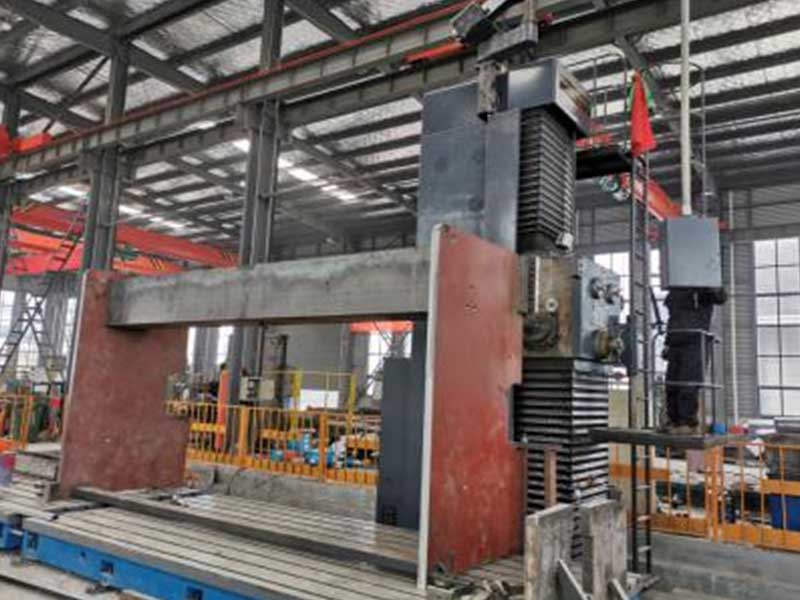
You’ll see staff in crisp polo shirts tightening Allen bolts on spotless epoxy floors. You’ll see neatly arranged Bosch Rexroth valves and gleaming Delem controllers. What you won’t see is a massive, soot-stained floor-boring mill. You won’t see a gantry crane lowering a ten-ton slab of raw steel plate into a welding fixture. You won’t see sparks flying.
Heavy manufacturing is dirty, capital-intensive work. Legitimate Chinese manufacturers—companies that evolved from state-owned industrial giants into vertically integrated enterprises—own the foundries, the robotic welding lines, and the enormous CNC machining centers required to cut and mill a press brake frame from raw steel. These real factories are often located deep inland, where industrial land is affordable, and they invest their capital in iron and infrastructure—not marketing campaigns.
The vendor with the glossy website is almost always based in a coastal export hub. They lease a warehouse, purchase pre-welded and pre-painted frames from an inland foundry, and order pallets of European hydraulic components. They don’t own welding robots—because they don’t weld. They assemble. Their business model depends on the illusion that a sleek digital presence equals engineering expertise. In reality, you’re paying a premium to a middleman who knows how to build a website—not a machine.
The Frankenstein Machine: Who takes responsibility when 15 outsourced components refuse to sync?
A 250-ton press brake bottoms out on a ten-foot sheet of half-inch mild steel. The ram shudders violently. The Y1 and Y2 hydraulic cylinders drift three millimeters out of parallel. The controller triggers a fatal axis error, bringing the entire machine to a dead stop.
When you call the vendor, the finger-pointing starts immediately. The assembler blames the hydraulic block supplier for a sticking proportional valve. The hydraulic supplier points to flawed controller programming. The controller rep insists the steel frame is deflecting under load.
This is the essence of the Frankenstein Machine. A true manufacturer engineers the hydraulic manifold, cylinder stroke, and control software to align precisely with the finite element analysis of its own frame. They know exactly how that specific structure will flex under a 250-ton load, and they program the CNC to compensate for that precise deflection.
An assembler, by contrast, purchases an off-the-shelf hydraulic block, bolts it onto a generic frame, and connects it to a standard controller. Operating that kind of press brake is like firing a high-caliber sniper rifle from a canoe. The barrel may be expertly machined and the optics top-tier, but the platform lurches violently with every shot. The kinetic energy generated by bending heavy plate has no stable structure to dissipate into, so it follows the path of least resistance—blowing O-rings, snapping mounting bolts, and corrupting sensor feedback.
Integration is the invisible asset you are actually paying for. If the factory did not engineer the frame to absorb the specific kinetic shock of the hydraulic punch, they did not build a machine. They assembled a collection of parts.
Will the “manufacturer” admit they’re just a trading company before your deposit hits their account?
Ask your sales representative outright whether they are a trading company. They will say no. They will promptly send a stamped business license showing “Manufacturing” listed within the approved business scope.
In China’s tightly packed industrial hubs, the boundary between factory and trading company is deliberately blurred. A vendor may genuinely produce small motorized slip rollers in-house, which legally allows them to present themselves as a manufacturer. But when you place an order for a 400-ton hydraulic press brake, they quietly shift into the role of pure trader, subcontracting the entire build to a third-party workshop down the road. They will never volunteer this information—their entire margin depends on you believing they control the quality of the heavy equipment.
You cannot rely on the paperwork, and you cannot rely on the sales pitch. The only thing you can trust is hard evidence: heavy steel being cut, machined, and assembled under one roof.
Forensic audit question: “Put me on a live, unedited video call from your shop floor right now. I want to see a CNC floor boring mill machining the Y-axis guide rails on a welded frame. Have the operator write my company’s name in chalk directly on the raw steel so I know it’s happening in real time.”
If they stall, say the machining center is at a “partner facility,” or offer to send a polished, pre-recorded video of a spotless assembly line tomorrow, your investigation is finished. They’re assembling Legos from outsourced components. The moment you wire that deposit, you’re not purchasing a machine—you’re underwriting a middleman’s margin.
The CNC–Hydraulic Disconnect: Where “Premium” Machines Start Bleeding Money
Why does a top-tier European CNC interface still deliver inconsistent bend angles?
The operator keys in 90.0 degrees on a $5,000 Delem DA-66T touchscreen. The ram drops, the steel groans under pressure, and the punch retracts. He checks the flange with a protractor.
| Attempt | Programmed Angle | Measured Result | Adjustment Made | Outcome |
|---|---|---|---|---|
| 1 | 90.0° | 92.5° | Digital offset adjusted | Incorrect angle |
| 2 | 90.0° (adjusted) | 88.5° | Further correction needed | Still incorrect |
He tweaks the digital offset, feeds in another piece of half-inch plate, and steps on the pedal. The ram descends again.
He’s running a brand-new machine powered by a world-class controller—yet he’s still chasing the angle, turning costly high-tensile steel into scrap.
The sales brochure promised that dynamic crowning and real-time angle sensors would automatically compensate for material variation. It’s an appealing promise. In reality, a CNC controller is just a brain transmitting electrical signals. It operates on mathematical models, assuming the mechanical system will execute every command instantly and precisely. But equations don’t bend half-inch AR400 plate. The brain is trying to command a Frankenstein machine—a nervous system built from outsourced hydraulic valves attached to a skeleton of poorly engineered steel. The parts were never designed to function as one body.
When a new batch of steel comes in slightly thicker or harder than the last, resistance against the punch spikes. The CNC detects the change and immediately tells the hydraulic cylinders to apply more force and the crowning table to compensate. But because the assembler merely bolted a generic hydraulic block onto a generic frame, the machine can’t respond fast enough. The electrical command runs straight into a mechanical bottleneck. Valves hesitate, the frame deflects unpredictably, and the digital model drifts out of sync with physical reality. If the brain is brilliant but the nervous system is numb, where does the error truly originate?
Proportional vs. standard valves: revealing the real bottleneck in the hydraulic system
Inside a hydraulic manifold, a steel spool no thicker than your thumb slides back and forth to route high-pressure oil. In an inexpensive, standard directional valve, that spool behaves like a blunt light switch—snap, full flow; snap, complete stop. Assemblers favor these valves because they cost a fraction of premium components. They’ll wire these crude on-off switches to a sophisticated CNC controller and market the machine as having “automatic synchronization.”
But when you’re forming three-quarter-inch high-tensile steel around the clock, the physics shift. Hydraulic oil heats up, thins out, and fundamentally alters the pressure dynamics. To keep the left and right cylinders perfectly synchronized under heavy load, the system requires proportional valves. A proportional valve functions like a precision dimmer switch, making micro-adjustments to oil flow hundreds of times per second. A true manufacturer will spend weeks tuning the CNC control loop to match the exact millisecond response characteristics of their specific proportional valves. They model the fluid behavior. They know precisely how much current is required to nudge the spool open by a tenth of a millimeter.
An assembler skips all of that. They purchase a generic proportional valve, bolt it onto the manifold, and upload a default software profile. When the oil heats up and the left cylinder begins lagging behind the right, the CNC demands more pressure. The generic valve hesitates. By the time the spool finally shifts to compensate, the punch has already entered the die unevenly, twisting the material. The touchscreen reports a flawless bend, but the physical flange tells a different story. And when that sluggish hydraulic response meets a frame that lacks structural rigidity, what do you think happens next?
Is repeatability truly a software issue—or a rigidity problem hidden behind a sleek touchscreen?
After welding, a gantry mill machines the bed of a heavy press brake to a flatness tolerance of 0.02 millimeters. That is the uncompromising baseline of serious manufacturing: precision is cut into raw iron by massive, soot-streaked machining centers. If a factory does not own one of these multi-million-dollar gantry mills, it cannot truly manufacture a press brake. It can only weld steel plates together, apply a coat of paint, and hope the customer is persuaded by the touchscreen.
Software cannot compensate for physical deflection. When a 250-ton load slams onto the bed of an unmilled, poorly engineered frame, the steel flexes like a bargain-bin diving board. The center of the bed sags under the immense pressure. Meanwhile, the CNC reads the linear scales mounted on the thick side frames and confidently reports that the punch has reached the programmed depth. But at the center of the machine, the tooling has dipped a full millimeter lower than at the ends. The result? A bend that’s accurate on the left and right edges but shallow in the middle—a scrapped part ruined by what fabricators call the "canoe effect."
Forensic Audit Question: "Show me the finite element analysis (FEA) report for this specific tonnage frame—then walk your camera over to the gantry mill where the crowning table mounting surfaces are machined to match that exact deflection curve."
If the vendor is merely an assembler, this is where the conversation stalls. There is no FEA report—because they never engineered the frame. They sourced it from a workshop down the street. The glowing Delem screen becomes a distraction, drawing your attention away from the uncomfortable truth: the machine lacks the structural backbone required to absorb real kinetic force. Smart software cannot reinforce a weak frame. At that point, the spec sheet is meaningless. So how do you expose these structural fictions before the wire transfer goes through?
The Factory Audit: Extracting the Truth in a Live Video Walkthrough
If they’re eager to showcase the paint booth, why are they hurrying past the boring mills?
You’re holding authorization for a $100,000 wire transfer, and the only barrier between you and a disastrous decision is a shaky WhatsApp video call. On-screen, the sales rep smiles as they sweep their phone across a spotless lineup of gleaming blue press brakes. They linger on the custom decals. They highlight the LED status lights. They want you to practically smell the fresh epoxy. This is the assembler’s primary tactic: overwhelm you with polished cosmetics to conceal an empty manufacturing floor.
Take control of the camera. Tell the rep to stop, turn around, and walk straight into the dim, noisy corners of the facility—the places where raw steel is cut, bored, and machined.
A legitimate press brake manufacturer does not conceal its heavy machining bays. You should see floor-boring mills the size of school buses—grease-streaked iron giants that carve micron-level tolerances into raw steel frames. If the rep claims the Wi-Fi signal is weak in that building or says the machining center is “at our other facility,” you are not dealing with a true manufacturer—you are dealing with an assembler. They hurry you past the heavy equipment because it simply isn’t there. They purchased a pre-welded frame from a workshop down the street, bolted on outsourced components, and rolled it straight into the paint booth. A glossy finish may look impressive. But paint doesn’t bend half-inch AR400 steel plate.
The thermal stress-relief gamble: What happens to an untreated steel frame after 10,000 bends?
Welding two slabs of two-inch plate steel together requires localized temperatures exceeding 2,500 degrees Fahrenheit. As the molten weld pool cools, the steel contracts—violently pulling against the surrounding cold metal and locking internal stresses deep within the structure.
Welding heavy plate without thermal stress relief is like freezing a fully stretched bungee cord inside a block of ice. From the outside, the structure appears perfectly stable, yet enormous tension lies trapped beneath the surface. To release that stress safely, a true manufacturer moves the entire welded frame into a massive gas-fired annealing furnace, holding it at roughly 1,100 degrees for an extended cycle to allow the steel’s molecular structure to relax and realign. Assemblers skip this step altogether. An annealing furnace costs millions of dollars and can occupy half a warehouse.
When you are forming three-quarter-inch high-tensile steel across three shifts a day, the physics of bending change dramatically. The cumulative shock of 10,000 heavy cycles becomes a slow, violent stress-relief process for a cold-welded frame. The trapped tension eventually releases. Side frames begin to pull inward. Ram guides drift out of parallel. Suddenly, punches start snapping, dies begin to gall, and operators resort to shimming tooling with scraps of cardboard just to maintain a true ninety-degree angle. You didn’t purchase a precision machine—you invested in a slow-motion structural failure.
Can the English-speaking rep actually explain the hydraulic manifold—or are they just reading from a marketing script?
The person holding the phone likely speaks polished, fluent English and has a sleek PDF brochure ready to send. They will gesture toward the hydraulic block and confidently recite the valve brand name. But repeating a brand name is not the same as understanding the engineering behind it.
An assembler purchases a generic hydraulic manifold, bolts it onto the top of the machine, and connects the wiring. That is the extent of their involvement. They do not truly understand fluid dynamics. They cannot explain how the oil’s viscosity changes under sustained pressure or how thermal buildup alters system response. All they know is what is printed on the valve manufacturer’s specification sheet.
Forensic Audit Question: "Please walk the camera over to your hydraulic assembly bench. Point to the proportional valve block and tell me the exact millisecond response time your engineers programmed into the CNC to prevent cylinder lag when the hydraulic oil reaches 140°F."
Watch their eyes carefully. If they freeze, hesitate, or glance off-camera hoping a technician will rescue them, send your money elsewhere. They did not engineer that hydraulic system; they bolted it on and trusted the default software parameters to compensate. In that moment, you have pierced the illusion before the funds ever left your account. But what if you overlook these warning signs? What if the container arrives and this Frankenstein machine is now sitting on your shop floor?
The "Day 400" Reality Check: Maintenance Economics and the Ghosting Phenomenon
The container shows up. You rig the machine into position, power it on, and for the first year you feel brilliant. The ram cycles smoothly, bend angles are on target, and your CFO compliments your sourcing strategy. You think you outsmarted the system. It is a wonderful illusion.
The nightmare begins on Day 400.
The standard one-year warranty has quietly expired. The trading company representative who once replied with cheerful emojis on WeChat now takes four days to answer a basic message. Your machine is down. Your operators are standing around with nothing to run. Cash is draining from your business by the hour.
So what really happens when the honeymoon period ends?
This is the moment when the Frankenstein machine finally turns on its maker.
An assembled press brake is essentially a mechanical patchwork—disparate, outsourced components bolted together and hidden beneath a glossy coat of paint. In the first year, the brute strength of new pumps and pristine seals conceals the underlying integration flaws. But high-volume production is an unforgiving truth test. Once cycle counts climb into the hundreds of thousands, the absence of genuine engineering alignment between the frame, hydraulics, and control software begins to rip the system apart. Performing maintenance on an assembler’s machine is like trying to replace spark plugs on a diesel engine with the hood welded shut. How do you repair equipment when even the people who sold it to you don’t fully understand how it works?
Warranty vs. Reality: Who actually controls the source code when your Y-axis starts to drift?
Let’s examine the mechanics of failure. Industry data shows that in heavy automotive stamping—where machines can run half a million cycles per year—hydraulic system failure rates triple compared to standard job shop environments, even for premium, certified equipment. When you are forming three-quarter-inch high-tensile steel across three shifts a day, the physics of bending change dramatically. Hydraulic oil overheats and thins out, losing viscosity, and proportional valves must work three times harder to keep the left and right cylinders descending in perfect synchronization. How does a true manufacturer prevent this kind of hydraulic instability?
In a properly engineered machine, the OEM writes the CNC source code to anticipate thermal degradation. Engineers map the precise response curves of specific valves to a specific steel frame. But what happens when the software has no real awareness of the hardware it is controlling?
An assembler does not own the source code. They purchase a locked, off-the-shelf controller, connect it to a generic hydraulic manifold, and rely on factory default settings. Forcing a sealed, generic controller to balance two thermally stressed cylinders is like trying to steer a speeding freight train with a pair of locking pliers. When your Y-axis begins to drift and one side of the ram drops a fraction of an inch deeper than the other, no mechanical tweak will solve it. The fix requires adjusting the digital parameters that govern valve behavior under load. If the vendor does not control the code, they cannot provide a software patch. So when the software stops communicating effectively with the hardware, who do you call?
The local-repair test: Will your domestic technician refuse to touch an undocumented proprietary system?
You call your local industrial repair technician. He charges $200 an hour, but at this point, you have no choice. He steps onto your shop floor, opens the main electrical cabinet, and immediately stops. Nothing is labeled. The hydraulic manifold is an off-brand he has never encountered, and the hose routing bears no resemblance to the lone photocopied schematic the vendor tossed into the shipping crate. Troubleshooting a short inside an assembler’s cabinet is like trying to untangle a hundred-foot extension cord in total darkness while wearing thick welding gloves. What does he do next?
He shuts the cabinet door and walks away.
We know preventive maintenance keeps a press brake operating at above 85 percent efficiency, while a run-to-failure approach drags performance into the gutter. Effective diagnostics depend on spotting a half-second delay in a valve shift before it destroys a seal. But your local technician cannot identify a half-second delay if he has no idea what the baseline performance should be. To determine whether you are purchasing a maintainable asset or a future ten-ton paperweight, you need to ask one question before you wire the deposit.
Forensic Audit Question: "Provide the uncompiled PLC ladder logic file and the complete, serial-number-specific hydraulic schematic for this exact build—not a generic series manual, but the precise documentation for my machine."
If they cannot deliver it immediately, they do not have it. And if they do not have it, your local technician cannot repair it. What happens to your cost advantage when your only viable repair option is to replace the entire machine?
Designing for lifecycle resilience: Ensuring your cost advantage survives beyond year three
Sourcing from China can still be highly profitable—but the economics only hold if the machine is still running in years three, five, and ten. A properly engineered mid-range Chinese press brake can easily deliver fifteen years of service if you maintain climate control and keep the hydraulic oil clean. The steel frame itself is rarely what kills the investment; it is ghosting issues, locked-down software, and hydraulics no one can repair that erode your return. So how do assemblers conceal these predictable failure points?
Vendors will hand you a glossy specification sheet promising lifetime support and seamless compatibility. Trusting an assembler’s warranty is like patching a ruptured high‑pressure line with masking tape—it might hold for a single cycle, but eventually the pressure will drench you in hot oil. And no matter how polished the brochure, paper doesn’t bend half‑inch AR400 steel plate. So what, exactly, are you really buying?
You’re not simply purchasing a machine to bend metal today; you’re securing the right to repair and sustain it tomorrow. Breaking through the assembler’s illusion means confirming that the factory has the deep, vertically integrated engineering expertise required to support you when failures occur. When you insist on evidence of in‑house heavy machining, probe their hydraulic system integration, and obtain the complete electrical schematics, the cosmetic façade falls away. You stop investing in a Frankenstein showpiece built to impress on the showroom floor—and start acquiring a true industrial asset engineered for life on the factory floor.
If you require detailed specifications, engineering documentation, or want to verify manufacturing capabilities before making a capital decision, review the official materials or directly contact ZWCNC to discuss your application, tonnage requirements, and production environment in depth.
Apply this guidance to your production
Share your material, thickness, part drawing, tolerance, and target output with the ZWCNC engineering team for an application-specific equipment review.
More news, insights, and updates from ZWCNC.
The "Press Brake Kit" Illusion: Why Bolt-Together Bending Doesn't Exist
Press Brake Applications Across 16 Industries: Selection Guide
How to Build a Hydraulic Press Brake: Deflection, Tonnage, Alignment, and Control
American vs. European Press Brake Tooling: How the "Cheaper" Option Eats Away at Your Profit Margins
How a Servo Press Brake Works: Mechanics, Energy Savings, and Tonnage Limits