
Licensed editorial adaptation
Adapted and localized by the ZWCNC Editorial Team from licensed technical material. The source record is published for traceability.
Technical boundary: confirm machine-specific capacity, configuration and safety requirements against the current quotation, manual and application review.
You’re standing in your garage looking at a sheet of 10-gauge plate, thinking it looks like a stiff piece of cardboard. You figure a few hundred bucks and a weekend of "assembling" a kit will let you fold that steel into a perfect battery box or a custom bumper. You’ve watched the videos where the parts snap together like Legos and the sparks fly just right.
But steel isn't plastic, and hydraulics don't play by the rules of your hobby bench. When you try to put a 90-degree bend in a piece of cold-rolled steel, you aren't just "folding" it; you are forcing the molecular structure of that metal to yield to your will. That requires a level of raw, unyielding rigidity that most "kits" simply cannot provide without a professional at the welding lead.
In professional fabrication environments, that rigidity comes from purpose-built machines like a press brake solutions, engineered with heavy-duty frames, precision backgauges, and hydraulic systems designed specifically to control tonnage and repeatability. This isn’t about bolting parts together—it’s about managing force, deflection, and accuracy down to fractions of a millimeter.
If you go into this thinking it’s a plug-and-play project, you’re going to end up with a pile of scrap and a very expensive lesson in structural engineering.
The "Arduino Effect": Why Metalworking Isn't as Modular as Electronics
You can build a functional computer by snapping together a motherboard, some RAM, and a power supply because the only thing moving through those parts is a stream of electrons. In the world of electronics, "modular" means the interfaces are standardized and the physical stress on the components is practically zero. Metalworking is the exact opposite because every joint in a machine is a point of potential failure under the weight of five heavy-duty pickup trucks concentrated on a single inch of steel.
When you try to "bolt together" a press brake, you are relying on the shear strength of a few Grade 8 bolts to hold back forces that want to tear the machine apart. A bolt that isn't torqued perfectly or a plate that is off by a hair will cause the entire assembly to twist the moment the hydraulic ram touches the workpiece. If a bolt shears under 20 tons of pressure, that head becomes a steel bullet that will punch through a plywood wall or your femoral artery without slowing down.
A machine that bends metal must be stiffer than the metal it is bending, which means it usually needs to be a single, monolithic unit of welded or heavy-cast steel. You cannot "snap" your way to that kind of rigidity.
Either buy a machine with a factory-certified frame or prepare to spend three times the kit's price on the heavy-duty welding equipment needed to make it safe. If you want to see what a purpose-built, rigid frame looks like in practice, compare it to a true industrial-grade press brake solutions designed and stress-tested at the factory level.
What "Kit" Means to a Hobbyist vs. What It Means in Metal Fabrication
When a hobbyist hears the word "kit," they think of an IKEA bookshelf where every hole is pre-drilled and the only tool required is an Allen wrench. In a real fabrication shop, a "kit" is just a stack of raw, laser-cut plates that haven't been joined yet. It is an unfinished puzzle where you are responsible for the structural integrity of every single seam.
The manufacturer gives you the shapes, but they aren't giving you the precision because they can't control how much your welds will pull the steel out of alignment. If you lay down a bead that’s too hot, the uprights will pull inward; too cold, and the first time you try to bend a piece of 3/16-inch plate, the bottom die will break off and fly toward your shins. A "kit" in this industry is a liability shift from the manufacturer to you.
If you don't have a high-amperage welder and the skill to pull off a multi-pass, full-penetration V-groove weld, you aren't building a tool; you're building a trap.
Accept that a $400 kit is actually a $1,200 project once you factor in the industrial consumables and the specialized clamps required to keep it square.
Why Your Search Usually Ends in a Pile of Unfinished Steel
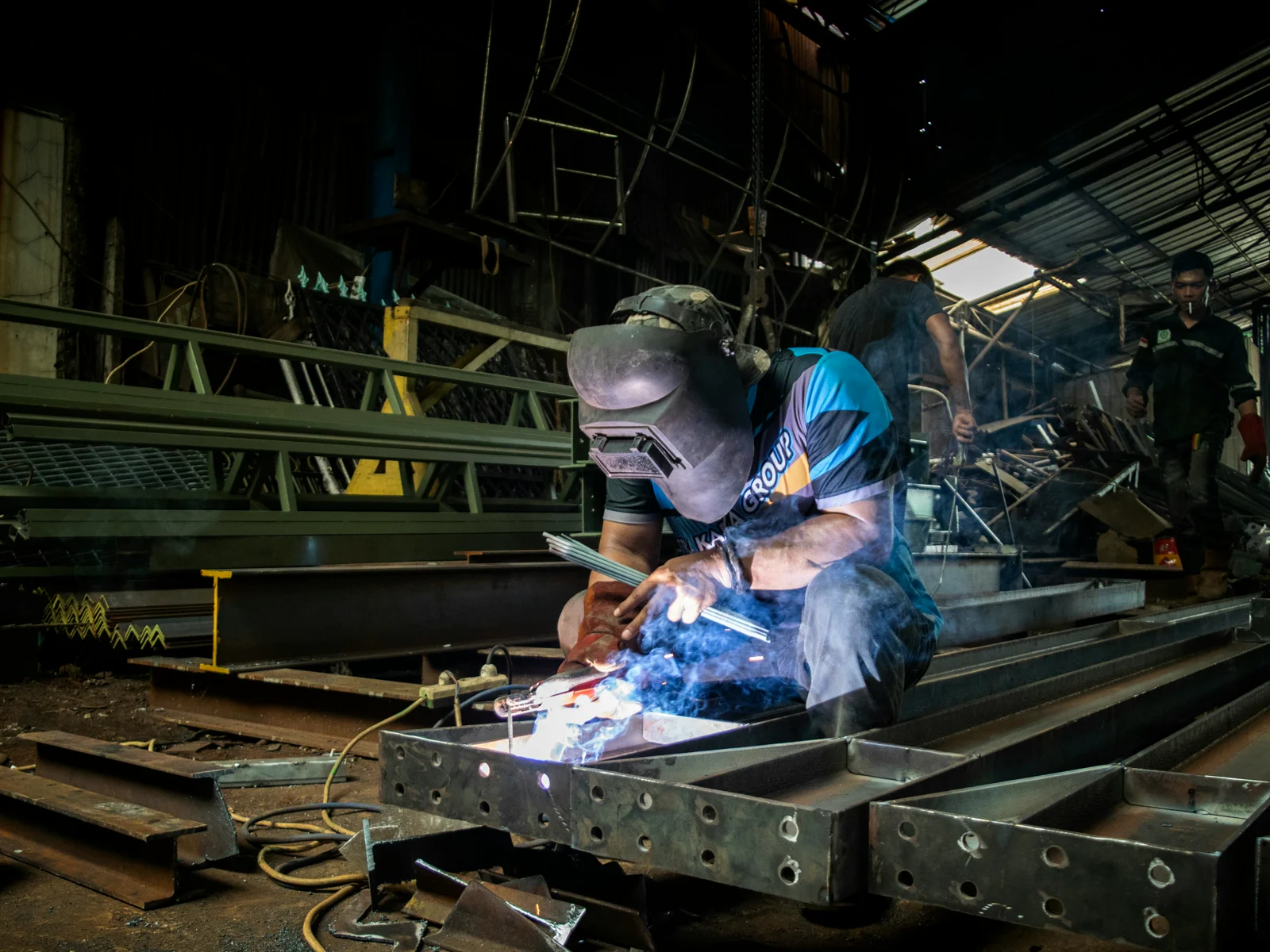
You start the search for a press brake kit because the professional machines cost $5,000 and the "DIY" videos make it look like a fun Saturday afternoon. You buy the plates, you get them home, and then you realize your 110-volt hobby welder can't even get the base plate warm, let alone penetrate the half-inch steel required for the side frames. The project stalls because the gap between your current toolset and the tools required to build the machine is a canyon you can't jump.
Most of these kits end up as rust-covered paperweights under a workbench because the buyer didn't realize that building a press brake is an advanced fabrication project, not a beginner's entry point. You need a rock-solid, perfectly level welding table just to get the frame square, and most beginners are working on a wooden bench or a concrete floor that’s as wavy as the ocean.
Trying to weld a precision tool on an unlevel surface will result in a brake that bends every part into a "propeller" shape.
Sell the kit parts for scrap now and save the headache, or commit to buying a real welding table before you strike the first arc.
Conversion Kits for Existing Shop Presses: The Closest Thing That Exists
The only thing that truly qualifies as a "kit" for a beginner is a press brake attachment designed to sit inside a standard 20-ton H-frame shop press. These aren't full machines; they are essentially a set of heavy-duty hinges and a spring-return system that holds a punch and a die. They work because they borrow the structural rigidity of the shop press you already own, which (hopefully) was built by a factory that knows how to weld.
These attachments are great for making small brackets or folding thin strips of steel for a motorcycle fender. However, they are clumsy because you have to hand-pump the jack, which makes it nearly impossible to feel the "spring-back" of the metal or stop at a precise angle. If the shop press frame isn't perfectly square, the ram will push the attachment sideways, potentially spitting the workpiece out the front like a deck of cards.
A sliding die that binds under pressure can shatter, sending shards of hardened tool steel into your chest.
If you already own a 20-ton press, spend the $200 on a reputable bolt-together attachment, but don't expect it to produce anything more accurate than "close enough for a farm gate."
DIY Plan Bundles: Engineering Drawings Without the Tolerances
You’ll see guys online selling PDF plans for $20 that promise a "professional-grade" press brake for a fraction of the cost. These plans are usually just CAD drawings of steel plates, and while the math might be right on paper, the plans can't account for the "real world" variables of the steel you buy from the local yard. Steel plate has a "mill scale" and a slight bow to it that will throw your tolerances off by degrees before you even start cutting.
Following a set of plans without having a milling machine to "true up" the edges is like trying to build a precision watch using a chainsaw. You can get the general shape right, but the fine-tuning required to make a press brake repeatably accurate to 0.5 degrees isn't something you can download.
If you can't machine your own pivot pins to a thousandth of an inch, those plans are just expensive scrap-metal recipes.
Buy the plans if you want to learn how machines are designed, but don't buy the steel until you've priced out the local machine shop's hourly rate for squaring your plates.
Hydraulic Cylinder Packages: A Power Source Masquerading as a Machine
Some "kits" are nothing more than a hydraulic cylinder, a pump, and a few hoses sold under the guise of a DIY press brake starter pack. This is the most dangerous path because it encourages you to build a frame around a power source that is capable of crushing a car engine into a pancake. Beginners often underestimate the "return path" of the force—the frame has to absorb every ounce of pressure that the cylinder puts out.
If you hook up a 30-ton cylinder to a frame made of thin-wall square tubing, the frame will fold like an accordion before the metal you're trying to bend even gets a scratch. You are essentially building a bomb where the fuse is the "cycle" button on the hydraulic pump.
A hydraulic line failure at 3,000 PSI can inject oil directly through your skin and into your bloodstream, which is a one-way ticket to the emergency room for a limb-saving surgery.
Unless you are a certified hydraulic technician, stay away from "power kits" and stick to manual jacks or pre-built power units.
The Deflection Trap: Why Thick Steel Doesn't Guarantee Straight Lines
You might think that using one-inch thick steel for your press brake frame will make it “indestructible,” but even thick steel behaves like a wet noodle when you hit it with 40,000 pounds of force. This is called deflection. If the top beam of your press brake bows upward by even 1/32 of an inch in the middle, your 90-degree bend will be 90 degrees at the ends and 92 degrees in the center.
| Issue | What Happens | Factory Machine Solution | DIY Kit Reality | Result |
|---|---|---|---|---|
| Frame under 40,000 lbs of force | Beam deflects (bends upward) | Designed with calculated structural rigidity | Relies mainly on raw mass | Frame still flexes |
| 1/32" upward bow in center | Bend angle becomes inconsistent (90° at ends, 92° in center) | “Crowning” system pre-curves the bed to counteract deflection | No crowning system | Inconsistent bends |
| Attempting to correct bend errors | Hammering parts to compensate | Precision engineering maintains accuracy | Fighting physics manually | “Boat-shaped” parts that won’t fit |
| Fixing deflection | Requires engineered compensation | Built-in structural and mechanical correction | No true correction available | Persistent inaccuracy |
You can't fix a deflected beam with a bigger hammer; you fix it with engineering that costs more than your truck.
If you need parts that are straight over a distance longer than 12 inches, stop looking at kits and start looking at used industrial machinery—or invest in a professionally engineered press brake solutions with built-in crowning and deflection compensation.
Ram Guidance Systems: Why Simple Bolts Can't Handle Side-Loading Forces
The most complex part of a press brake isn't the squishing; it's making sure the top die travels perfectly vertically without tilting. Most cheap kits use simple bolts or pieces of angle iron as "guides." The problem is that metal bending is rarely perfectly symmetrical, and the moment the resistance is higher on one side, the ram will try to kick sideways.
If the ram kicks, it puts a "side-load" on the guides that can snap a bolt or gall the metal so badly the machine seizes up mid-bend. A real machine uses precision-ground ways or massive chrome shafts to keep things straight. A kit that uses "sliding fit" steel plates will eventually develop enough play that your bends will look like they were done by a drunk person with a pair of pliers.
A seized ram under full hydraulic pressure is a ticking time bomb that can jump out of the frame if you try to force it back.
Budget an extra $300 for actual linear bearings or accept that your machine will have a "preferred" side that bends better than the other.
The 20-Ton Problem: When "Good Enough" Welds Meet Hydraulic Pressure
In most home projects, a "good enough" weld just has to hold a gate shut or keep a trailer together. In a press brake, a "good enough" weld is a death sentence. When you apply 20 tons of force, the internal stresses in the steel are looking for any microscopic crack or cold-lap in your welding to turn into a catastrophic failure.
The vibration and the repeated loading/unloading cycle will fatigue a poor weld until it lets go all at once. This isn't like a bracket breaking; this is the entire top assembly of the machine, weighing 200 pounds, being launched into the air by the stored energy of the hydraulic fluid.
If you haven't passed a bend test on a structural welding certification, you have no business welding the main load-bearing members of a press brake.
Spend the money on a professional welder to do the final assembly of your kit, or prepare to pay a much higher price in medical bills.
Die Sets That Fit Nothing: The Tooling Compatibility Trap
The biggest "hidden" cost of a press brake isn't the machine; it's the tooling (the "V" blocks and the punches). Cheap kits often come with a "universal" die that is really just two pieces of angle iron welded together. This might work for a few bends, but it will quickly deform, and it won't allow you to make tight radius bends or work with different thicknesses of material.
When you realize you need real tooling, you'll find that industrial "American" or "European" style dies don't fit your DIY machine because your tolerances are too sloppy. You’ll be stuck either grinding down expensive hardened steel dies to fit your crooked machine or making your own crappy tooling forever.
Using the wrong die for a material thickness can cause the metal to "bottom out" and explode the die into fragments.
Check the price of a standard 4-way V-die before you buy a kit; if the die costs more than the kit, the kit is a toy.
The Cost of Calibration: Can You Even Measure the Error in What You Built?
If I ask you if your DIY brake is square, and you pull out a plastic speed square from your tool belt, we’re done talking. To make a press brake work, you need to measure the distance between the bed and the ram to within a few thousandths of an inch across the entire width. If one side is 0.010" lower than the other, your angles will be off by a full degree or more.
Calibration requires dial indicators, precision ground parallels, and a lot of patience. Most kit builders skip this and then wonder why their "square" boxes look like trapezoids. You can't "eyeball" 20 tons of force into accuracy.
Without at least $200 in precision measuring tools, you’re just guessing with expensive steel.
Buy a dial indicator before you buy the kit, or admit that you don't actually care about precision.
Why "Saving Money" Often Requires $500 in Additional Machining
The "cheap" kit assumes you have a way to make the parts perfect after you've welded them. Because welding warps steel, the "bed" of your press brake will almost certainly be bowed after you finish the frame. A professional would then put that entire frame on a massive milling machine to "deck" the surface flat.
If you don't have a mill, you're stuck with a grinder and a straight-edge, trying to get a 24-inch span flat to within a hair's width. You will spend forty hours of your life grinding and measuring, or you will pay a local machine shop $500 to do it for you. Suddenly, your "cheap" DIY project costs as much as a used industrial machine.
A warped bed will cause your workpiece to "walk" during the bend, which can pinch your fingers against the frame.
Factor in the "frustration tax" of manual leveling, or buy a machine that was machined flat at the factory.
The Shop Press Conversion: What It Can (and Cannot) Realistically Bend
If you are a beginner, the shop press conversion is your best bet, but you must respect its limits. It is great for 1/8-inch aluminum or 14-gauge steel brackets. It is terrible for anything long, anything thick, or anything that needs to be identical to the last part you made. It is a "one-off" tool for a guy building a custom chopper in his garage, not a production tool.
The biggest limitation is the "throat depth"—how far you can slide the metal into the machine before it hits the back of the press. Most shop presses have very little room, meaning you can't bend a large box or a deep pan. You are limited to small, flat parts that don't require complex "return bends."
Trying to force a shop press to bend 1/4-inch plate across a 12-inch span will likely bend the press frame before it bends the steel.
If your goal is to make small tabs and spacers, the conversion kit is a smart buy; if you want to make a fuel tank, it’s a waste of money.
The Full DIY Build: When YouTube Makes It Look Easier Than It Is
YouTube fabricators have thousands of dollars in clamps, massive welding tables, and years of experience that they compress into a 15-minute video. They make the "fit-up" look effortless. What they don't show is the three hours they spent filing a single notch so the parts would sit square, or the fact that they're using a $3,000 pulse-MIG welder that makes a perfect bead every time.
When you try to replicate it with a hacksaw and a flux-core welder, the result is a disaster. You are seeing the "highlight reel" of a professional, not a realistic roadmap for a novice.
Watching a video of a guy building a press brake is not the same as having the "muscle memory" to prevent a weld from pulling a frame out of alignment.
If you haven't built at least three other heavy-duty shop tools from scratch, don't let a YouTube video convince you that a press brake is a "starter" project.
The Entry-Level Benchtop Machine: Where the Math Actually Changes
There is a point where it makes more sense to stop looking at kits and start looking at dedicated benchtop press brakes. These machines, often weighing 300-500 pounds, are designed from the ground up to be press brakes. They have integrated hydraulics, proper ram guides, and often come with a basic back-gauge (the stop that lets you bend the same spot every time).
Yes, they cost $1,500 to $2,500. But they work the day you bolt them to the floor. You aren't spending three months "debugging" a machine that wants to kill you. You are spending that time actually making parts and potentially earning money with the tool.
A factory machine has a safety rating; a DIY kit has a "hope and a prayer" rating.
If you value your time at more than $10 an hour, the "expensive" benchtop machine is actually the cheaper option over the first year of ownership.
If Your Material Is Under 16-Gauge: The Conversion Kit Case
If you are mostly working with thin stuff—HVAC ducts, electronics enclosures, or light bodywork—a shop press conversion kit is actually a decent choice. Thin metal doesn't require the massive tonnages that cause deflection and weld failure. You can get away with a lighter frame and less precise guidance because the "spring-back" is easier to manage.
In this specific niche, the "kit" reality matches the "kit" expectation. You can bolt it together, use a standard 12-ton jack, and get repeatable results without needing a degree in structural engineering.
Even thin metal can "whip" up during a bend and catch you in the chin, so always stand to the side of the machine.
Buy the kit for 16-gauge and up, but the moment you think about bending 1/8-inch plate, throw that kit in the trash and get a real brake.
If You Need Repeatable Angles: Why You Must Skip the Kit Entirely
Precision in metalworking is about repeatability. If you need to make four legs for a table and they all need to be exactly 88 degrees, a DIY kit will drive you to madness. Between the flex in the frame, the play in the ram guides, and the inconsistency of a manual hydraulic jack, every bend will be slightly different.
You will spend more time measuring and "tweaking" each part than you did bending it. A dedicated machine with a "depth stop" allows you to set the bottom of the stroke so every part is identical. A kit usually lacks this, meaning you are "eyeballing" the needle on a pressure gauge or a mark on a ruler.
If you are selling the parts you make, your customers won't pay for "close enough."
If repeatability, automation, or higher throughput matters to you, look beyond kits and consider a fully integrated press brake solutions that combines precision control with consistent part handling.
The Ultimate Question: Do You Want to Fabricate Tools or Fabricate Parts?
This is the crossroads. Some guys love the challenge of building the machine more than they love using it. If you want to spend your weekends solving engineering puzzles, welding thick plate, and chasing thousandths of an inch with a grinder, then buy the kit or the plans. It’s a great way to learn the limits of steel.
But if you actually have a project you want to finish—a car, a piece of furniture, a product for a business—the DIY press brake is a massive distraction. It is a project that prevents you from doing your actual project. You’ll be six months into the "tool build" and your actual project will still be a pile of flat sheets on the floor.
A tool that doesn't work perfectly is just another problem you have to solve before you can start working.
Decide today: are you a machine builder or a metal fabricator? If it's the latter, stop being cheap and buy a machine that was built by people who don't have missing fingers. For detailed specifications, comparisons, and technical data, review the official brochures or contact ZWCNC to discuss the right press brake solution for your application.
Apply this guidance to your production
Share your material, thickness, part drawing, tolerance, and target output with the ZWCNC engineering team for an application-specific equipment review.
More news, insights, and updates from ZWCNC.
Guide to Press Brake Bending Methods
How to Vet a China CNC Press Brake Factory Without Buying a Frankenstein Machine: The Assembler Illusion
How to Remove Galled Metal from a Press Brake V-Die Safely
Press Brake Applications Across 16 Industries: Selection Guide
What Is Press Brake Forming? How a Punch, Die, and Controlled Physics Turn Flat Metal Into Precise Shapes