Licensed editorial adaptation
Adapted and localized by the ZWCNC Editorial Team from licensed technical material. The source record is published for traceability.
Technical boundary: confirm machine-specific capacity, configuration and safety requirements against the current quotation, manual and application review.
Take a look at the machine quotes on your desk. The 6kW Raycus system is priced at about twice the cost of the 3kW version. Like many shop owners, you might enter these numbers into a spreadsheet, assume the 6kW unit cuts twice as fast, and conclude that the ROI does not justify the investment risk. You then choose the 3kW model because it can technically pierce the half-inch mild steel you occasionally process.
That spreadsheet just cost you your competitive advantage. You are not actually saving money—you are prepaying for countless hours of painfully slow production. The math assumes laser behavior follows a gas pedal model—press twice as hard, move twice as fast. But photons are indifferent to linear assumptions.
Related: Fiber Laser Cutting Speed with an IPG Laser Source
The Linear Scaling Trap: Why "Just Enough Power" Becomes an Expensive Error
Walk through any struggling fabrication shop, and you will see machines running at full capacity, barely meeting demand, while the owner laments slim margins. They invested in "just enough" power to complete the work, overlooking the actual physics taking place in the cutting process.
The Illusion of Proportional Gains: Why Doubling Power Doesn’t Mean Doubling Speed
Cut a sheet of 1/4‑inch carbon steel with a 3kW fiber laser and you might comfortably reach 80 inches per minute. Upgrade to a 6kW system, and linear thinking would suggest 160 IPM. Yet with that same material under a 6kW Raycus source, you could achieve about 300 IPM. Move up to 12kW, and instead of merely doubling output again, you enter the range of 800+ IPM depending on the optics.
For application-specific equipment selection, contact ZWCNC.
The assist gas clears molten metal with much lower viscosity. A 2.5× increase in raw power can produce up to a sixfold speed gain because the energy needed to initiate a cut is a fixed requirement. Once you pay that initial thermal cost to overcome material reflectivity and conductivity, nearly all additional watts contribute directly to cutting speed.
Cost‑Per‑Hour vs. Cost‑Per‑Part: The Metric That Truly Determines ROI
Monitor electricity and nitrogen usage on a high‑power system and you will see higher utility charges than with a 3kW machine. This single observation often alarms accountants into selecting underpowered equipment. They compute a burdened machine rate—perhaps $45 per hour for the 3kW unit versus $60 per hour for the 12kW—and react with concern.
Shops do not sell hours; they sell parts. Doubling fiber‑laser power usually raises total operating costs by only 20–30 percent. The chiller works harder, and the diodes draw more current, but the operator’s wage stays the same, and floor space expenses remain constant.
If your machine rate increases by 30 percent while your throughput grows by 400 percent, your cost per part drops dramatically. That $60 hourly rate is now distributed across six times as many brackets, flanges, and baseplates. The shop using a 3kW source loses margin on every cycle because it pays for time, whereas the shop with the high-power source pays for output.
The "Technically Works" Fallacy: Hidden Downtime in Underpowered Systems
Observe an operator cutting plate at the maximum limit of a low-wattage machine. The specifications claim it can handle the task, and it does—but only eventually. However, "technically" accomplishing the job doesn’t pay the bills. When power is insufficient, every pierce becomes a slow, tedious process, forcing the machine to waste time simply breaking through.
This is the essence of the "technically works" fallacy. Operating at maximum power turns the shop floor into a place where operators must constantly attend to the machine to keep production viable. High-power systems remove that friction. The real expense of an underpowered laser isn’t just the slow feed rate—it’s the operator oversight and lost productivity resulting from waiting while the machine struggles.
The Physics Behind the 6x Increase: How Raycus Power Density Alters the Melt Zone
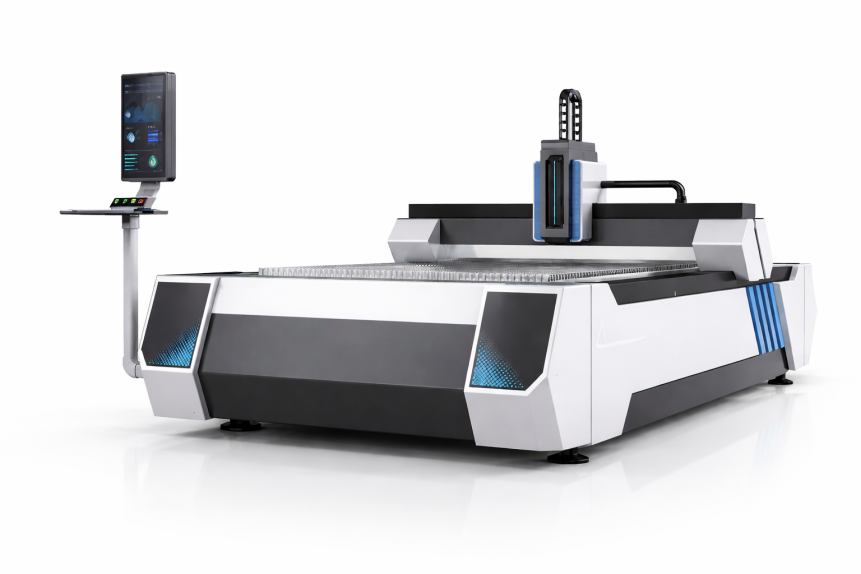
Power Density vs. Raw Wattage: Why 15kW Delivers Exponential Gains Over 6kW
Let’s review the concrete data to show this isn’t marketing hype. Refer to a standard Raycus OEM cutting chart for 6mm (1/4-inch) stainless steel on nitrogen. A 6kW source cuts that plate at about 130 inches per minute. Increase power to 15kW—a 2.5× boost in wattage—and the identical cut accelerates to 780 IPM. That’s a sixfold increase, clearly documented. At such speeds, the real bottleneck isn’t the laser itself—it’s that your automated pallet changer now appears to move in slow motion. Shifting from a 6kW to a 15kW Raycus source doesn’t merely add more heat; it fundamentally changes the energy density at the focal point. It’s like comparing the force of pushing a blunt stick through leather versus using a needle—the same general force, but the needle focuses that force over an area so small the leather offers no resistance.
A 15kW fiber laser focuses its photons into a spot size often under 150 microns. At such density, the material cannot conduct heat away fast enough. In lower-wattage systems, the metal acts as a heat sink, drawing energy from the cut and forcing slower speeds to sustain melting. With 15kW, the energy arrives so rapidly and in such a concentrated form that the material reaches its boiling point before surrounding crystals even begin to heat.
This explains the nonlinear speed increase. You’ve eliminated the material’s thermal drag. Once power density surpasses the metal’s initial reflectivity threshold, each additional watt translates directly into velocity. You’re no longer contending with the plate’s physics—you’re merely setting how fast the gantry can travel.
But what happens to the molten metal when cutting at speeds approaching three times the speed of sound?
Melt Pool Evacuation: What Occurs When You Surpass 10,000 Watts
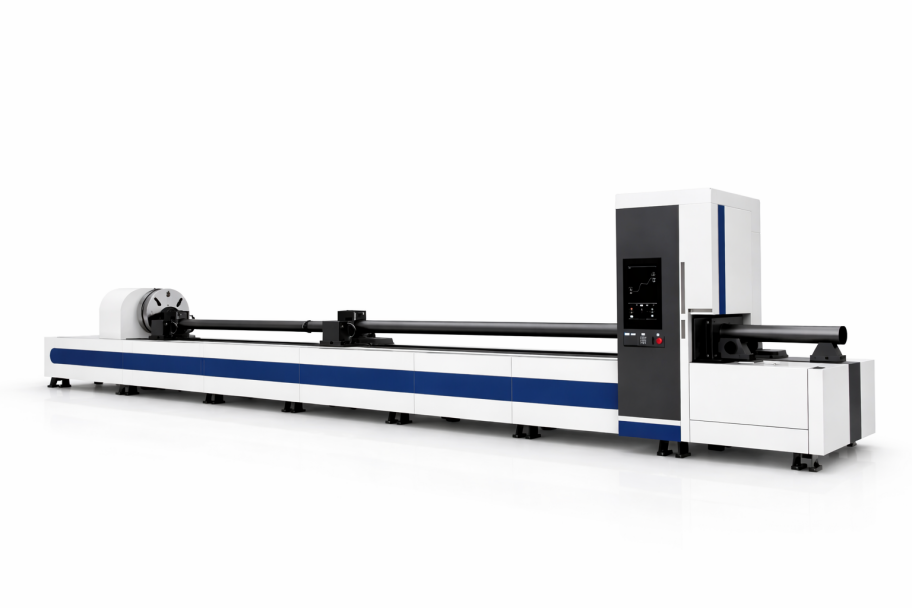
Exceeding the 10kW threshold transforms the kerf from a liquid flow into a "keyhole" vaporization mode. In a 4kW or 6kW setup, the laser melts the metal, and the assist gas must push that liquid through the bottom of the cut. If the feed rate is too high, the gas cannot clear the molten material, resulting in dross—the stubborn, hardened slag at the bottom of the part that workers have to grind off manually.
At 15kW, the Raycus source generates enough concentrated energy to instantly vaporize part of the metal. This produces a "recoil pressure"—a physical force that assists in expelling the remaining molten material from the kerf. In effect, the laser performs half of the assist gas’s clearing work. This explains why higher-power machines deliver cleaner edges at faster speeds: the melt pool is shallower and more dynamic, allowing it to exit the plate before it can adhere to the underside.
The limiting factor shifts from the laser’s melting capacity to the gantry’s ability to keep pace with the vaporization front. If the machine frame cannot sustain accelerations of 2G or 3G, that 15kW source is like installing a Ferrari engine in a golf cart; the sixfold speed increase will remain unrealized because the "chassis" cannot handle the rapid movement.
If the laser vaporizes the metal this effectively, does that mean you can finally stop losing money on nitrogen?
The Assist Gas Equation: How High Power Improves Nitrogen and Oxygen Efficiency
The most unexpected aspect of operating at high power is its impact on gas consumption. Common sense suggests that faster cutting requires more gas to clear the kerf. In practice, the opposite occurs: gas usage per inch of cut decreases as wattage rises. Because a 15kW beam traverses the material six times faster than a 3kW beam, the assist gas flows for only a small fraction of the time needed for the same component.
Consider the gas’s "dwell time." In slow, low-power cutting, nitrogen streams into the kerf for several seconds, much of it wasted as it reflects off the cooling walls. In a high-power Raycus setup, the beam passes through the material so quickly that the gas merely provides a brief "push" to clear the melt. Although pressure is higher, the duration is so short that the total gas volume consumed per part is reduced.
This efficiency undermines the idea of a purely linear return on investment. You save not only time but also consumable costs per linear inch of cut. When shorter cycle times combine with lower gas usage, a 15kW source shifts from seeming like a luxury to becoming a strategic necessity against competitors who have already made these calculations.
With the melt zone physics understood, how does this effect apply to the specific materials currently on your racks?
Mapping the Raycus Sweet Spot: Performance Across Material Thickness Ranges
A 1,500W laser cuts 3mm carbon steel at about 3.6 meters per minute, while a 1,000W source manages only 3 meters per minute. Spending 50% more power yields only a 20% speed improvement. If you base equipment investments on this range of data, it might seem that increasing power offers poor returns. But those apparent diminishing returns occur only because the process remains in the melting phase, below the point where vaporization physics dominate.
Once a high-power Raycus source is applied to the material thicknesses that generate most of the profit, the performance curve shifts dramatically. So where does this exponential advantage begin?
Mid-Range Mastery (3mm–12mm): Where the Speed Curve Rises Steeply
Consider 6mm (1/4-inch) mild steel. With a typical 6kW source, this plate can be processed at around 150 inches per minute, melting the material while gas pressure clears the kerf. Replace that with a 15kW Raycus source, and instead of merely doubling speed to 300 IPM, it exceeds 600 IPM. A 2.5-fold power increase results in a four- to six-fold boost in feed rate.
Why does this happen? Between 3mm and 12mm, the material is thick enough to absorb heat but thin enough that high power density can instantly vaporize the full depth of the cut. Thermal conduction ceases to be the limiting factor. A half-hour run of brackets can finish in just five minutes, dropping cost per part so steeply that the machine payment becomes negligible compared to the expanded capacity.
However, as the plate thickness increases, the cutting dynamics shift again. What occurs when you attempt to push these speeds through heavy structural plate?
Heavy Plate (12mm+): When Speed Yields to Edge Quality and Piercing Time
So why use high power for heavy plate? Because the limitation isn’t feed rate—it’s pierce time. A 6kW laser might spend five long seconds piercing 20mm carbon steel. Multiply that by 300 holes in a nest, and roughly 25 minutes are lost simply forming holes. A 15kW Raycus source can deliver a blast pierce in milliseconds, using its high energy density to eliminate idle time between cuts. High power on thick plate is purchased to minimize non-cutting time, not to increase travel speed.
Does this reasoning remain valid when switching from carbon steel to other alloys?
Stainless vs. Carbon Steel: How Material Type Alters the Crossover Point
Thermal conductivity dictates speed limits as strictly as thickness does. Carbon steel is forgiving, retaining heat locally. Stainless steel and aluminum conduct heat rapidly, pulling energy away from the cut zone so efficiently that a 6kW laser cutting 6mm stainless struggles to sustain the melt pool, let alone achieve full vaporization.
Therefore, the crossover point for non-linear speed gains shifts significantly depending on the material. To achieve the same six-fold speed increase on 6mm stainless that you get on carbon steel, you often need 15kW or even 20kW to overcome the alloy’s heat dissipation. The “sweet spot” isn’t fixed on a chart—it shifts according to how quickly the material drains your energy. Pricing stainless jobs by carbon steel speed metrics means losing margin on every sheet.
Yet even if your Raycus source matches the material perfectly, what happens when the machine itself can’t keep up with the required performance?
The “Fast Engine, Slow Chassis” Issue: When Your Machine Restricts Your Raycus Source
Motion System Limits: Can Your Gantry Match 15kW Speeds?
Picture installing a 1,000-horsepower race engine in a 1970s pickup truck—the transmission or frame would fail long before reaching top speed. In laser systems, the Raycus source acts as the engine, while the gantry—the moving bridge supporting the cutting head—serves as the chassis. Mounting a 15kW source on a machine built for 3kW doesn’t deliver more speed; it creates a costly way to shake the machine apart.
Acceleration is the hidden cost of every part you produce.
When your cutting chart claims 600 inches per minute (IPM) on 6mm plate, that figure is only achievable if the machine has sufficient acceleration. Most mid-range models peak at around 1.0G or 1.5G. On a small bracket with many corners, the laser head rarely reaches full velocity, constantly decelerating into turns and accelerating out. You may pay for 15kW of vaporization capacity, but because the gantry responds slowly, the laser often fires near 4kW to avoid burning the corners.
Rigidity is the other side of the performance equation. At high speeds, each directional change produces inertia that tends to carry the cutting head forward. If the gantry lacks stiffness, that inertia causes chatter or wavy edges. You must then slow the machine to preserve part quality, negating the non-linear return on investment initially promised.
If the frame can’t handle the strain, the laser becomes an overpriced passenger.
The Assist Gas Bottleneck: Could You Be Starving the Melt Zone?
High processing speed depends not only on intense light but also on a substantial, consistent flow of assist gas to clear molten material. Jumping from 2kW to 15kW increases the volume of metal processed per second. If the delivery system—regulators, internal hoses, or solenoid valves—was built for lower power, the cut may be starved of gas.
It’s like trying to run a marathon while breathing through a cocktail straw.
At elevated speeds, assist gas must expel molten material from the kerf within microseconds. Even a slight pressure drop along a long straight path prevents full clearing, leaving fused parts that won’t separate from the sheet. This isn’t a laser issue—it’s a plumbing one. Shops frequently blame the Raycus source for inconsistent cutting when, in reality, a 1/4‑inch gas line is attempting a 1/2‑inch task.
To achieve the sixfold increase in speed, you need high-flow valves capable of opening and closing with the same speed as the laser pulses. Without sufficient volume, vaporization cannot complete properly, leaving you to scrape dross off every part.
What occurs when gas delivery is optimal and the gantry is fast, but the transmission fails to engage?
Focus Position and Nozzle Dynamics: Millimeters That Can Double Your Throughput
The cutting head functions as the transmission of a laser system, and in high-power setups, the equivalent of a gear ratio is the focus position. When operating at 12kW or 15kW through a nozzle, the energy density is so intense that a focus error of only half a millimeter can turn an otherwise clean vaporization cut into a rough, slag-filled mess. If your machine relies on a manually focused head, you have already lost the efficiency and ROI advantage.
High-power laser cutting demands dynamic, real-time focus adjustments to maintain the very narrow optimal zone as the material heats and expands.
Nozzle choice also alters performance factors. At lower powers, a standard single-layer nozzle generally suffices. However, once exceeding the 10kW level, high-speed dual-layer nozzles become necessary because they create a venturi effect that pulls additional air into the flow and stabilizes the plasma. Although these nozzles are more expensive, they are the only way to keep the kerf sufficiently narrow to preserve the balance between speed and power.
Using a low-cost, generic nozzle with a high-wattage Raycus source is comparable to fitting economy tires on a supercar. You may save fifty dollars on consumables, but end up losing roughly five hundred dollars in reduced throughput by the end of the shift.
However, even with optimal machine setup, gas pressure, and focus alignment, there exists a certain material thickness where these non-linear performance gains hit a distinct point of diminishing returns.
The Thin-Gauge Exception: When Increased Wattage Encounters Diminishing Returns
Under 3mm: The Threshold Where Speed Multipliers Disappear
When cutting 16-gauge stainless steel, employing a 30kW Raycus source mainly results in burning through material waste expensively. The non-linear speed improvements that make high wattage valuable for 12mm plate reach a physical limit below about 3mm thickness. At this level, the sheet is so thin that even a 6kW source can vaporize along the cut path as quickly as most gantries can physically travel.
The limiting factor ceases to be the laser itself and becomes the basic law of inertia.
To deliver the promised “6× speed” on a 1.5mm sheet, a machine would need to move at speeds exceeding the structural tolerance of its drive components. Even if a cutting chart indicates 150 meters per minute, the machine’s acceleration constraints—the previously discussed G-force—will prevent reaching that top velocity except on very long straight paths. In practical parts with holes, tabs, and corners, the laser operates at reduced speed nearly 90% of the time because the gantry continually cycles through braking and acceleration.
It is essentially the equivalent of paying for a 200‑mph engine to drive in a school zone.
When material resistance approaches zero, the ROI from increasing wattage levels off because the “time per part” becomes limited by the machine’s mechanical responsiveness rather than its cutting power. In thin-gauge conditions, the cycle-time gap between a 12kW and a 20kW source is typically only fractions of a second—insufficient to justify a six-figure increase in equipment cost.
If the machine’s “chassis” limits its top speed, could adding more power actually become counterproductive?
Controlling Thermal Distortion: When Excessive Power Density Damages the Part
High power isn’t just fast—it’s aggressive. Delivering 15kW or 20kW of energy into a 2mm-thick sheet injects a tremendous amount of heat into a tiny volume of metal. Even with rapid vaporization, the Heat Affected Zone (HAZ) becomes a potential problem if the beam lingers even a millisecond too long in one spot.
On thin-gauge nests, this focused energy can cause “potato-chipping,” the quick warping of the sheet due to thermal expansion.
Once the sheet warps, the gap between the nozzle and the material changes faster than the height sensor can compensate. The nozzle may then “dive” into the material, or the focus point may drift so far out of alignment that the cut fails altogether. The result is a distorted skeleton and out-of-tolerance parts, turning what should be a high-speed production run into a high-speed scrap run.
Precision demands a careful equilibrium between intensity and control—something raw wattage often neglects.
Moreover, most ultra-high-power systems rely on a multi-mode beam structure to reach those large kilowatt outputs. While a broad multi-mode beam is excellent for cutting thick plate, it lacks the fine “single-mode” focus required for thin-gauge accuracy. The outcome is a wider kerf, more dross on the underside of the cut, and an increased likelihood of small features melting away.
If power density is no longer the path to profit, where should a thin-gauge shop invest instead?
Why Table Size Often Matters More Than Wattage in Thin-Sheet Production
In thin-gauge processing, profit comes not from “inches per minute” of cutting speed but from “sheets per shift” throughput. If a 12kW Raycus source can complete a 3000mm × 1500mm sheet of 2mm aluminum in three minutes, yet your operator needs five minutes to exchange pallets and load the next sheet, the laser remains idle for over half the day.
Doubling the wattage won’t compensate for a slow forklift or an inefficient pallet changer.
For shops concentrating on materials under 3 mm, expanding to a larger table or adopting an automated tower system delivers a much stronger ROI than increasing wattage. A 6‑meter or 12‑meter table lets the laser keep working on one end while the operator unloads completed parts from the other, eliminating the “dead time” between nests. That downtime is where true cost‑per‑part savings occur when you can’t process the metal itself any faster.
Efficiency in thin‑gauge production depends on logistics rather than physics.
By investing in a larger workspace or automated material handling, you maximize the “beam‑on” time of a mid‑range source—such as a 6 kW or 12 kW unit—that can already manage the material effectively. This avoids thermal distortion from excessive power while ensuring the machine never waits for human input. This thin‑gauge limit is the exception that proves the rule: those substantial non‑linear speed gains are genuine but apply to mid‑range plate thicknesses where most shops earn their profit. The ROI calculation that follows is designed around exploiting that mid‑range sweet spot, not the thin‑sheet outliers.
The New ROI Formula: Converting Raycus Specs into a Three‑Year Profit Projection
Raycus Power‑to‑Profit Matrix
- If 80% of your volume is <3 mm: Remain with 3 kW–6 kW. Your limitations are gantry acceleration and part nesting; higher wattage simply raises overhead without improving top speed.
- If 80% of your volume is 4 mm–12 mm: Choose 12 kW–20 kW. This is the “Vaporization Zone,” where non‑linear physics yields a sixfold speed increase and drastically reduces cost per part.
- If 80% of your volume is >16 mm: Move to 30 kW+. High power density is required to overcome thermal drag and maintain edge quality at scale.
If doubling laser power increases baseline operating costs by only 20–30% but delivers a 400% speed improvement on ¼‑inch plate, the conventional “machine hourly rate” formula is misleading. Many shops still justify purchases by dividing monthly finance payments by projected machine hours—a fundamental misinterpretation of high‑power fiber physics. When a 15 kW Raycus surpasses the thermal drag of melting and shifts to pure vaporization cutting, you’re no longer buying machine hours; you’re investing in a collapsed cost per part.
Determining the Break‑Even Volume for High‑Power Upgrades
Break‑even for a high‑power source is measured in parts produced, not in time. To calculate it, isolate the financial difference between the “safe” replacement machine and the high‑power upgrade. If a 6 kW system costs $4,000 per month to finance and a 15 kW system costs $6,500, the true upgrade expense is precisely $2,500 per month. Your task is to determine how many parts must be produced for the physics of power density to offset that $2,500 premium.
This calculation emerges from the non-linear decrease in consumables and beam-on time.
Since the 15kW source pierces 5/8-inch plate in milliseconds instead of seconds and cuts at three times the speed, nitrogen assist gas consumption per part drops sharply. If the shorter cycle time and lower gas usage save you $0.80 per part on a high-volume bracket, dividing the $2,500 premium by $0.80 shows that 3,125 brackets per month are needed to break even on the 15kW upgrade. Every bracket produced beyond number 3,125 represents pure margin that the 6kW machine cannot reach.
Labor Efficiency Factor: How Increased Throughput Reduces Headcount Requirements
Labor is the most costly and least predictable element on the shop floor. When shop owners review a cutting chart, they tend to focus on inches per minute, though the real metric they should consider is headcount reduction. A 15kW Raycus not only cuts faster than older units but effectively replaces multiple machines. If you currently operate three 4kW lasers across two shifts with four operators to meet production targets, you are losing money on wages, benefits, and human error.
Higher wattage consolidates labor.
By upgrading to a single 15kW or 20kW system with automated material handling, you can produce the same output in one shift with one operator. This change does more than save on nitrogen costs or piercing time—it removes three salaries entirely, converting a large fixed operating expense into retained profit. The machine covers its own premium simply by eliminating the need for a night shift.
The Final Decision: Aligning Your Material Mix with the Correct Power Tier
Match power to your main production volume, not the occasional thick piece. The biggest mistake a buyer can make is choosing a 30kW source for rare 25mm plate cuts, even though 80 percent of their output is 16-gauge stainless. As shown, thin-gauge processing is capped by the gantry’s acceleration limits, making the 30kW unit an expensive liability that distorts parts and wastes capital.
On the other hand, if your core work involves 6mm to 12mm plate, mid-range power cripples your margins. This range—often called the "thermal highway"—requires the highest achievable power density to drive rapid material vaporization. For occasional 25mm plate jobs, accept the slower rate or outsource instead of building your business around exceptions.
Do not purchase a laser merely to handle today’s backlog. Choose the power tier that leverages the physics of your material mix to reduce cost per part so aggressively that you can outbid competitors and secure future work.
Related Resources and Next Steps
- For readers who want detailed materials, brochures is a useful follow-up resource.
- If the next step is to speak with the team directly, contact ZWCNC fits naturally here.
Apply this guidance to your production
Share your material, thickness, part drawing, tolerance, and target output with the ZWCNC engineering team for an application-specific equipment review.
More news, insights, and updates from ZWCNC.
Fiber Laser Cutting Machine Maintenance Checklist and Schedule

Fiber Laser Cutting Machine Maintenance, Safety, and Troubleshooting
Fiber Laser Cutting for HVAC Ductwork: Throughput, Quality, and ROI
New vs. Used Fiber Laser Cutting Machine: Cost and Risk Guide
Fiber Laser Cutting Aluminum: Practical Thickness Limits by Power