Licensed editorial adaptation
Adapted and localized by the ZWCNC Editorial Team from licensed technical material. The source record is published for traceability.
Technical boundary: confirm machine-specific capacity, configuration and safety requirements against the current quotation, manual and application review.
A functional entry-level fiber laser cutting machine may appear affordable on a quotation. Yet the purchase price is only the beginning. Once electrical work, gas delivery, extraction, cooling, software, training, installation, and initial consumables are included, the amount required to produce the first acceptable customer part can be far higher.
That difference does not necessarily mean the machine is defective. It means the comparison is incomplete. A laser can power on and cut material while the buyer remains weeks—and thousands of dollars—away from reliable production.
The correct question is therefore not simply whether a new or used fiber laser has the lower invoice. It is which option can produce the required work at the lowest risk-adjusted cost while protecting customer deliveries.
The Used-Machine Discount Is a Risk Budget
A used machine’s discount is not automatic savings. For planning purposes, treat it as a finite budget that must absorb the obligations transferred to the buyer: dismantling, transport, installation, missing infrastructure, uncertain component condition, incomplete support, repairs, and lost production during diagnosis and recovery.
Age and depreciation also reduce used-equipment prices, so the entire discount should not be interpreted as hidden damage. A well-documented, properly supported machine can preserve a genuine price advantage. However, the buyer earns that advantage by resolving uncertainty before purchase—not by assuming that a lower invoice has already created savings.
Compare the cost to the first sellable part
Put new and used candidates on the same finish line. That finish line is not delivery, installation, or the first spark from the cutting head. It is the first conforming part produced repeatedly by a trained operator through a workflow capable of releasing customer orders.
Cost to first sellable part = purchase price + relocation + site preparation + integration + commissioning + training + startup materials + corrective work
Mark every cost as included, excluded, separately quoted, or unknown. An unknown is never zero. It is either a question that must be resolved before the purchase or a contingency that must remain inside the used-machine discount.
Used-machine relocation often involves several parties. Decommissioning, loading, freight, cargo insurance, unloading, rigging, positioning, reassembly, and recommissioning may all have different owners. Every handoff creates another opportunity for responsibility to become unclear.
“Running when removed” is not an acceptance standard. A machine that cut correctly before transport may still require alignment, calibration, parameter verification, and representative test cuts after installation. The agreement should identify who restores operation, what commissioning includes, what materials and thicknesses will be tested, and what result counts as acceptance.
New-machine proposals may also exclude freight, rigging, facility work, or advanced training. The important distinction is not that new equipment includes everything and used equipment includes nothing. It is that responsibility is often easier to define in a new-machine contract, while a used buyer may need to assemble that support path independently. Compare scope, not labels.
Account for the complete production cell
The laser does not produce alone. It requires suitable electrical service, cooling, fume extraction, assist-gas supply and regulation, compatible software, data connections, material handling, and startup consumables. Existing infrastructure can reduce these costs only when compatibility has been confirmed.
A higher quotation may include a chiller, extraction system, software rights, installation, operator instruction, and initial consumables. A lower used listing may include only the machine in its current location. Until both offers reach the same operational state, the invoice gap is not a valid savings calculation.
Once visible startup costs are aligned, convert every remaining uncertainty into one of three things: documentary proof, a physical test, or a financial reserve. If an important uncertainty cannot be resolved by any of them, the machine is not inexpensive; it is simply impossible to price responsibly.
Production Fit Comes Before Price

Imagine that a discounted machine cuts the required material during a demonstration but produces unacceptable edges at the speed needed to meet weekly demand. It can make the part, but it cannot make the part profitably. It should not enter the financial comparison at all.
Production fit is a pass-or-fail gate. New and used candidates deserve cost analysis only when both can produce sellable versions of the shop’s recurring work at the required volume, using a process the building and team can sustain.
Define the work the machine must perform profitably
Begin with the hardest recurring part or part family—not the average job and not an occasional specialty order that could sensibly be subcontracted. Hard recurring work exposes weak piercing, slow cycle times, inconsistent motion, poor edge quality, and excessive secondary finishing.
For each important part family, document:
- Material grade and recurring thickness range
- Tolerances, feature sizes, hole requirements, and edge condition
- Standard sheet size, largest part, and usable cutting area
- Weekly quantity and delivery pattern
- Required downstream condition, such as readiness for bending or welding
- Maximum acceptable scrap, rework, and secondary finishing
Separate mandatory work from occasional jobs that can be outsourced without damaging the core economics. Material names alone are not sufficient. Carbon steel, stainless steel, aluminum, and reflective nonferrous metals impose different requirements. Thickness changes power demand, piercing behavior, gas consumption, speed, and edge quality.
Define quality operationally. State whether visible dross is acceptable, whether edges require grinding, and whether parts must move directly into bending, welding, coating, or assembly. The relevant output is not merely a cut blank; it is a part ready for its next profitable operation.
Measure good parts per productive hour
Catalog cutting speed is only one element of a real cycle. Production nests contain corners, small holes, short contours, acceleration changes, head movements, and pierces. On thicker or more difficult material, piercing may consume a large share of cycle time.
Measure elapsed time from loading a representative sheet to unloading acceptable parts. Include setup, programming, inspection, handling, maintenance, and sorting. Scheduled shift hours are not productive cutting hours.
Repeatability matters as much as a single accurate part. The machine must hold dimensions and edge quality across multiple sheets, table positions, and thermal conditions. One successful sample proves possibility; repeated production proves capacity.
Scrap turns technical instability into financial loss. Rejected parts consume material, gas, machine time, inspection, and schedule capacity. Compare candidates by good parts per productive hour and cost per good part, not maximum feed rate.
Right-size power, table capacity, and automation
Laser power does not define performance by itself. The cutting head, motion system, controller, assist-gas system, parameters, and machine condition determine whether the available power produces the necessary speed and quality. Representative results are more useful than wattage claims.
Table size should fit standard stock and the largest recurring parts with enough usable area for effective nesting. Consider travel limits, clamping zones, loading clearance, and maintenance access—not just nominal bed dimensions.
For application-specific equipment selection, contact ZWCNC.
Buying excess wattage or unused automation can make a new offer unnecessarily expensive. It can also add facility requirements, service points, floor-space demands, and capital cost without increasing sellable output. Conversely, automation bundled with a used machine is not free merely because it has depreciated; the shop must still install, support, and integrate it.
Compare a correctly specified new system with a correctly specified used system. An oversized new package versus a differently configured used machine is not a meaningful new-versus-used comparison.
Confirm that the facility and team can support it
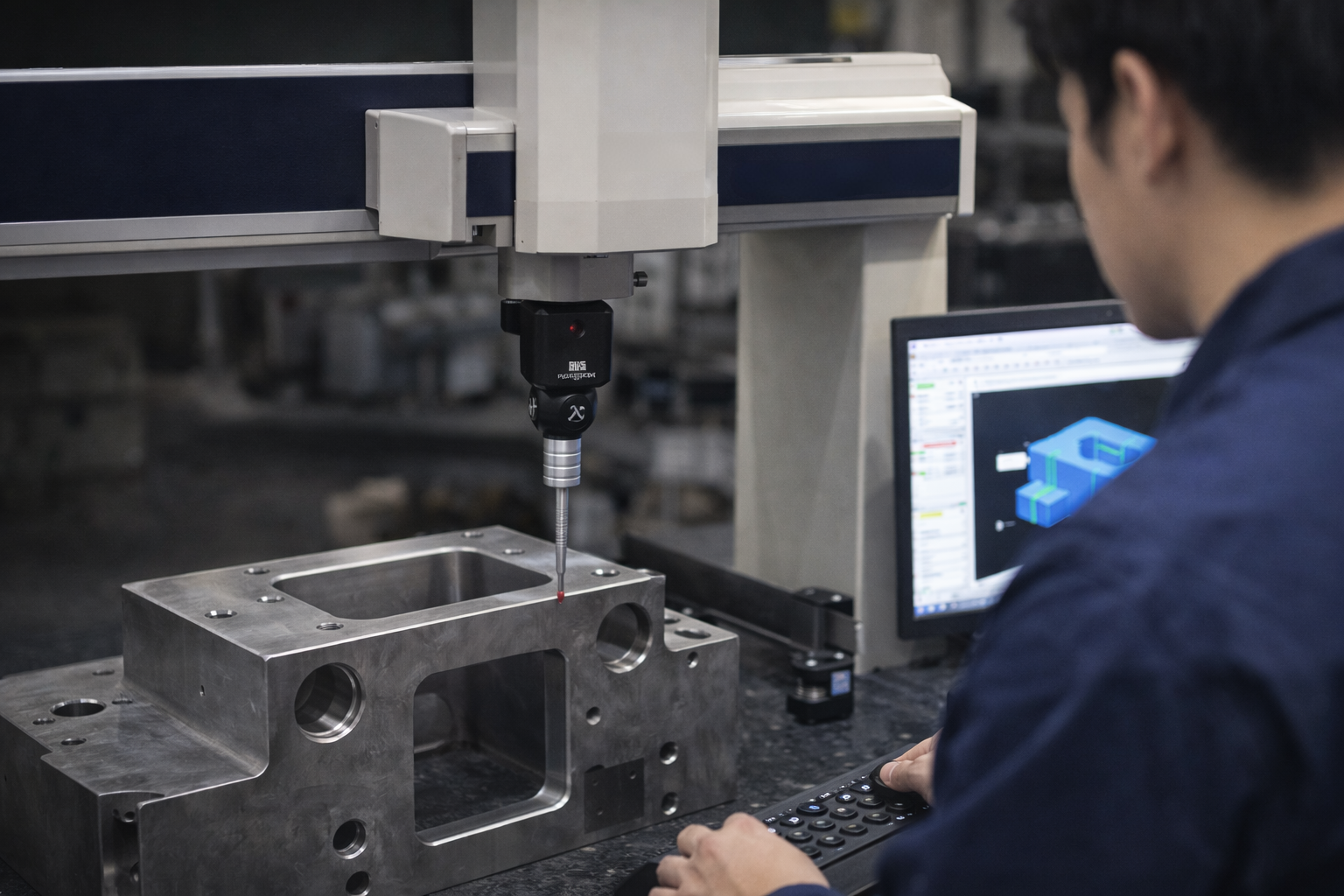
Map the complete footprint: machine, electrical cabinets, chiller, extractor, loading zone, sheet storage, unloading and sorting space, automation, and technician access. A machine that fits between two walls may still be impossible to service.
Verify electrical capacity, voltage, grounding, transformers, auxiliary loads, and distribution work against manufacturer requirements. Confirm extraction for the intended materials and operating hours. Check temperature, humidity, and contamination limits for the actual installation area.
Assist gas must provide the correct type, purity, pressure, and flow for the planned mix under sustained demand. A demonstration using ideal gas conditions does not establish production capacity if the buyer’s supply system cannot reproduce them.
Each facility requirement should end in one of three conclusions: already available, feasible at a documented cost and schedule, or disqualifying.
Staffing can be a hidden specification. The shop may need an operator familiar with the controller, a programmer who can create compatible jobs, and personnel who can manage nesting, parameters, consumables, cooling, routine inspection, and basic troubleshooting. If every minor alarm requires a distant specialist, service availability becomes part of the staffing model.
Reject a candidate when core performance depends on an unproven retrofit, unsupported control changes, custom software, improvised gas delivery, or major building reconstruction. Installation makes a suitable machine operational; modification attempts to make an unsuitable machine suitable.
A Used Fiber Laser Must Pass an Evidence Test
A clean coupon cut with a saved program proves very little. It does not show whether source output remains stable through a shift, whether motion repeats across the table, whether faults emerge after warm-up, whether software will transfer, or whether critical replacement parts are available.
A defensible used purchase requires multiple forms of evidence to agree: identity and ownership, operating history, physical condition, representative test cuts, independent diagnostics, support confirmation, and enforceable acceptance terms.
Verify identity, ownership, and history
Create an asset register covering the frame, laser source, controller, cutting head, chiller, automation, software, and accessories. Record exact models, serial numbers, and part numbers. Machines with the same general model name may use different generations of controls, drives, heads, or optical components, changing both compatibility and repair options.
Confirm that the seller has the right to transfer the equipment and that any financing interests or ownership claims have been cleared. Essential software and accessories must also be legally transferable.
Reconcile frame age, controller hours, source beam-on hours, service records, and component replacements. Large differences between controller and source hours can be legitimate, but the seller should be able to explain them with dated records. A replaced source, head, chiller, controller, or drive can improve the machine only when invoices, part numbers, installation dates, and service reports support the claim.
Build a chronology showing original commissioning, routine maintenance, major failures, collisions, replacements, software upgrades, relocations, and storage. Verify that repair invoices refer to the components currently installed.
Request alarm logs, event history, service tickets, and operator notes before they are cleared. Repeated autofocus errors, cooling alarms, drive faults, communication failures, or emergency stops deserve investigation. Ask about head collisions, nozzle strikes, sheet crashes, leaks, overheating, electrical modifications, and source repairs, then compare the answers with physical evidence.
Missing documentation does not prove neglect, but it does prove that condition cannot be verified. That uncertainty requires deeper inspection, stronger contract protection, a larger reserve, or rejection.
Treat source hours as one clue
Beam-on hours measure use, not remaining life. Two sources with similar hours may have experienced very different temperatures, contamination, duty cycles, cooling conditions, and power demands. The complete machine also includes rails, racks, gears, drives, electronics, sensors, controls, cutting head, and chiller, each with its own history.
Use source hours as a screening trigger rather than an expiration date. Compare them with operating conditions, maintenance history, alarm records, measured output stability, cooling performance, and actual representative cuts. If low reported hours conflict with heavy wear and unstable performance, trust the combined physical evidence.
Inspect the systems that create expensive failures
Inspection should take place while the machine is assembled and operational whenever possible. Qualified personnel—not an untrained buyer—should perform energized diagnostics on optical, electrical, motion, and high-pressure gas systems.
The inspection should cover the following areas:
- Laser source and cutting head: Review faults, output stability, connections, repairs, contamination, seals, threads, protective optics, collision evidence, nozzle centering, height sensing, alignment, and autofocus repeatability.
- Cooling system: Test temperature and flow under sustained load. Inspect coolant, filters, pumps, sensors, alarms, and leaks. A normal display at idle does not prove adequate cooling during production.
- Motion system: Inspect rails, racks, gears, bearings, drives, lubrication, contamination, backlash, noise, impact evidence, and positioning accuracy throughout the usable table—not only in the demonstration area.
- Controls and electrical cabinets: Review fault history, backups, communications, safety circuits, cooling fans, loose connections, overheating, and undocumented wiring changes.
- Gas delivery: Verify valves, regulators, sensors, hoses, fittings, leakage, pressure stability, and flow using the gases and conditions required for production.
An independent technician should be qualified for the major systems and should not be paid according to whether the sale closes. Agree on the inspection scope in advance. The resulting report should distinguish immediate repairs, developing wear, routine service, and unknown condition, while identifying the likely remedy, specialist, parts dependency, and urgency.
Require representative live test cuts
Provide the materials and thicknesses that represent normal production and the hardest recurring job. Use actual or comparable drawings, feature sizes, tolerances, nesting density, assist gases, and finish requirements. Include a cold start, repeated cycles, cuts across the table, and enough sustained operation to expose heat-related or intermittent faults.
Measure total cycle time, dimensional accuracy, repeatability, piercing consistency, incomplete cuts, dross, roughness, taper, heat effects, corner quality, small features, scrap, rework, alarms, and manual interventions. Record software versions, parameters, consumables, gas conditions, and operator adjustments.
Preserve labeled samples, measurements, alarm records, cycle-time notes, photographs, and transferable parameter files. If success depends on constant adjustment by an unusually skilled technician, the demonstration has identified a staffing dependency rather than proven routine capability.
Verify that support transfers with the machine
A mechanically sound machine can still become commercially stranded. Confirm support using the specific serial number and installation location. Obtain written answers from the responsible manufacturer, distributor, software provider, or service company rather than relying on the seller’s recollection.
Confirm warranty transfer, remaining coverage, exclusions, registration, inspection requirements, and fees. Inventory controller software, CAM software, enabled modules, license keys or dongles, passwords, backups, postprocessor rights, and update access. Without the correct postprocessor and legal software access, the shop may be unable to send usable jobs to the controller.
Define training and remote support precisely: provider, subjects, delivery method, duration, cost, network requirements, response commitments, labor, travel, and exclusions.
Identify critical proprietary components by part number. Determine whether controllers, drives, cutting heads, interface boards, sensors, safety devices, and gas-control parts are available new, rebuilt, repairable, or through compatible replacements. Confirm whether installation requires programming, calibration, passwords, or manufacturer authorization.
If an essential part has no dependable route back to production, establish a credible spare or retrofit plan with known cost and responsibility—or reject the machine.
Make the evidence control the contract
The purchase agreement should identify all assets by model and serial number, preserve access to records and diagnostics, and grant inspection and test rights before final acceptance.
Define objective acceptance criteria around materials, thicknesses, drawings, gases, parameters, cycle time, tolerances, repeatability, edge condition, scrap limit, sustained run time, and absence of named faults. Use both a pre-shipment test while the machine is assembled and a site acceptance test after transport, installation, and commissioning.
Every promised repair should state the responsible party, completion date, repair standard, and verification method. Tie payment milestones or a holdback to completion and acceptance. Return terms should allocate deinstallation, freight, inspection costs, transport damage, and site restoration if the machine fails the agreed criteria or key representations prove false.
Broad “as-is” language should not erase specific representations on which the purchase depends.
Compare Three- to Five-Year Risk-Adjusted Cost
After the candidates pass production fit and the used machine passes the evidence test, compare them over the same three- to five-year horizon, workload, staffing plan, quality standard, and disposal assumption.
Calculate both a base case and a severe but credible stress case. Used equipment should survive both. If it wins only when nothing significant fails, the cost advantage is fragile.
Use present value when payment timing differs materially, and apply financing, inflation, tax treatment, and resale assumptions consistently. Tax incentives and depreciation benefits should be verified rather than treated as guaranteed.
Add known ownership costs
Separate costs into initial costs required to reach accepted production, recurring costs tied to time or cutting volume, and net exit value at the end of the comparison period.
Include delivered price, lender interest and fees, insurance, rigging, site work, installation, extraction, cooling, gas, software, postprocessor work, training, commissioning, test material, labor, electricity, consumables, maintenance, support contracts, planned upgrades, and net resale value.
Count the purchase price once. If a machine is financed, add interest and financing fees rather than adding the full loan payment stream on top of the original price, which would count principal twice. Also examine down payments and timing because an option may have acceptable total cost but unsafe cash-flow demands.
Known defects belong in committed costs, not in the risk reserve. If inspection identifies a chiller repair, damaged cable, overdue service, or license fee, price it directly. Reserves are for uncertain events.
Common costs matter to overall job economics but may cancel in the decision. Differences in speed, gas use, labor, scrap, support, and maintenance do not cancel and must remain visible.
Use realistic operating assumptions. A faster laser does not automatically save labor if the operator remains occupied with loading, unloading, sorting, or inspection. Likewise, energy and automation benefits have little value when demand or downstream capacity limits production.
Estimate resale conservatively after broker fees, deinstallation, rigging, freight obligations, and site restoration. A hoped-for selling price is not an asset; credible net recovery is.
Credit new equipment only for usable benefits
New equipment may offer warranty coverage, predictable commissioning, current software, structured training, higher efficiency, automation, financing, better resale, and faster service. Give these benefits financial credit only when they change cash flow, productive capacity, or operational risk in this shop.
A warranty creates value through covered repairs, labor, travel, clearer responsibility, and shorter interruption. Avoid double counting: if warranty coverage reduces the new machine’s repair reserve, do not add the same avoided repair again as a separate benefit.
Commissioning and training may shorten the path to stable output and reduce scrap. Current controls may simplify programming and diagnostics. Faster service can protect margin when documented response times and parts availability support the claim. Efficiency and automation create value only at workloads where the shop can use them.
Favorable financing and higher resale may narrow the effective price gap, but they cannot rescue an oversized or poorly matched machine. New equipment must earn its premium through production the shop can actually sell.
Build a repair and downtime reserve for used equipment
For each credible uncertain event, estimate:
Expected exposure = probability during the ownership period × total financial consequence
The total consequence includes diagnosis, parts, labor, technician travel, freight, programming, calibration, test material, requalification, and downtime. Use ranges when the evidence does not support a precise percentage.
Estimate likelihood from age, condition, alarm and maintenance records, cooling history, contamination, leaks, sustained test results, diagnostic findings, component replacements, software support, parts supply, and technician availability.
Expected value is useful in a base case, but one shop cannot pay a fraction of a major repair averaged across imaginary machines. Also build a stress case based on one severe but credible event. A cutting head, source, chiller, drive, or controller failure should be modeled through its actual restoration path, including delivery lead time and the entire production interruption.
Downtime is more than the repair invoice. It can include subcontracting premiums, transport, extra inspection, paid labor that cannot be reassigned, emergency travel, expedited freight, temporary equipment, overtime, late penalties, and lost contribution margin.
Avoid double counting. If an order is outsourced and delivered, count the extra outsourcing and handling cost rather than also counting the full sale as lost. If an order is cancelled, count lost contribution margin—not revenue—because some variable production costs are avoided.
Parts availability can influence consequence more than failure probability. A common part with an identified supplier creates a manageable interruption. A proprietary component with uncertain stock, programming requirements, or authorization can produce a prolonged shutdown.
When neither probability nor restoration time can be bounded, the risk is not ready for a spreadsheet. Obtain stronger evidence or contractual protection, confirm a replacement path, or reject the machine.
Stress-test both choices
At minimum, model three cases:
- Base case: expected production, repairs, downtime, and resale.
- Used-machine downside: one severe but credible early repair with full downtime consequences.
- Demand downside: lower production volume applied to both machines.
A useful measure is the used machine’s remaining cost headroom:
Used cost headroom = comparable new ownership cost − known used ownership cost
This is the maximum additional repair, support, downtime, and resale disadvantage the used option can absorb before it stops being cheaper. If one credible event consumes all the headroom, the bargain is fragile even when expected-value calculations favor used.
Stress the new machine too. Commissioning problems, warranty exclusions, service delays, and downtime remain possible. Risk adjustment does not mean assigning uncertainty only to used equipment while assuming that new equipment performs perfectly.
Run lower-demand cases because many new-machine advantages scale with production while the price premium remains fixed. If demand is insufficient for either candidate to generate enough contribution margin, reject both and reconsider outsourcing, timing, or specification.
Compare productive-hour cost and saleable output
Calculate productive cutting hours rather than using calendar hours or an ideal maximum schedule:
Productive hours = realistically loaded scheduled hours − planned downtime − unplanned downtime − recovery and requalification time
Risk-adjusted cost per productive cutting hour = risk-adjusted ownership cost ÷ productive hours
Calculate this metric for both the base and stress cases. Keep workload comparable. If machines differ significantly in speed, setup, or yield, cost per hour alone can mislead. Confirm that both complete the same production mix, then relate productive hours to good parts, cost per good part, and protected contribution margin.
The used option should win only if its productive-hour cost remains lower after realistic startup, repair, downtime, support, and resale assumptions.
The Final Decision: Used, New, or Neither
The choice should follow a sequence of gates rather than a weighted score. A large discount cannot compensate for an inability to cut core work. A good test cut cannot compensate for non-transferable software. Excellent condition cannot compensate for an unavailable critical part.
Choose used when every critical condition is met
A used fiber laser is the stronger investment when:
- It produces the required materials, thicknesses, tolerances, edge quality, and volume without major modification.
- Identity, ownership, history, hours, condition, live-test results, software rights, parts supply, and service access are independently verifiable.
- The agreement contains measurable pre-shipment and post-installation acceptance standards.
- The remaining discount, after complete installation and known corrective work, still funds a credible repair and downtime event.
- Backup capacity, flexible scheduling, outsourcing, available cash, or in-house technical ability can protect customer orders.
That reserve must exist as cash or committed credit, not merely as a difference between quotations. If installation consumes the whole discount, the buyer has accepted used-machine exposure without retaining the capital that made the exposure rational.
Choose a properly specified new machine when uptime has high value
New equipment usually justifies its premium when the laser will run heavily, missed deliveries are costly, the shop lacks repair capability, or a single stoppage could disrupt several downstream operations and important customer relationships.
The value comes from measurable reductions in uncertainty: structured commissioning, transferable responsibility, warranty coverage, current controls, software access, training, documented service response, and a clearer parts path.
New does not eliminate failure, operator error, poor demand, or process bottlenecks. It is worth the premium when its protections reduce actual repair exposure, shorten recovery, or preserve saleable production—and when the selected configuration is appropriately sized for the shop.
Reject both when the fundamentals fail
The buyer is not required to choose the less defective of two offers. Reject a machine when it cannot profitably produce the representative sales mix, requires major unproven modifications, or cannot be supported by the building and team.
Reject a used offer when ownership, hours, service history, licenses, parts, or support cannot be verified; when relevant test cuts or independent inspection are refused; or when acceptance and return terms do not protect the buyer.
Reject either option when the budget ends at the invoice and leaves no room for complete installation, maintenance, consumables, training, working capital, repairs, or downtime. Continuing to outsource, changing the specification, delaying the purchase, or seeking another seller can be more economical than committing capital to the wrong asset.
Choose the Option That Keeps Finished Parts Moving
If the offers remain close, test the single first-year problem most consistent with the evidence. Identify who diagnoses it, where parts come from, how long restoration and requalification take, where urgent orders go, what employees do during the interruption, and how much cash remains afterward.
“Worst credible” does not mean combining every possible breakdown into an imaginary catastrophe. It means selecting an adverse event supported by the machine’s age, history, inspection, parts position, and intended workload, then pricing its complete operational consequence.
Choose used only when it passes every production, condition, support, contractual, and financial-resilience test—and remains less expensive under that credible adverse scenario. Choose a properly specified new machine when one realistic used-machine problem would erase the savings or endanger customer deliveries. Reject both when neither can support profitable production or operational survival.
The decisive image is not the machine sitting on the floor after installation. It is the loading door after the first serious service call: finished parts must still be going out.
Apply this guidance to your production
Share your material, thickness, part drawing, tolerance, and target output with the ZWCNC engineering team for an application-specific equipment review.
More news, insights, and updates from ZWCNC.
Fiber Laser Cutting Electrical Enclosures: First-Pass Yield Guide
Fiber Laser Cutting Machine Maintenance Checklist and Schedule
Fiber Laser Cutting Machine Maintenance, Safety, and Troubleshooting
Fiber Laser Cutting for HVAC Ductwork: Throughput, Quality, and ROI
Fiber Laser Cutting Aluminum: Practical Thickness Limits by Power