
Licensed editorial adaptation
Adapted and localized by the ZWCNC Editorial Team from licensed technical material. The source record is published for traceability.
Technical boundary: confirm machine-specific capacity, configuration and safety requirements against the current quotation, manual and application review.
Export Volume is a Vanity Metric
You see a supplier with a "Top 10 Exporter" badge or a Diamond rating on Alibaba and assume safety in numbers. If thousands of other buyers trust them, surely the machine is reliable. But in the Chinese machine tool industry—specifically within the massive Ma'anshan Bowang cluster—high export volume is often a red flag, not a seal of quality.
Volume requires speed. To ship hundreds of units a month, a factory must shorten production cycles. The first casualty is the "stress relief" period. A true manufacturer lets a welded frame sit or bakes it in a large annealing furnace to release internal tension; a volume-chasing factory paints it immediately. The machine looks perfect on the dock. But six months later, as the steel naturally relaxes, the frame twists. Your bending angle drifts, and no amount of CNC calibration can fix a physically warped spine.
For application-specific equipment selection, contact ZWCNC.
The Hidden Subcontracting Economy
If you walk through the industrial districts of Bowang, you will see open-air welding yards stacked high with gray, unpainted press brake frames. Look closely. None of them carry a brand logo yet. This is the "Frame Supermarket."
In this ecosystem, 90% of the brands you see online do not cut steel or weld structures. They are assemblers. They purchase standard-size frames from a shared third-party supplier, buy hydraulic systems from another, and bolt them together in a rented shed. This creates a dangerous illusion of choice. You might solicit quotes from five different brands, thinking you are comparing competitors. In reality, you are getting quotes for the exact same physical machine, welded by the same subcontractor, painted five different colors.
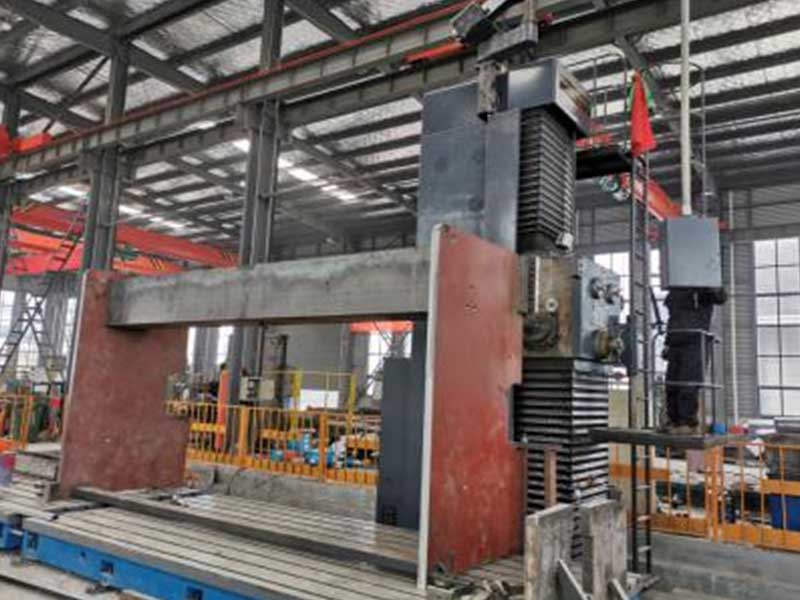
The risk here is accountability. If a true manufacturer’s frame cracks, they investigate their own welding procedure. If an assembler’s frame cracks, they point fingers at the supplier, who points at the steel mill. You are left with a broken machine and a voided warranty. A genuine manufacturer owns the heavy machinery—specifically the massive Floor-type Boring Machines required to mill the frame after welding. If a supplier cannot show you a video of their boring machine machining your frame with their logo in the background, they are merely an assembler. Before choosing, review our press brake solutions, which demonstrates this full in-house capability.
The "Golden Sample" Trap
The machine you inspect at the Canton Fair or see in a pre-shipment video is technically perfect. It features genuine German Hoerbiger hydraulic valves, a legitimate Delem controller, and Siemens motors. This is the "Golden Sample"—a unit engineered specifically to close the deal. The machine that arrives in your container often tells a different story.
Unscrupulous assemblers survive on the "swap." The Hoerbiger valves are replaced with domestic clones that look identical but suffer from heat-induced drift. The "Siemens" motor is a local generic brand with a counterfeit sticker. The Delem controller might be a refurbished unit or, worse, run on pirated software that locks up when you attempt a firmware update.
Frame Rigidity: The Invisible Variable That Determines Long-Term Accuracy
The Annealing Oven Check
Welding a press brake frame introduces massive internal stress. As the molten steel cools, it contracts, pulling the structure into a tensioned state like a loaded spring. If this stress is not released before machining, the frame will slowly distort over the first year of operation, destroying the machine's parallelism.
True manufacturers solve this with Thermal Annealing: baking the entire welded frame in a furnace at 600°C for several hours to rearrange the steel’s crystalline structure. This is expensive due to electricity costs and production delays. Consequently, 90% of budget assemblers substitute this with Vibration Aging—attaching a shaker motor to the frame for 30 minutes. While vibration relieves some peak stresses, it does not stabilize the metal deeply enough for high-precision machine tools.
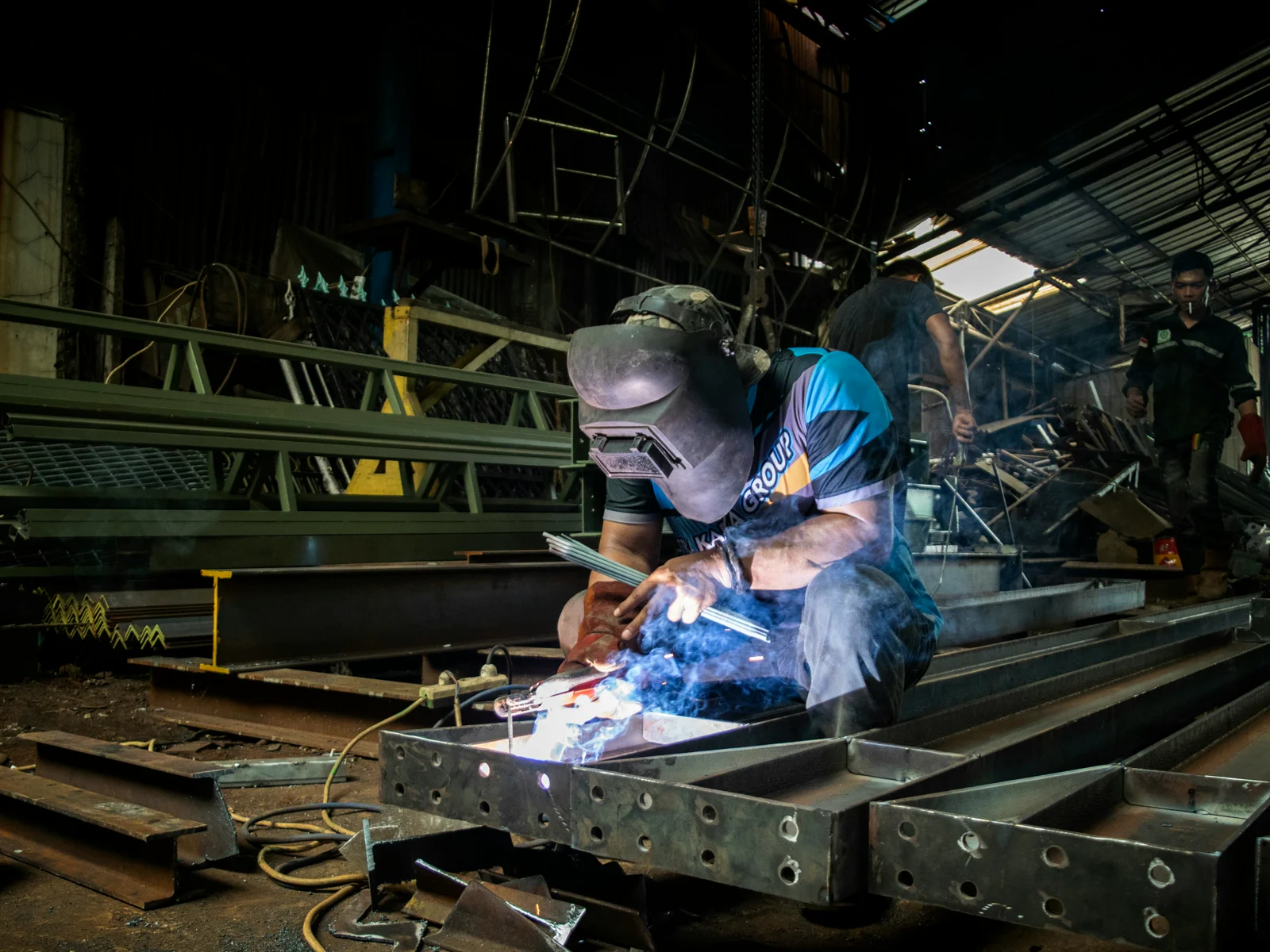
You cannot see the heat history, but you can see the skin it leaves behind. Thermal annealing creates a thick, dark grey oxide layer called "scale" on the steel surface. To paint the machine, the factory must blast this scale off using a Shot Blasting Machine, leaving a uniform, rough, matte texture. If you inspect a frame before painting and see shiny swirls from a hand-held angle grinder or patches of body filler (putty), the factory likely skipped the furnace. They are manually grinding raw steel to make it look smooth, hiding the fact that your machine is a ticking time bomb of stress release. But even if the frame is properly heat-treated, does it actually contain enough steel to handle the tonnage?
Weight-to-Tonnage Ratio
Weight is the one variable a factory cannot fake without increasing their shipping costs. In the press brake market, mass equals rigidity. A lighter machine is cheaper to build because it uses thinner side frames, hollow rams, and fewer internal strengthening ribs. When these "lightweight" machines hit maximum tonnage, the side frames physically stretch—a phenomenon known as "jaw opening"—causing the ram to bow and the workpiece to be under-bent in the center.
Apply the "Golden Rule" of structural density. For a standard 100-ton / 3200mm press brake:
- Tier 1 Manufacturers (e.g., Trumpf, Amada, Yawei): The gross weight sits between 6,500kg and 7,500kg.
- Budget Assemblers: The weight often drops to 5,500kg or 6,000kg.
Where did that missing 1,000kg go? It was stripped from the structural spine of the machine. Do not trust the weight listed in the marketing brochure, as these are often copy-pasted from competitor specs. Instead, demand to see a Bill of Lading (BL) from a previous export of the same model. The "Gross Weight" on a BL is a legal declaration for customs; if they lie there, they risk heavy fines. If the customs weight is 15% lighter than the brochure claims, you are buying a machine that will flex under pressure. Yet, even a heavy, annealed frame suffers from temporary deflection during bending—so how does the system compensate for the laws of physics?
Deflection Compensation: Mechanical vs. Hydraulic
Every press brake ram bows upwards slightly under load, and the table bows downwards. Without compensation, your 90-degree bend will be 92 degrees in the center. Manufacturers use "crowning" systems to push the center of the table up, counteracting this deflection. In China, the choice between Mechanical and Hydraulic crowning is not just a preference; it is a reliability risk assessment.
Hydraulic Crowning places cylinders inside the lower beam to push the table up. In theory, it works. In practice, budget Chinese factories use low-grade seals that degrade within two years. The system develops internal leaks—invisible from the outside—causing the compensation pressure to drift during a shift. You will constantly chase the angle, recalibrating the machine as the oil bypasses the seals.
Mechanical Crowning uses a series of opposing wedges to physically lift the table. It is the superior choice for imported machines, but it has a specific "China trap": the steel grade of the wedges.
- The Standard: Wedges made of 42CrMo alloy steel, heat-treated (hardened) to resist wear.
- The Shortcut: Wedges made of 45# Carbon Steel (soft), with no heat treatment.
Soft wedges will crush and flatten under the tonnage, permanently losing their calibration profile. When specifying your machine, demand Mechanical Crowning with 42CrMo wedges and a Servo Motor drive. Many suppliers install a cheap AC motor with no position feedback; a Servo ensures the CNC system knows exactly where the wedges are. Mechanical systems fail linearly—if they wear, you can adjust them. Hydraulic systems fail silently. Once you have verified the steel structure, how do you ensure the complex electronics bolted onto it will actually communicate? To understand this interaction, take a closer look at the technologies behind the press brake solutions control architecture.
The Integration Gap: Why "Genuine Components" Don't Guarantee Performance
The Hydraulic Manifold Design
A genuine Bosch-Rexroth proportional valve is a precision instrument, but it is only as good as the block of steel it is bolted to. Think of the hydraulic manifold not as a passive connector, but as a complex circuit board (PCB) for fluid. In a budget machine, the manifold is often a generic "off-the-shelf" block that simply directs oil from point A to point B. In a high-precision machine, the manifold is custom-engineered to manage the "pressure differential" (Delta P) across that expensive Rexroth valve.
Start your audit by asking the engineer to explain their pressure compensation strategy. A proportional valve controls flow based on the size of its opening, but this relationship only holds true if the pressure difference across the valve remains constant. Without a dedicated pressure balance valve integrated into the manifold, a change in load—like bending a thicker plate—will alter the flow rate, causing the ram speed to fluctuate even if the controller signal is steady. The "assembler" factory relies on the valve brand to do the work; the true manufacturer designs the manifold to stabilize the environment in which the valve operates.
Deepen this inquiry by asking about their valve driver strategy: "Do you use voltage or current driving for the valve coils?" As the machine runs, the valve coils heat up, increasing their electrical resistance. If the system uses simple voltage driving, the current (and thus the magnetic force moving the spool) drops as the coil gets hot, causing the bending angle to drift over a long shift. A manufacturer focused on consistency will use current driving (PWM with dither), which actively adjusts the voltage to maintain a stable current regardless of temperature. But even if the hydraulics are thermally stable, does the brain of the machine actually know what the muscle is doing?
The Controller Fallacy (Delem & Estun)
Buyers often treat the controller brand—usually Delem (Netherlands) or Estun (China)—as a proxy for system performance, assuming a "Delem DA-53T" guarantees European precision. This is a dangerous simplification. A CNC controller is merely a calculator; its ability to execute a bend depends entirely on the "closed-loop" architecture the factory builds around it.
Consider the feedback loop. A Delem controller can drive a hydraulic axis in open loop (estimating position) or closed loop (measuring position). In a high-quality integration, the controller communicates with two critical sensors: the linear scale on the ram (measuring Y-axis position) and the LVDT on the hydraulic valve itself (measuring spool position). Many budget factories skip the valve spool feedback to save cost. They wire the Delem to send a signal, but the controller never receives confirmation that the valve actually opened to the exact millimeter requested. The screen says the machine is accurate; the bent metal says otherwise.
Wiring and Cabinet Organization
Open the electrical cabinet door. If you see a "spaghetti explosion" of wires hidden behind plastic trunking, walk away. But neatness alone is not enough; you are looking for Electromagnetic Compatibility (EMC). A press brake combines high-voltage motors (creating noise) with sensitive low-voltage sensor signals (hating noise). If these are not physically separated, the machine will suffer from "ghost" errors—random resets, drifting axes, or flickering screens—that no software update can fix.
Perform the "Shield Termination Check." Locate the thick, black cables coming from the servo motors and linear encoders. These cables have a metal braided shield inside to block interference. Follow them to where they enter the cabinet.
- The Amateur Standard: The shield is twisted into a thin "pigtail" and screwed into a terminal block deep inside the cabinet. This turns the shield into an antenna, broadcasting noise directly into your control components.
- The Professional Standard: The cable is stripped at the very point it enters the metal cabinet, and the exposed shield is clamped firmly against a bare metal grounding bar or plate. This "360-degree termination" dumps the interference into the ground before it ever enters the sensitive zone.
This detail costs pennies to execute but requires a disciplined understanding of electrical engineering. If a factory ignores EMC grounding, they are not building a machine for long-term reliability; they are building a machine that will work just long enough to pass the acceptance test. Still not sure? You can contact ZWCNC to get expert guidance on how to identify correct electrical design standards in real manufacturing lines.
The "Live Video" Audit: Specific Tests That Expose Weak Suppliers
The 24-Hour Run Test
Most factory acceptance tests are theater: a technician turns the machine on, bends one perfect sample while the oil is cold, and packs it up. This hides the single greatest enemy of hydraulic precision—thermal drift. To expose a supplier’s true assembly quality, demand a 24-hour "dry run" cycle before you approve shipment. Instruct the factory to program the ram to stroke 60–70% of its maximum travel continuously, without stopping, for a full day and night.
You do not need to watch the stream for 24 hours; you only need to check in at the 0, 2, 8, and 24-hour marks. At each interval, require the technician to measure the Y-axis bottom dead center (BDC) position using a dial indicator fixed to the side frame. In a high-quality machine, the hydraulic system’s cooling loop and the controller’s thermal compensation algorithms will keep the ram stopping at the exact same micron, regardless of oil viscosity changes. If the BDC drifts by more than 0.02–0.03 mm as the tank heats up, the machine lacks the thermal stability required for production shifts. A supplier who refuses this test is often hiding an undersized cooling system or a frame that warps under sustained heat. For an example of machines that excel in endurance tests, review the press brake solutions range.
Backgauge Repeatability
A spec sheet claiming "±0.02 mm positioning accuracy" is meaningless if that number comes from a laser interferometer test on a guide rail rather than the actual backgauge fingers under load. To verify the mechanical "skeleton"—the ball screws, guides, and servo tuning—require a "shuttle run" test on live video. Have the operator cut ten small coupons (e.g., 200 mm × 200 mm) of 1.5 mm steel and program a simple stop position at 100.00 mm.
Watch them bend the first five pieces and measure the flange length. Then, command the operator to move the X-axis out to 300.00 mm and back to 100.00 mm five times rapidly before bending the remaining five pieces. You are not looking for the absolute dimension (which can be offset); you are auditing the dispersion. If the second batch shows a shift in the mean dimension or a wider variance (range > 0.05 mm), the backgauge has mechanical backlash or poor servo stiffness. A true manufacturer’s machine will land on the exact same hundredth of a millimeter after the shuttle run; an assembler’s machine will "float" because the heavy backgauge beam is overwhelming its cheap drive components.
The axes are now proven stable, but do they work together to create a geometrically correct part? For live demonstrations of precision assembly testing, contact ZWCNC to arrange a remote factory audit session.
The "Trial Bend" Challenge
Suppliers love demonstrating single 90-degree bends on small samples because they hide frame twisting and crowning errors. To separate capable integrators from mere assemblers, send a drawing for a "torture track" part: a Z-profile or a U-channel involving at least four bends and, crucially, pre-cut holes that must align after folding. Demand that they program this part from scratch on the live video, not just recall a saved file.
Watch the "limit flange" performance specifically. Ask them to bend a flange that is barely wide enough to catch the V-die (e.g., 10–12 mm). This forces the backgauge to operate at its limits and exposes the rigidity of the finger stops. If the operator has to manually fight the sheet to keep it square, or if the pre-cut holes on the finished part fail to align with a checking pin, the machine’s crowning system is not compensating for the ram’s deflection. A successful test proves the factory understands the physics of metal deformation, not just how to wire a cabinet.
Structuring the Purchase: Acceptance Criteria That Protect Your Investment
The Material Test Clause
A common trick among lower-tier assemblers is to perform the Factory Acceptance Test (FAT) using "soft" steel—plates with lower yield strength than standard Q235 or mild steel. This allows a structurally weak frame to bend a test piece without showing the deflection or twisting that would ruin a real production run. To counter this, your contract must specify not just the machine’s capacity, but the exact material properties of the test coupons used during acceptance.
Insert a "Material Challenge" clause into your purchase order. Explicitly state: "FAT shall be conducted using [Specific Material Grade, e.g., Hardox 450 or SS304] with a verified yield strength of [X] MPa." By forcing the factory to demonstrate accuracy on high-tensile material, you stress-test the hydraulics and frame rigidity under maximum load, rather than letting them coast through on soft iron.
Beyond the test coupons, you must audit the machine’s own DNA. Assemblers often substitute premium alloys with cheaper generic steel—using 45# steel instead of 42CrMo for the tool holders, or cast iron instead of forged steel for the connecting rods. To prevent this, attach a "Critical Component Bill of Materials" to the contract. This annex should list key structural parts (cylinders, sliders, compensation wedges) and define the verification method for each: "Buyer reserves the right to perform random Rockwell hardness testing or X-ray fluorescence (XRF) analysis on the slider and table during FAT." The moment a supplier knows you have the contractual right to test the metal hardness on the shipping dock, the incentive to swap materials vanishes. Before finalizing your specifications, explore our technical brochures and ensure material compliance standards are aligned.
The "Locked System" Risk
Imagine your press brake arrives, runs perfectly for six months, and then a linear scale drifts by 0.05 mm due to settling. You open the controller’s parameter page to enter a simple offset, but a pop-up appears: "Enter OEM Password." You contact the supplier, but it is a national holiday in China, or worse, they demand a "service fee" to unlock the menu. You effectively own the hardware, but they own the operation. This is the "Locked System" trap, where manufacturers use software permissions to force long-term dependency.
You must neutralize this risk before the deposit is paid. In the technical agreement, demand a clause requiring the handover of all "Engineer Level" and "Maintenance Level" passwords upon delivery. Distinguish this from the "Developer Level" (which protects their core IP); you do not need to rewrite the kernel, but you must have access to axis parameters, PID settings, and I/O logic configuration.
Furthermore, require proof of software legitimacy. Some assemblers install cracked versions of Windows or Delem/Cybelec control software to save $2,000 per machine. If the controller connects to the internet for an update, it could brick itself. Require a "Certificate of License Authenticity" and a clause stating: "Supplier warrants that all control software is fully licensed. If a 'pirated software' lock occurs, Supplier must replace the entire control unit and pay liquidated damages equal to 20% of the machine value." This converts a hidden technical risk into a clear financial liability.
Defining After-Sales Reality
"Lifetime Service" is the most dangerous phrase in a Chinese machinery brochure. To a salesperson, it often means "we will reply to your WeChat messages forever," not "we will fly a technician to your plant." If you do not define the logistics of support, you will eventually face a situation where a $500 valve failure causes $50,000 in downtime because the replacement part is three weeks away.
Replace vague promises with a "Service Level Agreement" (SLA) annex. First, freeze the cost of ownership. Require a price list for all proprietary spare parts (valves, seals, motors, drive cards) to be attached to the contract, with a clause locking these prices for 24 months and capping future increases to a specific inflation index. This prevents the supplier from selling the machine at a loss and recouping profit through predatory spare parts pricing later.
Second, define the "intervention mechanism." Do not accept "we will send an engineer." Specify the terms: "In the event of a critical failure unresolved by remote support within 48 hours, Supplier shall dispatch a technician. Buyer agrees to pay [Fixed Rate] USD per day plus economy class airfare; Supplier provides labor free of charge during the warranty period." By negotiating the daily rate and travel terms now, you avoid being gouged when you are desperate. For standard agreements and reliable after-sales support, you can directly contact ZWCNC to discuss SLA customization.
Ultimately, the willingness to sign these clauses is the final litmus test. A "mere assembler" will balk at material audits, hide software passwords, and refuse to fix spare part prices because their business model relies on ambiguity. A true manufacturer, confident in their rigidity and integration, will sign them—because they know their machine can pass the test.
Apply this guidance to your production
Share your material, thickness, part drawing, tolerance, and target output with the ZWCNC engineering team for an application-specific equipment review.
More news, insights, and updates from ZWCNC.
The Press Brake Technology Trap: Why Defaulting to Hydraulic Is Costing Your Shop Precision and Profit
The Ultimate Guide to Hydraulic Presses: Why Tonnage Is a Trap
How to Vet a China CNC Press Brake Factory Without Buying a Frankenstein Machine: The Assembler Illusion

Press Brake Bending Load Calculation: Tonnage and Capacity Guide
Hydraulic Press Brake Diagram: Fluid Flow, Force, and Troubleshooting