Licensed editorial adaptation
Adapted and localized by the ZWCNC Editorial Team from licensed technical material. The source record is published for traceability.
Technical boundary: confirm machine-specific capacity, configuration and safety requirements against the current quotation, manual and application review.
Walk into almost any fabrication shop in the country and you will see the same scene: a 250‑ton hydraulic machine humming away, drawing enough idle power to light a city block, while an operator uses it to bend 16‑gauge aluminum brackets.
It is the equivalent of buying a 3500‑series dual‑rear‑wheel diesel truck to deliver single pizzas. The brochure promises “unmatched versatility,” but the reality on the shop floor is that you are paying commercial hauling rates for a job that only requires a nimble transit van.
Related: Guide to Press Brakes and CNC Technology
Related: How Does An Electric Press Brake Work
The "Tonnage Trap": Why the "Hydraulic Is King" Assumption Is Costing Shops Real Money
When "more tonnage" became shorthand for "more capability"
Stop buying machines based on the half‑inch plate job you might quote once a decade. I see shops spend $200,000 on a 300‑ton machine because they remember losing a heavy agricultural bid in 2018. They buy tonnage to feel safe. But safety has a carrying cost. When you bend 10‑gauge stainless over 10 feet, you only need about 150 tons of force. If you use a 300‑ton hydraulic press to do it, that massive ram is still moving, those large cylinders are still filling, and the pump is still screaming.
If the machine can still form the sheet, why does that extra capacity hurt your bottom line?
Is brute force actually masking poor setup processes and mechanical variance?
Look at the scrap bin next to that oversized machine. You will see deformed flanges, over‑bent corners, and cracked radii. With 300 tons of hydraulic pressure at the foot pedal, it is easy to crush through bad setups. Instead of calculating the exact air‑bending force required for the material’s yield strength and grain direction, operators let the ram bottom out. Brute force drives the metal into the die, masking worn tooling and inaccurate back‑gauge positioning.
It works—until it doesn’t.
That excess tonnage causes microscopic over‑bending and frame deflection, which operators then try to correct with manual shimming. The machine is not making you more capable; it is making you complacent and introducing mechanical variance that destroys repeatability across a batch of 500 parts. How long can a shop survive when every third part needs a hammer to fit the welding fixture?
The shift that already happened while most shops were looking the other way
Stop treating your press brake department like a tractor pull. While traditional shops were busy boasting about hydraulic tonnage, high-profit operations quietly analyzed their actual daily part mix. They discovered that 80% of their work was under 1/4-inch thick. They traded the diesel d
The Muscle: Comparing Mechanisms, Thermal Drift, and Failure Modes
Hydraulic realities: How afternoon heat and oil dynamics destroy morning repeatability
At 8:00 AM, your operator runs a 10-foot piece of 10-gauge stainless steel and achieves a perfect 90-degree bend. At 2:00 PM, using the exact same program, the same dies, and the same material batch, that bend measures 89.5 degrees. The vendor brochure promises ±0.0004 inches of ram repeatability, but the shop-floor reality is that your 100 gallons of ISO 46 hydraulic oil has spent six hours under pressure. It has heated up, thinned, and fundamentally altered the volumetric efficiency of your proportional valves. The ram no longer stops exactly where the computer commands it to.
Stop chasing phantom setup errors when the physics of your machine are changing throughout the shift. That thermal drift is the invisible tax of hydraulic power, forcing operators to waste time manually adjusting offsets every afternoon just to hold tolerance. The environment dictates the fluid, and the fluid dictates the bend. In a January shop running below 10°C, that same oil turns sluggish. You burn 15 to 20 minutes of idle warm-up time, drawing heavy amperage just to get the fluid moving enough to avoid blowing a main seal. If fluid dynamics make precision a moving target, why not remove the fluid entirely?
Servo-Electric: Trading raw power for micro-millimeter control and structural energy savings
An EV transit van does not burn fuel while idling at a stoplight. Neither does a servo-electric brake. When the ram is stationary, power draw drops to near zero because the system uses twin AC servo motors driving heavy-duty ball screws or belts, rather than a constantly running hydraulic pump. You exchange the brute, inflexible force of fluid dynamics for precise micro-millimeter mechanical control. With no oil to heat up, there is no afternoon thermal drift. You can run 16-gauge aluminum brackets for ten hours straight, and the final bend will match the first with dead-reckoning accuracy.
But precision has its own breaking point.
Place that same electric brake in a non-climate-controlled Texas shop hitting 40°C in August, and the story reverses. Without oil acting as a thermal sink, control chips, optical encoders, and lead screws experience severe thermal stress. The lead screws physically expand in the heat, degrading the accuracy you paid a premium for, while the drives often fault and shut down to protect themselves. When a hydraulic seal fails, your grease-covered shop mechanic replaces an O-ring and you are back up within an hour. When a proprietary servo drive burns out, you wait three days for a specialized factory electrician billing $250 an hour. If pure electric systems are this fragile in extreme heat and lack the bottomless tonnage needed for deep, complex bends in heavy plate, how do you get the instant-on precision of electrics without giving up the rugged muscle of hydraulics?
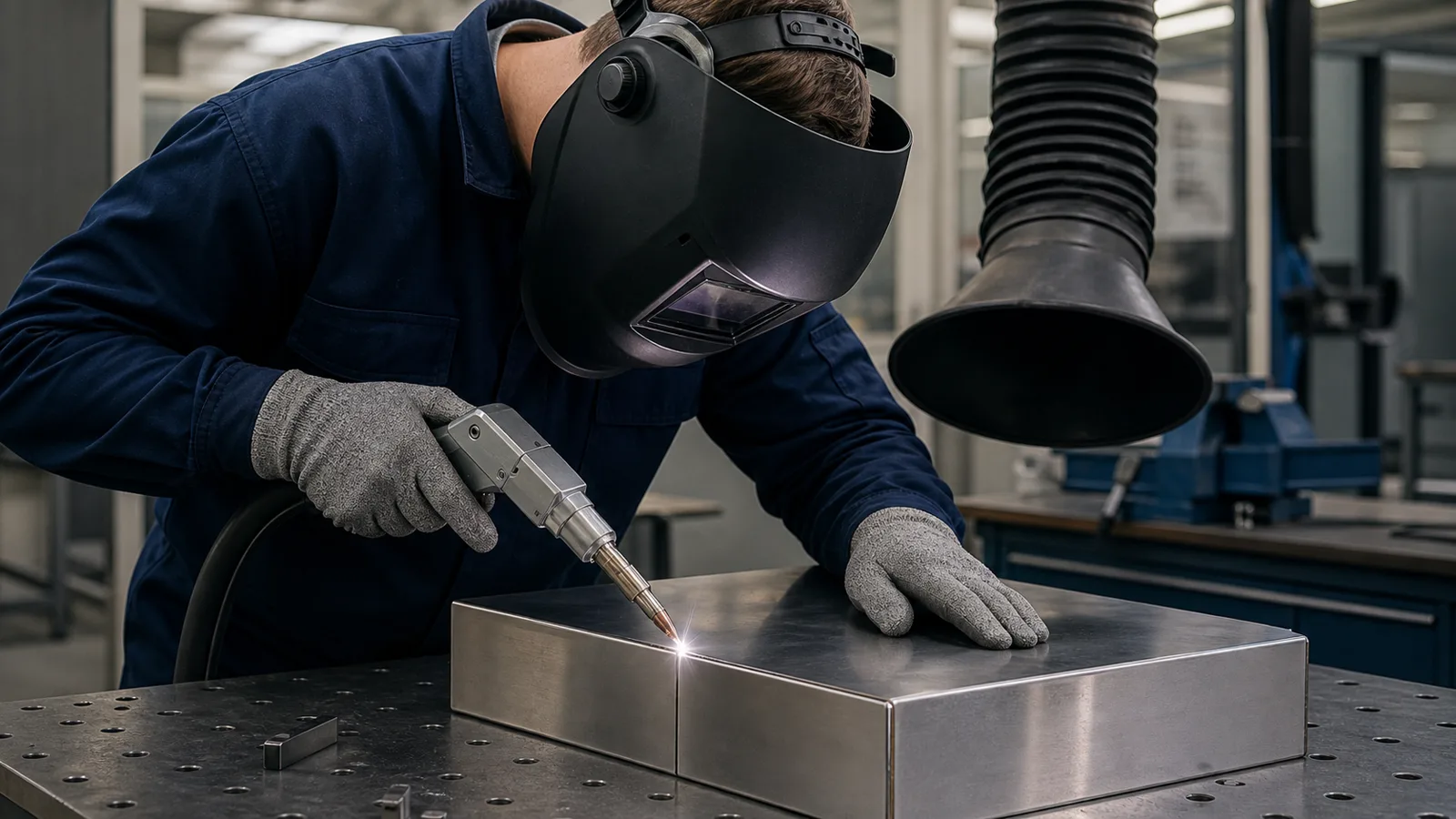
The Hybrid Compromise: Tonnage without the heat—genius fix or just more parts to break?
Examine the pump block on a modern hybrid press brake. Rather than a large central reservoir that continuously circulates oil through the entire frame, a dedicated AC servo motor is mounted directly on a compact, closed-loop hydraulic cylinder. It pumps oil only when the ram needs to move. Because the oil is not constantly shearing through relief valves while the operator reviews a drawing, it does not heat up. You still get the 300 tons of force needed to form half-inch steel—where purely mechanical servo motors would reach their torque limits and stall—without the afternoon thermal drift that can ruin stainless work.
For application-specific equipment selection, contact ZWCNC.
Do not let the "best of both worlds" argument obscure the complexity of what you are actually purchasing. You are combining two distinct engineering disciplines within a single frame. You now have hydraulic seals that will eventually leak, directly paired with sensitive servo drives that can fail on dirty power grids. In addressing an oil temperature problem, you have effectively doubled the number of potential failure modes. If the machine’s physical power is this dependent on its environment and internal friction, how much confidence should we place in the software tasked with controlling it?
The Brain: Why CNC Control is a Layer, Not a Machine Type
Is the real upgrade the frame—or the software that drives the backgauge?
Observe an operator bending an 8-foot length of 10-gauge stainless steel off-center on an older NC torsion-bar brake. The mechanical linkage twists under the uneven load, pushing the angle off by two degrees on the far side. Shops buy extra tonnage for peace of mind. But that safety comes at a cost. Vendor literature promises "rigid mechanical synchronization," yet on the shop floor, mechanical limitations force operators to shim dies and scrap blanks just to meet basic tolerances.
High-mix vs. high-volume: The setup-time multiplier nobody budgets for
Stop treating your controller like a universal remote. Install a complex CybTouch controller in a shop focused on high-mix, low-volume job work, and watch daily margins disappear. These "professional" controllers offer deep capabilities for custom parametric programming, but they require an operator with a strong understanding of the software’s underlying logic. When the lead setup technician is out and a backup operator takes over a batch of 16-gauge aluminum chassis boxes, a routine 10-minute tooling change can easily turn into a 40-minute experiment.
The interface determines the bottleneck.
In a high-volume production environment where a machine runs the same 1/4-inch brackets for three straight weeks, that steep learning curve pays dividends through cycle-time optimization and automated tool-change integration. But in a high-mix shop performing five different tear-downs before lunch, ergonomic friction at the controller multiplies idle time exponentially. You are not only paying for the machine to sit idle; you are also paying a skilled operator to navigate nested sub-menus while the main drive motor continues to consume electricity.
Offline programming vs. at-machine tweaking: Which consumes more shop hours?
Walk past a modern press brake and you will often see the ram completely still while the operator studies a 3D simulation on a 24-inch screen. They are attempting to sequence a complex 12-bend layout in 1/4-inch A36 plate to avoid a collision with the upper punch. With 300 tons of hydraulic pressure under a foot pedal, it is extremely easy to force a bad setup through. As a result, the operator spends forty-five minutes at the control pedestal adjusting backgauge fingers, adding retract delays, and test-bending scrap. The machine is technically “running,” but no sellable parts are landing in the bin.
The solution to this margin drain is not faster ram speeds. It is moving the thinking off the machine entirely. Offline programming software allows an engineer in the front office to unfold the CAD model, simulate tooling clearances, and send a collision-free program to the floor before the sheet metal ever reaches the laser. The operator simply loads the dies shown on the screen, scans a barcode, and presses the pedal. If you are still paying your most expensive floor employees to do geometry on a machine that costs $150 an hour to run, you are no longer fabricating—you are operating the world’s most expensive computer lab.
The Costs You're Not Comparing When You Compare Price Tags
A shop signs a purchase order for a standard 250-ton hydraulic brake at $120,000 instead of a 100-ton servo-electric at $180,000, congratulating itself on saving sixty thousand dollars. They buy extra tonnage to feel secure. But safety carries an ongoing cost. That upfront capital expense is only the entry price. The real financial loss occurs in fractional pennies per minute that accumulate over a five-year financing term. We need to stop focusing solely on the invoice and start examining utility bills, maintenance records, and scrap bins.
The hidden energy tax: Are you paying for power when the ram isn't moving?
Approach a traditional hydraulic brake while the operator is reviewing a blueprint. The main motor is running at 1,500 RPM, circulating oil through the manifold simply to maintain system pressure. That idle machine draws roughly 7 kilowatts of electricity. Now compare it to a servo-electric brake sitting idle. It draws about 0.5 kilowatts. In a high-mix shop where the ram moves only 30 percent of the shift, the downtime energy cost of a hydraulic system is fourteen times higher than that of an electric one. Vendor brochures emphasize “low initial investment” for traditional hydraulics, but the reality on the shop floor is that a pump spinning at full RPM between bends quietly consumes thousands of dollars in idle energy every quarter.
That spinning pump does more than consume electricity—it generates heat. Hydraulic systems experience roughly a 1.2 percent hourly efficiency loss from oil temperature rise over an eight-hour shift. By 3:00 PM, sustained efficiency drops below 88 percent. The oil thins, proportional valves respond slightly slower, and ram positioning drifts by several thousandths of an inch.
You are, quite literally, paying the power company to make your machine less accurate.
All-electric systems maintain efficiency above 90 percent from the first bend to the last and are unaffected by thermal drift. That does not mean electric systems automatically win. If you are bending 1-inch A36 steel plate for bridge girders, you need the displacement only hydraulics can provide. You accept the energy cost because a servo-electric ball screw would fail under that level of localized tonnage. The economics only make sense when energy consumption is matched to actual cycle times.
Maintenance intervals and fluid systems: What downtime actually costs per hour
Stop treating your press brake as a set-it-and-forget-it anvil. A standard 150‑ton hydraulic brake requires roughly 150 gallons of specialized hydraulic oil to operate. Every 2,000 hours, that oil must be tested, filtered, or fully replaced to prevent particulate damage to sensitive internal valves. You pay for the new oil, pay to dispose of the old oil, and absorb roughly three hours of lost production time while the machine is locked out.
Calculate your true hourly downtime cost. If that brake generates $150 per hour in revenue, a single fluid change costs $450 in lost spindle time before you even purchase lubricants. Servo‑electric systems remove this fluid dependency entirely. An all‑electric brake uses zero gallons of oil, replacing valves and pumps with sealed ball screws and heavy‑duty belts that require basic greasing once per year.
You trade unpredictable fluid maintenance for predictable mechanical wear. That trade‑off, however, requires strict operational discipline. When a hydraulic seal fails, you clean up the oil, replace the $50 O‑ring, and return to work. When an electric press brake crashes hard enough to damage a primary ball screw, you may wait weeks for a proprietary $10,000 assembly to ship from overseas. Maintenance intervals are much longer, but catastrophic failure costs are exponentially higher.
Operator skill dependency: Which technology forgives inexperience and which punishes it
Put an inexperienced operator in front of an older hydraulic torsion‑bar brake and ask them to bend 10‑gauge stainless over 10 feet. With 300 tons of hydraulic pressure controlled by a foot pedal, it is easy to crush through poor setups. The mechanical linkage twists, the angle opens in the center, and the operator spends the next hour shimming dies with paper and adjusting stroke depth to compensate for frame deflection. The machine demands a master fabricator to manage its mechanical shortcomings.
Stop subsidizing inexpensive iron with costly labor. Modern servo‑electric and high‑end proportional hydraulic brakes shift accuracy from the operator’s hands to the machine’s encoders. An electric brake uses dual linear scales that read position down to the micron, automatically correcting for deflection without the operator touching a shim. It tolerates inexperience because the mechanics are inherently rigid and the feedback loop is instantaneous.
However, this technological forgiveness has a firm limit. If your shop handles oversized, heavy plate for construction equipment, the raw force of a hydraulic system outweighs the precision of an electric drive. A well‑run U.S. shop may adopt electric press brakes for 50 percent electricity savings and 25 percent faster cycles on sheet metal, while retaining a heavy hydraulic machine for high‑tonnage work. The question is no longer which machine is objectively better, but which specific bottleneck—energy, maintenance, or labor—is currently constraining your shop’s throughput.
The Decision Framework: Matching Technology to the Shop You Actually Run
Stop treating capital equipment purchases as an insurance policy. Shop owners frequently over‑spec machines because they fear turning down an unusual job that appears once a year. They buy extra tonnage for peace of mind.
But that sense of safety carries a cost. Brochures claim a flagship model can do everything, yet shop‑floor reality is that consistently bottom‑bending 1/2‑inch Hardox over 12 feet requires the brute force of hydraulics, while holding tight tolerances on 18‑gauge galvanized electronics enclosures benefits from the energy efficiency and structural rigidity of a servo‑electric. You would not buy a 3500‑series dually to deliver single pizzas and expect to protect your margins.
If your work is mostly thick structural steel at high force: Where hydraulic still wins outright
With 300 tons of hydraulic pressure under a foot pedal, it is remarkably easy to force material through poor setups. That raw, forgiving power is precisely why heavy‑plate shops continue to rely on oil. Thermal drift and idle energy consumption are accepted because the precision ball screws of an electric drive would fail under the localized stress of heavy plate bottoming. Brute force still has a role, and that role is hydraulic.
If precision sheet metal and tight tolerances define your contracts: The electric advantage
Review your scrap output. If complex 16‑gauge aluminum brackets are being discarded because the angle drifted by half a degree in the afternoon, you are absorbing the thermal penalty of hydraulics.
Servo‑electric brakes lead the high‑mix, low‑volume sheet metal market because they eliminate fluid variability altogether. They provide instant torque, zero idle power consumption, and micron‑level repeatability. A responsive electric brake is like an EV transit van—well suited for dense, precise production routes. On light‑gauge material, cycle times are about 25 percent faster, directly reducing cost per part. When tight tolerances determine contract success, you stop paying for idle oil and instead pay for encoder accuracy.
If you are upgrading an aging mechanical brake: Which decision path prevents buyer’s regret?
Do not replace old iron with new iron solely because the footprint is the same. When retiring a 40‑year‑old mechanical flywheel brake, the primary risk is purchasing excessive tonnage while investing too little in control capability.
Determine the actual tonnage required for 90 percent of your jobs, rather than sizing the machine for the rare outlier you run once a year. If that figure is below 100 tons, an all‑electric or hybrid system can recover its higher upfront cost through energy and setup savings within three years. If you regularly require 250 tons, choose a modern proportional hydraulic with CNC crowning. Align the machine’s physical capabilities with the financial reality of daily throughput, and the numbers will point to the exact machine needed to remain profitable.
Apply this guidance to your production
Share your material, thickness, part drawing, tolerance, and target output with the ZWCNC engineering team for an application-specific equipment review.
More news, insights, and updates from ZWCNC.
The Ultimate Guide to Hydraulic Presses: Why Tonnage Is a Trap
Hydraulic Press Brake Diagram: Fluid Flow, Force, and Troubleshooting
How to Build a Hydraulic Press Brake: Deflection, Tonnage, Alignment, and Control
Press Brake Projects That Actually Bend Straight: Guided Die Design for 20-Ton Shop Press
Press Brake Solutions: How Rushing to All‑Electric Could Bottleneck Your Fabrication Shop