Licensed editorial adaptation
Adapted and localized by the ZWCNC Editorial Team from licensed technical material. The source record is published for traceability.
Technical boundary: confirm machine-specific capacity, configuration and safety requirements against the current quotation, manual and application review.
You place a gleaming 1mm sheet of aluminum onto the honeycomb bed of your 40W CO2 laser. You’ve cut through quarter-inch plywood and acrylic effortlessly. Metal is just tougher wood… right? You crank the power to 100%, slow the speed to a crawl, and press start.
Instead of a smooth, clean cut, you get a blinding flash, a sharp crack, and the sharp scent of ozone in the air. Congratulations—you didn’t cut the aluminum, but you did manage to shatter your $150 focal lens.
Related: Guide to Laser Cutting Metals
Related: Laser Cutting Thickness
The "Wood and Acrylic" Trap: Why Your Current Laser Can’t Cut Aluminum
When a laser hits wood, the material absorbs the light, converts it into heat, and vaporizes. Simple cause and effect. Wood readily absorbs that specific infrared wavelength. Aluminum does the opposite—it behaves like a carnival mirror, reflecting most of the energy back. So why does a machine that slices acrylic with ease suddenly struggle with a thin sheet of metal?
What “cutting” really requires vs. engraving or surface marking
You’ll see people online claiming they’ve “lasered” aluminum with a desktop diode machine. In reality, they’ve barely marked the surface. Engraving or marking only demands enough heat to oxidize a microscopic top layer. Cutting, by contrast, is a forceful physical process.
To cut metal, you must melt the material’s entire thickness into a molten pool—then use high-pressure assist gas to blast that liquid metal out of the kerf before it solidifies again. A desktop unit provides a gentle stream of air designed to prevent flare-ups in wood, not a 150-PSI surge of nitrogen. If you can’t expel the molten metal, how can you ever separate the sheet?
Rule of Thumb: 1000W of CO2 power + 150 PSI oxygen = a clean cut through 1mm aluminum.

The dangerous myth of using marking spray or anodized coatings to force a cut
You’ll find videos suggesting you coat the metal with dry moly lube, mustard, or pricey marking spray. Others recommend black anodized aluminum. The reasoning seems logical: if bare metal reflects light, paint it black so it absorbs energy. That approach works well if your goal is simply to bleach the dye in the anodized layer and create a crisp white logo. But the moment the laser burns through that one-micron-thick dark coating, what’s waiting directly underneath?
Bare, polished, highly reflective aluminum. The coating fools the laser for a split second—until the illusion collapses.
Reflected Beams and Ruined Optics: When a Failed Cut Turns Into Costly Damage
This is where the physics lesson starts getting expensive. A standard CO2 laser operates at a wavelength of 10,600 nanometers. At that wavelength, aluminum reflects roughly 98% of the incoming light. When you fire that beam straight down onto a flat sheet, that 98% doesn’t simply disappear. So where does that concentrated energy actually go?
It shoots straight back up the nozzle. I learned this the hard way twelve years ago with a $15,000 flatbed CO2 laser. Convinced I could brute-force 16-gauge aluminum, I cranked the power to maximum and slowed the gantry to a crawl. The beam struck the surface, reflected directly into the cutting head, superheated the focal lens, and cracked it clean in half. The fractured lens distorted the remaining beam, which then ricocheted up the gantry and melted the third flying mirror. That five-second experiment cost me $800 in replacement optics—and three days of downtime.
The Wavelength Advantage: Why Only Fiber Lasers Can Handle Bare Aluminum
10.6 vs. 1.06 Microns: How Wavelength Determines Metal-Cutting Physics
In lab testing, bare aluminum still reflects more than 90% of a fiber laser’s beam. At first glance, that sounds like another dead end. But compare it to a CO2 laser reflecting 98%. That 8% gap may seem minor—until you run the numbers. A fiber laser forces the metal to absorb five times more energy from the very first instant.
Fiber lasers operate at a 1.06-micron wavelength—ten times shorter than the 10.6-micron beam of a CO2 laser. That shorter wavelength is the master key to aluminum’s reflective surface. Once the initial 10% of energy penetrates, it instantly melts a microscopic crater. Molten aluminum absorbs light far more effectively than solid metal. The beam drops into that liquid pocket, reflects within the molten walls, and becomes trapped—converting the remaining 90% of its energy into intense, highly localized heat.
Overcoming High Thermal Conductivity: Why Aluminum Is Actually Harder to Cut Than Steel
Take a piece of steel and a piece of aluminum of the same thickness and hold a lighter under each. You’ll drop the aluminum long before the steel even feels warm.
| Property | Aluminum | Steel |
|---|---|---|
| Thermal Conductivity (W/m·K) | ~237 | ~50 |
| Heat Behavior | Rapidly pulls heat away; acts like a thermal sponge | Slower heat transfer; retains heat longer |
| Response to Direct Flame | Heats up and transfers heat quickly to surroundings | Warms more gradually |
In other words, aluminum behaves like a thermal sponge. The instant your laser injects heat into the cut zone, the surrounding metal aggressively pulls that heat away.
This is where the real challenge begins. The laser isn’t just trying to melt the material directly beneath the beam—it’s battling the entire sheet, which is constantly working to cool that exact spot down.
I learned this lesson the hard way with my first 1kW fiber laser. It cut through 3mm steel all day without a hiccup, so I confidently quoted a job for 500 brackets in 3mm aluminum, assuming the same settings would do the trick. The laser pierced the sheet flawlessly, but as the head advanced, the aluminum wicked heat away so quickly that the melt pool froze solid right in the beam’s path. The cutting nozzle slammed into the hardened slag at 400 inches per minute, yanked the sheet off the bed, and tore the $1,200 capacitive height sensor clean off the Z-axis carriage.
Can a 50W Entry-Level Fiber Laser Pierce Metal, or Is It Strictly for Engraving?
You’ll find 50W fiber lasers heavily promoted online for just a few thousand dollars, often showcased in videos blasting intricate designs onto firearms and metal business cards. The marketing suggests that because it’s a fiber laser, it somehow carries the same metal-cutting magic we just discussed. While it does have the correct wavelength, it simply doesn’t have the horsepower required to sustain a melt pool.
A 50W unit is a pulsed laser. It accumulates energy and releases it in microscopic, high-intensity bursts. Those bursts are excellent for instantly vaporizing a thin layer of surface material to create a permanent mark. But remember the “thermal sponge” effect: the instant each 50W pulse ends, the surrounding aluminum pulls the heat away and cools the spot back down. You simply cannot stack those micro-bursts quickly enough to sustain a melt pool through the full thickness of the sheet. Trying to cut 1mm aluminum with a 50W engraving laser is like attempting to thaw a frozen turkey with a strobe light.
Matching Fiber Laser Power to Aluminum Thickness (1mm to 25mm)
1kW, 2kW, 3kW, 6kW: The realistic production limits of each power class
A typical spec sheet for a 1kW fiber laser claims it can cut 3mm aluminum. If you are coming from the world of woodworking tools, it is tempting to think in simple ratios: if 1kW handles 3mm, then 2kW should manage 6mm, and 3kW should slice through 9mm without breaking a sweat. In practice, that assumption is a fast track to a stalled machine and a scrapped sheet of metal.
Laser cutting power does not scale linearly. Moving from 3mm to 6mm aluminum is not just doubling the cut depth—you are dramatically increasing the mass of surrounding material that draws heat away from the melt pool. In real-world production, a 2kW fiber laser typically maxes out at about 5mm for consistent, high-quality aluminum cuts. To cleanly cut 10mm aluminum without excessive edge distortion, you generally need to step up to a 3kW—or even 6kW—system.
Does alloy grade affect the power required? (6061 vs. 5052 vs. cast aluminum)
Standard 6061 aluminum contains magnesium and silicon, giving it excellent machinability and predictable behavior under a laser beam. Switch to 5052 aluminum—an alloy with significant chromium content—and the thermal dynamics shift noticeably. Because 5052 has slightly lower thermal conductivity, it retains heat more readily at the cut zone. As a result, you often need to reduce laser power or increase cutting speed compared to 6061. If you don’t, the material can overheat, causing excessive melt and blowout at the bottom of the kerf.
Then there’s cast aluminum, which follows no predictable rules at all.
Seven years ago, a client brought in a stack of half-inch cast aluminum tooling plates for custom machine bases. I had my 4kW laser perfectly dialed in for half-inch 6061. Confident in the setup, I loaded the cast plate, hit start, and walked over to grab a coffee.
Cast aluminum is highly porous, riddled with microscopic air pockets and residual casting sand. When the 4,000-watt beam struck a subsurface void, the trapped gas superheated and exploded. The blast shot molten aluminum straight back into the cutting head, instantly destroying the $400 ceramic isolation ring, shattering the protective window, and fusing itself to the copper nozzle. That single pierce cost me $650 in replacement parts—and a scrapped $200 plate.
The 25mm ceiling: Why even industrial fiber lasers struggle beyond a certain thickness
A 10,000W industrial fiber laser may advertise a maximum aluminum cutting capacity of 40mm. You can even find videos of these million-dollar machines methodically chewing through metal thicker than a phone book. But just because a laser can physically melt through an inch of aluminum doesn’t mean it’s a practical or wise choice.
Industry data shows that the practical sweet spot for laser-cutting aluminum tops out at around 8mm. Beyond that point, the physics of the process begin to deteriorate. As the beam penetrates deeper into a 25mm plate, it loses focus and energy density. The top edge may appear clean and precise, but the bottom edge often emerges jagged, heavily striated, and coated with hardened slag that can take hours of manual grinding to remove.
Moreover, the immense thermal energy required to punch through 25mm of aluminum introduces significant heat distortion, warping the surrounding material and compromising dimensional tolerances.
If you need production-grade parts cut from 15mm to 25mm aluminum, the answer isn’t a larger fiber laser. It’s outsourcing to a waterjet system, which uses high-pressure abrasive media to cut through the material without introducing any heat.
Carving a deep channel into thick aluminum is only half the challenge. If the molten metal isn’t forcefully expelled from the kerf before the surrounding material cools it down, the aluminum will simply fuse back together as it solidifies.
Assist Gas and Speed: Preventing Aluminum from Fusing Back Together
Nitrogen vs. Compressed Air: When a clean, oxide-free edge justifies the gas cost
Aluminum conducts heat roughly five times faster than mild steel. When a laser cuts through steel, the surrounding material stays hot enough to keep the molten pool fluid, allowing standard shop air to blow it clear. With aluminum, however, the sheet acts like an enormous heat sink, rapidly pulling energy away from the cut zone. Within milliseconds, the molten metal thickens into a heavy, sticky slurry.
Standard compressed air or low-pressure nitrogen systems—typically operating around 6 to 8 bar—can do little more than shove this slurry around.
Without sufficient pressure to forcefully eject the material, the slurry smears along the lower edge of the cut and solidifies into hard, jagged dross. Proper kerf evacuation requires at least 18 bar (approximately 260 PSI) of nitrogen directed at the molten pool. Why nitrogen instead of less expensive compressed air? Air contains oxygen, which initiates an exothermic reaction. That additional heat benefits steel cutting, but with aluminum it forms a porous, scorched oxide layer along the edge—rendering the part unsuitable for welding later on.
Focus Position on Reflective Materials: Why Auto-Focus Calibration Drifts Mid-Cut
That massive surge of nitrogen only does its job if the laser beam is tightly focused at the very bottom of the cut, keeping the molten aluminum fluid enough to be expelled. But aluminum actively undermines your machine’s ability to hold that focus. Its naturally occurring oxide layer scatters the beam before it even breaks the surface, creating a chaotic spray of reflected light inside the cutting head.
Most entry-level and mid-range systems rely on optical sensors to maintain the correct standoff distance from the material. When cutting aluminum, that scattered glare effectively blinds the sensor, causing the auto-focus to drift upward in the middle of the cut.
Six years ago, I put my faith in an optical auto-focus while cutting a $300 sheet of 5052 aluminum. Midway through the nest, the sensor was fooled by surface glare and lifted the head by just two millimeters. The beam widened, power density collapsed, and the metal stopped melting—yet the 260-PSI nitrogen kept blasting. It violently shoved the half-molten puddle sideways, straight into the sensor array, fusing $800 worth of precision brass and ceramic into a useless, smoking mass.
To avoid this scenario, you cannot depend on optical auto-focus alone. You must manually lock in a negative focus—setting the focal point deep within, or even slightly below, the material—to drive the energy downward where the assist gas can properly evacuate it.
The test-cut protocol that keeps your first production sheet from becoming scrap
Because aluminum sheds heat so aggressively, cutting speed operates on a strict threshold. Thin sheets under 3mm demand blistering speeds—typically 1,000 to 3,000 mm/min—just to stay ahead of thermal dissipation. Slow down, and the heat spreads laterally, the kerf widens, and the metal begins to splatter. Beginners often respond by instinctively increasing laser power.
Adding more power to a slow aluminum cut only creates a broader trench of boiling metal that your assist gas still cannot effectively clear.
You need to dial in speed, negative focus, and gas pressure as a coordinated system—not as isolated settings. Start with a scrap piece that matches the exact alloy and thickness of your final part. Program a grid of one-inch straight lines. Set your nitrogen to 18 bar, position the focal point in the lower third of the material thickness, and run the first line at the manufacturer’s recommended speed. For each subsequent line, increase the speed by 10% until the laser no longer achieves full penetration—then step back one increment. Examine the underside of the best-performing line. If you see dross buildup, lower the focal point by 0.5 mm and repeat the grid test.
The Budget Reality: Should You Invest in a Fiber Laser, Outsource, or Change Tools?
You may have perfected your straight-line test cuts on scrap—but what happens when you run the actual production file and the laser must pierce the center of the sheet or slow down to handle a tight 90-degree corner? Piercing aluminum is a violent process. Until the beam fully breaks through the underside, 100% of that energy has nowhere to go except straight back into the cutting head. On a straight path, you outrun the heat. In a corner, the gantry must decelerate. When speed drops but power remains constant, the kerf widens, the molten pool overheats, and metal splatters. Managing these real-time transitions requires automated gas blending and high-speed power modulation—capabilities budget machines simply don’t have. Bottom Line: Straight lines are easy to tune. Surviving pierces and corners in real production demands dynamic gas and power control that entry-level systems just can’t deliver.
Under $5K, $5K–$30K, and $30K+: What Each Budget Tier Really Gets You
Under $5K puts you squarely in diode and hobby CO2 territory. Many beginners buy into the myth that a 20W diode can cut aluminum if you just run endless passes. In reality, aluminum’s high thermal conductivity wicks heat away almost instantly—the material cools faster than the diode can melt it. “More passes” quickly turns into a sunk-cost trap.
What about hobby CO2 machines? Industrial CO2 lasers, equipped with hundreds of watts and high-pressure assist gas, can reliably cut aluminum up to 8mm thick. But an 80W desktop CO2 simply doesn’t have the power density to break through the oxide layer—or the gas pressure to evacuate the kerf. Aim it at aluminum, and you’re far more likely to reflect the beam back into the lens than achieve a clean cut.
Step up into the $5K–$30K range and you’re entering entry-level fiber laser territory. You finally get the 1064nm wavelength that aluminum absorbs efficiently—but you’re still missing the heavy-duty gantry speeds and 150-PSI nitrogen delivery systems needed for clean, production-grade edges. The result? Slow cutting speeds, heavy dross buildup, and large heat-affected zones.
For application-specific equipment selection, contact ZWCNC.
Ten years ago, I tried to push a complex gear profile through 6mm aluminum on a $12,000 entry-level fiber laser that lacked corner-ramping software. The machine hit the first sharp tooth, decelerated, and the molten pool instantly boiled over. The splatter shot straight up into the protective window, shattering it—and destroyed a $2,200 focusing lens in less than three seconds.
Precision vs. Price: When a CNC Router or Plasma Table Is the Smarter, More Cost-Effective Choice
If your budget tops out at $5,000, it’s time to stop considering lasers altogether. Aluminum is relatively soft. A solid $3,000 CNC router equipped with a single-flute carbide bit and a mist coolant system can cut 6mm aluminum all day. Setup takes longer, and you’ll deal with noise and flying chips—but the router removes material mechanically instead of thermally.
That completely sidesteps the reflectivity problem.
If speed matters more than a picture-perfect edge, a CNC plasma table is the workhorse you want.
A $2,000 plasma system will rip through aluminum plate without frying itself from reflected light. The compromise is edge quality. Plasma-cut aluminum develops a rough, porous oxide layer along the cut that must be ground off aggressively before welding. You’re trading laser-level precision for raw cutting power—but you’ll get your parts made without risking damage to your equipment.
The break-even equation: owning a fiber laser vs. outsourcing your parts
If you only need 100 aluminum brackets per month, send the DXF file to a local fabrication shop.
They already have a $1 million, 10kW fiber laser on their floor. They purchase nitrogen in bulk liquid tanks. They’ll nest your parts efficiently, cut them in seconds with virtually no dross, and charge you less than you’d spend on assist gas alone running a hobby-grade machine. The real break-even point isn’t about production volume—it’s about whether your margins can absorb the substantial, recurring costs of industrial gas and optical consumables.
Bottom Line: Unless you’re producing enough aluminum parts to justify at least a $30,000 investment—and the ongoing headache of nitrogen tank deliveries—your most economical choice is to set pride aside and pay a professional fab shop to handle the cutting.
Imagine the precision of a laser, slicing through aluminum with the finesse of a master sculptor. But can laser cutters cut aluminum? A material known for its high reflectivity and heat conductivity? This guide delves into the fascinating world of laser cutting technology, unraveling the complexities and potential challenges of working with aluminum.
Apply this guidance to your production
Share your material, thickness, part drawing, tolerance, and target output with the ZWCNC engineering team for an application-specific equipment review.
More news, insights, and updates from ZWCNC.
Laser Welding Aluminum: How to Produce Strong, Clean Welds
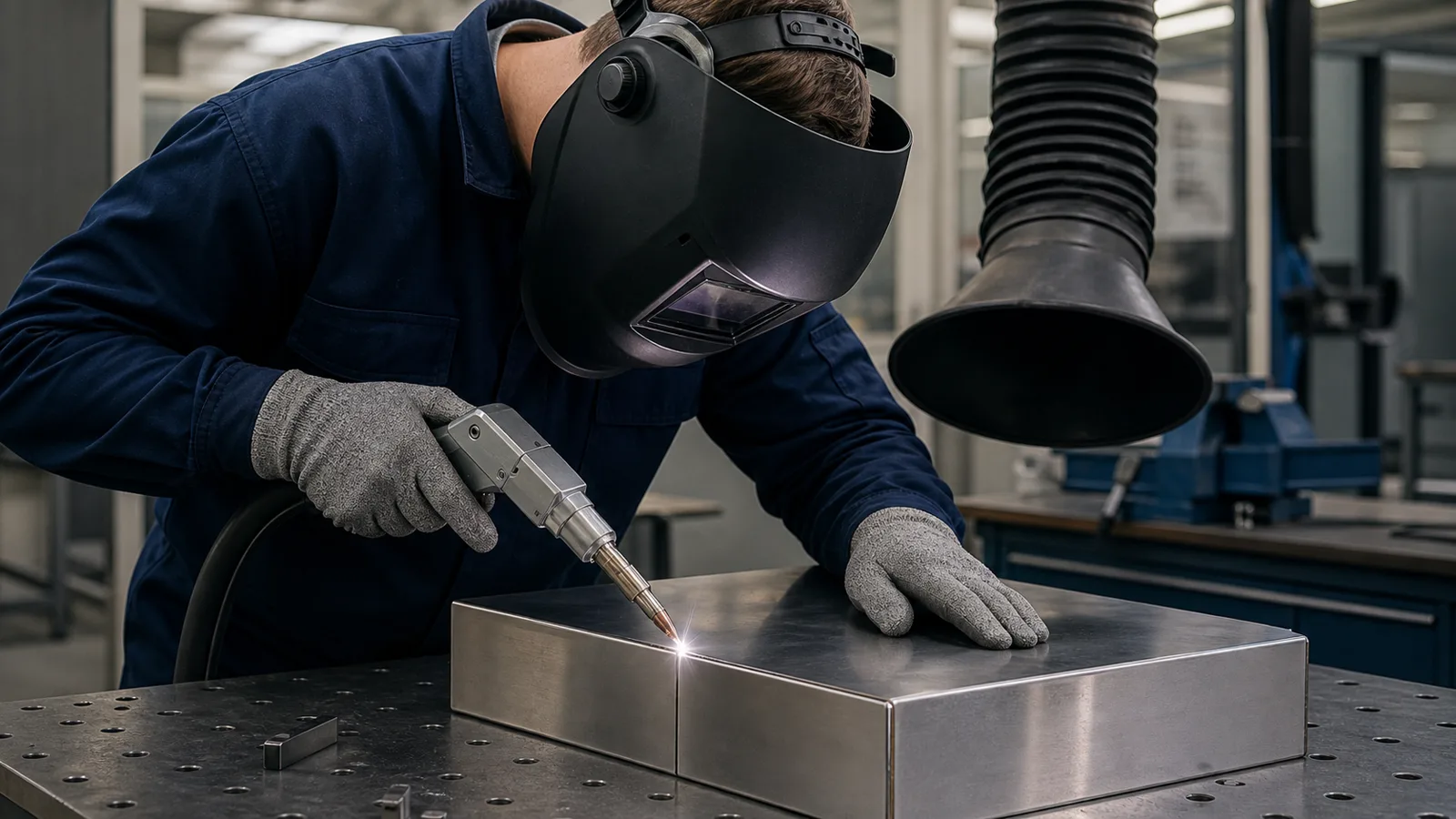
Fiber Laser Cutting Aluminum: Practical Thickness Limits by Power
Can Laser Cutters Cut Metal? Fiber Laser Power and Thickness Guide
Can Laser Cutting Machine Cut at an Angle? Bevels, Tapers, and Real Hardware Limits
Laser Welding Machine Materials: Metals, Plastics, Thickness, and Wavelength