Licensed editorial adaptation
Adapted and localized by the ZWCNC Editorial Team from licensed technical material. The source record is published for traceability.
Technical boundary: confirm machine-specific capacity, configuration and safety requirements against the current quotation, manual and application review.
Open an overseas equipment directory right now, and you can find a 3000W fiber laser cutter listed for $30,000. Call an established machine tool builder in the Midwest, and they may quote $250,000 for a machine with the exact same wattage.
A first-time buyer looks at those two numbers and assumes the established builder is simply charging a $220,000 premium for a nameplate and a warranty.
But wattage is only a lightbulb. The true cost of a laser cutter is not in the beam—it is buried in the steel, the servos, and the software needed to move that beam across a sheet of metal at racing speeds without tearing the machine apart.
Related: Laser Cutting Machine Comparison Guide
The $30,000 Gap: Why Two 3000W Machines Are Never Created Equal
A 3000-watt laser source produces enough localized heat to vaporize half-inch carbon steel in milliseconds. That is a violent physical process. If you bolt a 1,000-horsepower racing engine onto a riding lawnmower chassis, you do not get a race car. You get a death trap that shakes itself apart the moment you hit the gas.
The $30,000 machine and the $250,000 machine might both use the exact same brand of laser source.
The huge difference in price—and in real shop-floor survival—comes entirely from what surrounds it. How does a budget builder remove so much cost from the surrounding machine?
The "Frankenstein" Risk: Why the laser source brand is only 30% of the price story
Budget manufacturers like to put a premium logo—such as an IPG Photonics or MAX Photonics laser source—on the front page of their brochures. They know buyers recognize the name. But the laser generator itself accounts for only about 30% of the machine's total manufacturing cost. The remaining 70% is where the budget builder cuts expenses to reach that bargain price.
They buy the premium source, then connect it to off-brand drivers, discount chillers, and pirated control boards.
This creates a "Frankenstein" machine. The components do not communicate with each other natively. When a fault occurs on a heavy production day, the laser source reports one error code, the motion controller reports another, and the operator is left looking at a dead machine. How do you troubleshoot a system when the brain and the nervous system speak different languages?
Structural Engineering: Why a heavy-duty bed costs more but protects your precision
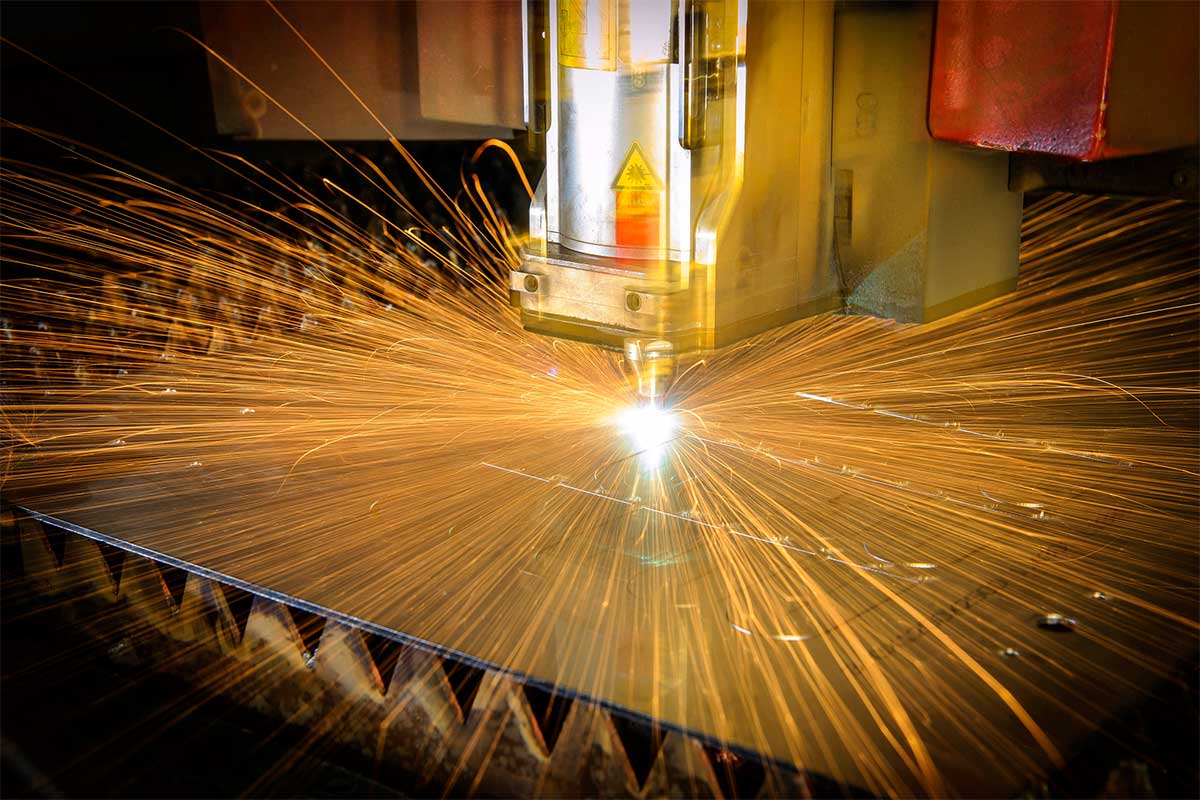
Go to a fabrication shop and place your hand on the frame of a top-tier industrial cutter while it runs a nest of parts. You will not feel a thing. Do the same on a budget machine, and you will feel vibration traveling straight through your boots.
A fiber laser cutting head moves at extremely high speeds, stopping abruptly and changing direction multiple times per second.
That momentum has to go somewhere. Premium builders use plate-welded, stress-relieved steel beds weighing more than 15,000 pounds to absorb that kinetic energy. Budget builders use thin-walled tube steel to reduce freight and material costs. After a few months of hard stops, a lightweight frame twists. The gantry falls out of square. Suddenly, your circular holes look like eggs, and your interlocking tabs no longer fit together. What good is a powerful laser if it cannot cut a straight line?
The Invisible Components: How high-end control software and cooling systems prevent downtime
A 3000W beam creates massive thermal blowback, especially when piercing thick plate. If the cutting head lenses get too hot, they warp, shifting the focal point and ruining the cut. High-end machines integrate closed-loop chillers that communicate directly with the control software. If the water temperature rises by two degrees, the software automatically pauses the cut before the optics burn out.
Cheap machines use standalone chillers that simply pump water without feedback.
If a coolant line gets pinched, the laser keeps firing until the $2,000 cutting head literally melts. The software gap is even wider. Premium controllers dynamically adjust laser power based on the cutting head's speed, reducing wattage as it slows for a sharp corner so it does not blow out the edge. Budget controllers simply fire 3000 watts continuously. How many scrapped sheets of stainless does it take to erase the savings from a cheap controller?
Motion System Dynamics: Why cheap motors turn a high-power laser into a slow machine
Watch a budget 3000W machine cut a complex nest of small brackets. It crawls. The laser source has enough power to cut the material three times faster, but the motion system—the servo motors, racks, and pinions—cannot handle the acceleration.
To keep the gantry from shaking itself apart, the manufacturer artificially limits the machine's speed in the firmware.
You paid for 3000 watts of cutting capacity, but you are getting only 1000 watts of actual throughput. Industrial machines use high-torque servos or linear motors that can achieve 2G to 3G of acceleration, allowing the machine to actually use the wattage you paid for. The true bottleneck in a fabrication shop is rarely how fast the beam melts metal. It is how fast the machine can move to the next pierce point.
Reframing "Power" as "Throughput": Why Peak Thickness Is a Buyer's Trap
You determine the true cost of a machine by looking at what leaves your shop, not at the dealer’s invoice. If you spend $30,000 on a machine that can technically "sever" a one-inch plate but takes twenty minutes to do it, you have not bought a production tool; you have bought an expensive hobby. A $250,000 machine pays for itself because it produces parts that require no secondary operations. In a world where labor is your highest overhead, every minute a worker spends using a hand grinder to clean up a "cheap" laser cut is a direct hit to your bottom line.
Throughput is the only metric that keeps the lights on.
The difference between "can cut" and "can cut profitably"
Sales brochures like to emphasize "Maximum Cutting Thickness," but that number is a vanity metric. In the trade, we distinguish between a "severance cut"—where the laser eventually forces its way through the material and leaves a jagged, dross-heavy mess—and a "production cut," which is clean, fast, and repeatable. A budget 3000W machine might be rated for 20mm carbon steel, but if it has to crawl at four inches per minute to do it, the heat buildup will warp the part and leave a massive heat-affected zone.
Speed creates quality.
When you cut quickly, the heat does not have time to spread into the rest of the part, which preserves the metal’s structural integrity and prevents edge rounding. A premium machine uses its rigidity to maintain high feed rates even on thick material, ensuring that gas flow effectively clears the molten metal. If you have to spend ten minutes deburring a part that took five minutes to cut, your actual cycle time has tripled. Can you really afford a machine that turns your skilled operators into full-time grinders?
Why material variety, not just maximum gauge, should dictate your budget
Most shops do not cut the same thickness all day; they move from 22-gauge stainless to half-inch aluminum and back to 16-gauge galvanized. This is where the "hidden ecosystem" of a high-end machine proves its value beyond raw wattage. A budget machine usually requires the operator to manually change nozzles and re-center the beam every time the material changes. This "hidden" downtime can consume two hours of a ten-hour shift.
Minutes are money.
Premium machines integrate automated nozzle changers and motorized focal positioning that adjust in seconds through the cut library. They also include sophisticated gas pressure controls that switch between oxygen and nitrogen without human intervention. If your workflow involves varied job shop work, the machine’s ability to transition between materials is more important than its ability to cut an extra 5mm of plate. Does it make sense to buy a high-wattage beast if it spends 30% of its life waiting for an operator to turn a wrench?
Shifting the focus from raw wattage to optical path efficiency
Raw wattage measures what the laser source produces, not what actually reaches the metal. In a cheap machine, a significant share of that power is lost through inferior fiber connections, low-quality protective windows, and misaligned cutting heads. A 6000W source behind “dirty” optics may deliver only the effective cutting power of a well-tuned 3000W system. Efficiency is the bridge between theoretical power and actual melting capacity.
You want photons on the part, not heat building up in the cutting head.
High-end systems use “intelligent” cutting heads with internal sensors that monitor optic health in real time. If the lens becomes contaminated, the machine warns you before the beam drifts and ruins a $500 sheet of brass. These systems also use specialized beam-shaping technology to adjust the spot diameter, allowing a single power source to behave like a surgical scalpel on thin sheets and a heavy-duty torch on thick plate. If the machine cannot focus that power precisely, is the extra wattage not just wasted electricity?
Navigating the Tiers: 1500W vs. 3000W vs. 6000W Performance Realities
We have established that the speed of clean, finished parts determines your profitability, not the theoretical maximum thickness a beam can pierce. So why do manufacturers push 6000W, 10kW, or even 20kW machines? Because maintaining high-speed throughput across thicker gauges eventually requires a different class of architecture. But moving up a power tier is not like swapping a V6 for a V8 in the same truck. It fundamentally changes your shop’s entire cost structure. Laser cutting pricing is built on an hourly rate that must absorb equipment depreciation, labor, utilities, and insurance. If you buy a massive machine but do not have the repeat volume to keep the beam on consistently, your fixed costs overwhelm your production speed, and your cost per part actually rises.
1500W: The precision entry point for thin-gauge specialization and small footprints
For application-specific equipment selection, contact ZWCNC.
Because the raw power is relatively low, thermal stress on the machine frame stays manageable. You do not need a 15,000-pound cast iron bed to absorb the aggressive acceleration required to prevent a higher-wattage beam from lingering and warping the plate. The chiller unit is compact. The electrical requirements will not force you to pull a massive new service drop from the city grid. For a low-volume prototyping shop or a business making complex, thin-walled assemblies, a 1500W machine keeps overhead low while delivering the same edge quality as a machine costing five times as much.
3000W: The industrial “sweet spot” for job shops—if the configuration matches the power
Step up to 3000W, and you enter the true job shop arena. This tier can handle 1/4-inch to 3/8-inch carbon steel fast enough to make money, while still cutting thin-gauge stainless at high speed. It is the most common wattage sold for a reason. But this is exactly where buyers fall into the trap of mismatched configurations, assuming the laser source alone guarantees performance.
Putting a 3000W laser source on a lightweight 1500W frame creates a serious mechanical bottleneck. To process 1/4-inch plate profitably, the machine needs heavy-duty cast gantry components and high-torque servos that can handle the greater mass of heavier plates and faster straight-line cuts. If the manufacturer cut corners on the rack-and-pinion system, the machine will vibrate during high-speed direction changes, leaving a serrated edge on your parts that requires manual grinding. The “sweet spot” only exists when the mechanical rigidity scales up with the laser source. Otherwise, you are paying for 3000W of power but throttling it back in the software just to keep the cuts clean.
6000W: The high-volume heavyweight that requires matching infrastructure and automation
Moving to 6000W crosses a firm line from “buying a machine” to “building a production cell.” At this power level, the laser cuts 1/2-inch steel like butter. But here is the harsh reality of high-wattage throughput: a 6000W laser will finish a nest of parts faster than a human operator can manually unload the skeleton and load the next sheet.
Gas Consumption Dilemmas: How upgrading wattage changes your Oxygen and Nitrogen bills
The biggest shock to a first-time high-wattage buyer is never the monthly equipment payment. It is the first delivery bill from the local gas supplier. Assist gas—primarily oxygen for thick steel and nitrogen for clean-cutting stainless and aluminum—is the lifeblood of fiber laser cutting. It blows molten material out of the kerf before it can fuse back together, and its consumption rises sharply with your machine’s power.
When you upgrade from 1500W to 6000W, your nitrogen usage skyrockets. High-power lasers cut incredibly fast, but to maintain that speed without oxidizing the edge, they require massive volume and pressure at the nozzle. A 6000W machine running nitrogen through thick plate can easily drain a standard liquid cylinder in hours. Suddenly, you are forced to pipe in bulk tanks or install a high-pressure nitrogen generation system, adding tens of thousands of dollars to your initial capital expenditure. If you have not calculated the hourly cost of your assist gas, how can you possibly know what your parts actually cost to make?
The Cost-Per-Part Formula: Calculating ROI Beyond the Sticker Price
Most shop owners look at a $4,000 monthly equipment loan and assume it is their main financial hurdle. It is not. If you are running a 6000W laser on 1/4-inch steel, you can easily go through $6,000 a month in liquid nitrogen alone. The cost-per-part formula does not care about your sticker price; it cares about your hourly operating rate. That rate includes labor, overhead, electrical draw, assist gas, and consumables. To calculate true ROI, you have to divide that total hourly burden by the number of sellable parts reaching the pallet every sixty minutes. If your machine is cheap but requires a secondary grinding operation to clean up dross, your labor burden just doubled. So how do you weigh the upfront cost against the daily bleed?
Capital Expenditure (CAPEX) vs. Operational Reality: Which one kills your margin?
Consider two quotes for a 3000W laser: a budget import at $45,000 and a premium domestic machine or top-tier import at $140,000. On paper, the $95,000 CAPEX gap appears impossible to overcome. But let’s look at the operational reality. The budget machine lacks an automatic nozzle changer and uses a basic gas manifold that leaks 15% more nitrogen per hour. It also forces the operator to pause manually and realign the sheet because the edge-detection sensors are notoriously unreliable.
Over a 2,000-hour shift year, that 15% gas inefficiency and 20% reduction in uptime can easily add up to $35,000 in lost revenue and wasted consumables. Within three years, the “cheap” machine has cost you more cash out of pocket than the premium one, while still leaving you with a less reliable asset. Why do so many buyers ignore the utility meters spinning on the sides of their buildings?
Speed vs. Electricity: The point where additional watts produce diminishing returns
Upgrading from a 3000W to a 12000W laser does more than quadruple the power at the cutting head. It dramatically increases the energy footprint of the entire support ecosystem. A high-wattage source requires a large industrial chiller to keep the optics from melting, along with a heavy-duty exhaust system to remove vaporized metal from the cabinet. These auxiliary systems draw substantial amperage continuously, even when the laser is idling between sheets.
If you are cutting 1/2-inch plate, the extreme speed of the 12000W source justifies the electrical draw because you are producing parts four times faster. But if you load 16-gauge sheet metal onto that same machine, the laser moves so fast that the gantry physically cannot accelerate hard enough to use the available wattage. You end up paying the massive electrical overhead of a 12000W chiller and exhaust system while the laser throttles down to 4000W just to get through the corners. Where does this mismatch between raw power and mechanical reality ultimately show up?
Maintenance and Calibration: The long-term cost of choosing a low-tier brand for high-tier power
Putting a massive power source on a budget chassis is a recipe for chronic downtime. High-wattage cutting creates intense thermal and kinetic stress. When a cheap, un-annealed machine frame absorbs the violent, rapid movements of a 6000W cutting head, the metal warps. You will not see this on day one. You will see it in month six, when your operator spends two hours every Monday morning recalibrating the focal point and squaring the gantry because the machine lost its zero over the weekend.
Every hour spent test-firing and adjusting parameters is an hour of overhead with no production. A premium machine holds its tolerances for months because the castings were stress-relieved in a furnace before assembly. The long-term cost of a low-tier brand is not only replacement parts; it is the painful, invisible drain of scrapped material and idle operator time.
The Buyer’s Decision Framework: Turning Spec-Sheet Confusion into Confidence
Audit the Manufacturer: Three questions that reveal low-quality machine configurations
A control system can cost $5,000 or $50,000, and that tenfold price gap marks the difference between a machine that “hunts” for its position and one that actually reaches it. The cheap controller uses generic, third-party PLC (Programmable Logic Controller) code that has not been optimized for the machine’s specific gantry mass. When the cutting head stops at the end of high-speed travel, a low-tier controller allows the head to vibrate for a fraction of a second before starting the next cut. In a 2,000-hole nest, those fractions of a second accumulate into twenty minutes of wasted time per sheet, effectively gutting your hourly yield before the first part is even finished.
Ask the manufacturer whether the frame was furnace-annealed after welding. If they hesitate or refer to “natural aging,” the frame was probably made from raw steel tubes that will “creep” during the first year of operation as internal stresses relax, pulling the gantry out of square and destroying your precision.
Finally, ask for the acceleration specifications in G-force, not just the top speed in meters per minute. A machine that can reach 500 meters per minute is useless on a shop floor if it needs a city block to get there; you need high-G acceleration to maintain wattage efficiency on complex parts with frequent direction changes. If the manufacturer cannot provide these metrics, they are selling you a power source on wheels, not a production tool.
How can a buyer keep this mechanical mismatch from disrupting the daily production schedule?
The “Reality Check” Rule: Buy for your daily 80% workload, not your yearly 1% exception
I see shops go broke because they bought a 12,000W monster for the 1-inch plate contract they hope to win, while their everyday bread-and-butter work is 11-gauge stainless. On thin material, that high-wattage laser is often a liability because it requires larger nozzles, higher gas pressure, and a massive electrical draw just to remain powered on. Because the gantry has to move at aggressive speeds to keep up with the heat of a 12kW source, the machine eventually shakes itself out of calibration on the small, intricate details that actually pay the bills.
You should buy the machine that handles 80% of your current workload best. If five tons of 1/4-inch plate move through your shop every week, buy the 4kW or 6kW machine that cuts that thickness with complete reliability. For the 1% of the time you need to cut 1.5-inch armor plate, send the file to a service bureau that already owns the automated 30kW beast. Let them deal with the $8,000-a-month nitrogen bill and the specialized maintenance headaches of the “yearly exception.”
If you use your own capital to chase edge cases, you will end up with a machine that is too expensive to operate for the work you actually have.
Final Checklist: When to pay the premium and when to walk away from the wattage race
To calculate your projected cost per part before signing a loan, do not rely on the salesman’s generic spreadsheet. Give the vendor three of your most common DXF files and request a “nesting time study” that includes estimates for gas consumption and electrical draw. Take the estimated cycle time and add 20% for real-world variables such as sheet loading and nozzle cleaning. Then divide your total monthly burden—loan, labor, gas, and power—by the number of sellable parts the study indicates you can produce in a month.
Pay the premium when the manufacturer offers a dedicated service technician within a four-hour drive and a control system that predicts its own maintenance intervals. Walk away from the wattage race as soon as the price of “more power” forces the vendor to use a lighter, un-annealed frame or a pirated software board. A 3000W laser that runs 2,000 hours a year will always outperform a 12000W laser that spends half its life waiting for a technician to fly in from overseas.
The iron in the floor and the logic in the cabinet are what allow the wattage to do its job. If you focus on the “billable minute” instead of the “peak thickness,” you stop being a dreamer and start being a manufacturer.
Related Resources and Next Steps
- For teams evaluating practical options here, laser cutting machines is a relevant next step.
Apply this guidance to your production
Share your material, thickness, part drawing, tolerance, and target output with the ZWCNC engineering team for an application-specific equipment review.
More news, insights, and updates from ZWCNC.
Fiber Laser Cutting Aluminum: Practical Thickness Limits by Power
Laser Cutting Machines Understanding
Guide to Laser Cutting Software
Panel Bender and Laser Cutting Integration for Higher Throughput

How to Prevent Burn Marks During Laser Cutting: A Troubleshooting Guide