
Licensed editorial adaptation
Adapted and localized by the ZWCNC Editorial Team from licensed technical material. The source record is published for traceability.
Technical boundary: confirm machine-specific capacity, configuration and safety requirements against the current quotation, manual and application review.
I often see spotless, quarter-million-dollar electro-hydraulic servo press brakes bending 10-gauge steel to tolerances so loose you could drive a forklift through them. Owners pay a huge premium for synchronization their parts do not need—like buying a Stradivarius to play a campfire song—while their maintenance costs rise. For a high-tonnage operation, the most "advanced" option in the brochure is often a strategic liability rather than an asset.
Related: Comparing Types of Press Brakes
The Over-Engineering Trap: Why the "Most Modern" Machine Often Costs Your Shop More
The Prestige Technology Bias: Why Metal Shops Overbuy Accuracy They Do Not Use
The electro-hydraulic servo CNC press brake is a strategic liability for high-tonnage shops unless your specific part mix requires high-speed synchronization enough to outweigh the inherent maintenance and capital-cost advantages of traditional hydraulic systems. I once audited a structural steel plant that replaced its reliable workhorses with a fleet of high-spec servos, chasing the "prestige" of the latest technology. Within a year, they realized they were paying a 2.4x premium to bend half-inch plate to a level of precision the material itself could not physically hold. They did not need microns; they needed uptime.
The sales pitch always emphasizes that the ram stays level to within hair-widths, even under off-center loads. That sounds impressive in a showroom, but on a dusty shop floor, it is a phantom benefit. You are paying for a sophisticated control architecture that uses independent servo motors to drive high-precision pumps for every cylinder, even when the job is heavy-plate structural work that a simpler machine could handle for half the price.
The real cost is the payback period. A conventional hydraulic system might pay for itself in 20 months, while the electro-hydraulic equivalent often stretches that debt to 48 months or more. For a high-tonnage shop, carrying two extra years of debt just to own the "best" machine on the block is a tactical mistake that drains cash flow needed for material and labor.
Understanding the Gap Between "Real-World Tolerance" and "Marketing Precision"
Consider a 200-ton shop in Ohio that recently replaced a reliable hydraulic unit with a high-spec servo-hydraulic model. They were chasing ±0.01mm precision. Eighteen months later, they were back to using their old hydraulic backup for 60% of their thick-plate runs. The issue was not the machine's capability; it was the environment.
The high-performance servo valves—the "brains" that regulate fluid flow at extreme speed—are notoriously sensitive to ambient dust and temperature swings. On a pristine laboratory floor, they are a marvel. In a shop where grinders throw sparks and bay doors stand open to summer humidity, they become a liability. A single speck of contamination in the hydraulic fluid can trigger a cycle-stop error that shuts down production.
Furthermore, heavy-gauge material has inherent "scale"—the flaky, oxidized layer on hot-rolled steel. This scale comes off during bending and creates variable thickness, making micron-level ram accuracy irrelevant. If your material varies by 0.1mm across the sheet, a ram accurate to 0.01mm will not save your angle. You are trying to use a surgical scalpel to cut a log, then getting frustrated when the blade chips.
Does it make sense to buy a machine that requires a clean-room environment to perform a dirty job?
Reframing the Purchase: From “Which Is Better?” to “Which Is Profitable?”
Think of a press brake like a work truck. A high-performance electric racing engine is objectively “better” technology than a heavy-duty diesel, but you would not use it to haul ten tons of gravel up a mountain. The “better” machine is the one that stays stable under the specific loads you put on it.
For shops that run 80% of their jobs on material thicker than 12mm, the energy savings of a servo system—often promoted as 50%—are frequently consumed by maintenance. In these high-tonnage applications, the higher risk of valve-sticking failures and fluid leakage caused by increased operating pressures often cancels out the lower power bill. You end up trading a predictable utility cost for an unpredictable repair bill.
The “breakpoint” where an electro-hydraulic system actually starts to pay for itself is not tonnage, but complexity. If you are running multi-angle, high-speed setups on thin-gauge parts where every second of air-time matters, the servo wins. But for a heavy-tonnage shop, the strategic move is often to stay with the “sledgehammer” of conventional hydraulics. It is cheaper to buy, easier to repair, and far more tolerant of the grit and grime that actually define metal fabrication.
If we stop chasing the “modern” label, what does the actual mechanical heart of these machines tell us about their longevity?
Beyond the Piston: How Control Architecture Separates Simple Force from True Precision
Traditional Hydraulic: The Torsion Bar and the Limits of Mechanical Synchronization
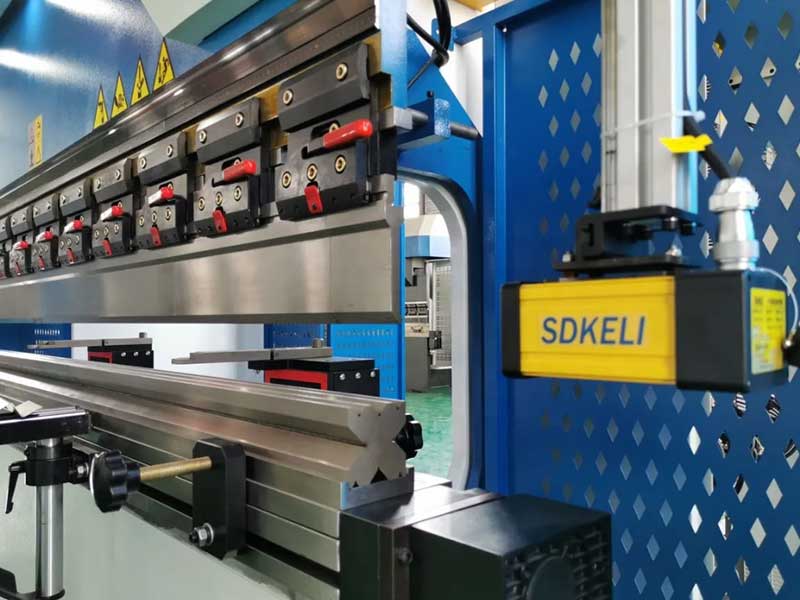
A standard torsion bar on a 300-ton hydraulic brake is essentially a solid steel axle, often four inches thick, that physically forces the two ends of the ram to move together regardless of what the operator tells the controller. It is bound by geometry. When the left cylinder pushes, the bar transfers that torque to the right side, ensuring the ram descends level. There are no sensors to fail, no code to “hang,” and no delicate glass scales to become coated in oily shop dust. It is a “dumb” system in the best possible sense: it relies on the shear strength of steel rather than the reliability of a localized network.
For application-specific equipment selection, contact ZWCNC.
The simplicity of the torsion bar means that when the machine stops moving, the fix is usually found with a wrench, not a laptop. You are not hunting for a software bug or a micro-fracture in a fiber-optic cable; you are looking at a valve, a seal, or a physical linkage. This transparency is the bedrock of reliability in a shop where the maintenance person is also the head welder.
If the torsion bar is a rigid bone, how does the servo system replace it with a digital nervous system?
Electro-Hydraulic Servo: Dual-Scale Monitoring and Real-Time Valve Adjustment
Electro-hydraulic servo systems replace the heavy steel bar with two independent Y1 and Y2 axes, each monitored by a linear encoder—a high-precision glass scale—mounted on the side frames. These encoders “read” the ram position to within 0.001 mm and report back to the CNC brain thousands of times per second. If the left side is 0.005 mm lower than the right, the controller immediately adjusts the proportional valves to balance the oil flow. It is a constant, invisible exchange between the electronics and the fluid.
This architecture allows the ram to be intentionally “tilted,” which is essential for complex parts that require different bend depths across a single piece of sheet metal. Because the cylinders are not mechanically linked, the machine can be much more agile. However, that agility depends entirely on signal purity and hydraulic-oil cleanliness. Proportional valves have tolerances tighter than a watch movement; a single grain of grit from a poorly maintained reservoir can jam a spool and put a $200,000 machine into an error state that no amount of “manual override” can fix.
The servo’s precision comes at the cost of environmental vulnerability. In a high-tonnage environment, where heavy plates are dragged across the bed and scale flakes into every crevice, those delicate glass scales are a primary failure point. Vibration from a nearby plasma table or a smear of grease on the encoder strip can cause the ram to “hunt” for its position, producing stuttering movements that ruin the bend.
When the material gets heavy and the load becomes uneven, does this digital “brain” stay in control?
The Off-Center Loading Factor: How Each System Handles Pressure Imbalance
Place a 50-ton load on the far left of a 10-foot torsion bar machine, and the mechanical bar will strain to pull the right cylinder down with it. If the load is too extreme, the machine will simply groan and stop, or the part will come out slightly out of parallel. The machine’s physical limit is the bar’s torsional rigidity. The outcome is binary: the bar holds, or it does not.
The electro-hydraulic servo machine handles the same off-center load through a high-speed balancing act. The controller senses the resistance on the left and sends more pressure to that cylinder while restricting the right. This allows for remarkable accuracy even when you are not bending in the center of the bed. But for high-tonnage shops, it creates a hidden risk: localized stress. Without a mechanical link to distribute the torque, the side frames and cylinder mounts absorb the full force of the imbalance, relying entirely on the software to keep the machine from twisting into permanent misalignment.
In heavy-plate fabrication, you are not just fighting the machine; you are fighting the physics of the material. A 400-ton press brake does not “nudge” a plate into shape; it overpowers it. When a servo-hydraulic system tries to manage that level of force through software-controlled valves, the margin for error narrows. A millisecond of lag in valve response under full load can cause a “pressure spike” that blows a seal or cracks a manifold—failures that are virtually nonexistent in the “dumb” hydraulic circuit of a torsion bar machine.
If the servo is more temperamental under load, why do we keep hearing about its superior consistency?
Repeatability vs. Accuracy: Why Your 500th Bend Defines Your Machine’s Value
Accuracy means hitting the mark once; repeatability means hitting it every time the sun goes down and the shop gets cold. Conventional hydraulic systems are notorious for “drifting” as the oil heats up. Warm oil is thinner, flows faster, and compresses differently. On a torsion bar machine, your first bend at 7:00 AM might be 90 degrees, but by 2:00 PM, after the pump has been humming for seven hours, that same stroke might produce 89.2 degrees. The operator has to manually “chase” the angle all day.
The electro-hydraulic servo system largely addresses this with closed-loop feedback. Because it continuously measures the ram’s actual position—not merely the pressure in the line—it automatically compensates for thinning oil. In theory, the 500th part is identical to the first. This is where the 30–50% energy savings cited by the Department of Energy actually matter. It is not only about motor speed; it is also about the machine no longer fighting its own thermal expansion.
For a shop doing high-volume, thin-gauge work, this repeatability can be the difference between profit and scrap. But for a high-tonnage shop bending 1-inch base plates, that 0.8-degree drift is often still within the final assembly’s “weld-to-fit” tolerance. You have to ask whether you are paying for a level of consistency your final product does not actually need. The “strategic liability” is not the technology itself; it is the cost of maintaining a digital precision system in a setting that only requires mechanical force.
Does this trade-off between precision and speed actually put more finished parts out the door by the end of the shift?
The Throughput Paradox: Measuring Speed from Setup to Finished Part
Ram Approach and Return: Where Servo Systems Shave Seconds Off Every Cycle
Scale the material up to heavy gauges, and the mathematical advantage of the servo-hydraulic system disappears. When you are maneuvering a half-inch plate into position with an overhead crane, the ram’s rapid-approach speed is an empty win. With that much mass in motion, you are not looking for “free-fall” velocities; you are looking for controlled, predictable force. Once the physics of heavy material and the realities of crane loading take over, the servo-driven pump is effectively forced to behave like a standard hydraulic unit. Watch a servo-hydraulic brake run a basket of small, 16-gauge brackets, however, and the appeal is obvious. The ram drops at alarming speed, stops precisely a millimeter above the material, makes the bend, and snaps back to top dead center before the operator has even fully pulled their hands away. Manufacturers routinely claim a 30% to 50% throughput increase from these systems on small parts that require short strokes and frequent, rapid-fire bends. They are not lying—the math works perfectly when the operator’s hands can keep up with the ram. But for the heavy-tonnage shop, that speed is a ghost you pay for but never actually see on the floor.
High-Mix vs. High-Volume: Does CNC Automation Solve Your Bottleneck or Create a New One?
A recent European OEM field study claimed that electric and servo-hydraulic press brakes can reduce energy consumption by up to 80% compared with traditional hydraulic systems. Look into the data, and the real story appears: most of those savings occur during idle time, not during active bending. The machine is not necessarily producing parts faster; it is simply better at waiting. Consider the power draw of a standard 150-ton hydraulic press brake. Left idling between jobs, it will consume roughly 42 kWh per shift just to keep the oil circulating. A comparable hybrid or servo-driven machine might draw only 25 to 30 kWh, shutting the pump down entirely when the foot pedal is released. This tells us exactly what the machine is doing: sitting empty. In a high-volume environment producing light-gauge enclosures, CNC automation solves the bottleneck of operator fatigue and manual positioning. In a high-mix, heavy-tonnage shop, the bottleneck is the forklift bringing the skid, the crane loading the plate, and the two operators squaring it against the backgauge. Buying a high-speed servo system to solve a material-handling constraint is like buying a track car to sit in rush-hour traffic. You have not increased throughput; you have only increased the cost of waiting.
The Setup Time Delta: How Much Time Is Lost to Manual Depth Adjustments on Conventional Machines?
Speed under load: Comparing bending velocities across material thicknesses
The ultimate equalizer in sheet metal fabrication is pressing speed. No matter how quickly the ram approaches the workpiece, the actual bending velocity is tightly limited by both safety regulations and the physics of the metal. Try to form a piece of 3/4-inch A36 steel too quickly, and the material will crack along the bend line. The industry consensus is that once you routinely bend plate thicker than 1/2 inch (12 mm) or require more than 250 tons of force, the traditional hydraulic system remains the better fit. The servo's rapid approach speed is canceled out by the slow, unforgiving reality of forming heavy plate safely. When both machines must crawl through the actual bending phase at exactly the same inches per minute, the conventional hydraulic system delivers identical throughput without the fragile digital overhead. If the cycle times under heavy load are identical, what exactly are you paying to maintain?
Hidden Operational Costs: Energy Efficiency and the Maintenance Risk Profile
The Idle Power Drain: Why conventional pumps waste money when the beam is stationary
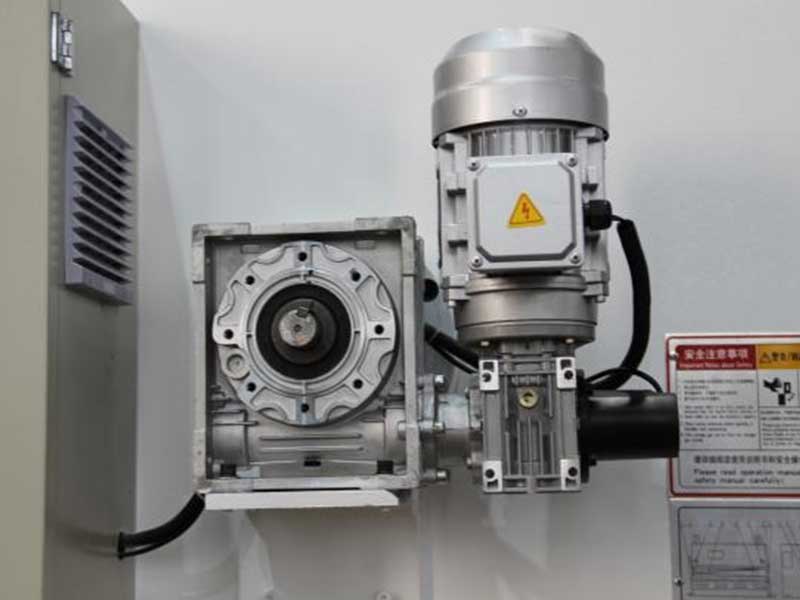
A standard 150-ton hydraulic press brake sitting silent between jobs is not truly off; it is a 42 kWh-per-shift “vampire” that consumes electricity simply to keep its internal heart beating. Conventional systems use constant-speed motors that spin the main pump at full RPM regardless of whether the ram is moving or the operator is scrolling through a TikTok feed. This is the primary argument used by servo-hydraulic sales teams. They point to the “hybrid” system, where the motor only spins when the foot pedal is depressed, promising a 30% to 50% reduction in your utility bill. On paper, the math is damning for old-school machines.
But energy is rarely the largest line item on a shop’s P&L. If you are running a high-tonnage shop where the machine spends 80% of its time under load bending thick plate, those idle-time savings start to look like a rounding error. The energy required to move 200 tons of force through a half-inch of steel is a physical constant; the servo motor and the induction motor both have to perform the same heavy lifting. When the “green” marketing meets a high duty cycle, you realize you are paying a $40,000 premium to save $600 a year in electricity.
Is the machine's ability to “wait for free” worth more than the capital cost of the technology?
Thermal Dynamics: How oil temperature fluctuation affects consistency in long production runs
Hydraulic oil is a living medium that changes its behavior as it warms, losing roughly 1.2% of its efficiency for every hour of a heavy production run as temperatures rise. As the oil thins, its viscosity drops, and the responsiveness of the proportional valves begins to drift. This is why a part bent at 8:00 AM might not match a part bent at 4:00 PM on a traditional machine without manual compensation. Servo-hydraulic systems reduce this effect because they do not churn the oil while idling, keeping the reservoir cool and the viscosity stable throughout the day. For shops doing precision work in thin gauges, this consistency can be the difference between an accepted part and scrap.
In high-tonnage environments, however, "precision" is a relative term measured in sixteenths, not microns. If you are forming base plates for structural steel, the slight thermal drift of a conventional hydraulic system remains well within the weldment's tolerance. In effect, you are buying a climate-controlled laboratory tool to perform the work of a sledgehammer. The thermal stability of a servo system is a luxury that high-tonnage plate shops pay for, but rarely need in order to meet customer requirements.
If the added precision does not let you charge more for the part, heat management is simply another expensive feature with no ROI.
The Reliability Trade-off: Predictable Mechanical Wear vs. High-Cost Electronic Sensor Failure
When a traditional hydraulic press brake breaks down, the cause is usually a $200 seal, a blown hose, or a standard contactor that your local industrial supply house keeps in stock. These are mechanical failures that an experienced maintenance technician can diagnose with a wrench and a pressure gauge. Reliability in these machines is built on the "predictable failure" model: parts wear out gradually, provide warning signs, and are inexpensive to replace. You are not held hostage by a single supplier because the machine's internal components are largely commoditized.
Contrast that with a servo-hydraulic system, where the "scalpel" is controlled by proprietary laser scales, high-speed encoders, and specialized servo drives. When a $5,000 proprietary sensor decides the shop's humidity or vibration is too high, the machine does not merely "drift"—it bricks itself. You are not calling the local supply house; you are waiting for a factory-trained technician to fly in with a laptop and recalibrate a black box. You have traded the predictable, low-cost maintenance of a mechanical system for the high-stakes, "all-or-nothing" risk of advanced electronics.
The question is not whether the machine is more efficient, but whether you can afford the downtime when the "brain" fails.
Skill Gap Requirements: Can Your Current Team Maintain a Servo-Controlled System?
The transition to servo-hydraulics forces a shop to reconsider whom it hires, shifting the maintenance burden from the "grease monkey" to the "IT technician." A traditional hydraulic brake is a transparent machine: you can see the oil move and hear the valves fire. It is an intuitive system that rewards experience and mechanical aptitude. A modern servo-controlled CNC brake, however, is an opaque digital ecosystem where the operator is often locked out of the very parameters needed to keep production moving.
If your current maintenance team is built around mechanical longevity and "fixing it with what we've got," a move to servo systems will leave them stranded. You either pay for an expensive annual service contract from the OEM, or you hire a new tier of talent that understands PLC logic and digital feedback loops. This is a "hidden" operational cost that never appears in the brochure, yet it is the primary reason high-tonnage shops find themselves with $300,000 paperweights during a rush.
This shift from mechanical to electronic vulnerability confirms a hard truth: once your production crosses the 250-ton threshold, the rugged "sledgehammer" of pure hydraulics is objectively more profitable than the delicate "scalpel" of the servo.
The Tonnage Threshold: Why Conventional Hydraulic Muscle Still Wins in Heavy-Gauge Work
When Brute Force Trumps Microns: Structural Steel and Thick Plate Applications
The industry data is clear: price parity for servo-hybrid systems usually fades once you go beyond 150 tons. Past that point, the cost of the high-torque servo motors and specialized drives needed to maintain that level of control rises sharply. You are not just paying for a motor; you are paying for the engineering required to make a high-speed electronic component survive the violent kickback of a 300-ton load.
It is a classic case of diminishing returns, where the “innovation” becomes a burden.
For the shop owner, the question is not whether the servo is “better” in isolation, but whether the part actually requires it. If your tolerances are wide enough to accommodate a weldment, you are paying for a level of accuracy that will be ground away or filled with a bead at the next station. Why buy a precision instrument to do the work of a mule?
The “Wide V-Die” reality: Why high precision is often lost in heavy material dynamics
In heavy-gauge work, we are not bending with narrow 12mm dies; we are using 4-inch, 6-inch, or even 10-inch V-openings. This geometry creates a fundamental problem for the “precision” argument because a wide V-die naturally expands the tolerance window of the air bend. Even if your servo-driven ram reaches its target within a micron every time, the material itself will undermine that precision.
Hot-rolled plate comes with a mill tolerance on thickness that can vary by 5% or more across a single sheet. On half-inch plate, that variation is enough to shift your bend angle by a full degree, regardless of how perfectly the ram was positioned. The servo system can be as precise as a laser, but it cannot “see” the internal stress of the steel or the slight thinning of the plate from the last batch.
You are effectively using a digital scalpel to cut through a bag of gravel.
When material variability is ten times greater than the machine’s positioning tolerance, the machine’s precision is effectively neutralized. In these situations, the operator’s ability to “bump” a bend or shim a die matters more than the encoder’s feedback loop. The machine’s “intelligence” is wasted because the medium it is working on is inherently “dumb” and unpredictable.
Ruggedness vs. Sophistication: Surviving the dust and heat of heavy fabrication environments
The environment of a heavy plate shop is a graveyard for delicate electronics. Between airborne grit from grinding stations, thermal spikes in a non-climate-controlled warehouse, and the constant vibration of overhead cranes, the “sophistication” of a servo system becomes its greatest weakness. High-resolution glass scales and sensitive encoders do not thrive in places where people are moving 200-pound slabs of steel and slag.
A conventional hydraulic system is a tank. Its components are overbuilt, enclosed in heavy casings, and designed to operate in the heat and grime of a real-world shop floor without complaint. It is a system built on pressure, not just signals. If a seal leaks, you can see it, fix it, and keep moving. If a servo drive’s cooling fan clogs with metallic dust and fries the board, your entire production line stops until a specialist arrives with a proprietary replacement.
Does the "prestige" of owning a high-tech machine justify the risk of having it disabled by a dusty circuit board?
True reliability in high-tonnage work comes from simplicity. Once you strip away the layers of digital abstraction, you are left with a machine that is easier to understand, less expensive to repair, and much more likely to still be running ten years from now. The "sledgehammer" of traditional hydraulics wins because it is the only tool that does not try to outthink the material.
The ROI Decision Matrix: Matching Machine Tonnage to Your Production Reality
The Break-Even Crossover: Calculating Payback Based on Shift Patterns and Part Complexity
A 130-ton hybrid servo-hydraulic machine running a single eight-hour shift will save you approximately $2,500 in electricity per year. If you paid a $40,000 premium for that technology over a standard hydraulic model, you are looking at a 16-year payback period on energy alone—roughly twice the expected lifespan of the high-end electronic drives that control it. In the high-tonnage range of 300 to 1,000 tons, where the price gap between a "smart" machine and a "strong" machine can exceed six figures, energy efficiency is a rounding error on your P&L.
Real payback comes from reducing "air-cut" time during complex multi-bend sequences. If your operator spends four minutes winching a heavy plate into position just to make a single 90-degree bend, the high-speed ram approach of a servo-hybrid is useless. The machine spends 95% of its life waiting on a crane or a person. However, if you are running 10-gauge cabinets with six different bend angles and four flange heights, the servo’s ability to snap into position and synchronize precisely saves thirty seconds per part. Across three shifts, those seconds add up to enough added capacity to justify the capital outlay.
Does your current part mix actually let the ram move fast enough, often enough, to pay for its own expensive motors?
Future-Proofing vs. Fiscal Prudence: Identifying the Point of Diminishing Returns
Sales reps like to talk about "future-proofing" your shop by buying more precision than you currently need. In heavy fabrication, this logic is a trap because, unlike a fiber laser that can be updated with software to cut faster, a 400-ton press brake is a legacy asset whose primary value is its structural rigidity. When you buy a high-tonnage servo-hybrid "just in case" you get higher-precision work, you are paying a recurring maintenance tax on a capability that the material on your floor may never use.
The point of diminishing returns is usually reached at 250 tons. Below that line, the speed of servo-hydraulics can actually keep pace with the physical handling of smaller, lighter parts. Above it, the sheer mass of the ram and the protective dwell times needed to prevent structural fatigue undermine the "high-speed" marketing claims. You end up with a high-performance machine that must be run at 50% speed to keep the hydraulic seals from protesting under the stress of rapid reversals.
If the machine's top-end capabilities are sidelined by the reality of heavy-plate physics, what exactly are you "future-proofing" besides the manufacturer’s profit margin?
Four Questions to Define Your Shop’s Ideal Technology Tier
To cut through the marketing noise, you need to view your shop through mechanical utility rather than technological envy. Start with the "quarter-inch rule": Is more than 70% of your throughput thicker than 6 mm? If so, the inherent material variation in that plate will overwhelm the precision of a servo system, making the extra investment a ghost in the machine.
Next, assess your shift density and your local service map. If you run a single shift, a conventional hydraulic machine's lower upfront cost and simple maintenance mean you can pay it off in three years and run it for twenty. If you run three shifts, the energy savings finally begin to look like real money, but only if you have a technician within a two-hour drive who can troubleshoot a proprietary servo drive. Finally, count the bends; if your average part has fewer than three bends, you are buying a computer to do a job that a limit switch can handle.
Is your production bottleneck caused by the speed of the ram, or by the sweat on the operator’s brow?
Final Verdict: Scenarios where the "lesser" machine is the smarter investment
The "lesser" conventional hydraulic machine is the superior financial asset when your shop values uptime over theoretical microns. In heavy-duty environments—structural steel, heavy equipment frames, and large-scale weldments—the traditional hydraulic brake remains the only logical choice for handling shock loads and industrial power fluctuations without the fragility of sensitive electronics. It is a machine that any competent mechanic can repair on a Tuesday afternoon with parts from a local supply house, helping ensure that a simple sensor failure does not lead to a week of downtime. For the high-tonnage buyer processing thick A36 plate, the conventional machine is the strategically dominant choice because it delivers the lowest cost per bend and a resale value that does not evaporate when the controller reaches end of life. Buy the mechanical muscle your material requires, and leave the high-tech monuments to the shops that prefer software updates over actual production.
Apply this guidance to your production
Share your material, thickness, part drawing, tolerance, and target output with the ZWCNC engineering team for an application-specific equipment review.
More news, insights, and updates from ZWCNC.
Direct Drive vs Hydraulic Press Brakes: Precision, Tonnage Limits & Real Cost Comparison
Are Press Brakes Hydraulic? Hydraulic vs Electric vs Hybrid Explained
The Small Press Brake Trap: Why Servo-Electric C-Frames Are Replacing Downsized Hydraulics
CNC Press Brakes for Automotive Parts: Why General Sheet Metal Specs Fall Short—and How to Configure for High-Volume Production
How Hydraulic Press Brakes Produce Repeatable Sheet Metal Parts