Licensed editorial adaptation
Adapted and localized by the ZWCNC Editorial Team from licensed technical material. The source record is published for traceability.
Technical boundary: confirm machine-specific capacity, configuration and safety requirements against the current quotation, manual and application review.
The "Vs." Mentality: Why We Secretly Root Against the Machine
The motor hums steadily, a deep, resonant tone that foreshadows what’s to come. Centered on the steel anvil sits a flawless, gleaming ball bearing, awaiting its fate. As the ram begins its descent, the scene feels less like a lab demonstration and more like a fixed gladiator bout—where the champion is always expected to win. But that isn’t the whole story. The internet’s fascination with hydraulic press videos stems as much from suspense as from destruction: the thrill lies in watching an unstoppable force meet an object that might—just might—defy it. For those intrigued by this interplay of raw power and precision, exploring advanced industrial equipment like a press brake solutions offers a deeper look at how carefully controlled force shapes and transforms materials.
The illusion of invincibility in viral videos
Popular channels such as the Hydraulic Press Channel have turned material science into a kind of spectator sport—an endless series of "Press vs. Object" showdowns. This framing feeds the seductive notion that the press is a kind of universal destroyer, a god-tier device capable of reducing anything to fragments. In these narratives, the verdict is always the same: “Machine Wins,” reinforcing a belief in technological supremacy. Yet, the impression of invincibility hinges entirely on geometry and specific loading conditions.
In truth, a hydraulic press delivers a very particular kind of force: slow, uniaxial compression. It’s more of a specialized stress-testing tool than a mythical destroyer. Likewise, equipment such as a press brake solutions operates on comparable principles but focuses on precision bending, underscoring that industrial machines are tailored for specific tasks, not boundless power. These videos captivate because they distill complex interactions—stress distribution, contact geometry, strain rates—into a simple image of dominance. When a diamond splits or a rubber toy bursts, it affirms the viewer’s expectation that the machine will prevail.
Yet the spectacle conceals the true mechanics of failure. A material that performs poorly under compression might be remarkably resilient in tension—and the opposite is equally true. The press’s apparent “invincibility” hinges on the fact that the object is trapped, with no avenue for displacement. Change the parameters—replace the flat platen with a needle tip, or apply a shearing force instead—and suddenly the outcome is reversed. Viral videos strip away such nuances, distilling the encounter into a one-dimensional narrative that the machine is unbeatable.

The essential distinction between “flattening,” “shattering,” and “destroying”
Before we can identify what truly endures, we need to clarify what it means for an object to “fail.” In the comment threads surrounding these videos, the concept of destruction is often muddled. In materials science, however, the difference between deformation and catastrophic failure is fundamental—plastic flow and brittle fracture represent entirely different modes of response.
| Category | Description |
|---|---|
| Flattening | Rarely signifies genuine destruction; instead, it’s adaptation. When ductile metals such as lead or mild steel are pressed, they undergo plastic deformation. Their atomic lattice remains intact, with atomic planes sliding past one another under stress. The material yields without losing structural integrity—it merely changes form. In this case, the press doesn’t defeat the metal; the metal adjusts to the load. |
| Shattering | Typical of brittle substances like glass or ceramics, which lack the capacity for plastic deformation. Once the applied compressive force exceeds the strength of atomic bonds, the result is sudden, catastrophic breakage. Shattering often stems from flaws in geometry as much as material weakness—a flawless glass sphere can resist crushing, but the smallest imperfection can trigger complete fragmentation. |
| Destroying | The hardest outcome to achieve: making an object functionally nonviable. For example, neodymium magnets might look untouched after withstanding the press, yet their internal lattice and magnetic domains can be fatally compromised. Similarly, a flattened spring still exists physically but can no longer perform its intended mechanical task—intact in matter, ruined in function. |
Why we obsess over finding the one object that refuses to submit
These videos tap into something far deeper than idle curiosity—they engage a deeply human "underdog bias." When the hydraulic press is cast as Goliath, a cold and relentless force of destruction, we instinctively search for a David—a defiant outlier capable of overturning the presumed order. We crave the moment when some unlikely contender defies the rules, disrupting the mechanical inevitability of the scene.
That explains the near-mythic status of the Prince Rupert’s Drop in this niche. This peculiar, tadpole-shaped glass marvel doesn’t simply resist the crushing force—it retaliates. Formed with immense compressive stresses locked into its bulbous head during rapid cooling, it can endure pressures so intense they dent the steel jaws of the press. Watching the ram yield while the glass remains flawless delivers a surprising emotional release. It challenges our assumptions about fragility, hinting that, with the right inner tension, what is perceived as weak can indeed overpower the strong.
Our allegiance often lies against the machine because it embodies the hard limits of physical law. If it can pulverize everything—diamonds, titanium, obsidian—then it reinforces the idea that physics is an unbreakable cage. But the moment a simple glass drop or a humble stack of paper stalls its motor, even briefly, it suggests the existence of a loophole. We’re not merely seeking toughness—we’re seeking confirmation that reality can be subverted. Watching the press falter offers hope that the relentless march of time and entropy might not be as inescapable as we fear.
Download brochures to discover additional examples of advanced, precision-engineered machinery and specialized testing techniques.
Hardness Can Be Fatal—Diamonds Prove It
Scroll through the comments under any hydraulic press video involving a gemstone and you’ll find a common misconception: that "hard" means "unbreakable." Many expect a diamond to spear through steel unharmed, its edges impervious. Yet materials science delivers a bitter twist—the very hardness that defines the diamond’s fame is also the reason it fails spectacularly. Hardness doesn’t shield against crushing forces; in fact, it often ensures a brittle, catastrophic end.
The Science Behind It: Hardness, Toughness, and Geometry
To grasp why a gemstone can be reduced to dust while a softer, more pliable material endures, you have to move beyond the everyday notion of "strength." In engineering, strength is not a single quality but a delicate balance of three distinct—and often competing—factors: Hardness, Toughness, and Geometry.
Toughness, in contrast, is the material’s endurance meter—the capacity to absorb and dissipate energy before reaching a breaking point. In material science, a well-known compromise exists: as hardness climbs, toughness tends to fall, resulting in increased brittleness.
This compromise stems from the atomic structure itself. Hard substances rely on strong, highly directional bonds—like the covalent bonds in diamonds—that resist stretching or sliding under strain. They stay rigid until the applied force overtakes their threshold, at which point they shatter abruptly rather than bend or deform.
Lastly, Geometry determines how force spreads through an object. A sphere pressed against a flat surface creates a focused “point load,” concentrating immense pressure into an extremely small area. Whether an object withstands this scenario hinges entirely on its ability to offset this geometric disadvantage.
Why a budget-friendly steel ball bearing can outlast a flawless diamond
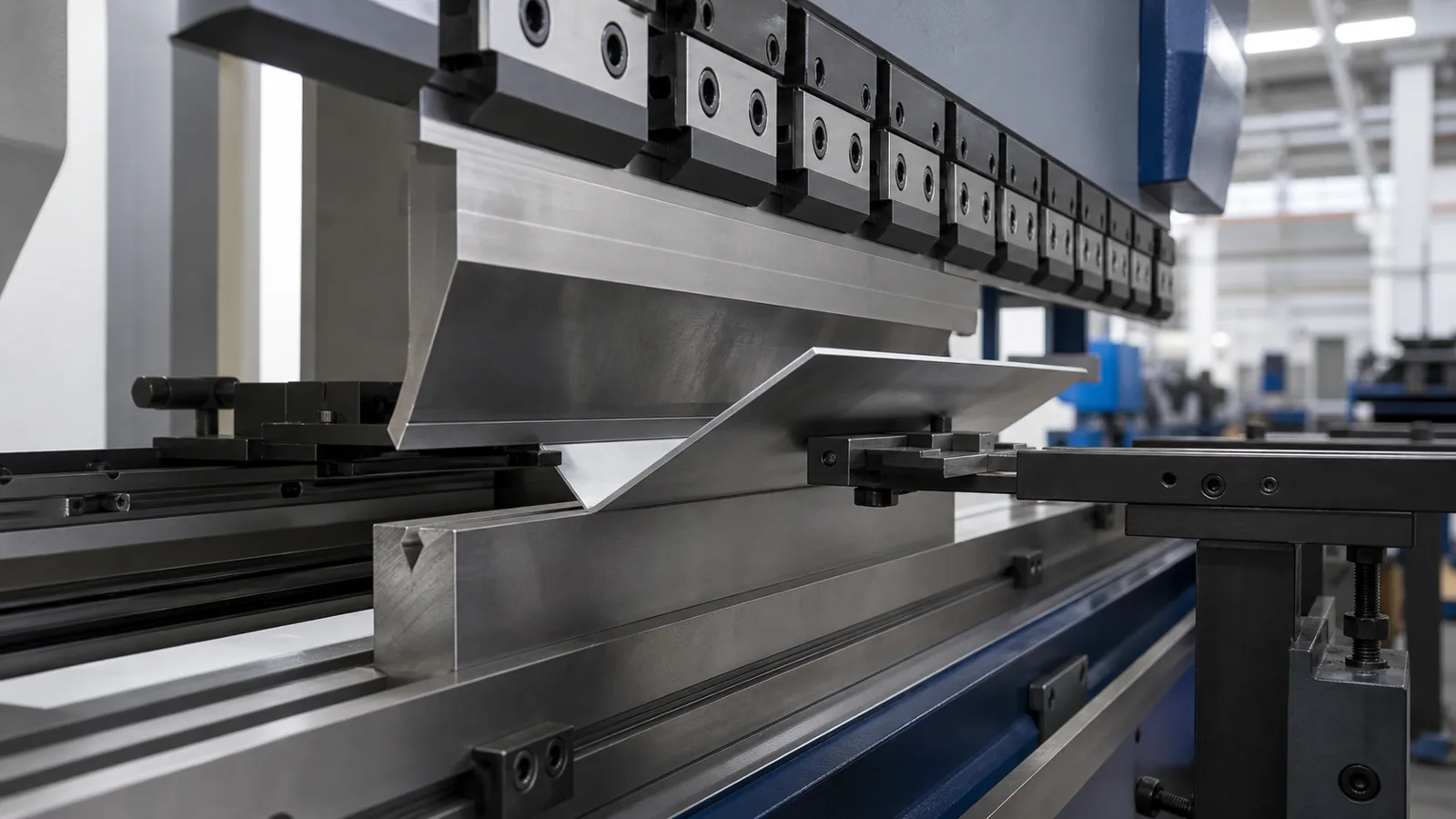
Put an ordinary steel ball bearing under the press, and it will likely emerge intact—though reshaped. Place a diamond of the same size under identical conditions, and the diamond will be destroyed. The key lies in steel’s capability to contend with the physics of Hertzian contact stress.
At the moment the press meets the steel sphere, the contact zone is vanishingly small, producing pressure levels that verge on the theoretical extreme. Yet steel has ductility—on an atomic level, its iron atoms are arranged in layers capable of "dislocation movement," meaning they can slip past one another without severing their metallic bonds.
As the press advances, the steel sphere opts to surrender its shape in order to preserve its integrity. It rapidly undergoes plastic deformation, flattening into a disc-like form. This is an astute survival strategy: by spreading out, steel transforms a perilous "point contact" into a much safer "surface contact." In mere milliseconds, its contact area increases hundreds of times, causing the pressure—Force divided by Area—to plummet.
Moreover, this transformation is essentially a conversion of mechanical force into thermal energy. Touching that newly flattened steel immediately after the press releases it (which is a very bad idea) would result in severe burns—the metal would be scorching hot. The steel survives the encounter by channeling the press’s immense mechanical work into internal heat, essentially "spiking a fever" as a self-preservation strategy. In contrast, a diamond, with its rigid and inflexible nature, refuses to give way. It maintains that minuscule point of contact, allowing pressure to accumulate in a steady, unrelenting climb until the physical limits are breached and fracture becomes inevitable.
Cleavage Planes: Why the "Hardest" Materials Can Disintegrate in an Instant
When a diamond reaches its breaking point, it doesn’t simply split into a few distinct shards—it can erupt into a dense cloud of fine white dust. This isn’t the result of a chemical change but rather a violent mechanical rupture fueled by the sudden release of elastic strain energy.
1. The primary factors contributing to this dramatic failure include:
- Near-zero plasticity: A diamond cannot flex or change shape to absorb force—it acts like an exceptionally rigid spring.
- Energy retention within atomic bonds: Under extreme hydraulic pressure, the force is stored directly in the diamond’s atomic lattice.
- Rapid release: Once the crystal’s threshold is breached, the stored energy unloads within microseconds. Breaking into large pieces isn’t sufficient to disperse the energy.
2. The sequence unfolds in this way:
- Catastrophic brittle fracture: Cracks propagate through the crystal structure faster than the speed of sound.
- Targeting {111} cleavage planes: These particular octahedral planes have the weakest atomic bonds, requiring less energy to fracture than {100} or {110} planes.
3. The characteristic “dust cloud” is a direct consequence of surface area dynamics:
- The fracture produces millions of new microscopic surfaces in mere fractions of a second.
- This huge increase in surface area is essential for absorbing and balancing the released energy.
- The diamond is reduced to ultrafine powder because generating that vast surface area is the only viable pathway to dissipate the intense stored compression energy.
In short, the diamond’s extraordinary hardness, coupled with its refusal to yield, ensures that once pushed beyond its limits it will shatter into dust—making rigidity its ultimate downfall.
The "Press Killers": When the Object Destroys the Machine
Part of the fascination with hydraulic press videos stems from their implied inevitability. We expect to see a remorseless industrial force methodically impose order on unruly materials, compressing intricate forms into simple, uniform discs. Yet the truly intriguing—and scientifically valuable—moments occur when that script flips: when the material under pressure refuses to give way, and the press itself becomes the casualty.
This phenomenon isn’t about magic or indestructibility—it’s about the physics of comparative material strength. "Destruction" here is simply defined by which element fails first. If the test object remains unscathed while the press’s platens—the steel plates applying the force—are bent, cracked, or rendered unusable, the object has, in effect, defeated the tool. Such moments reveal an inconvenient truth: industrial steel is not indomitable, but rather a material with finite yield limits that can be surpassed under certain extreme conditions.
Prince Rupert’s Drops: The glass oddity that can dent steel
Ordinarily, glass in a pressure test is expected to fail spectacularly, its brittleness a byword for fragility. But the Prince Rupert’s Drop is a rare thermal anomaly—an engineered quirk of physics—that can turn a powerful hydraulic press into an unwitting victim.
A Prince Rupert’s Drop forms when molten glass is dripped into icy water. The outer layer cools and hardens instantly, while the interior retains heat longer and contracts as it cools. This rapid differential in temperature produces a formidable “compressive shell” around the surface, locking the drop in a state of extreme internal tension. Remarkably, its surface compression can reach between 100 and 150 tons per square inch.
When the press’s platen comes down on the rounded head of a Prince Rupert’s Drop, it’s not merely confronting ordinary glass—it’s contending with a pre-stressed structure that can outmatch the strength of hardened tool steel. In many documented attempts, the drop resists fracture long enough for the steel anvil to experience plastic deformation, leaving behind a clear dent—a small but undeniable testament to the glass’s unexpected superiority.
The glass remains intact because the force needed to overcome its intense surface compression exceeds the yield strength of the steel anvil. Eventually, the drop does fail, but often not from the direct crushing force. A slight vibration from the press can fracture the fragile tail—its built-in stress release point—triggering the glass to shatter in a violent chain reaction at speeds close to 1.5 kilometers per second. Even so, the dent left in the steel serves as tangible evidence that, for a brief moment, the glass was the victor in a battle of hardness.
Embedment: When a tungsten cube causes the press to damage itself
Core principles:
- Material superiority: Tungsten’s extraordinary density and exceptional yield strength surpass both mild steel and hardened steel.
- Contact precision: The cube’s small contact point focuses pressure on the steel, leaving the tungsten unaffected.
- Effect: Rather than deforming, the cube channels force directly into the press’s working surface.
This process, referred to as embedment, operates in the following way:
- The tungsten cube acts like a precision punch.
- The press plate takes the role of a die.
- Instead of flattening the sample, the hydraulic ram drives the cube into the steel, effectively cutting a square opening.
The result is generally subtle—no spectacular breakage, but an abrupt mechanical stoppage.
- Operators must halt the process to avoid permanently bonding the cube to the press or cracking its frame.
- The tungsten emerges unscathed.
- The equipment, however, can require expensive repairs.
For forming larger or more intricate components, a press brake solutions delivers both scale and precision capabilities.
The Physics Loophole: How water can outmatch steel—until the container gives way
When facing a hydraulic press, the strongest defense isn’t necessarily a harder material than steel—it’s leveraging a state of matter that can’t truly be “crushed.” Water perfectly illustrates the physics workaround described by Pascal’s Law.
Pressing a solid leads to deformation or fracture. In contrast, pressing a liquid confined within a sealed cylinder produces neither. Under normal lab conditions, water is virtually incompressible. If you fill a robust steel cylinder with water and drive a piston down using a hydraulic ram, the water won’t shrink. Instead, it equally distributes the force throughout the container in every direction.
This situation generates hoop stress—a force acting perpendicular to the cylinder’s walls. As the hydraulic press drives the piston downward, the water exerts an equal outward force against the steel housing. Since the liquid is effectively incompressible, the pressure has nowhere to go except into expanding the vessel itself.
The consequence is that the container fails catastrophically while the liquid inside remains unaffected. The steel cylinder will swell, then tear open, sending high-speed jets of water outward. The water’s chemistry and physical state stay the same. To actually force water into a solid form—specifically Ice VII, a dense “hot ice”—you’d need pressures exceeding 25,000 atmospheres, far beyond what typical workshop hydraulic presses can produce. In the showdown between fluid mechanics and structural steel, the fluid wins simply by shifting the damage onto its container.
The Uncomfortable Truth Few Admit
The whole quest for an object that can survive the force of a hydraulic press misses the point entirely. When people applaud a tungsten cube that dents the crushing plate yet remains intact, it’s not a victory for the material—it’s evidence that the testing apparatus has reached its own breaking point.
Nothing withstands limitless force—only the limits of the machine
The question “What can never be destroyed?” seeks a kind of miracle in a world ruled by the conservation of energy. As long as the applied force is finite, survival just means the machine hasn’t yet met a tool capable of delivering greater impact.
- There’s no such thing as indestructible—only tougher than the anvil.
- In viral clips showcasing a “surviving” object, what’s actually on display is relative Yield Strength:
- If an object’s resistance exceeds the yield strength of the press’s tool steel (around 2,000 MPa), it’s the press that begins to deform.
- The object isn’t escaping harm—it’s simply the machine that gets damaged.
Core Principles
| Concept | Explanation |
|---|---|
| Yield Strength | The highest stress a material can handle before it begins to permanently deform. |
| Binding Energy | The limited amount of energy that holds atoms together via chemical bonding. |
| Conservation of Energy | No force or process can defy the laws of physics; all destruction must conform to energy limits. |
- Physics rules out the possibility of anything being infinite:
- Every material is composed of atoms bound together by a finite Binding Energy.
- Once that threshold is surpassed—whether through hydraulic force, explosives, or nuclear reactions—the material’s structure will inevitably give way.
- Asking “What can’t be destroyed?” is essentially wishing for magic in a universe governed by physical laws.
- Survival is never infinite; it simply lasts until the object encounters a force powerful enough to overcome it.
The core takeaway: Endurance comes not from rigidity, but from adaptability
The most revealing lesson from hydraulic press experiments lies not in what breaks, but in how something manages to withstand pressure. Socially, we are taught to value Hardness—the ability to resist indentation and remain perfectly rigid—as the hallmark of strength.
Yet under extreme compression, hardness becomes a weakness. Diamond, the hardest natural substance, refuses to bend or change shape. Because it cannot disperse energy through gradual deformation, stress builds until it reaches a breaking point—causing the diamond to fracture into dust. It preserves its form at the expense of its existence.
True resilience is found in Toughness.
Take the modest steel ball bearing. Faced with the same press that destroys a diamond, it doesn’t hold its shape. It flattens out, becoming an uneven disc—but it remains intact.
This ability comes from Plastic Deformation. The metal reorganizes its crystal structure to accommodate the force. In yielding, it sheds perfection yet preserves integrity. By allowing itself to be reshaped, it disperses the energy that might otherwise destroy it.
Those that survive under extreme force aren’t the ones that remain upright and unyielding—they are the ones willing to change. If you aspire to be unbreakable, don’t emulate the diamond. Be the steel puck. Enduring the weight of the world requires letting it transform you. This principle mirrors modern manufacturing, where adaptability—whether through specialized press brake solutions for shaping massive sheets or versatile equipment for complex forming—combines with a flexible mindset to achieve lasting success.
Ultimately, a material that could withstand every form of pressure without yielding wouldn’t stay in a press—it would shear through the machinery, bore into the concrete floor, and plunge all the way to Earth’s core. If today’s thoughts on strength, flexibility, and adaptation resonate with you, take a look at our comprehensive brochures to explore how industrial equipment channels and controls immense forces. And when you’re ready to find solutions designed specifically for your requirements, don’t hesitate to contact ZWCNC for knowledgeable, professional support.
Apply this guidance to your production
Share your material, thickness, part drawing, tolerance, and target output with the ZWCNC engineering team for an application-specific equipment review.
More news, insights, and updates from ZWCNC.
Hydraulic Press Machine Parts: Names and Functions
How Hydraulic Press Brakes Produce Repeatable Sheet Metal Parts

Hydraulic Press Brake Diagram: Fluid Flow, Force, and Troubleshooting

Hydraulic vs. Electro-Hydraulic Servo CNC Press Brakes: Precision, Cost, and Profitability
How to Build a Hydraulic Press Brake: Deflection, Tonnage, Alignment, and Control