
Licensed editorial adaptation
Adapted and localized by the ZWCNC Editorial Team from licensed technical material. The source record is published for traceability.
Technical boundary: confirm machine-specific capacity, configuration and safety requirements against the current quotation, manual and application review.
Step into any fabrication shop and you'll notice those bold, safety-yellow numbers painted on the steel columns: 20-Ton, 50-Ton, 100-Ton. Although these markings appear to promise a fixed amount of strength, the pressurized oil flowing through the hoses isn’t aware it’s inside a “50-ton” press—it just follows the laws of mathematics. In truth, a hydraulic press is a limitless force multiplier, constrained only by the point at which its own steel frame begins to fail.
Related: Hydraulic vs Electric Press Brake
The “100-Ton” Misconception: Why Force Isn’t an Inherent Attribute of the Machine
Observe the pressure gauge on a typical 100-ton shop press while it crushes an empty aluminum soda can—the needle barely moves. Replace the can with a solid block of cold-rolled steel, pull the lever, and the gauge suddenly climbs. The machine didn’t magically produce more power; the fluid simply responded to greater resistance. A hydraulic press doesn’t deliver a fixed output force—it operates as a responsive system that applies exactly as much pressure as the material resists with.
Why the Label “20-Ton Press” Seems Definite but Quickly Falls Apart in Practice
For application-specific equipment selection, contact ZWCNC.
As pressure builds, the heavy steel uprights of the frame start to stretch. The top beam arches upward, and the lower bed compresses downward. Long before the hydraulic fluid reaches its theoretical maximum pressure, the frame itself hits its yield limit. That “20-ton” tag isn’t a promise of what the fluid can achieve—it’s a cautionary mark indicating when the structure begins to deform under stress. So if the hydraulic fluid can exert more force than the frame can contain, what exactly are we witnessing when the press reaches its limit?
Viral Crushing Clips vs. Industrial Reality: What “Tons of Force” Really Represent
Most of us have seen online videos showing massive industrial presses slowly flattening bowling balls or stacks of coins as the pressure gauge climbs into the red. Such scenes teach us to equate tonnage with a blunt-force hammer that always operates at full strength until something gives way. In actual fabrication work, driving a machine at its maximum rated capacity is exceptionally rare—and intimidating when it happens.
When an operator bends a thick steel piece, the gauge on the console doesn’t show absolute force—it displays fluid pressure relative to the machine’s structural limit. Crushing a bowling ball might briefly push the dial to 90% before the ball shatters and resistance disappears. Industrial forming, however, demands steady, controlled pressure to shape metal without breaking it. The hydraulic fluid continually adjusts—applying 10 tons, then 15, then 20—as it matches the material’s opposing force. If most operations use only a fraction of a press’s rated capacity, why do workshops invest heavily in machines with higher tonnage ratings?
The Overlooked Factor: Why Two “20-Ton” Presses Can Feel Entirely Different in Operation
Place a low-cost imported 20-ton garage press next to a 20-ton industrial fabrication press. Both contain identical hydraulic cylinders and operate at the same rated PSI. Yet, when you attempt to push a seized bearing from a corroded axle, the garage unit strains, bends, and kicks back violently, while the industrial version performs the task with a quiet, effortless push.
The distinction lies not in the hydraulic fluid but in the steel framework surrounding it.
An industrial press relies on heavily reinforced, oversized steel channels that resist deflection under load, channeling all hydraulic energy straight into the workpiece. The inexpensive press, built from thinner steel, behaves like a large rigid spring. As pressure rises, much of the energy is lost flexing the frame instead of shifting the bearing. Buying a press means purchasing more than its cylinder and pump—you’re also paying for the structural stiffness needed to contain pressurized fluid and force it to perform work without destroying its frame. That understanding leads to the striking, almost elegant mathematics of fluid power.
Pascal’s Gamble: The Simple Math That Turns a Finger Tap Into Tons of Force
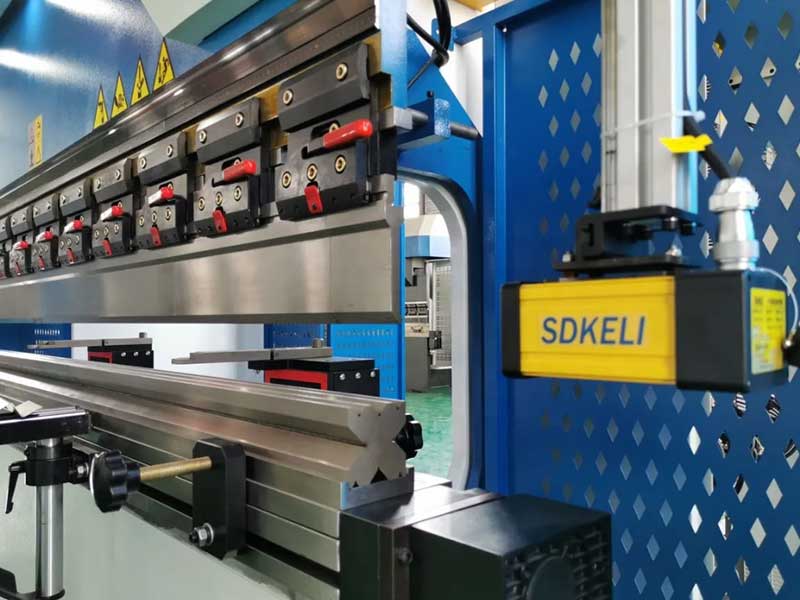
The force multiplier: how small pistons can drive much larger ones using the same fluid
A mechanic applying body weight to a steel hand lever can generate 3,000 pounds per square inch (psi) of pressure inside a hydraulic line. If that line connects to a 10-inch diameter cylinder, the manual effort converts to more than 226 tons of compressive force. No diesel engine or electrical grid is required to break solid steel in half—only contained oil and a mathematical principle discovered in the 1600s.
The key lies in a physical rule called Pascal’s principle, which holds that when a liquid is pressurized in a confined system, the pressure distributes evenly in every direction. Because hydraulic fluid is essentially incompressible—acting like a flexible, shape-shifting lever—it transmits energy flawlessly from one end of the hose to the other.
Picture a small cylinder with a piston measuring one square inch connected by a pipe to a larger cylinder with a piston of ten square inches. Pushing on the smaller piston with 100 pounds of force pressurizes the fluid to 100 psi. That same pressure acts evenly across the entire system, so the larger piston experiences 100 pounds per square inch over its ten-square-inch area, producing 1,000 pounds of lifting force. This setup multiplies your strength tenfold without any gears or motors. If pressurized oil can amplify force so efficiently, what prevents us from building pistons hundreds of times larger to crush metal with just a fingertip?
The trade-off: why achieving enormous power demands immense patience (and fluid volume)
Consider the reservoir tank attached to the side of a heavy-duty shop press. It holds multiple gallons of hydraulic oil, which may appear excessive for a ram that travels only a few inches. Yet that large vessel exists because the laws of physics impose a cost for multiplying force—and hydraulics pay that cost in volume.
There is no free power; you exchange travel distance for mechanical advantage. To raise that ten-square-inch piston just one inch, you must push ten cubic inches of fluid into its chamber. Consequently, your one-square-inch hand pump must move through ten inches of stroke to shift the heavy piston by a single inch.
Want to amplify your force by a factor of 100? To move the crushing ram one inch closer to the anvil, you would need to pump the small handle 100 inches. This is why operating a hand-pumped 50-ton press means cranking the lever dozens of times just to close the air gap above a piece of steel. The press functions like a hydraulic gearbox, geared so extremely low that a person could, in theory, out-push a locomotive—if given enough time. Since the ratio of the two pistons determines the required patience and fluid, how can you determine what your particular garage setup can actually accomplish?
Calculating your own punch: the essential “Pressure × Area” rule for DIYers
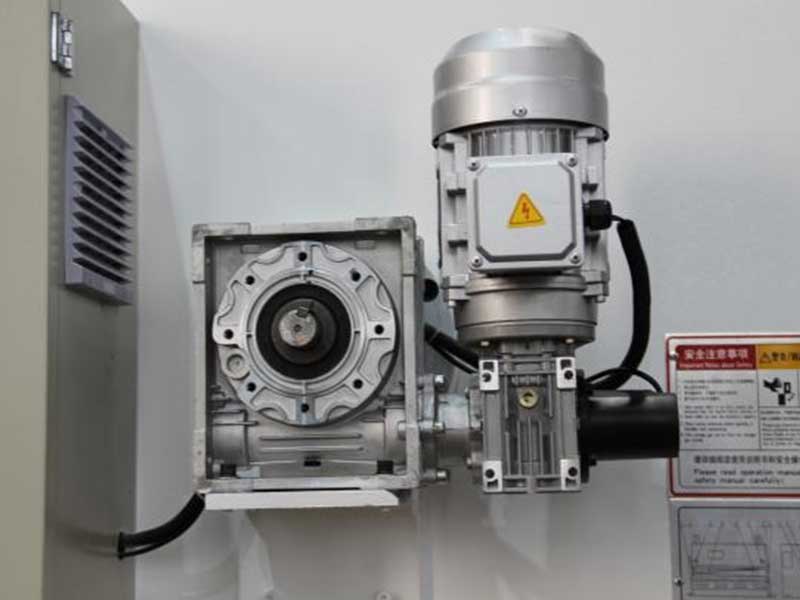
When a fabricator focuses on a resistant workpiece, the pressure gauge serves as their control panel. If the dial indicates 1,500 psi in a system rated for 3,000, they instantly know they are using just half of the machine’s potential. The gauge is not merely a safety indicator; it provides a real-time measure of the intense force occurring between the ram and the anvil.
To convert that pressure reading into actual pounds of force, you only need one equation: Force equals Pressure multiplied by Area (F = P × A).
Start by measuring the diameter of your main pressing cylinder—say it’s 4 inches across. Compute the surface area (radius squared times pi: 2 × 2 × 3.14 = 12.56 square inches). If your gauge shows 2,000 psi, multiply 2,000 by 12.56. The result is 25,120 pounds—over 12.5 tons—of force applied directly to the metal.
Keep in mind that the press behaves like a responsive throttle rather than a brute-force hammer. It doesn’t instantly deliver that full 12.5 tons as soon as you touch the lever. The fluid builds pressure only to match the resistance it encounters. A thin aluminum sheet might buckle at 500 psi, limiting the total force, while a solid block of cold-rolled steel forces the pump to work harder, driving the psi—and thus the tonnage—upward until the metal gives. The calculation shows that pushing power is simply a function of surface area and trapped pressure. But if this formula can scale endlessly, what happens when this hydraulic principle is applied to the largest industrial challenges in existence?
The Force Spectrum: Visualizing Pushing Power From Soda Cans to Aircraft Wings
To grasp the true strength of this mathematical amplifier, observe how it scales from a modest garage setup to the enormous, bedrock-anchored giants of industry.
1–20 Tons (The Garage Range): Straightening truck frames and the limits of the standard bottle jack
Position a typical 12-ton hydraulic bottle jack between the bent frame rails of a wrecked Ford F-150. The internal cylinder is only about two inches wide. As you operate the handle, the fluid doesn’t care that it’s contained in a low-cost tool—it simply follows Pascal’s law, increasing pressure until the steel frame begins to move.
At around 10 tons of force, the truck’s high-strength steel groans and returns to shape. But if a particularly stubborn crease requires 25 tons to shift, the jack’s cast-iron base might fracture, or its internal seals could rupture, spraying high-pressure fluid onto the floor. The calculations allow for more force, but the hardware reaches its limits. So what changes when the equipment is engineered for serious fabrication work?
50–200 Tons (The Fabrication Beast): Liquefying solid wood and major metal forming
Enter a custom fabrication shop and you’ll see frames constructed from enormous H‑beams welded an inch thick. These 50‑ to 200‑ton presses are the backbone of heavy industry. Set a solid pine block under a 100‑ton ram: at 10 tons, it begins to creak; at 50 tons, the wood’s cellular structure fully collapses, forcing the natural resins out like water from a sponge until what remains is a dense, plastic‑like puck.
To achieve this, the hydraulic pump drives oil into a cylinder roughly the size of a dinner plate, generating thousands of pounds per square inch. The resistance is tremendous, yet the massive steel frame absorbs the opposing force effortlessly. But what if the task is to bend cold steel plates thick enough to armor a tank?
1,000–5,000 Tons (Heavy Manufacturing): The brute strength needed to form structural steel
When a heavy‑equipment manufacturer needs to stamp the thick steel tub of an earthmover, a flat armor plate is set over a die. As the ram descends, pressure surges instantly. The steel resists, but the vast surface area of the upper cylinder multiplies the hydraulic pressure into millions of pounds of force. The plate yields, wrapping perfectly around the mold with a single, violent crunch. The press frame—often a monolithic casting weighing hundreds of thousands of pounds—visibly elongates during the stroke. If that frame strains while stamping a tractor component, imagine the scale of the machine required to forge the titanium skeleton of a fighter jet.
The Breaking Point: Why You Can’t Simply “Turn Up the Dial” for Unlimited Power
Compare a standard 12‑ton shop press with a 20‑ton model placed side by side. Their cylinder diameters differ—2.4 square inches versus 4.0 square inches—but if you attach a gauge to their hydraulic lines, both manual pumps top out at exactly 10,000 PSI. That’s not a coincidence of physics but a strict engineering limit designed into the hoses, fittings, and valves. Mathematically, increasing pressure should yield more force, but the hardware disagrees. Bypass the safety relief valve and drive the pump past the 10,000 PSI threshold, and the fluid doesn’t conjure additional strength—it finds the weakest component and violently destroys it.
The structural ceiling: when the press crushes its own frame instead of the material
The most frightening noise in a machine shop is not the loud rumble of a grinder but the sharp, high-pitched 'ping' of a Grade-8 steel bolt stretching past its elastic limit. When a cylinder presses down on a stubborn workpiece, an equal and opposite force tries to tear the top of the press frame away from its base. Steel is extraordinarily strong, but it is not perfectly rigid. Under extreme loads, it behaves like an exceptionally stiff rubber band.
As bore diameter grows in pursuit of higher tonnage, stress concentrations at welded corners and rod junctions increase exponentially. A 50,000-ton industrial forging press needs a three-story frame built from specialized composite alloys merely to prevent it from pulling itself apart during a single stroke. You cannot simply enlarge a small press by thickening the steel. Eventually, the frame’s geometry becomes the limiting factor, bending under enormous reaction forces until welds fracture and heavy steel plates become permanently deformed. The hydraulic force always triumphs over the structure restraining it.
The seal dilemma: why high-end force is ultimately limited by a piece of rubber
Even with an indestructible steel frame, the fluid must stay contained within the cylinder, a task handled by a few cents’ worth of polyurethane or nitrile rubber. At 5,000 PSI, hydraulic oil stops behaving like a lubricant and begins to act like a waterjet cutter searching for an escape route.
The steel piston moving inside the cylinder requires a microscopic clearance to slide without galling. The seal sits in a groove on that piston, expanding under pressure to close the gap. But as pressure approaches 10,000 PSI, the fluid tries to squeeze the rubber seal through that minute steel space like Play-Doh through a press. Once the rubber ruptures, high-pressure oil bypasses the piston completely, eliminating all pushing power instantly—often with a violent burst of hot fluid. The final limit of a multi-million-pound machine can depend on the shear strength of a small black O-ring.
Heat and fluid compression: the invisible thieves stealing your theoretical maximum output
Hydraulic fluid is often treated as perfectly incompressible, but at extreme pressures, that assumption breaks down. When oil is compressed to 10,000 PSI, its volume decreases by about 0.5 percent. Though small, this forces the pump to work harder and longer to supply enough fluid to sustain the desired force.
That additional molecular friction generates large amounts of heat. As the oil warms, its viscosity declines and it becomes thinner. Thinner oil escapes past high-pressure seals more easily, reducing efficiency and producing even more heat in a self-reinforcing cycle. The calculations might predict a 100-ton push, but thermal expansion and fluid compression quietly erode your peak performance. On paper, physics grants an infinite multiplier, but in practice, thermodynamics exacts a steep toll.
The DIY Dilemma: Why a Massive Press Might Be Your Worst Workshop Investment
Engineers prevent high-tonnage damage by designing machines heavier than houses and fitting them with electronic load cells that detect pressure changes in milliseconds. In large industrial forging facilities, the system is sophisticated enough to stop before it flattens a million-dollar die. In your garage with a hand-pumped bottle jack, that protection doesn’t exist. Scaling up to a huge press without industrial-grade feedback means you gain force but lose sensory awareness. You exchange the ability to feel or hear metal strain for a silent, unstoppable power that ignores whether your part is aligned or not.
The control vs. power trade-off: why adding more tons often destroys your precision
A 50‑ton press perceives a seized wheel bearing no more than an elephant senses a blade of grass beneath its foot. When a huge cylinder is used for a small task, the amount of fluid displaced per stroke is so large that a single pump on the handle can deliver several tons of force. With a smaller 10‑ton press, you can feel resistance building through the handle, maintaining a tangible connection to the workpiece. With a much larger press, the handle may stay light as air right up to the moment when the part suddenly shatters into pieces.
Precision depends on feedback. If the gauge on a 50‑ton press shows increments of 1,000 pounds, you can’t tell whether you’re applying 200 or 800 pounds of so‑called gentle force. For fine work, such as pressing a needle bearing into an aluminum housing, that lack of measurement detail can destroy the component. You think you’re merely beginning, but the hydraulic system has already decided the operation is complete—one way or another.
It’s one of the shop’s paradoxes: the greater the available power, the harder it becomes to use only a small amount of it.
"Over‑pressing" the project: the danger of ignoring a material’s yield point
Every metal piece has a "yield point"—the precise moment it ceases to behave like a spring and begins to deform permanently. A hydraulic press, lacking awareness, will continue pushing long after that point is exceeded. If you try to straighten a steel plate using 20 tons of force when only 5 are needed, you’re not correcting the bend but crushing the steel’s internal grain structure. The part might appear straight once removed, yet it’s as weak as a wet noodle because it was forced beyond its limits.
Here the endless multiplication of force becomes a drawback. Since the fluid never tires and the physics always apply, the press keeps extending the cylinder until it meets resistance equal to its full capacity. If your workpiece sits between piston and bed and isn’t rated for 50 tons, it will distort, mushroom, or fracture. At that stage, you aren’t simply using a tool—you’re performing a destructive stress test on what you’re making.
What occurs when the machine itself begins to move before the part responds?
Why frame rigidity matters far more than the cylinder’s rated capacity
A cheap, high‑tonnage press is often little more than a large cylinder fastened to a frame made of flimsy steel. As you pump, the frame stretches and flexes like an enormous bow. This stored energy is among the greatest hazards in a workshop. If the frame deflects two inches before the part finally moves, it becomes a loaded spring with 20 tons of potential energy. When the part eventually releases, all that energy is discharged instantaneously, often hurling the piece across the room or snapping bolts apart.
Industrial engineers focus not only on the cylinder but also on the H‑frame’s deflection rate. A truly professional press employs steel channels so robust that the frame deflects less than a thousandth of an inch at full load. This rigidity ensures that every bit of hydraulic pressure is directed into the work instead of bending the structure. If your homemade press frame groans and bows, the jack’s tonnage rating is meaningless—you’re not pressing the workpiece but storing up a potentially disastrous mechanical spring.
How can you tell a machine built to perform from one destined to fail? The distinction lies in demanding total frame rigidity and applying pressure‑first specification reading—a mindset shift that takes you past the gauge and toward the mastery of focused force.
Beyond the Gauge: Mastering the Art of Focused Force
To recognize a press engineered for true rigidity, ignore the huge "50 TON" marking on the crossbeam. Examine its structure instead. Look for half-inch thick, fully welded C-channel uprights, oversized hardened steel pins, and a bed that takes two people to move. That heavy steel isn’t just for show—it defines the absolute upper limit of the mechanical multiplier. It’s the cage that stops the machine from destroying itself. Once you’ve secured a frame that refuses to flex, stop thinking of the press as a dumb hammer swinging at full weight every time. A press doesn’t unleash its rated tonnage the instant you touch the handle. Place a 10-inch piston running at 3,000 PSI over a thin aluminum sheet and, in theory, you have more than 226 tons of potential force available. But watch the gauge as you bend that sheet—it won’t shoot to maximum pressure; it might hover near just 10 tons. Why does such a massive machine act with such delicacy?
The point of contact: how where it pushes determines how hard it pushes
Hydraulic fluid is a remarkably efficient worker—it exerts only the effort required by the task. The pressure inside the cylinder automatically adjusts to the resistance of the material. If the metal yields under 1,000 pounds of pressure, the fluid stabilizes there, completing the job effortlessly. It will only climb toward its full potential when the object refuses to give way. Yet the real intensity of that power depends completely on the tooling at the contact point.
Distribute 20 tons of force through a flat twelve-inch steel plate, and you produce a smooth, even compression. Channel that same 20 tons through a hardened steel punch the size of a dime, and it becomes a concentrated, armor-penetrating blow cutting straight through the metal’s grain. The fluid doesn’t care about tool shape—it simply transmits the calculated force to the piston, leaving it to you to decide whether to spread that energy or concentrate it into a pinpoint of destruction. If tooling determines the intensity at contact, how can we accurately assess the power source behind it?
Reading press specifications differently: focusing on pressure ratings first, then piston size
Ignore the marketing claims and rely on calculation. The rated tonnage is merely a derived figure based on two physical variables: the pump’s maximum pressure and the piston’s surface area. When assessing a new press for the shop, I go straight to the hydraulic unit’s PSI limit and the main cylinder diameter. A 3,000 PSI pump driving a large piston produces a vastly different hydraulic lever than a 10,000 PSI pump acting on a smaller one, even if they advertise the same total tonnage.
The high-pressure, narrow-piston design operates faster but demands exceptionally strong seals to contain that aggressive fluid. The lower-pressure, wide-piston setup moves slower and occupies more space, yet it places far less strain on its plumbing. Your pressure gauge is therefore essential—it’s not just a display but a live indicator of your current force output. If the pump maxes at 3,000 PSI and the gauge shows 1,500, you are generating exactly 50 percent of the rated tonnage. What changes when you understand that the gauge is a throttle rather than a warning light?
The mental shift: viewing force not as a fixed machine limit but as a customizable parameter
This is the moment of realization. A hydraulic press does not possess a permanently fixed strength. The tonnage figure printed on its side isn’t the cap on what the hydraulic fluid can deliver—it’s a structural failure warning indicating when the steel frame will tear apart. Everything beneath that destructive threshold is a continuously adjustable multiplier, and you are the one who controls that calculation.
You are no longer limited to accepting a preset amount of power. Instead, you control the three factors that define that force: the pump PSI determining raw pressure, the piston area that amplifies it, and the tooling geometry that channels it into either a gentle press or a penetrating blow. You’re not wielding a fixed 50-ton hammer anymore; you’ve mastered the hydraulic lever, exchanging a few inches of fluid for any crushing force you choose to create.
Apply this guidance to your production
Share your material, thickness, part drawing, tolerance, and target output with the ZWCNC engineering team for an application-specific equipment review.
More news, insights, and updates from ZWCNC.

Hydraulic Press Brake Diagram: Fluid Flow, Force, and Troubleshooting
Replacing a Hydraulic Press Brake Motor Without Damaging the Pump
The Press Brake Technology Trap: Why Defaulting to Hydraulic Is Costing Your Shop Precision and Profit
The Ultimate Guide to Hydraulic Presses: Why Tonnage Is a Trap
Press Brake Bending Load Calculation: Tonnage and Capacity Guide