Licensed editorial adaptation
Adapted and localized by the ZWCNC Editorial Team from licensed technical material. The source record is published for traceability.
Technical boundary: confirm machine-specific capacity, configuration and safety requirements against the current quotation, manual and application review.
A fiber laser finishes a steel-bracket demonstration first. The cut is fast, the edge is clean, and the purchase seems obvious.
Then the buyer returns to a production queue filled with acrylic signs, plywood fixtures, paper prototypes, and only a few metal jobs. The demonstration proved which machine was faster on one operation. It did not prove which machine would earn more across the shop's real workload.
The right laser is not necessarily the newest, most powerful, or fastest machine. It is the one that safely processes the materials customers repeatedly buy, delivers the required quality, removes a real production constraint, and earns enough from productive hours to repay its total cost.
This guide compares fiber and CO2 laser cutting through those practical business questions.
Related: How Does a Laser Cutting Machine Work
The “Fiber First” Assumption Can Create an Expensive Mismatch
“Advanced” is a poor purchasing category. A laser earns its place by converting incoming work into saleable parts, not by winning a specification comparison.
When a machine's strengths match the jobs that arrive every week, higher speed can shorten lead times, increase capacity, and reduce cost per finished part. When the workload does not match, the same speed has little financial value.
This is the difference between capability and utilization. Capability asks whether a machine can perform a job. Utilization asks whether enough suitable work will arrive to keep that capability productive.
A mixed-material shop may need metal-cutting capacity several times a month without having enough sustained metal volume to justify a specialized production asset. If metal orders already create backlogs, overtime, rejected quotes, or expensive outsourcing, fiber may remove a genuine bottleneck. If those orders are sporadic, the machine may wait for work while recurring non-metal jobs remain unsupported.
Fiber Is a Metal-Cutting Specialist, Not a Universal Upgrade
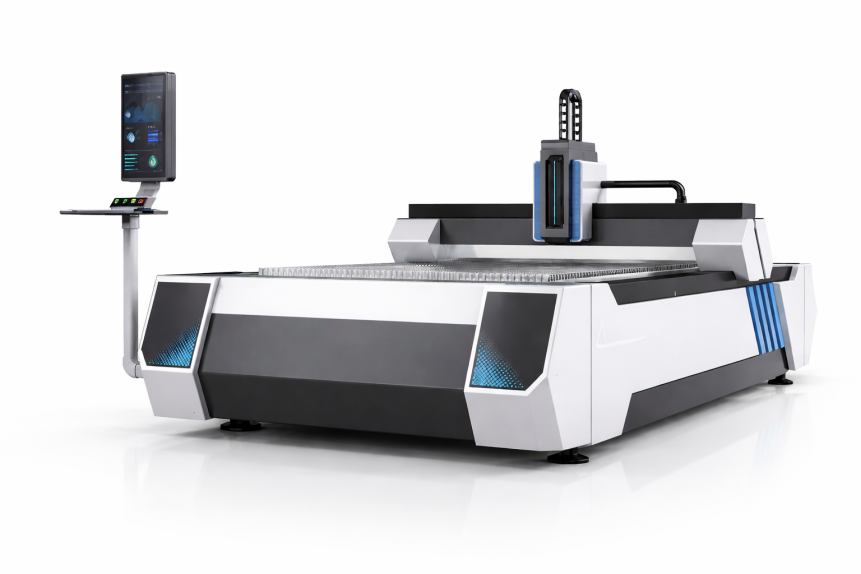
For repeat sheet-metal production, fiber's appeal is concrete. Faster processing can produce more parts per shift, spread ownership and labor costs over more units, and improve delivery capacity.
Change the material, however, and the comparison changes. Acrylic, wood, paper, textiles, leather, cork, and many other non-metal jobs fall within the practical operating range of CO2 lasers. A fiber purchase does not accelerate these jobs; it removes them from the machine's normal workload.
The shop must then retain another machine, outsource the displaced work, decline it, or persuade customers to accept different materials. Each option adds cost, delay, or revenue risk. Fiber may still be extremely efficient at metal cutting, but efficiency across a narrower workload is not a universal upgrade.
Even “faster” requires context. Faster on which material and thickness? With what edge requirement? Through what complete production cycle? Setup, piercing, handling, unloading, finishing, inspection, rejects, and rework all affect how many acceptable parts leave the shop.
Start With Quote and Order History
Before comparing machines, group completed and lost work by material, thickness, batch size, repeat frequency, revenue, gross margin, and required turnaround time.
Do not treat every inquiry equally. A one-time request for thousands of metal parts is not equivalent to a smaller order that returns every month. An unconverted quote should not carry the same weight as work that customers consistently approve. Repeat demand and actual margin reveal the production base; speculative opportunities describe only a possible future.
Next, identify the constraint behind delayed or lost revenue. If profitable metal orders regularly exceed available capacity, fiber speed has work waiting for it. If recurring non-metal jobs support important customers, replacing that capability with a metal specialist creates a new bottleneck. If neither category can keep a machine productive, a primary laser plus outsourcing may preserve flexibility with less idle capital.
Vendor demonstrations should follow this analysis. Give vendors actual files and representative materials, then compare complete cycle time, edge quality, secondary work, and accepted output. A demonstration built around the vendor's easiest sample answers the wrong question.
Wavelength Determines Material Compatibility
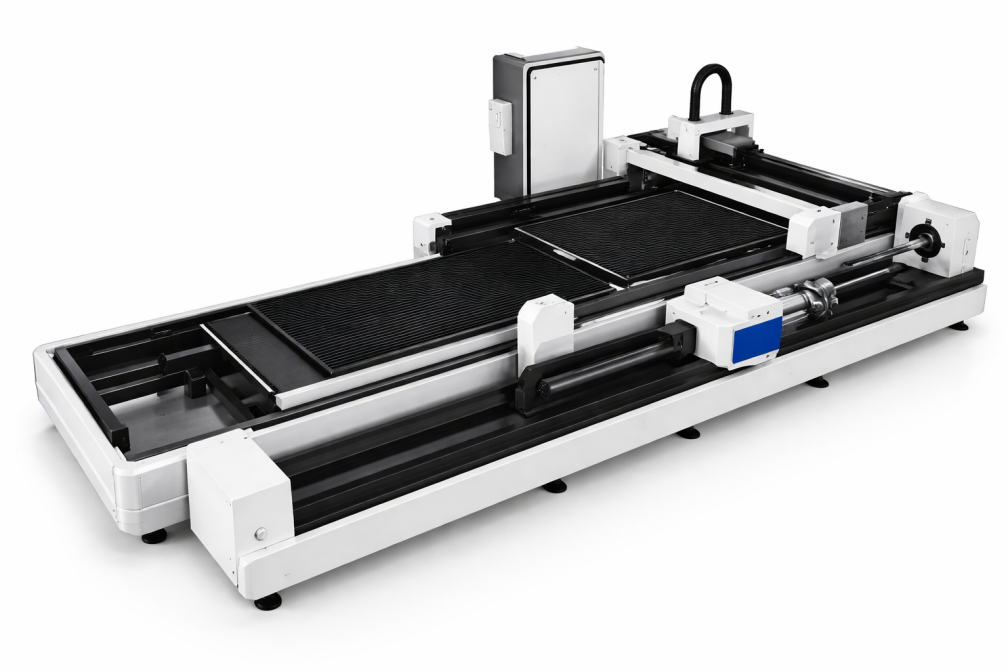
Laser sources are not interchangeable heat generators. Their wavelengths interact differently with different materials.
A typical fiber laser operates near 1.064 micrometers. Many metals absorb this shorter wavelength effectively, allowing the beam to concentrate energy into a small area and produce a narrow, fast-moving cut.
CO2 lasers operate near 10.6 micrometers. Organic and many non-metallic materials absorb this longer wavelength more effectively. That is why clear acrylic, wood, cloth, leather, paper, and many coated products are familiar CO2 applications.
If a material reflects or transmits most of the light, increasing wattage does not eliminate the underlying mismatch. More energy may leave the source, but too little enters the workpiece in the correct place to create a controlled, commercial process.
Equal Wattage Does Not Mean Equal Capability
Imagine a fiber and a CO2 machine with the same rated wattage. Direct both beams at metal, then at clear acrylic. The source ratings remain equal, but the useful energy absorbed by each material changes sharply.
Power extends performance only within a compatible material range. When absorption is already effective, more power may increase speed or thickness capacity. When absorption is poor, more power may increase reflection, unwanted heating, equipment stress, or inconsistency without creating a profitable cut.
Buyers are therefore not purchasing watts in isolation. They are purchasing absorbed energy, cut quality, and repeatable output on specified materials and thicknesses.
Practical Limits: Reflective Metals, Acrylic, Glass, and Coatings
Reflective metals show why nominal power is not enough. Alloy, finish, oxidation, coating, thickness, and machine design influence how much energy enters the cut and how much returns toward the system. “Fiber cuts reflective metal” is incomplete. The real question is whether the proposed machine can process the shop's exact grade and finish repeatedly without unstable piercing, damaged optics, poor edges, or excessive scrap.
Clear acrylic presents the opposite problem for fiber: transmission. Too much of the shorter-wavelength light may pass through rather than being absorbed along a controlled cutting path. CO2 light couples much more effectively with clear acrylic, making it a routine cutting application rather than an edge case.
Glass demonstrates that absorption alone does not guarantee practical through-cutting. A CO2 laser can engrave or alter the surface, but conventional cutting is generally impractical because glass responds poorly to highly localized heating. Treat glass as engrave-only unless a specialized process has been demonstrated on the exact product.
Coatings add another variable. A laser may remove paint, anodizing, or a surface layer while leaving the substrate mostly unchanged. That may be ideal for marking, but it does not prove that the underlying material can be cut. A successful test on one coated sample establishes a process for that sample, not all coated products.
Materials that look similar can behave very differently. Clear acrylic and glass are an obvious example. Two plastics may look identical while producing different edges or fumes. Two metal sheets with different finishes may require different piercing conditions. Material identification must come before machine selection.
“Possible” Is Not the Same as Safe, Repeatable, and Profitable
A laser may mark, melt, or penetrate a material that should never become a production job. PVC and vinyl can release hazardous decomposition products and damage equipment. Fiberglass and epoxy boards also present toxic-processing concerns. Unknown composites deserve the same caution.
Before testing, identify the substrate, adhesives, coatings, fillers, and fire retardants through supplier documentation and the safety data sheet. If the composition remains uncertain, reject the material or send it to a qualified specialist. Ventilation cannot turn an unidentified chemical reaction into a controlled process.
Every material should pass three gates:
- Safety: Its composition is known, the machine manufacturer permits the application, and extraction and fire controls address the expected fumes and debris.
- Repeatability: Real production stock can be processed across normal thickness, finish, and batch variations without unstable cuts, excessive scrap, or machine damage.
- Profitability: Speed remains worthwhile after setup, gas, consumables, cleaning, extraction, finishing, rejects, and operator attention are included.
Failure at the safety gate means rejection or specialist outsourcing. Failure at the repeatability gate means more process development or outsourcing, not optimistic quoting. Failure at the profitability gate means the machine is technically capable but commercially wrong for the job.
Fiber's Speed Matters Only When It Improves Finished-Part Throughput
A laser does not sell cutting speed. It sells acceptable finished parts.
Production time includes loading, locating, piercing, cutting, unloading, sorting, deburring, inspection, and material or program changes. Fiber is the stronger choice when its fast metal cutting remains fast after these steps and produces more completed parts per shift.
Thin-to-Medium Metal: Fiber's Clearest Advantage
For application-specific equipment selection, contact ZWCNC.
Repeat work strengthens this advantage. Operators develop stable settings, programs and inspection routines become reusable, and material handling can be organized around predictable batches.
But a quick cut is not automatically a quick order. A nest with many small parts may require frequent pierces, repositioning, unloading, and sorting. If parts need little secondary work and the bed stays supplied, fiber's cutting advantage has a direct path to output. If every part needs extensive deburring or correction, the laser may finish long before the order is ready to ship.
Thick Plate: Test the Complete Process
Thick plate changes the question from “Which machine cuts faster?” to “What happens after the cut?”
Fiber's speed advantage can narrow as thickness rises, while piercing time, gas use, handling, and edge condition become more important. Heavy stock may require cranes, fixtures, careful alignment, and slow unloading. Faster head movement cannot remove these constraints.
Edge quality may also reverse an apparent advantage. A part that separates successfully may still have taper, dross, roughness, or an edge that needs grinding. If the part goes directly to welding and the edge is acceptable, that work may be minor. If the edge is cosmetic, tightly fitted, or near its finished condition, downstream labor can change the economics.
High-power fiber is a serious option for thick steel and may still deliver greater overall output. It wins when the shop values shorter total cycles, accepts the resulting edge, has enough compatible demand, and preserves the advantage through finishing and handling. CO2 can remain competitive in some heavy-plate applications, particularly where edge quality matters.
There is no universal thickness boundary. Alloy, power, assist gas, piercing strategy, geometry, and quality requirements all move the result. A clean through-cut proves capability. It does not prove repeatable piercing, acceptable edges, manageable gas cost, or profitable finished-part time.
Measure Accepted Parts per Shift
The most useful production measure is simple:
Finished-part throughput = accepted parts completed / total production time
Total time must include all required work before and after beam-on cutting. Rejects and rework belong in the calculation. A part that exits the machine quickly but fails inspection has consumed time without adding output.
Geometry matters as much as thickness. A nest of small, intricate parts behaves differently from a few large profiles with long continuous cuts. Frequent internal features, lead-ins, and pierces can absorb a large portion of the cycle.
Changeovers also matter. Moving between alloys, thicknesses, finishes, or quality requirements may require new programs, nozzles, focus settings, assist gas, staging, and inspection routines. A specialized fiber workflow can be extremely efficient when the next job resembles the previous one. Its advantage is less decisive when every order requires a different process setup.
Generic cutting charts are useful for screening. They cannot predict performance on the shop's grade, surface finish, tolerance, geometry, batch size, and deadline. Production trials should use real stock and representative parts, not straight-line samples designed to isolate peak cutting motion.
Total Cost Depends on Utilization
Published comparisons often show fiber cutting suitable jobs several times faster than CO2 while high-end fiber systems can cost several times more. Both statements can be true. The speed creates value only when qualifying work reaches the bed; the capital cost continues every month.
The useful financial calculation is:
Incremental annual return = added contribution from parts actually sold + avoidable production costs − added ownership costs − lost-capability costs
Contribution means selling price after costs that rise with the job, such as material, gas, direct labor, and outside processing. Revenue alone overstates value because every additional part also carries costs.
Compare Installed Investment, Not the Machine Quote
Include delivery, rigging, installation, training, extraction, cooling, electrical service, gas supply, software, material handling, automation, and facility changes. Compare equivalent production packages; a bare machine and a turnkey cell are not competing prices.
Separate the cash and return views. The cash view asks whether down payments and financing fit the order cycle. The return view asks whether the additional installed capital earns an acceptable return over the ownership period. Avoid counting loan principal, interest, and depreciation twice.
Then calculate how heavily fixed cost falls on real work:
Fixed ownership cost per productive hour = annual ownership cost / productive machine hours
Use hours occupied by accepted production, including necessary setup and changeovers. Do not divide by all calendar hours the machine could theoretically run. Available hours do not pay invoices; profitable completed work does.
Fiber speed can create value in two ways. It can complete existing demand with fewer hours, or it can create capacity for additional orders. Count the second benefit only if there is a backlog, credible sales demand, or another valuable use for the released labor and floor time.
If cutting is not the constrained step, higher laser speed may simply move the queue to unloading, deburring, inspection, bending, welding, or sales.
Electricity Is Only One Operating Cost
Fiber typically converts a larger share of incoming electricity into useful laser output than CO2. That can reduce electrical demand, but it does not predict the cost of a finished part.
Assist gas can dominate certain jobs. Nitrogen consumption on thick stainless, for example, may offset or reverse the hourly advantage suggested by electrical efficiency. Higher cutting speed may still reduce gas cost per accepted batch, so compare complete jobs rather than isolated hourly rates.
For representative parts, record machine time, measured electrical demand, gas type and flow, local delivered gas cost, nozzles and protective optics, operator labor, secondary finishing, maintenance allocation, scrap, restarts, and expected downtime.
Consumables should be measured by replacement frequency as well as purchase price. A low-cost item replaced frequently may matter more than an expensive component with a long service life. Ask vendors for a complete consumables list, maintenance intervals, utility requirements, and the gas settings used during the trial.
Downtime creates both visible and indirect costs. The visible cost is service, replacement parts, and technician labor. The larger cost may be lost contribution, overtime, expedited outsourcing, or a missed delivery. Use a probability-weighted estimate rather than assuming either perfect availability or constant failure.
Low Volume Can Defeat Lower Hourly Cost
Consider a simplified example. If the installed and financed fiber premium adds $60,000 per year and the verified job mix saves $16 for each productive machine hour, the shop needs 3,750 productive hours merely to offset the premium. At 1,000 productive hours, the operating savings are $16,000, leaving $44,000 of the annual premium uncovered.
The numbers will vary, but the mechanism does not. Variable savings largely disappear when the machine is idle; financing and other fixed ownership costs continue.
Three tests expose inflated payback claims:
- Demand: Can the shop sell additional parts, or will released capacity remain empty?
- Constraint: Is laser cutting limiting output, or will another process cap shipments?
- Cash: Will contribution arrive consistently enough to cover financing during weak as well as strong months?
A saved hour is not automatically revenue. It may reduce labor, overtime, or operating expense, but it creates sales only when another paying job fills it.
Include the Cost of Lost Capability
A machine may be economical on the jobs it accepts while making the business more expensive by excluding the rest. Fiber's model must include recurring non-metal work that it would force outside. CO2's model must include metal orders that slower throughput or constrained capacity would delay, outsource, or decline.
For declined work, count lost contribution rather than lost revenue. For outsourced work, include supplier charges, freight, inspection, coordination, minimum-order effects, and delay risk, then subtract the in-house variable costs avoided.
Outsourcing is not automatically a loss. It becomes uneconomical when recurring volume, margin, and schedule dependence are sufficient to support dedicated in-house equipment.
Mixed-Material Shops Must Choose Between Range and Specialization
A faster metal cutter can make the whole shop slower if recurring non-metal jobs must enter a second queue with supplier scheduling, freight, inspection, and delivery risk.
Choose the primary laser around the work that must be processed reliably and repeatedly. Let exceptions remain exceptions until their volume proves otherwise.
Metal-Dominant Production
Metal share is a first filter, not a verdict. The best case for fiber combines compatible metals, a favorable thickness range, repeat batches, sufficient annual volume, manageable gas use, acceptable edge requirements, and downstream capacity that can absorb greater output.
A shop dominated by thin brackets or enclosures presents a different case from one whose revenue comes mainly from heavy plate. Similarly, “mostly metal” may still be insufficient if the order book is too small, changeovers are constant, or cutting is not the true bottleneck.
Keeping CO2 merely because it can process more materials is weak logic when those materials rarely generate profit. But specialization must be paid for by demand, not admired on the specification sheet.
Recurring Non-Metal Work
CO2 is the lower-risk primary machine when wood, acrylic, textiles, paper, leather, or other compatible non-metals are part of the shop's regular delivery promise.
This does not mean CO2 is cheaper on every job. Fiber usually retains advantages in suitable metal speed, electrical efficiency, and maintenance. The question is whether those advantages outweigh the burden of sending frequent non-metal work elsewhere.
Cadence matters. If non-metal jobs arrive predictably, require rapid revisions, or share deadlines with assemblies, outsourcing removes control precisely where the shop needs it. If they are rare and tolerate outside lead times, buying broad in-house capability may be unnecessary.
The 60/40 Problem
A 60/40 workload does not create an automatic compromise. Revenue share says little about cutting hours, frequency, margins, or deadline pressure. The smaller category may occupy more machine time, while the larger category may depend on short lead times.
A versatile CO2 machine can process both streams, but both must wait in the same queue. Growing metal demand can turn that shared queue into a bottleneck. Choosing fiber removes the metal constraint but creates a firm boundary around non-metal work.
The goal is not one machine that can touch the most jobs. It is a workflow that completes the full order book with the least total delay and cost.
When Outsourcing or Two Machines Makes Sense
A primary laser plus outsourcing is often the best answer when one workload is dependable and the exceptions remain irregular. A metal-heavy shop may run fiber and outsource limited non-metal work. A non-metal-focused shop may run CO2 and outsource thin-sheet metal batches that would otherwise consume disproportionate time.
Compare annual outside cost—including freight, inspection, coordination, rejection risk, and lead time—with full ownership cost, including financing, space, labor, utilities, service, and idle time. Bring the work inside when recurring margin and schedule sensitivity can support the equipment through strong and weak months.
Separate fiber and CO2 machines become rational when both streams have enough recurring profitable work, shared scheduling is causing measurable delays or lost contribution, and the shop has the staff, utilities, space, maintenance capacity, and downstream processes to use both systems. Two machines do not cure weak demand; they can simply divide it between two sets of fixed costs.
A Four-Part Decision Rule
A defensible purchase passes four gates in order: material compatibility, demonstrated quality, finished-part throughput, and complete ownership cost. Failure at an early gate eliminates the machine. A later advantage cannot rescue it.
1. Material: Protect Revenue-Critical Work
Build a workload table containing material and grade, thickness, annual quantity, batch size, frequency, quality requirement, contribution margin, and current outsourcing burden.
Use it as a pass-or-fail screen. Require written confirmation of compatibility, extraction requirements, assist gas, and operating limits. If a machine excludes a revenue-critical material, reject it or establish a dependable outsourced route. Outsourcing is valid for limited, schedule-tolerant exceptions—not urgent work that repeatedly affects customer delivery.
2. Thickness and Quality: Test Real Parts
Give each vendor the same packet: a high-volume part, a quality-critical part, a difficult geometry, a representative nest, and a part near the upper end of the expected thickness range.
Define acceptance criteria before the test. Include dimensional tolerance, taper, heat effects, edge condition, permitted dross, and whether grinding, deburring, cleaning, or inspection is allowed.
Measure from the beginning of setup to sorted, accepted parts. Record programming, loading, piercing, cutting, gas consumption, consumables, operator attention, sheet yield, rejected parts, and finishing time. Use the same material grade, thickness, nesting assumptions, and quality target for every vendor.
If a demonstration reports only travel speed or beam-on time, it has proved machine motion, not production economics.
3. Throughput: Calculate Realistic Utilization
Convert each successful trial into annual required machine hours:
Required productive hours = annual part quantity / demonstrated accepted parts per productive hour
Allocate setup using normal batch sizes. Then estimate available productive hours after maintenance, cleaning, operator gaps, material delays, changeovers not already counted, and expected downtime.
Required utilization = required productive hours / available productive hours
Low utilization weakens the return because idle capacity creates neither savings nor revenue. Utilization near the practical limit creates queues and late deliveries. A good case needs enough demand to monetize the machine while preserving capacity for normal variation and urgent work.
Also evaluate the lowest sustainable rate across cutting, unloading, sorting, deburring, inspection, and downstream operations. Extra blanks are work-in-process, not customer throughput.
Compare each option with the current process and the next-best alternative:
Annual net benefit = avoided outside cost + contribution from credible additional shipments − added operating and ownership costs
Simple payback = installed investment / annual net benefit
Run at least a base-demand and a weaker-demand case. A purchase that works only when every forecast is achieved is a bet on utilization.
4. Budget: Build Three Cost Ledgers
The installation ledger should include machine, freight, rigging, extraction, gas infrastructure, electrical upgrades, compressed air, cooling, software, safety provisions, training, and any handling or downstream equipment required to turn cutting capacity into finished output.
The operating ledger should separate fixed costs—financing, service agreements, software, space, and permanent staffing—from variable costs such as electricity, gas, nozzles, optics, filters, scrap, and finishing.
The interruption ledger should include credible downtime costs: idle labor, emergency outsourcing, expedited freight, restart scrap, and lost contribution when actual demand would have used the unavailable capacity.
Finally, calculate:
Cost per accepted part = annual fixed ownership cost / accepted annual output + variable production cost per accepted part
This exposes an underused efficient machine for what it is: a low-energy asset carrying high fixed cost across too few shipments.
Final Recommendation
Compare four workflows: fiber, CO2, a primary machine plus outsourcing, and separate fiber and CO2 systems.
Choose fiber when the essential workload is suitable metal, production trials prove a meaningful accepted-output advantage, recurring demand can repay the specialization, and downstream processes can absorb the output.
Choose CO2 when recurring non-metal work must remain under direct control or when a genuinely mixed workload makes range more valuable than maximum metal speed. Its metal performance must still satisfy delivery and quality requirements.
Choose a primary machine plus outsourcing when one material stream is dependable and the exceptions are too small, irregular, or schedule-tolerant to support dedicated equipment.
Choose separate machines when both metal and non-metal streams can independently justify their equipment and the existing shared workflow is already causing measurable delay, outsourcing cost, or lost contribution.
Before issuing a purchase order, require a written test record covering accepted output, batch assumptions, gas consumption, operator time, consumables, quality results, rejects, installation requirements, and service expectations. Make final acceptance contingent on reproducing the agreed result under production conditions.
The decision is not simply between two laser sources. It is a decision about which workload the shop should own, which exceptions it should rent capacity for, and which productive hours are dependable enough to repay control.
Apply this guidance to your production
Share your material, thickness, part drawing, tolerance, and target output with the ZWCNC engineering team for an application-specific equipment review.
More news, insights, and updates from ZWCNC.
Fiber Laser Cutting for Kitchen Equipment: Parts, Quality, and Cost
Fiber Laser Cutting Automotive Parts: When It Beats Other Methods

Types of Fiber Laser Cutting Machines: Selection Guide
Fiber Laser Cutting Machine Maintenance Checklist and Schedule

Fiber Laser Cutting Machine Maintenance, Safety, and Troubleshooting