
Licensed editorial adaptation
Adapted and localized by the ZWCNC Editorial Team from licensed technical material. The source record is published for traceability.
Technical boundary: confirm machine-specific capacity, configuration and safety requirements against the current quotation, manual and application review.
On too many shop floors, a million-dollar press brake sits idle while an operator searches through dark cabinets for the right punch. The machine isn’t down for maintenance—it’s waiting on tooling. Every minute spent digging through disorganized storage is lost production time that directly reduces throughput and inflates cost per part.
Idle time is not an unavoidable nuisance; it is a storage problem. High-capacity roll-out shelving turns storage into a staging system, speeding changeovers and giving operators clear access to every die set for faster, consistent setups daily.
Related: Press Brake Sheet Followers
Related: How to Set Up Press Brake Tooling
The "Static Rack" Tax: Why Your Current Storage is Leaking Machine Uptime
The Hidden Cost of “Search-and-Rescue” Tool Retrieval
Watch an operator retrieve a 30mm V-die from a fixed shelf. Because the rack doesn’t move, he reaches into a dark, cramped space and shifts two or three heavy segments just to access the one he needs. When tooling is stored three-deep, this “shuffle” becomes part of every setup, quietly adding five to fifteen minutes of non-value-added labor to each changeover.
That time compounds quickly. If a press brake runs six changeovers per day and each one absorbs an extra 20 minutes due to inefficient storage, that’s two lost machine hours daily. Over a month, you’ve effectively erased a full production week—not because of demand, but because tools are hard to reach.
The cost isn’t only measured in minutes. Each time a precision-ground punch is dragged across a steel shelf or bumped against another die, you risk nicks and burrs that later show up as marks on finished parts. Shops obsess over axis accuracy and backgauge repeatability, yet store the very instruments of precision in conditions that invite damage. If an operator must move Tool A to reach Tool B, you are paying in both time and accelerated wear.
Heavy Dies, Idle Machines
Static racks also turn heavy tooling into a bottleneck. A 200-pound die buried at the back of a shelf often becomes a “two-person job.” The operator either waits for help—doubling labor during setup—or attempts to wrestle it alone, risking injury or a dropped tool. Meanwhile, the press brake sits idle.
This is not a people problem; it is a physics problem. When storage forces lifting from awkward positions with limited access, every heavy tool becomes a delay point. Multiply that across shifts and machines, and you create a workflow where operators spend more time handling tooling than forming parts.
The Real Operational Impact
Static storage looks “paid for,” but it quietly caps throughput. Added changeover time reduces daily stroke count. Extra handling increases tool wear. Waiting for assistance stalls machines. Minor inefficiencies accumulate into systemic downtime.
If improving changeover is the fastest path to higher output, then inefficient racks are not neutral—they are an active constraint on production capacity.
The 100% Extension Mandate: Why Partial Access Is a Dangerous Compromise
Eliminating Blind Picks with Full-Shelf Visibility
When a heavy die sits at the back of a static rack, retrieval becomes a blind operation. The operator cannot clearly see hook points or edges, so positioning equipment requires guesswork and slow corrective movements. That uncertainty leads to chipped tooling, damaged racks, and unnecessary downtime. A routine changeover becomes a cautious rigging exercise instead of a controlled, repeatable process.
Full visibility is a prerequisite for speed and safety. If the entire shelf cannot be seen at a glance, inventory control degrades and handling risk rises. Supervisors cannot quickly verify part numbers or condition, increasing the likelihood of using incorrect or worn tooling. With 100% extension, the back row moves fully into the aisle. A crane or forklift can approach vertically and lift cleanly, eliminating lateral dragging that damages precision-ground surfaces. Shops invest heavily in press brake accuracy; storage systems should not reintroduce error during retrieval.
The question is whether the mechanism can move heavy loads reliably under daily production demands.
Ball Bearings vs. Rollers: Moving 4,000 Pounds Without Strain
A shelf carrying several thousand pounds resists motion due to friction. Basic roller slides concentrate weight on a few contact points, which can bind under load. The result is a shelf that sticks or requires multiple operators to move. Inconsistent motion makes fine positioning difficult, increasing the chance of sudden shifts. When access becomes difficult, operators revert to reaching into the rack—recreating the hazards roll-out shelving was meant to solve.
High-capacity systems use heavy-duty ball-bearing assemblies that distribute weight across many contact points, reducing friction and wear. Properly engineered, a single operator can move two tons of tooling smoothly and predictably. In higher-density configurations, pneumatic assist systems can further reduce effort, ensuring the safest method of access is also the easiest.
Effortless motion makes full-depth storage practical in real production environments.
Higher Density Without Sacrificing Accessibility
Without full extension, operators avoid storing tools in the back of deep shelves, wasting floor space. With 100% extension, the entire shelf depth—often up to 48 inches—remains accessible.
Because tools are retrieved by pulling the shelf out rather than reaching over items, vertical clearances can be tighter. There is no need to leave extra space above each tool. This enables higher storage density within the same footprint while maintaining safe, direct access.
The Hidden Cost of 75% Extension
A 75% extension shelf leaves the back portion trapped beneath the rack structure. The heaviest tools often occupy that zone, forcing operators to reach and maneuver around obstructions. Safety risks remain, and productivity gains shrink.
In high-mix environments, the rear space becomes neglected storage for rarely used dies, reducing inspection and increasing deterioration. Partial-extension systems may also lack interlocks that prevent multiple shelves from being opened simultaneously, increasing tip-over risk.
Paying for most of a roll-out system while preserving the core access problem is an expensive compromise—measured in time, safety, throughput, and long-term equipment reliability.
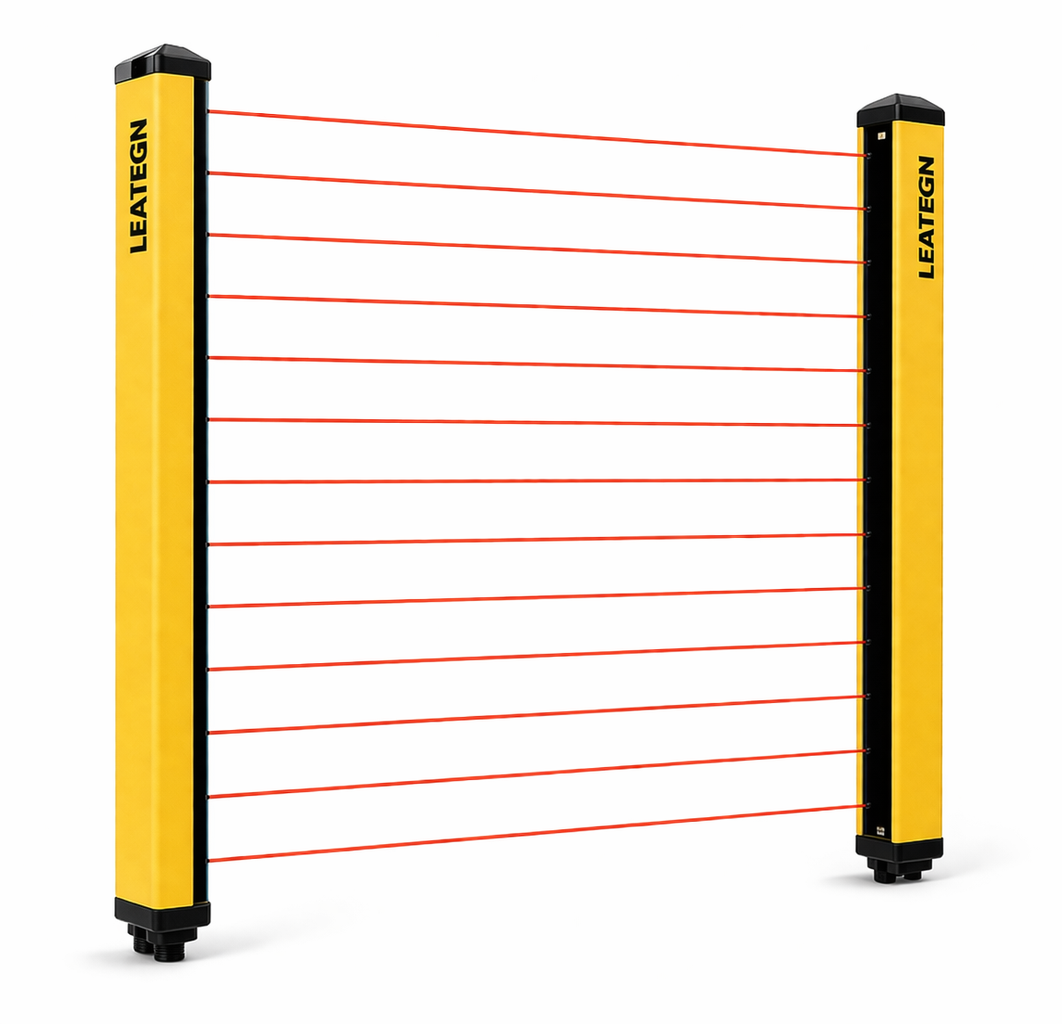
Engineering Trust: The Safety Mechanisms That Prevent Shop Floor Catastrophes
Auto-Locks vs. Manual Pins: Which One Actually Stops a 2-Ton Tip-Over?
Criterion: Load Stability
Manual locking pins depend entirely on operator action. If the pin is not fully engaged, a loaded shelf can roll forward under vibration, floor deflection, or impact from nearby equipment. In fast-paced environments, small steps are easily skipped. That makes manual pins a compliance-based safeguard rather than a system-based one.
Automatic locks remove that variability. Gravity-actuated or spring-loaded latches engage as soon as the shelf returns to its home position, without requiring input. The shelf becomes a rigid part of the rack frame until deliberately released. This prevents “shelf creep” caused by vibration or traffic. Stability is built into the mechanism itself, not dependent on memory.
Criterion: Human Error Reduction
Manual pins assume consistent behavior under time pressure. Automatic locks assume inconsistency—and design around it. By eliminating a required action, they remove a predictable failure point. In environments where shelves carry 2,000–4,000 pounds, removing a single missed step materially reduces risk exposure.
The Mechanical Interlock: Why Opening Only One Drawer at a Time Is Non-Negotiable
Criterion: Tip-Over Prevention
When a fully loaded shelf is extended, its mass shifts beyond the rack’s vertical supports. The structure is engineered to handle this load—but only one shelf at a time under rated conditions. If multiple shelves extend simultaneously, the center of gravity can shift beyond the base footprint, creating a forward tip hazard.
Training alone cannot reliably control this risk in busy settings. Engineering can.
A mechanical interlock—often a vertical rod or cam-and-cable system—physically prevents more than one shelf from opening at once. If Shelf A is open, all others remain locked. This preserves structural integrity at full extension and allows safe operation without destabilizing the rack.
Concrete Floor Load Ratings: The Installation Constraint Most Shops Overlook
Criterion: Structural Foundation Integrity
High-capacity roll-out shelving concentrates weight into a small footprint. A fully loaded unit can impose significant point loads at anchor locations. If the slab is uneven, underspecified, cracked, or poorly anchored, the frame can twist, pulling glide tracks out of alignment and compromising smooth travel.
Dynamic forces also matter. When a heavy drawer stops at full extension, impact forces transfer through anchors into the slab. Repeated cycles amplify stress at connection points. Compliance with ANSI/RMI MH16.1 should be verified for both the rack and the supporting concrete.
Maintenance Reality Check: What Actually Fails on Heavy-Duty Glide Systems?
Criterion: Long-Term Reliability
Weight alone rarely causes failure. Contamination does.
Fine metallic dust infiltrates bearing races and tracks. Mixed with grease, it forms an abrasive compound that degrades bearings and creates uneven motion. As resistance increases, operators apply more force—stressing interlocks and mounting hardware beyond intended limits.
Routine inspection should focus on debris in tracks, bearing smoothness, interlock alignment, and anchor integrity. High-capacity storage functions as production equipment. Its safety and uptime depend on cleanliness, alignment, correct installation, and preventive maintenance—not just the stated load rating.
The Comparison Matrix: Matching Shelf Specs to Your Tooling Geometry
High-capacity roll-out shelving only improves throughput when its physical specifications match the geometry, weight, and handling requirements of the tooling it stores. A flat steel drawer may look organized, but without alignment between shelf design and tool design, it simply concentrates risk. The goal is not storage—it is faster, safer changeovers. That starts with understanding load rating, deck construction, liner materials, shelf depth, and tooling compatibility.
Load Capacity: When does 1,500 lbs fail and 4,000 lbs become essential?
For application-specific equipment selection, contact ZWCNC.
However, capacity without adjustability creates a new bottleneck. Some heavy-duty racks require fully unloading a shelf to change vertical spacing. If height adjustments are labor-intensive, the rack resists evolving tooling needs. The ideal system combines high load ratings with easily adjustable shelf positions to accommodate taller punches or specialty profiles without disruptive rework. In high-mix environments, that flexibility prevents the rack from becoming obsolete as tooling inventories expand or shift toward taller, heavier, or more specialized geometries.
Tooling Compatibility: Adapting racks for American, European, and Wila/Trumpf styles
Tooling style dictates internal shelf architecture.
Wila and Trumpf New Standard tooling depend on precision seating shoulders and spring-loaded safety mechanisms. Metal-on-metal contact can damage these reference surfaces. These profiles benefit from slotted holders that suspend the punch by the shoulder, keeping delicate tips isolated and preventing shifting.
American planer-style tooling, with half-inch tangs, is more tolerant but bulkier and top-heavy. Without deep saddles or channels, vertically stored tools can tip when a drawer stops abruptly. European precision tooling falls between the two, requiring protection of fine tips but without complex locking features.
A universal flat deck rarely serves all profiles well. The rack’s internal supports must match tang geometry and center of gravity. If they do not, tools shift and chip during normal drawer movement—turning storage into a damage source. Over time, even minor impacts compound into measurable accuracy loss and premature regrinding costs.
Custom Inserts vs. Flat Decks: Maximizing Density for Segmented vs. Full-Length Tooling
Segmented tooling introduces a density challenge. Loose segments placed on bare steel decks slide into each other, risking edge damage. Wood liners are a common workaround, but wood can absorb moisture and promote corrosion.
Non-metallic custom inserts—lined with nylon, neoprene, or polyurethane—provide a more controlled solution. Vertical slots with protective dividers allow segmented tools to stand shoulder-to-shoulder without contact, maximizing horizontal density while protecting precision-ground edges.
Flat decks still serve a purpose. Full-length dies are often too heavy for vertical handling and are better rolled or slid into position on reinforced flat surfaces. A mixed approach—vertical protected storage for segments and dedicated flat decks for long, heavy pieces—optimizes both safety and access.
Drawer Depth and Aisle Clearance: Matching the Rack to Your Shop Footprint
Drawer depth affects more than storage volume—it reshapes traffic flow. A 36-inch drawer at full extension requires 36 inches of clearance, plus operator working space. In tight aisles, that extension can interfere with forklifts, carts, or adjacent work cells, slowing overall throughput. Evaluating rack depth alongside aisle width, lift equipment turning radius, and typical staging patterns ensures the shelving system supports, rather than disrupts, daily production movement.
From Storage to Staging: Integrating Roll-Out Racks into a SMED Workflow
The Point-of-Use Fallacy: Why proximity without organization fails to reduce downtime
Proximity is a prerequisite, not a solution. Parking a high-capacity rack near the backgauge means nothing if it’s filled with unlabeled punches and worn V-dies. You haven’t reduced downtime; you’ve relocated it. Many shops invest heavily in premium tooling, then undermine it with “point-of-use” storage that’s nothing more than a shared flat surface.
A mess at arm's length is still a mess.
When an operator must search through a drawer—even a smooth-gliding one—the machine sits idle. True SMED requires that the operator never asks where a tool is, only whether the next kit is ready. If the rack does not assign a specific, repeatable home for every tool, any gain in proximity is lost to searching. Standardized locations, clear labeling, and routine audits are what prevent drift back into disorder.
Organization is what turns a shelf into a system.
The moment an operator doubts whether a tool is sharp, clean, or present, flow breaks. Over time, those small interruptions compound into significant lost production. Proximity alone does not create efficiency; disciplined structure does. Without defined ownership and replenishment rules, even the best rack becomes another cluttered surface.
Kitting for the next shift: Transforming your die library into a high-speed staging area
Zero-downtime changeovers come from doing setup work while the machine is still running. In a lean cell, the roll-out rack becomes a staging zone where cleaning, inspection, and grouping of the next job’s tools happen in parallel with production. This separation of internal and external setup tasks is the core principle that shortens changeovers.
Dead time disappears when the next setup is already staged.
Using designated drawers for upcoming jobs eliminates the scramble at the end of a run. High-capacity shelves allow full-length dies to be staged at machine height, reducing strain and transfer time. Pre-stage clamps, shims, and documentation alongside the tooling to avoid last-minute trips across the shop floor.
If it takes ten minutes to locate tools and ten more to load them, that is twenty minutes of lost production. If the tools are pre-kitted on a roll-out drawer, changeover time drops dramatically. The challenge is maintaining that discipline under pressure, especially during rush orders or schedule changes.
Shadow boarding at scale: Visual management for heavy tooling sets
Visual management sustains the process. On a standard rack, a missing tool is unclear; on a roll-out shelf with shadow inserts, it is obvious. Every tool has a defined, labeled position, making status visible at a glance.
An empty slot signals immediate action.
This visibility discourages hoarding and reinforces accountability. Color-coded labels or etched identifiers further reduce operator guesswork. When the rack clearly communicates what belongs where, attention shifts from searching for tools to producing quality parts. Over time, this clarity builds habits that support faster setups and more predictable throughput.
The ROI of Effortless Access: Calculating the Break-Even on Your Setup Time
Mapping the "Buy Signal": When your bottleneck shifts from the press to the tool crib
In a modern job shop running small batches, you might change tools six or eight times a shift. If each change includes a five-minute search or a wrestling match with a 100-pound die, you lose nearly an hour of green-light time a day. That’s an hour you’ve already paid for. Over a month, that’s a week of production gone—not from lack of orders, but from friction on your own floor.
If your operator spends more time at the tool crib than the controller, the bottleneck has moved from the cylinder to the shelf. We often treat “looking for tools” as part of the job instead of a system failure. But a skilled operator’s value is in forming accurate parts, not searching for steel.
Calculating the payback period: How many tool changes until the rack pays for itself?
To find the break-even point, look beyond the rack invoice to the burdened shop rate of your press brake. Include labor, benefits, overhead, and opportunity cost. If your machine rate is $150 an hour and a roll-out rack saves 12 minutes per setup across four setups a day, you reclaim $120 of capacity every 24 hours. In a 20-day month, that’s $2,400—meaning a $10,000 shelving system pays for itself in just over four months.
The math improves when you factor in damaged precision tooling, rework, and missed delivery windows.
A chipped edge on a $2,000 punch—caused by dragging it from a shelf or dropping it during retrieval—can equal a significant fraction of a storage system’s cost. Roll-out drawers reduce this risk by bringing tools into the light and giving every profile a dedicated home. You aren’t just buying speed; you’re protecting expensive steel and extending its service life.
Rethinking the rack as a lean lever, not a furniture purchase
Treat a roll-out rack as furniture and you’ll question the price; treat it as a fuel injector for your press brake and you’ll question the delay. The rack becomes a staging point that ensures the machine never waits. When the next job’s tooling is staged at bed height, labeled, and ready, the shift from “Job A” to “Job B” becomes controlled instead of chaotic.
In a lean environment, the goal isn’t just storage; it’s removing physical and cognitive drag. Eliminate reach-and-risk bottlenecks, reduce unnecessary motion, and standardize locations, and operators stay focused, quality rises, and scrap falls.
The rack isn’t where tools rest; it’s where the next hour of profit is prepared and protected.
Apply this guidance to your production
Share your material, thickness, part drawing, tolerance, and target output with the ZWCNC engineering team for an application-specific equipment review.
More news, insights, and updates from ZWCNC.
Hydraulic Press Brake Diagram: Fluid Flow, Force, and Troubleshooting
Press Brake Robot Integration: Building a Safe, Productive Cell
How to Prevent Bowing in Long Press Brake Parts

Press Brake Preventive Maintenance Checklist: Daily to Annual Tasks
Press Brake Accidents: Five Hidden Mechanical Failures Behind the Myth of "Operator Error"